Historical Background of the House of Griffins
The House of Griffins, also known as the House of Pomerania, was a prominent noble dynasty that ruled the Duchy of Pomerania from the 12th century until 1637. Tracing their origins to West Slavic nobility or the Polish Piast dynasty, the Griffins established their legacy through strategic alliances and political influence extending into Silesia and Wrocław. Notably, Eric of Pomerania—one of the dynasty’s most illustrious members—ruled the Kalmar Union, encompassing Denmark, Sweden, Norway, and Finland.
The griffin, a legendary creature symbolizing vigilance and strength, became the dynasty’s heraldic emblem, leaving a lasting mark on regional architecture and culture. (Wikipedia: House of Griffin, academia.edu)
The House of Griffins and Wrocław: A Historical Connection
While the Griffins are primarily associated with Pomerania, their influence reached Wrocław, then a vital crossroads in Central Europe. The city’s strategic position attracted dynastic interests, shaping its political and cultural landscape through frequent shifts in governance between Polish, Bohemian, and German rulers. The House of the Griffins contributed to this evolving urban identity, reflected in architectural motifs and the city’s multicultural heritage. (localhistories.org)
Architectural Features and Urban Significance
Facade and Style
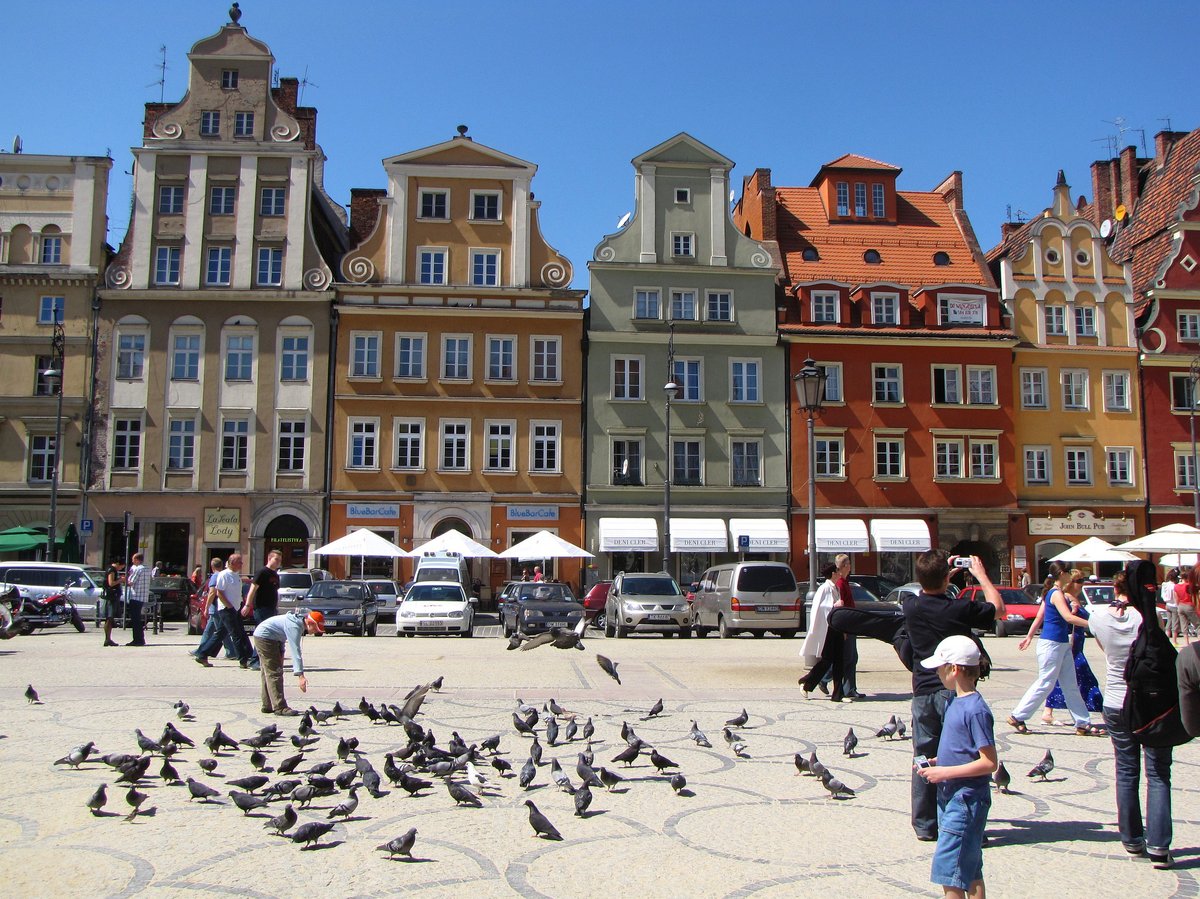
The House of the Griffins is a striking example of historicist and eclectic architectural styles, seamlessly blending Renaissance and Baroque elements. Its ornate facade is adorned with elaborate stucco work, decorative cornices, pilasters, and, most notably, griffin sculptures—symbols of strength and protection. These motifs are a testament to the skilled craftsmanship that characterizes Wrocław’s historic architecture. (Commons Wikimedia)
Structural Elements and Urban Integration
Robust masonry, high ceilings, and spacious windows define the building’s structure. Its harmonious proportions and alignment with adjacent Old Town buildings enhance the unity of the streetscape, contributing to the Market Square’s distinct charm. Inside, period interiors, restored frescoes, a grand staircase, and historical furnishings offer a vivid glimpse into the city’s aristocratic past.
Visiting Hours, Tickets, and Accessibility
Opening Hours:
- Summer Tuesday–Sunday, 10:00–18:00
- Winter Tuesday–Sunday, 11:00–16:00
- Closed Mondays and public holidays. Please check the official website or tourist information for updates.
Tickets:
- General admission: approx. 15 PLN
- Discounts: Available for students, seniors, and families
- Children under 7: Free entry
- Tickets can be purchased on-site or online via the official heritage website.
Accessibility:
- The ground floor and main entrance are wheelchair accessible.
- Some upper floors may be reached only by stairs due to the historic structure.
- Accessible restrooms are available; contact administration in advance for assistance if needed.
Guided Tours and Visitor Experience
Guided tours are available in multiple languages, led by knowledgeable local historians or certified guides. Tours offer insights into the Griffin dynasty, the building’s architecture, and Wrocław’s historical evolution. Interactive exhibits and multimedia presentations—such as digital reconstructions, family trees, and historical timelines—enhance visitor engagement. Informational plaques and QR codes provide self-guided exploration, with audio guides offered for rent.
Booking tours in advance is recommended, especially during peak tourist seasons or for special exhibitions. (getyourguide.com)
Cultural Events and Community Significance
The House of the Griffins is not just a historical monument; it is a vibrant hub for cultural programming and community engagement. It regularly hosts temporary exhibitions, concerts, educational workshops, and public events—particularly during major celebrations like the Wrocław Christmas Market and the Night of Museums. The griffin motif serves as a unifying symbol for the city’s diverse residents, fostering dialogue and pride in Wrocław’s multicultural legacy. (enrs.eu, Sunshine Seeker)
Nearby Attractions and Travel Tips
Other Market Square Highlights:
- Gothic Old Town Hall Features an astronomical clock and museum exhibits
- St. Elizabeth’s Church Offers panoramic city views from its tower
- Hansel & Gretel Houses Quirky, fairy-tale-inspired architecture
- Wrocław’s Dwarves Over 300 whimsical bronze statues scattered citywide
Travel Tips:
- Arrive early to enjoy the facade in morning light and avoid crowds
- The Old Town is best explored on foot; use tram/bus for easy access
- Download local map apps or use interactive maps on tourism websites
- Book tours and special exhibitions in advance
- Nearby dining: Try regional favorites at Pierogarnia Rynek 26 or Lepione - Kuźnicza Wrocław
- Wrocław is known for safety and hospitality; observe site etiquette and photography rules
(visitwroclaw.eu, community.ricksteves.com)
Frequently Asked Questions (FAQ)
Q: What are the House of the Griffins’ visiting hours?
A: Typically Tuesday–Sunday, 10:00–18:00 in summer, 11:00–16:00 in winter; closed Mondays.
Q: How can I purchase tickets?
A: Tickets are available on-site or online; discounts offered for eligible visitors.
Q: Are guided tours available?
A: Yes, in multiple languages. Advance booking is advised.
Q: Is the building wheelchair accessible?
A: The entrance and ground floor are accessible, but upper levels may have limited access.
Q: Is parking available nearby?
A: Limited public parking; public transport or cycling is recommended.
Q: Can I take photos inside?
A: Non-flash and non-tripod photography is generally allowed.