What the place is
The Tomba Rocco Piaggio is a funerary monument in the Monumental Cemetery of Staglieno in Genoa, Italy. It commemorates Rocco Piaggio, a figure in Genoa’s maritime and industrial history, and reflects the city’s development from a maritime republic into a modern industrial hub. The Piaggio family’s history is closely connected to Genoa’s economic, social and cultural life (Staglieno official site; Academia.edu).
Staglieno is an open-air museum known for its funerary sculptures and varied architecture. The tomb offers a focus for exploring the cemetery’s art and Genoa’s social history.
History
Genoa and the cemetery
Known as “La Superba,” Genoa has a long maritime tradition. By the 19th century, it had become a major centre of commerce, education and reformist thought. The city’s bourgeoisie and intellectual elite expressed their achievements and aspirations through elaborate funerary monuments (Wikipedia).
Urban growth and public health policies in the 1800s, including the Napoleonic Edict of Saint-Cloud, moved burials outside city limits and led to the creation of monumental cemeteries such as Staglieno (Ancient Origins).
Carlo Barabino designed the cemetery in 1835, and Giovanni Battista Resasco completed it. Staglieno opened in 1851 and expanded over subsequent decades. Its design combines Neo-Classical symmetry with romantic, naturalistic landscaping. The grounds include grand cloisters, winding garden paths, a Pantheon-inspired central structure and seven distinct sectors (Atlas Obscura; Discover Genoa).
The Piaggio family
The Piaggio family rose to prominence through shipbuilding and international trade, particularly with South America (Wikipedia: Faustino Piaggio). Its business activities and civic engagement made the family part of Genoa’s economic and social evolution. Later generations founded the Piaggio Group, known for the Vespa scooter (Piaggio Group History).
What to see
Staglieno is considered an open-air museum, with works by sculptors including Leonardo Bistolfi, Augusto Rivalta and Giulio Monteverde. Its monuments range from grand mausoleums to expressive statues of mourners and allegorical figures, reflecting artistic movements from Neo-Classicism to Art Nouveau. Their realism and emotional depth offer a view of the city’s cultural values and historical memory (Wikipedia; Ancient Origins).
Tomba Rocco Piaggio
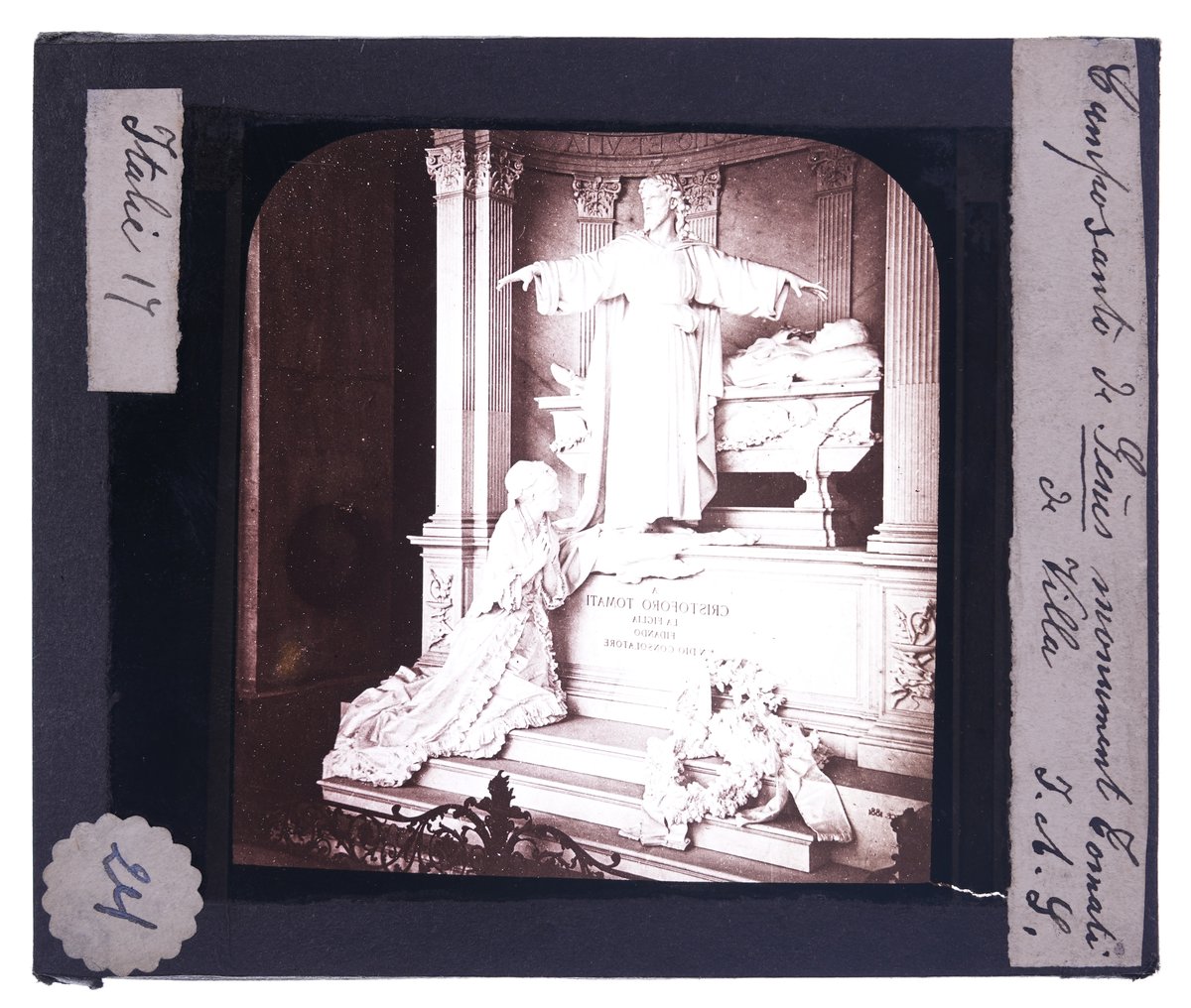
Designed by Giuseppe Benetti, the Tomba Rocco Piaggio is in the LI niche of Staglieno’s lower southern arcade. It combines neo-Renaissance architecture with “Realismo borghese” sculpture. A realistic bust of Rocco Piaggio is accompanied by maritime symbols including an anchor, ropes, an hourglass, a globe and a chart, representing the family’s nautical achievements (symbolsproject.eu).
At the entrance, a lifelike figure of Piaggio’s widow holds a prayer book. The figure conveys dignified grief and the importance of family, memory and civic virtue in Genoese bourgeois culture (Staglieno official site).
The marble sculptures are notable for their detailed textures and naturalistic forms. Light and shadow emphasize their three-dimensionality and the technical skill of Genoese sculptors (Staglieno official site).
Practical visiting information
Hours and admission
- Cemetery hours Daily from 7:30 AM to 5:00 PM from April to September, and from 8:00 AM to 4:00 PM from October to March. Hours may vary on holidays; confirm with the official website.
- Admission Entry is free for individual visitors. Guided tours may require advance booking and a small fee (Visit Genoa PDF, p. 6).
Getting there
- Public transport AMT buses 12, 14, 34 or 48 go to Piazzale Resasco (Visit Genoa PDF, p. 19).
- Taxi Book through Coop Taxi Genova.
- Car Paid parking is available near the entrance, but spaces are limited during peak times.
- On foot Approximately a 15-minute bus ride from the city centre (Hikersbay).
Facilities and accessibility
- Accessibility Main avenues and paths are generally accessible, though some areas have uneven ground. Contact Tourism Without Barriers for assistance. For special accommodations, contact the cemetery.
- Restrooms Available near the main entrance.
- Refreshments Bring water and snacks. Nearby cafés are in Marassi or Via delle Banchelle.
- Maps Free maps are available at the entrance or as a downloadable official PDF guide.
- Wi-Fi Limited inside the cemetery.
Guided tours
The City of Genoa offers free public tours monthly, starting near the Pantheon. Private tours on art and history are also available through local operators; book private tours in advance.
Tips
- Wear comfortable shoes and bring weather-appropriate gear.
- Photography is permitted for personal use. Be discreet and respectful, particularly around funerals and mourners.
- Early mornings or late afternoons offer the best light and tranquillity.
- Pets are generally not allowed.
- Take time to study the sculptures’ expressions and textures, and compare the Piaggio tomb with neighbouring monuments to see differences in artistic styles and social histories.
- Spring and autumn are described as ideal seasons for pleasant weather and fewer crowds.
- The tomb can serve as a focus for exploring Genoa’s maritime and industrial heritage.
Nearby places
Other places to see in Staglieno include:
- The Pantheon, the central domed structure
- Raggio Chapel
- The graves of Giuseppe Mazzini and Constance Lloyd
- The School of Stone Restoration (Visit Genoa PDF, p. 6)
Genoa’s historic centre, museums and culinary destinations are also nearby (The Crazy Tourist). Accommodation options include modern apartments and family-friendly B&Bs near Via delle Banchelle and Marassi (Hikersbay).
Further information
- Official Monumental Cemetery of Staglieno Information
- AMT Genoa Public Transport
- Tourist Information Office
Frequently asked questions
What are the visiting hours for Tomba Rocco Piaggio?
The cemetery is open daily from 7:30 AM to 5:00 PM from April to September, and from 8:00 AM to 4:00 PM from October to March.
Is there an entrance fee?
No. Entry is free for individual visitors.
Are guided tours available?
Yes. Free public and private guided tours are available. Book private tours in advance.
Is the cemetery accessible for people with disabilities?
The main paths are generally accessible, though some areas have uneven ground. Contact the cemetery for special accommodations.
Can I take photographs?
Yes, for personal use. Be mindful of funerals and mourners.