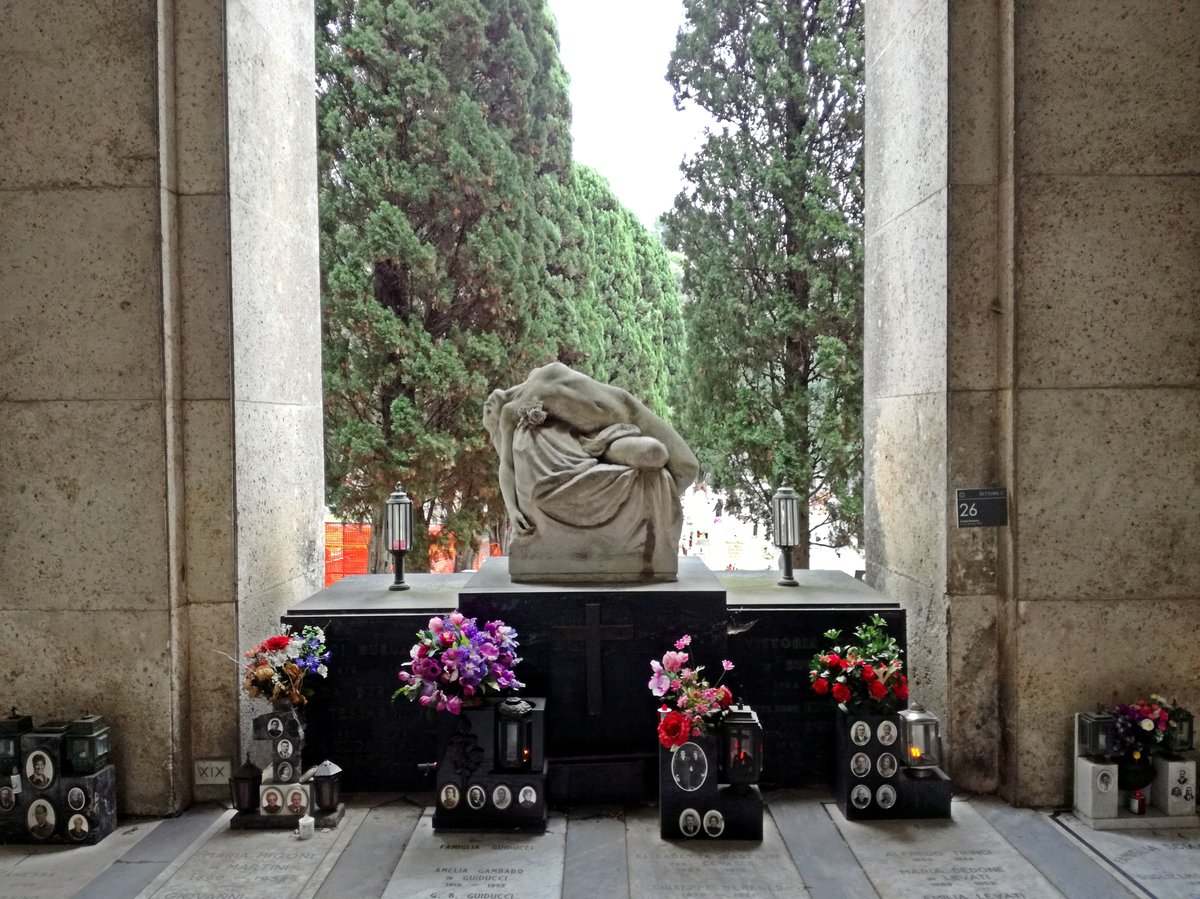
Historical Context: Staglieno Cemetery and Tomba Pizzorni
Genoa’s Transformation and the Creation of Staglieno Cemetery
In the 19th century, Genoa underwent significant urban and social changes. The Napoleonic edict of Saint-Cloud (1804) prohibited burials inside city centers, prompting the development of large, ornate cemeteries on city outskirts (Wikiwand – Cimitero monumentale di Staglieno). Cimitero Monumentale di Staglieno, opened in 1851, was designed by Carlo Barabino and completed by Giovanni Battista Resasco. Its hillside layout, sweeping avenues, and diverse architectural styles—ranging from neoclassical to Art Nouveau—reflect the cosmopolitan aspirations of Genoa’s elite (Staglieno Official Site).
The Pizzorni Family and Their Monument
The Tomba Pizzorni was commissioned by the prominent Pizzorni family and is recognized as one of the cemetery’s most significant works. Designed during a period when Genoese families invested in elaborate memorials, this tomb exemplifies the era’s artistic trends and social values. Its central sculpture, attributed to Giovanni Scanzi, is a masterwork of emotional realism and technical finesse.
Artistic Significance and Iconography
Mastery of Funerary Sculpture
The Tomba Pizzorni stands out for its sculptural excellence. Giovanni Scanzi’s life-sized figure of a seated woman, draped in classical robes, demonstrates meticulous attention to anatomy and fabric, capturing the solemnity of mourning. The monument’s realism and emotional resonance epitomize the cemetery’s artistic legacy, alongside works by Monteverde and Varni (Finestre sull’Arte).
Symbolism and Themes
The tomb’s iconography—bowed head, clasped hands, and laurel motifs—reflects themes of remembrance, grief, and spiritual reflection. These classical references link the monument to ancient Roman traditions, while the setting within Staglieno’s terraced gardens enhances its contemplative atmosphere.
Visiting the Tomba Pizzorni: Hours, Tickets, and Practical Information
Location and Access
- Address Piazzale Resasco, 16137 Genova GE, Italy
- The cemetery is approximately 4 km from Genoa’s historic center and is easily accessible by public transport:
- Bus Lines 34, 48, and 480 from Genoa Brignole station stop at the cemetery entrance (Italy Heaven).
- By Car/Parking Limited parking is available; weekdays are less busy.
Opening Hours and Ticketing
- Summer (April–September) 7:30 AM – 5:30 PM
- Winter (October–March) 7:30 AM – 4:30 PM
- Entry Fee Admission is free. Some guided tours may require a fee (Visit Genoa).
- Special Closures The cemetery closes on January 1, 6, Angel Monday, June 24, August 15, December 25, 26, and Easter Day (check the official calendar for updates).
Navigating the Cemetery
- Maps Obtain at the entrance or download from the official site.
- Signage Key tombs, including Tomba Pizzorni, are clearly marked.
- Shuttle Buses Two internal AMT shuttle lines (CF and CS) help visitors reach different sections (visitgenoa.it PDF).
Accessibility
- Paths Main avenues are paved and wheelchair accessible; some secondary paths may be steep or uneven.
- Facilities Restrooms, benches, and a small cafeteria are available near the entrance.
- Pets Allowed only on specific weekdays; guide dogs always permitted.
Guided Tours and Special Events
- Guided Tours Available in Italian and sometimes English, often focusing on artistic and historical highlights. Book via the Genoa Tourist Office or local operators (Visit Genoa).
- Special Events Cultural programming, such as European Heritage Days and Rolli Days, may include themed tours (Bimbeinviaggio).
Visitor Tips and Etiquette
- Dress Code Wear respectful attire (cover shoulders and knees).
- Footwear Comfortable shoes are essential due to cobblestones and elevations.
- Photography Permitted for personal use; avoid flash and tripods unless authorized.
- Best Times Weekdays and spring/autumn visits offer a quieter and more enjoyable experience.
- Weather The cemetery may close during severe weather alerts (comune.genova.it).
Highlights and Suggested Itinerary
Must-See Monuments at Staglieno
- Statue of Faith Central spiritual symbol.
- Pantheon (Cappella dei Suffragi) Majestic domed structure with colonnades (visitgenoa.it).
- Tomba Pizzorni Noted for its emotional realism and artistry.
- Erba and Gallino Tombs Renowned funerary sculptures.
- Boschetto Irregolare Resting place of Risorgimento heroes.
- Graves of Notable Figures Includes Giuseppe Mazzini, Constance Mary Lloyd Wilde, Fabrizio De André, and more.
- English Cemetery Non-Catholic section reflecting Genoa’s diversity.
Frequently Asked Questions (FAQ)
Q: What are the visiting hours for Tomba Pizzorni/Staglieno Cemetery?
A: Open daily, 7:30 AM–5:30 PM (summer), 7:30 AM–4:30 PM (winter); closed or limited hours on major holidays.
Q: Is there an admission fee?
A: Entry is free; some tours require a fee.
Q: Are guided tours available?
A: Yes, in Italian and occasionally English. Book through the Genoa Tourist Office.
Q: Is the site wheelchair accessible?
A: Main avenues are accessible; some areas may be challenging.
Q: Can I take photographs?
A: Yes, for personal use; commercial photography requires permission.
Nearby Attractions in Genoa
- Historic Center UNESCO World Heritage Site with palaces and museums.
- Via Garibaldi Notable for Renaissance architecture.
- Palazzo Ducale and Musei di Strada Nuova Key cultural institutions (Savoring Italy).
- Dining Sample local specialties near Brignole Station.
Practical Information
- Cemetery Administration +39 010 557 5627
- Genoa Tourist Office [email protected]
- Emergency Dial 112