
Origins and Cultural Significance
The Grüne-Soße-Denkmal, or Green Sauce Monument, is a tribute to one of Frankfurt's most beloved culinary traditions: the Grüne Soße (Green Sauce). This dish, known locally as "Grie Soß'," is a cold sauce made from a mixture of seven specific herbs: parsley, chives, cress, sorrel, chervil, borage, and salad burnet. The origins of Grüne Soße are somewhat shrouded in mystery, with some attributing its introduction to the Huguenots who fled to Frankfurt in the 17th century to escape religious persecution in France (Frankfurt on Foot).
Establishment of the Monument
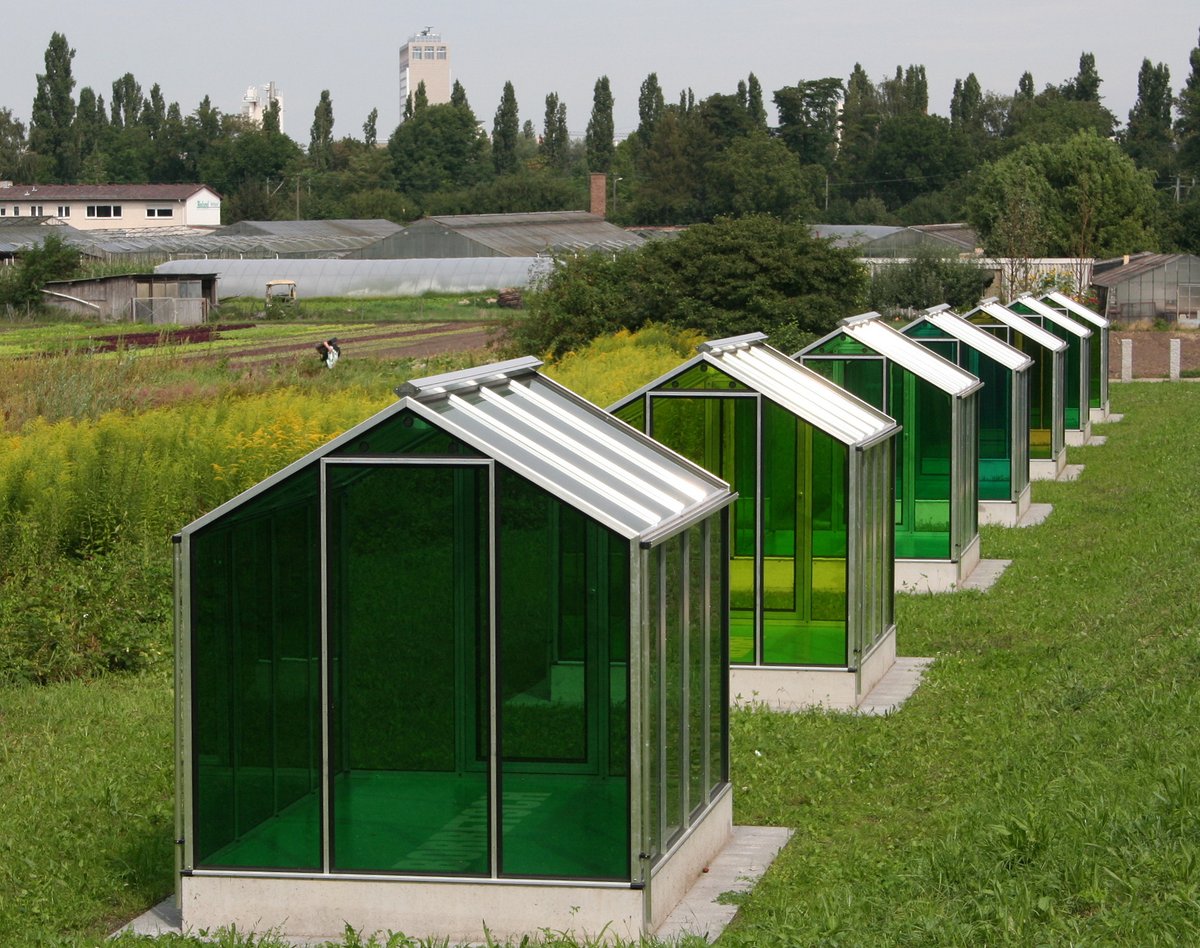
The Grüne-Soße-Denkmal was inaugurated in 2007 in the Frankfurt district of Oberrad, an area renowned for its extensive herb fields. The monument consists of seven small greenhouses made of Plexiglas, each representing one of the seven essential herbs used in the traditional Grüne Soße recipe. These greenhouses are particularly striking at night when they are illuminated, creating a visually captivating experience (Frankfurt.de).
Design and Construction
The monument was designed by the artist Olga Schulz, who aimed to capture the essence of the local landscape and the rhythm of the herb-growing seasons. The initial construction cost was approximately €150,000, with an additional €70,000 spent on a recent renovation to restore the monument's original vibrancy. The renovation was completed in January 2019, with materials sourced from a specialized Italian company (FR.de).
EU Protection and Local Pride
In March 2016, the Grüne Soße received EU-wide protection, ensuring that only sauces made with herbs grown in Frankfurt could be labeled as "Frankfurter Grüne Soße." This protection underscores the cultural and culinary importance of the dish to the region. The local community, particularly the gardeners of Oberrad, have been instrumental in preserving this tradition. They even established a "Verein zum Schutz der Frankfurter Grünen Soße" (Association for the Protection of Frankfurt Green Sauce) to safeguard its authenticity (Frankfurt.de).
Annual Grüne Soße Festival
The popularity of Grüne Soße is celebrated annually with the Grüne Soße Festival, where local restaurants compete to create the best version of the dish. This festival not only highlights the culinary skills of local chefs but also fosters a sense of community and pride among Frankfurt residents. The festival typically runs from Green Thursday (the day before Good Friday) until the first frost, aligning with the traditional season for Grüne Soße (Frankfurt on Foot).
Visitor Experience
Visitors to the Grüne-Soße-Denkmal can enjoy a unique blend of cultural heritage and modern art. The illuminated greenhouses provide a stunning visual display, especially in the evening. Additionally, the nearby herb fields in Oberrad offer a picturesque backdrop, particularly during the growing season when the fields are lush and aromatic. For those interested in botany, the Botanical Garden in Frankfurt also features a section dedicated to the seven herbs used in Grüne Soße, although it is closed during the winter months (Frankfurt.de).
Best Time to Visit
The best time to visit the Grüne-Soße-Denkmal is during the growing season, typically from early spring to late autumn, when the herb fields are at their most vibrant. Evening visits are especially recommended to experience the illuminated greenhouses.
Ticket Information
There are no admission fees to visit the Grüne-Soße-Denkmal. The monument is open to the public year-round, and no tickets are required.
Nearby Attractions
While visiting the Grüne-Soße-Denkmal, be sure to explore other nearby attractions such as the Frankfurt Botanical Garden, which features a section dedicated to the seven herbs used in the Green Sauce. Additionally, the district of Oberrad offers charming local shops and eateries where you can sample authentic Grüne Soße.
Challenges and Renovations
Despite its cultural significance, the Grüne-Soße-Denkmal has faced challenges over the years, including wear and tear that led to a loss of its original vibrancy. The recent renovation aimed to address these issues, restoring the monument to its former glory. The project was a collaborative effort between the Frankfurt Environmental Office and the Regionalpark Rhein-Main Südwest GmbH, reflecting the community's commitment to preserving this iconic landmark (FR.de).
Frequently Asked Questions
What are the opening hours of Grüne-Soße-Denkmal? The Grüne-Soße-Denkmal is open to the public 24/7, year-round.
How much do tickets to Grüne-Soße-Denkmal cost? There are no admission fees; the monument is free to visit.