

Origins and Development
Santa Apolónia’s conception began in the mid-19th century as Portugal sought to modernize and connect Lisbon with Spain and the rest of Europe. The Companhia das Obras Públicas, established in 1844, aimed to create an intermodal station for both rail and maritime passengers, earning the project nicknames like “Cais da América” and “Cais da Europa.” The station, designed by Angel Arribas Ugarte and constructed by the Oppermann company, was officially inaugurated on May 1, 1865, atop the grounds of a former convent (Wikipedia; Lisbon Portugal Tourism).
Architectural Features and Expansions
Santa Apolónia is celebrated for its neoclassical and Neo-Manueline architecture, with a symmetrical façade, limestone masonry, and intricate tilework. The main nave is 117 meters long, 24 meters wide, and 13 meters high, constructed of brick, limestone, wrought iron, and glass. The grand hall’s high ceilings, chandeliers, and marble columns evoke the golden age of rail travel (Lisbon Guide; Lisbon Sight Sailing). Major expansions in the 20th century enhanced the station’s capacity, solidifying its ranking among Portugal’s top train depots (Editory Hotels).
Role in the Rail Network
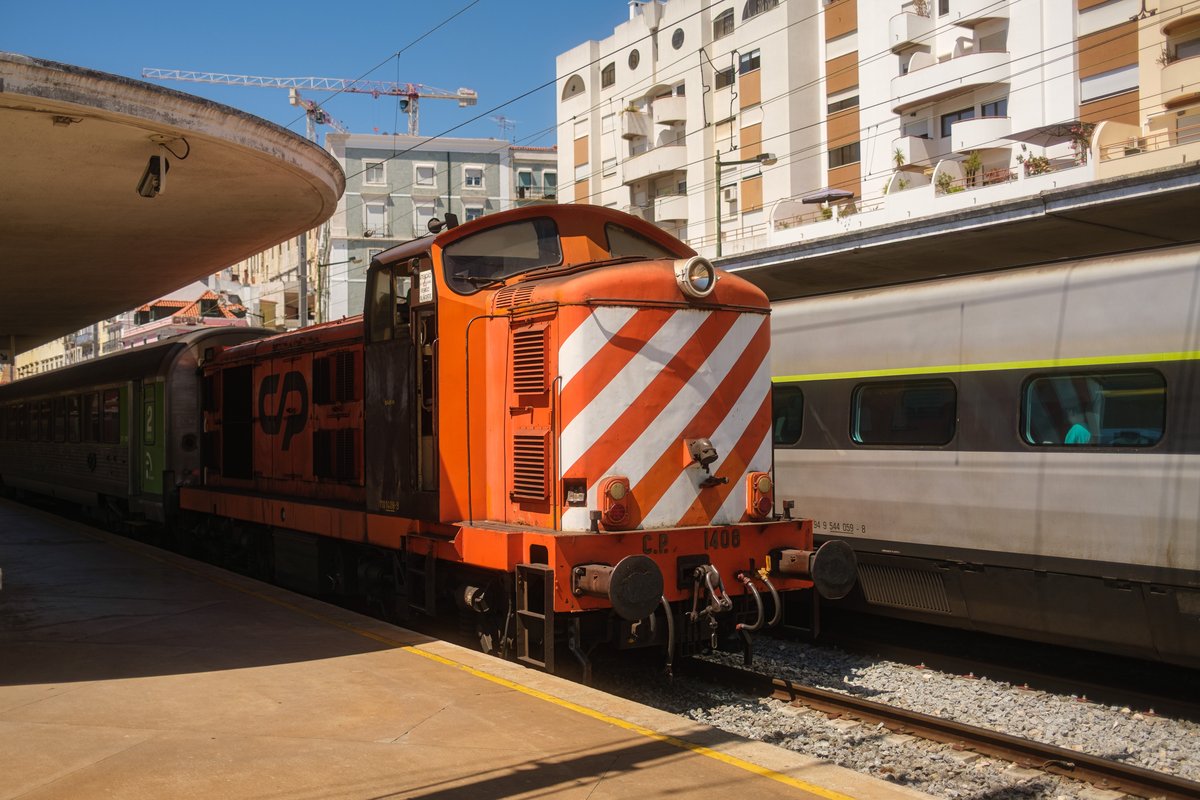
Santa Apolónia was established as the terminus for the Lisbon-Porto railway and quickly became a key node in Portugal’s rail system. The station was central to national and international routes, including high-speed Alfa Pendular trains and international links to Spain and France (Wikipedia). With the opening of the Santa Apolónia metro station in 2007, intermodality was further enhanced (Lisbon Portugal Tourism).
Social and Cultural Significance
Beyond transport, Santa Apolónia has deep social resonance. It was a departure point for generations of Portuguese emigrants, commemorated by the Monument to the Emigrant outside the station (Lisbon Sight Sailing). Its interiors and façade are popular subjects for architectural and travel photography, and a small museum on-site explores Portugal’s railway history (Lisbon Guide).
Modernization and Adaptive Reuse
While the opening of Gare do Oriente reduced its prominence, Santa Apolónia adapted with modern amenities and, in 2022, welcomed The Editory Riverside Santa Apolónia—a five-star hotel that celebrates the station’s legacy (Editory Hotels). Today, the station remains a vital transport node and cultural landmark (Lisbon Sight Sailing).
Visiting Santa Apolónia Station
Visiting Hours and Days of Operation
- Station Open daily, typically from 5:30 AM to midnight (some entrances and services may vary).
- Ticket offices 6:00 AM to 10:00 PM.
- Station museum and guided tours Check ahead for availability.
Ticket Prices and Purchase Options
- Where to buy At ticket counters, automated machines, or online via Comboios de Portugal (CP).
- Pricing Varies by service. Regional tickets start from ~€2; long-distance and international routes require advance booking.
- Payment Contactless options and travel cards (Navegante, Lisboa Card) are accepted.
- Pro tip Confirm your departure station, as express trains may leave from Oriente.
Accessibility and Facilities
- Step-free and lift access from the main entrance.
- Luggage storage Coin-operated lockers (€4.50–€6/day); third-party storage nearby (Lisbon Luggage Storage).
- Restrooms Available near platform 3 (€0.50 fee).
- Food and drink Supermarket (platform 5), Telepizza (platform 3), hotel restaurant, and Alfama eateries.
- ATMs and car rental desks in the main hall.
- Security CCTV and regular patrols; remain vigilant for petty theft (Xplrverse).
Connectivity and Transport Links
- Metro Blue Line (Linha Azul) terminates at Santa Apolónia; operates 6:30 AM–1:00 AM (€1.85 fare).
- Buses Connect to city districts; main routes 6:00 AM–9:00 PM (some until midnight).
- Taxi rank and close proximity to ferry terminals for cross-river travel.
- Walking Riverside promenade leads to Praça do Comércio (1.3 km) and Rossio Square (1.7 km).
Nearby Attractions and Cultural Context
Alfama District and Historical Landmarks
Stepping out of Santa Apolónia, visitors enter Alfama, Lisbon’s oldest neighborhood—famous for its Moorish alleyways, Fado music venues, and authentic atmosphere. Nearby highlights include:
- Lisbon Cathedral (Sé de Lisboa) 12th-century Romanesque monument.
- Fado Museum Interactive exhibits on Portugal’s traditional music.
- Miradouros Scenic viewpoints such as Santa Luzia and Portas do Sol.
Tagus Riverside and Promenades
The riverside promenade is ideal for walks, cycling, and sunset views. Nearby, the Cais das Colunas at Praça do Comércio is a historic riverside gateway.
Iconic Monuments
Within walking distance:
- National Pantheon Baroque church and mausoleum with panoramic rooftop views.
- Monastery of São Vicente de Fora Mannerist monastery, royal pantheon, and azulejo-clad cloisters.
- Feira da Ladra Lisbon’s legendary flea market, held twice weekly at Campo de Santa Clara.
- Museu do Azulejo Museum dedicated to Portugal’s ceramic tile art.
Dining and Nightlife
- Alfama’s taverns Classic Portuguese fare and Fado performances.
- Riverside restaurants Modern dining with river views.
Practical Tips for Visitors
- Arrive 10–15 minutes early to buy tickets or store luggage.
- Use the main entrance for step-free access.
- Carry small change for restrooms.
- Confirm your departure station for express trains.
- Travel light during peak hours.
Frequently Asked Questions (FAQ)
Q: What are the station’s opening hours?
A: Typically from 5:30 AM to midnight; ticket offices 6:00 AM–10:00 PM.
Q: How can I buy train tickets?
A: At the station, online via CP, or at machines and agencies.
Q: Is the station accessible?
A: Yes, with step-free access, lifts, and adapted restrooms.
Q: Are there luggage storage facilities?
A: Yes, coin-operated lockers and third-party options are available.
Q: What are the top nearby attractions?
A: Alfama, Lisbon Cathedral, National Pantheon, Feira da Ladra, Fado Museum.
Visual Gallery
View Map of Santa Apolónia Station and Surroundings