
Origins and Development
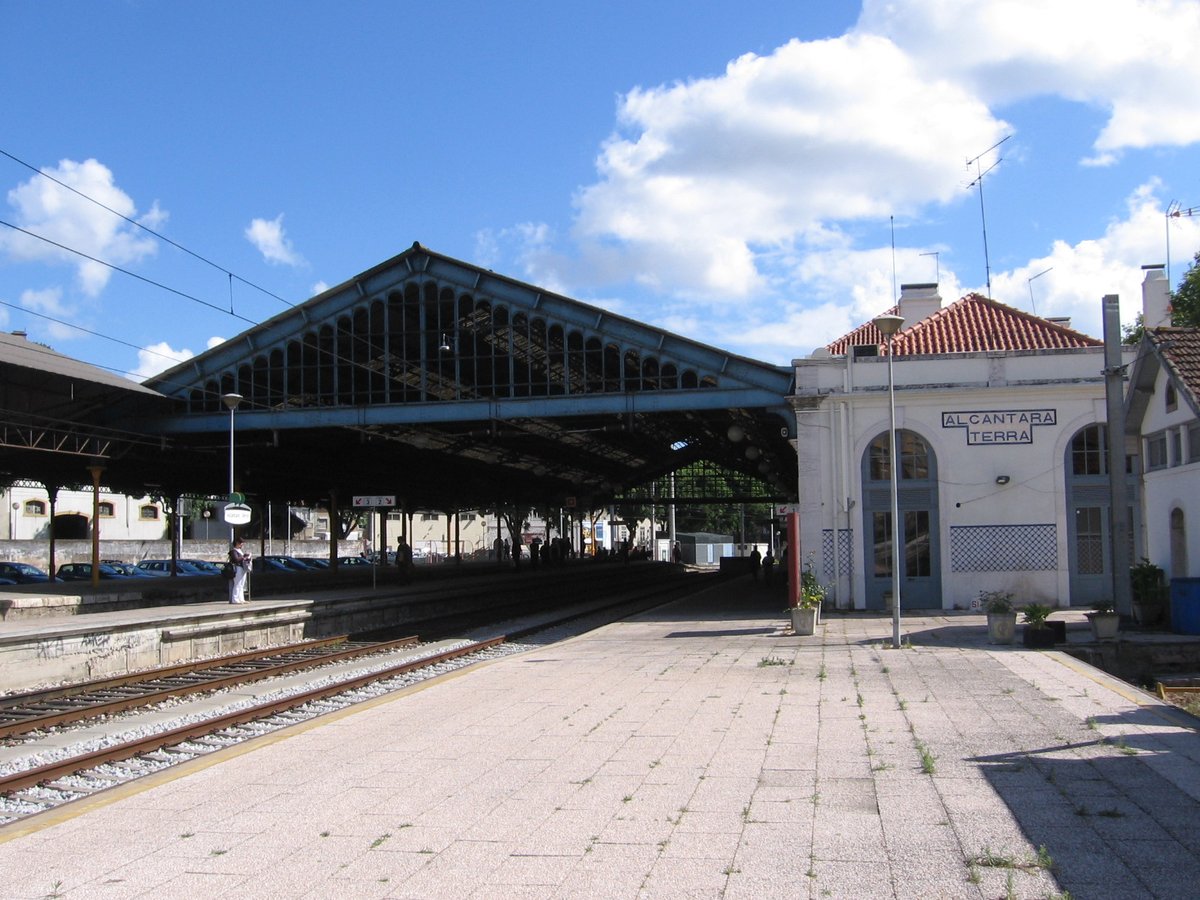
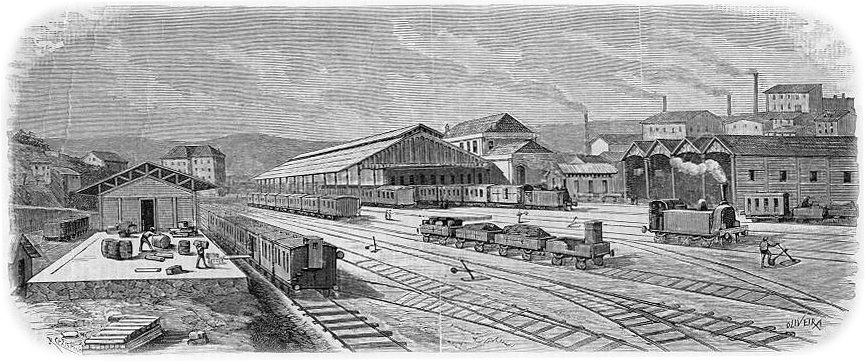
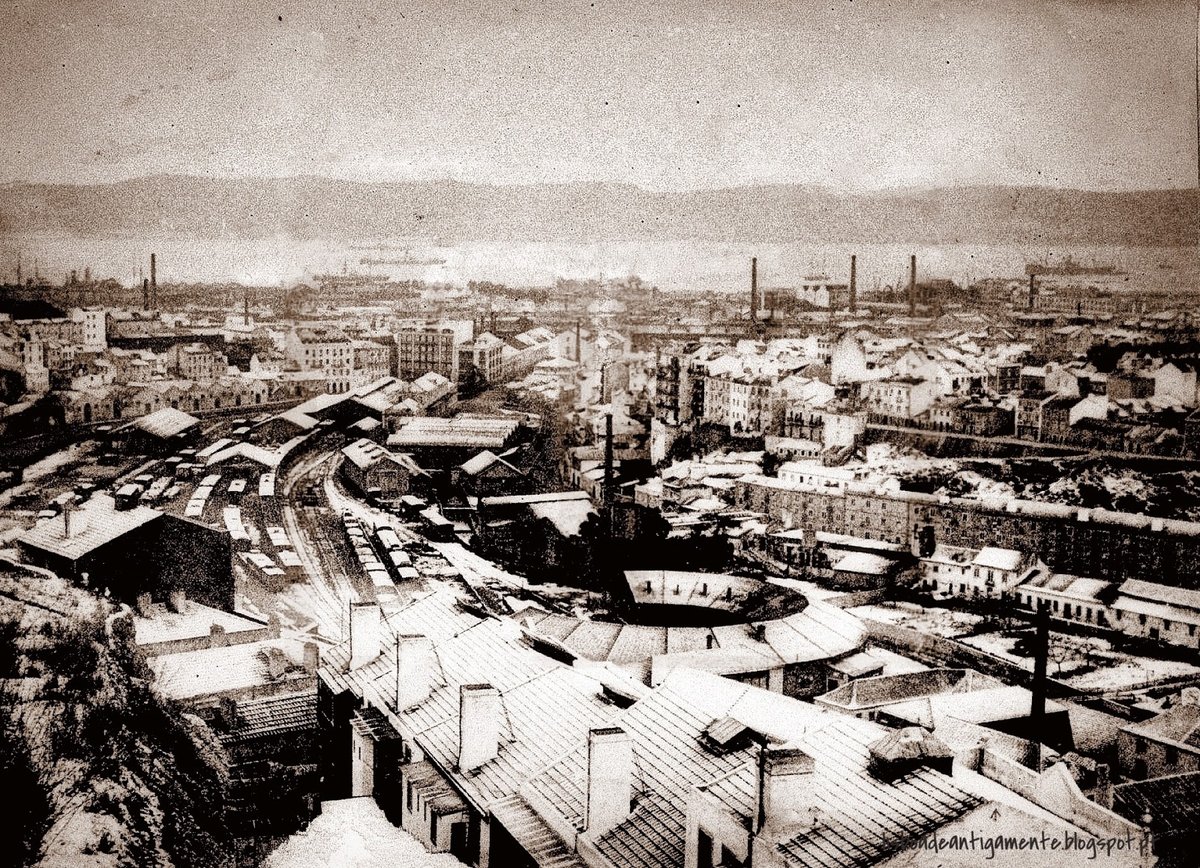
- Inauguration The station was inaugurated on April 2, 1887, as the southern terminus for the Sintra and Oeste lines, under the Companhia Real dos Caminhos de Ferro Portugueses (Wikipedia PT).
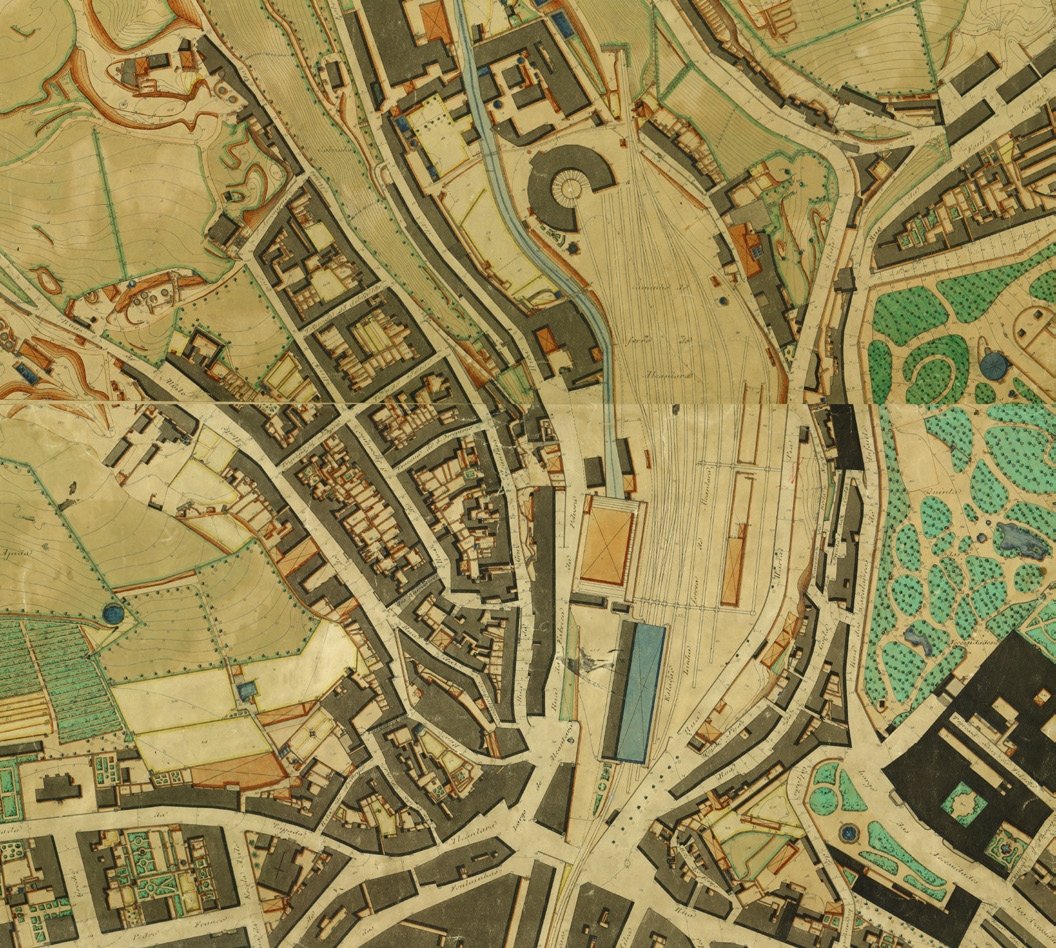
- Strategic Location Chosen for its proximity to Avenida de Ceuta and the historic Alcântara valley, the area’s name is derived from the Arabic "Al-Qantarah" ("the bridge") (LisbonLisboaPortugal.com).
- Early Role Initially the main railway gateway to Lisbon, prior to the opening of Rossio Station in 1891.
20th Century Transformations
- Transition With Rossio Station’s inauguration in 1891, Alcântara-Terra’s prominence as a terminus declined but it remained a key suburban and regional station (Wikipedia PT).
- Infrastructure Upgrades Remodeling and repairs in the 1930s, and land expropriation for Avenida de Ceuta in 1938, shaped the station’s current layout.
- Electrification Mid-20th century works included electrification of the lines and adjustments to accommodate new rolling stock (Wikipedia PT).
Modern Era and Recent Developments
- Pedestrian Link From 1991–2008, a pedestrian overpass connected Alcântara-Terra to Alcântara-Mar (Cascais Line), removed due to structural issues (Wikipedia EN).
- Current Operations Since June 2015, the station serves as the Azambuja Line terminus for suburban trains to Castanheira do Ribatejo, operating only on weekdays (Lisboaparapessoas.pt).
- Modernization Ongoing renovations have improved accessibility, platform heights, signage, lighting, and waiting areas (Lisboa Para Pessoas).
Future Prospects
- Metro Expansion Plans to extend the Lisbon Metro’s Red Line to Alcântara by 2028 will transform the station into a major intermodal hub (Portugal.com; Railway Pro).
- Urban Integration Revitalization projects include improved public spaces, cycling infrastructure, and better pedestrian connectivity (Lisboa Para Pessoas).
Visiting Hours and Tickets
- Opening Hours Alcântara-Terra operates on weekdays only, from early morning (first train around 5:30 AM) until late evening (last train after midnight). It is closed on weekends and public holidays (Lisboaparapessoas.pt).
- Ticketing Purchase tickets at vending machines or ticket counters within the station, or online via the CP – Comboios de Portugal official website. The Viva Viagem card is accepted.
- Fares Pricing starts at approximately €1.50 for short suburban trips; check the latest fares online or at the station.
Accessibility and Facilities
- Access Recent renovations have added ramps and elevators, enhancing accessibility for those with reduced mobility (Lisboa Para Pessoas).
- Platforms Features four tracks with platforms at improved heights for easier boarding.
- Amenities Includes waiting areas, real-time departure boards, restrooms, and vending machines; while there are no large shops or restaurants within, the surrounding district offers ample options.
- Luggage No dedicated storage facilities—plan accordingly.
Transportation Connections
- Train Terminus for the Azambuja Line, connecting to Campolide, Sete Rios, Entrecampos, Oriente, and Castanheira do Ribatejo (Lisboaparapessoas.pt).
- Bus Multiple Carris bus lines connect the station with central Lisbon, Belém, and other neighborhoods (Moovit).
- Tram Tram 15E stops at nearby Alcântara-Mar.
- Metro No direct metro connection yet—planned Red Line extension will address this.
- Cycling GIRA bike-share network and cycling lanes are expanding in the area.
Nearby Attractions
- LX Factory Creative hub with shops, eateries, galleries, and regular markets (Mad About Lisbon).
- Docas de Santo Amaro Riverside warehouses turned restaurants and bars beneath the 25 de Abril Bridge.
- Carris Museum Showcasing Lisbon’s public transport history with vintage trams and buses.
- Pilar 7 Experience Bridge pillar museum and panoramic viewpoint.
- Necessidades Palace Historic royal residence with gardens.
- Capela do Alto de Santo Amaro Hilltop chapel with city views and azulejo tiles.
Practical Tips
- Transfers No direct pedestrian link to Alcântara-Mar (Cascais Line); use buses or a short walk.
- Peak Hours Weekday rush hours (7:00–9:00 AM, 5:00–7:00 PM) can be crowded.
- Tickets Use the CP app or Viva Viagem card for convenience.
- Safety Stay vigilant during late hours; the station is generally safe and monitored.
- Luggage Travel light, as no storage is available.
Frequently Asked Questions (FAQ)
Q: What are the station’s opening hours?
A: Weekdays, approx. 5:30 AM–midnight; closed weekends and public holidays.
Q: How do I purchase tickets?
A: At station machines/counters or online via CP.
Q: Is the station accessible for reduced mobility?
A: Yes—ramps, elevators, and improved platforms are available.
Q: Are guided tours offered?
A: No, but neighboring attractions like LX Factory and Pilar 7 offer tours and exhibitions.
Q: Can I store luggage at the station?
A: No; plan to carry your bags with you.
Discover More
Estação Ferroviária de Alcântara-Terra is both a historical landmark and a practical transport gateway, connecting travelers to Lisbon’s evolving urban landscape. While weekend service limitations and the absence of a direct Cascais Line link present challenges, strategic modernization and metro expansion projects are set to further elevate its role. Whether you’re a commuter, a history enthusiast, or a tourist, Alcântara-Terra provides unique access to cultural hotspots like LX Factory and the riverside docks.
Plan ahead: Check operating hours, use the CP or Viva Viagem card, and stay updated via the Audiala app for real-time train info and tips for navigating Lisbon’s transport system.