About the Jean Moréas Bust
Historical and Cultural Significance
The bust of Jean Moréas is more than a commemorative sculpture; it is a symbol of Athens’s cosmopolitan literary heritage. Moréas, whose seminal “Symbolist Manifesto” (1886) shifted the course of European poetry, is celebrated for fusing Greek classical roots with the modernist innovation of French Symbolism (Wikipedia: Symbolist Manifesto). His later embrace of neo-classicism further reflected his dynamic engagement with the traditions of both Greece and France. The monument’s placement in Athens acknowledges Moréas’s impact as a literary bridge and honors his dual identity.
The sculpture itself is a bronze bust, typically inscribed in both Greek and Latin alphabets, reflecting Moréas’s bicultural legacy. Its inclusion among other monuments on the Athens Poetry Walk positions Moréas alongside other luminaries of Greek and European poetry, inviting visitors to reflect on the city’s global literary influence (Athens Poetry Walk).
Visiting Information
Location and Accessibility
- Location The bust is prominently displayed along the Athens Poetry Walk, inside the south entrance of the National Garden of Athens, near Syntagma Square (NomadicNiko – National Garden).
- Getting There Easily accessible via:
- Metro Syntagma and Panepistimio stations are within walking distance (Earth Trekkers).
- Bus/Tram Multiple lines serve the area; consult the Athens Sbwy app or Google Maps for updated routes.
- Taxi Central hotels are a short ride away.
- Accessibility The National Garden features paved paths suitable for wheelchairs and strollers, with ramps and benches nearby. Some areas may have uneven surfaces, so caution is advised.
Visiting Hours and Admission
- Opening Hours The National Garden is generally open daily from 8:00 AM to 8:00 PM (check official sources for seasonal variations).
- Admission Free entry; no tickets required.
Photography and Visitor Tips
- Photography Permitted and encouraged. Early mornings and late afternoons provide ideal lighting.
- Etiquette Respect the monument by not touching or climbing on it. Maintain a quiet, reflective demeanor.
- Amenities Benches and shaded areas nearby offer places for rest and contemplation.
- Weather Spring (April–June) and autumn (September–November) are the most pleasant seasons for visiting. Stay hydrated and use sun protection, especially in summer (Real Greek Experiences).
Guided Tours and Events
- Tours While there are no tours dedicated solely to the bust, many literary and historical walking tours of Athens include the site. Guided tours during the annual Athens City Festival often feature the bust in their itineraries (Athens City Festival).
- Special Events Cultural and literary events occasionally take place in the garden, especially during major festivals or anniversaries related to Moréas.
About Jean Moréas: Life & Legacy
Jean Moréas, born Ioannis Papadiamantopoulos in 1856, was raised in a distinguished Athenian family and educated in the traditions of both Greece and France (NevermorePoem). After moving to Paris in 1875, Moréas became immersed in the city’s vibrant literary scene. He published influential works such as Les Syrtes (1884) and Les Cantilènes (1886), and his 1886 “Symbolist Manifesto” in Le Figaro defined the movement’s emphasis on suggestion and the evocation of meaning beyond direct representation (Science.jrank.org).
Moréas’s later embrace of neo-classicism and founding of the École Romane reflected his evolving artistic vision. He died in France in 1910, but his influence persists in both Greek and French literary canons (UCSB Library).
Nearby Attractions
The area surrounding the bust is rich in historical and cultural sites, including:
- Hellenic Parliament Building Iconic government building adjacent to the National Garden.
- Syntagma Square The city’s bustling central plaza.
- Zappeion Hall Neoclassical exhibition and event venue.
- National Archaeological Museum Over 11,000 exhibits chronicling Greek history (Earth Trekkers).
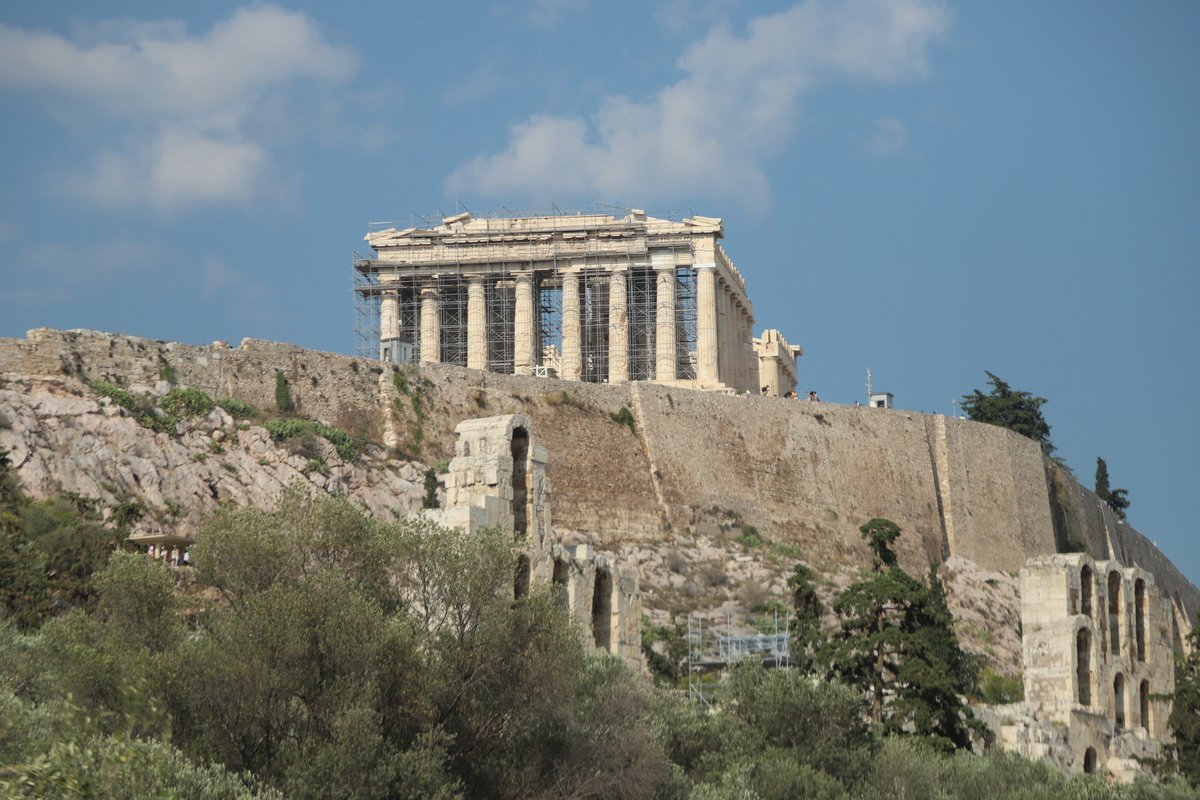
- Acropolis and Acropolis Museum The heart of ancient Athens and a UNESCO World Heritage Site (European Heritage Label).
- Mount Lycabettus Offers panoramic views over Athens.
Cafés and bookstores nearby provide opportunities to further immerse yourself in Greek literary culture.
Frequently Asked Questions (FAQ)
Q: What are the visiting hours for the Jean Moréas bust?
A: The bust is within the National Garden, open daily from 8:00 AM to 8:00 PM, though hours may vary seasonally.
Q: Is there an admission fee or tickets required?
A: No. Visiting the bust and the National Garden is free of charge.
Q: How do I reach the bust via public transport?
A: The closest metro stations are Syntagma and Panepistimio. Numerous bus and tram lines also serve the area. Use the Athens Sbwy app or Google Maps for real-time directions.
Q: Is the site wheelchair accessible?
A: Yes, the National Garden’s paths and the area around the bust are accessible, though some terrain may be slightly uneven in places.
Q: Are guided tours available?
A: Yes, many city and literary walking tours include the National Garden and the Jean Moréas bust.
Q: Can I take photos?
A: Absolutely—photography is permitted and encouraged.