
Historical Background & Architectural Significance
Origins and Purpose
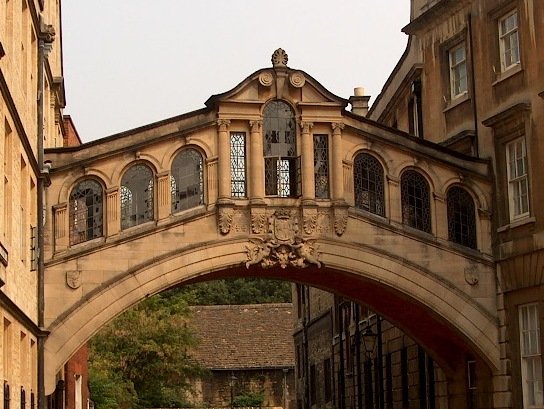
The Bridge of Sighs was built in 1914 to join Hertford College’s Old and New Quadrangles, easing movement for students and staff who previously had to cross New College Lane in all weather conditions (Oxford Visit). Its construction faced some local opposition but quickly became an integral part of college life (Oxford Magazine).
Architectural Influences and Design
Though popularly believed to mimic Venice’s Bridge of Sighs, the Oxford bridge actually incorporates elements of both Gothic and Renaissance design, aligning with the early 20th-century Gothic Revival aesthetic. The single stone arch, intricate fenestration, and ornamental carvings—built from local limestone—complement the surrounding historic architecture (Oxford Visit). The arch beneath the bridge, reminiscent of Venetian structures, inspired its nickname.
Construction and Historical Context
Completed just before World War I as part of Hertford College’s redevelopment, the bridge marked a period of renewal and growth for the college. It quickly became a visual landmark, often featured in films, literature, and university iconography (Oxford Visit).
Symbolism and Myths
The bridge is woven into Oxford folklore and student traditions. A persistent superstition claims that crossing the bridge before final exams invites bad luck—a story that persists among students today (Oxford Magazine). While the bridge’s Venetian namesake is tied to prisoners’ sighs, Oxford’s version is more about academic anticipation and collegiate camaraderie.
Heritage Status and Cultural Impact
Listed as a Grade II structure, the Bridge of Sighs is protected for its historical and architectural significance. It’s a favorite subject for photographers and a symbol of Oxford’s blend of historic gravitas and ongoing academic life (Oxford Visit).
Visitor Information
Visiting Hours & Access
- Public Viewing The bridge can be admired and photographed from New College Lane, which is open to the public at all times.
- Bridge Access Only Hertford College members and those on official guided tours can cross the bridge.
Tickets & Guided Tours
- Street Viewing Free; no tickets required.
- College & Bridge Access Occasionally available via Hertford College’s official guided tours. Advance booking is recommended—consult the college website or local visitor centers for availability.
Accessibility
- New College Lane is pedestrian-friendly, but the historic cobblestones may be uneven. Visitors with mobility challenges should plan accordingly.
- The area is generally wheelchair accessible, but it is advisable to check in advance if you require additional assistance.
Nearby Attractions
The Bridge of Sighs is at the heart of Oxford’s historic center. Notable nearby attractions include:
- Bodleian Library One of the oldest libraries in Europe.
- Radcliffe Camera Iconic circular reading room.
- Sheldonian Theatre Sir Christopher Wren’s architectural masterpiece.
- Oxford University Museum of Natural History Family-friendly and educational.
These landmarks are all within easy walking distance, making the bridge an excellent starting point for an Oxford walking tour.
Visuals & Media
High-quality images showcase the bridge’s ornate architecture and its setting within historic Oxford. For best photography:
- Visit during early morning or late afternoon for ideal lighting.
- The corner of Catte Street and New College Lane provides classic vantage points.
Frequently Asked Questions (FAQs)
Can the public walk across the Bridge of Sighs?
No; access is restricted to Hertford College members and official guided tours.
Is there an admission fee to see the bridge?
No; viewing from public streets is free.
Are guided tours available?
Yes, local tour companies and Hertford College occasionally offer tours that include the bridge. Check availability in advance (Oxford Walking Tours).
Is the area wheelchair accessible?
Generally yes, but cobblestones may pose some difficulty. Plan accordingly if accessibility is a concern.
What are the best times to visit for photos?
Early mornings and late afternoons provide soft, natural light and fewer crowds.