Börse München’s Historical and Economic Significance
Origins and Development
Founded in 1830 during Bavaria’s industrial boom, Börse München emerged from the “Kaufmannsstube” (merchants’ parlor) to regulate securities trading and facilitate capital for the region’s rapid expansion (fpmi.de; bankactivities.com). The exchange became a catalyst for financing local companies and municipal projects, supporting both established corporations and innovative start-ups.
Through the years, Börse München weathered wars, political shifts, and economic upheavals. It was closed during World War I, briefly interrupted during World War II, and restructured over time to adapt to modern financial markets (depotkonto.de; Wikipedia). Today, it lists over 6,300 securities, including blue-chip DAX companies headquartered in Munich such as BMW, Allianz, and Siemens (munich-business.eu).
Role in Munich and German Finance
Known as Germany’s “DAX city,” Munich is home to more DAX-listed companies than any other German city. Börse München serves as the home exchange for many of these firms, reflecting the city’s economic dynamism and global reach (munich-business.eu). Its modern trading platforms, MAX-ONE and gettex, offer extended trading hours, automated order execution, and fair pricing for both institutional and private investors (depotkonto.de).
Architectural Evolution and Institutional Legacy
The Old Stock Exchange Building
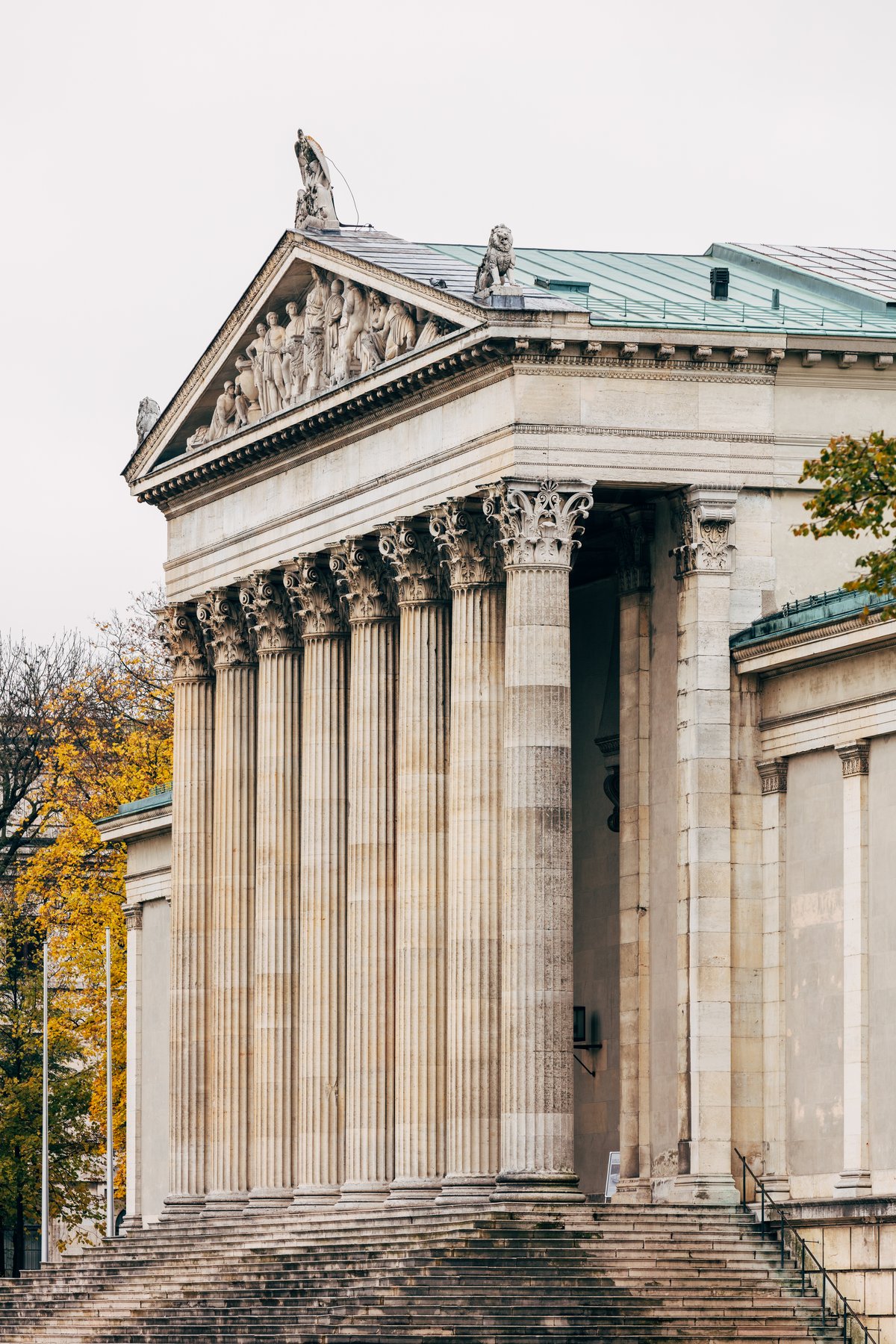
The iconic Old Stock Exchange (Alte Börse) at Lenbachplatz 2, built between 1896 and 1898, is a masterpiece of Wilhelminian Neo-Baroque architecture by Albert Schmidt (nomadepicureans.com). Its ornate sandstone façade and Corinthian columns symbolize financial prestige and civic pride. While the exchange’s main operations have relocated, the building now houses offices and social clubs, preserving its historic grandeur.
Current Location and Modern Facilities
Börse München’s trading floor is currently located at Karolinenplatz 6, in the heart of Munich’s Maxvorstadt district. The area is renowned for its academic, financial, and cultural institutions, making it an accessible and vibrant destination for visitors.
Visiting Börse München: Hours, Tickets, and Accessibility
Visiting Hours
- Standard Trading Hours Monday to Friday, 8:00 AM–10:00 PM CET for stocks and funds; 8:00 AM–8:00 PM for bonds (kagels-trading.de).
- Public Access The exchange does not offer daily public tours. Access to the interior is typically limited to pre-registered groups, educational visits, and special public events such as the annual Anlegertag München (anlegertag-muenchen.de).
- Exterior Viewing The historic building exteriors at Karolinenplatz and Lenbachplatz can be admired at any time—no ticket required.
Ticketing and Tour Information
- Tickets No general ticket sales or walk-in tours are available. Public events (e.g. Anlegertag München) are free but require advance registration via the event’s website.
- Group Visits Educational, business, or student groups can request guided visits by contacting Börse München in advance ([email protected]; +49 89 5490450).
- Photography Photography inside the exchange is generally prohibited without permission. Exterior photography is allowed.
Accessibility
- Public Transport The exchange is centrally located, with U-Bahn stations (Königsplatz, Sendlinger Tor, Stachus) and tram stops nearby. The area is pedestrian-friendly.
- Accessibility The building provides wheelchair access with ramps and elevators. Notify staff in advance for additional assistance (deutsche-boerse.com).
- Parking Public garages are available, but using public transport is recommended due to limited parking in central Munich.
Special Events and Financial Education
- Anlegertag München The city’s largest annual investor event, featuring workshops, lectures, and networking opportunities for private and professional investors (anlegertag-muenchen.de).
- Numismatic Fairs Munich hosts major coin fairs like NUMISMATA, attracting collectors and dealers (silber.de).
- Educational Programs While Börse München does not have a dedicated visitor center, it participates in financial education through lectures and partnerships with local universities.
For a more interactive stock exchange experience, consider visiting the Deutsche Börse Visitors Center in Frankfurt (deutsche-boerse.com).
Travel Tips and Nearby Attractions
Top Nearby Attractions
- Königsplatz A grand square surrounded by neoclassical museums (Alte Pinakothek, Neue Pinakothek, Pinakothek der Moderne).
- Marienplatz Munich’s historic city center with the Neues Rathaus and Glockenspiel (historycurator.com).
- Viktualienmarkt A lively food market offering Bavarian delicacies (nomadicmatt.com).
- Englischer Garten One of the world’s largest city parks, ideal for a relaxing stroll.
- BMW Museum Celebrating Munich’s industrial heritage (myglobalviewpoint.com).
Practical Tips
- Dress Code Business casual for meetings or events.
- Language German is the official language, but English is widely spoken in professional settings.
- Currency Euro (EUR); cash is useful but cards are widely accepted.
- Safety Munich is safe and tourist-friendly; follow customary safety precautions.
Frequently Asked Questions (FAQ)
Q: Can I visit Börse München without an appointment?
A: General public access is not offered. Visits must be arranged in advance or during special events.
Q: Are there any ticket fees?
A: Public events are typically free but require registration. No tickets are needed for exterior viewing.
Q: What are the visiting hours?
A: Monday to Friday, 8:00 AM–10:00 PM for trading. Public visits are only possible during registered events or group tours.
Q: Is Börse München wheelchair accessible?
A: Yes. Contact the exchange in advance for assistance.
Q: Can I take photos inside?
A: Photography inside is restricted but allowed for the building exterior.
Q: How do I reach Börse München by public transport?
A: Use the U-Bahn (Königsplatz, Sendlinger Tor, Stachus), trams, or buses. The area is centrally located.
Summary and Visitor Checklist
Börse München embodies Munich’s blend of historic tradition and economic innovation. While daily public access to the trading floor is limited, the exchange offers unique opportunities during special events, and its architectural heritage is always on display. Combine your visit with nearby cultural and historic attractions for a well-rounded Munich experience.
Visitor Checklist:
- Check official websites for special event dates and registration requirements.
- Arrange group visits or educational tours in advance.
- Explore the exteriors of historic exchange buildings at Lenbachplatz and Karolinenplatz.
- Utilize public transport for convenient access.
- Pair your visit with museums, markets, and parks in Maxvorstadt and Altstadt.