Type 2+ letters to search all countries, cities, and places
/Ctrl KEsc
travel_explore
Type 2+ letters to search all countries, cities, and places
Press Enter to open the top result
Beer and Oktoberfest Museum
Munich·Germany·48° N · 11° E·Updated Apr 2026
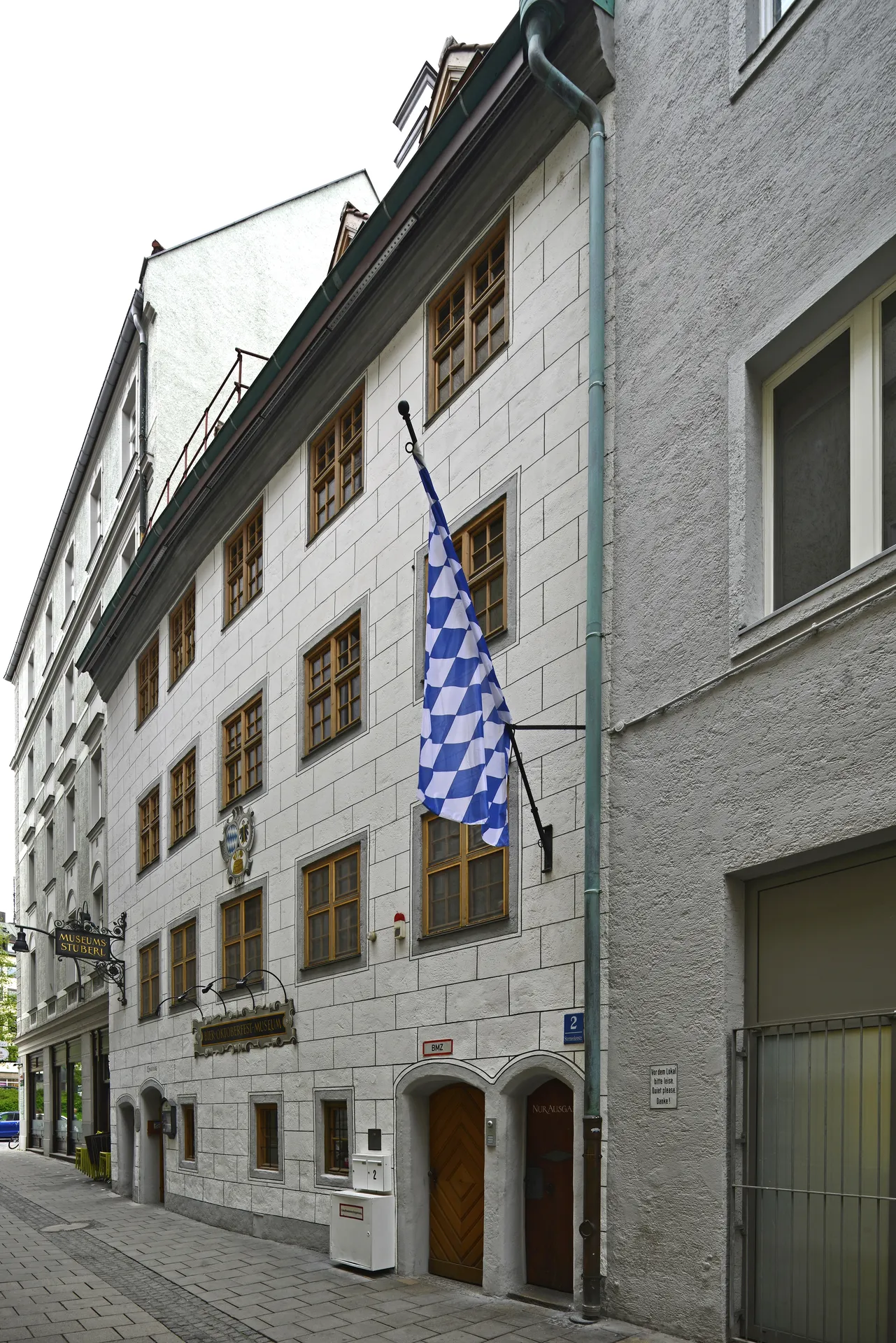
Housed in a Munich townhouse dating to 1340, this intimate museum lets you tour brewing history and Oktoberfest lore with a beer in hand. Entry from €4.
Not wheelchair accessible — steep original wooden staircases, no elevator
Best season
Year-round; especially atmospheric around Oktoberfest season (September–October)
Until the 1980s, someone was living in the heart of Munich without electricity or indoor plumbing — in a building that had stood since 1340. That building is now the Beer and Oktoberfest Museum, and it tells the story of how a single drink built an entire city. Tucked into Sterneckerstraße in Germany's Bavarian capital, this narrow, creaking townhouse is one of Munich's oldest surviving structures, and it makes the case — convincingly — that beer isn't a footnote to Munich's history but the main text.
Forget the grand beer halls. This is three floors of steep medieval staircases, blackened hearths, and low ceilings where you can practically smell the centuries. The museum traces brewing in Munich from monastic origins through the Reinheitsgebot purity laws to the global spectacle of Oktoberfest, all packed into rooms barely wider than a modern hallway. You carry your beer with you as you climb. That's not a metaphor — they actually hand you one.
The collection is modest by blockbuster-museum standards: historical steins, brewing tools, festival timelines, a few multimedia displays. But the building itself is the real exhibit. Every warped floorboard and hand-hewn beam is a document of how ordinary Münchners lived seven centuries ago, long before the city became synonymous with lederhosen and one-liter glasses.
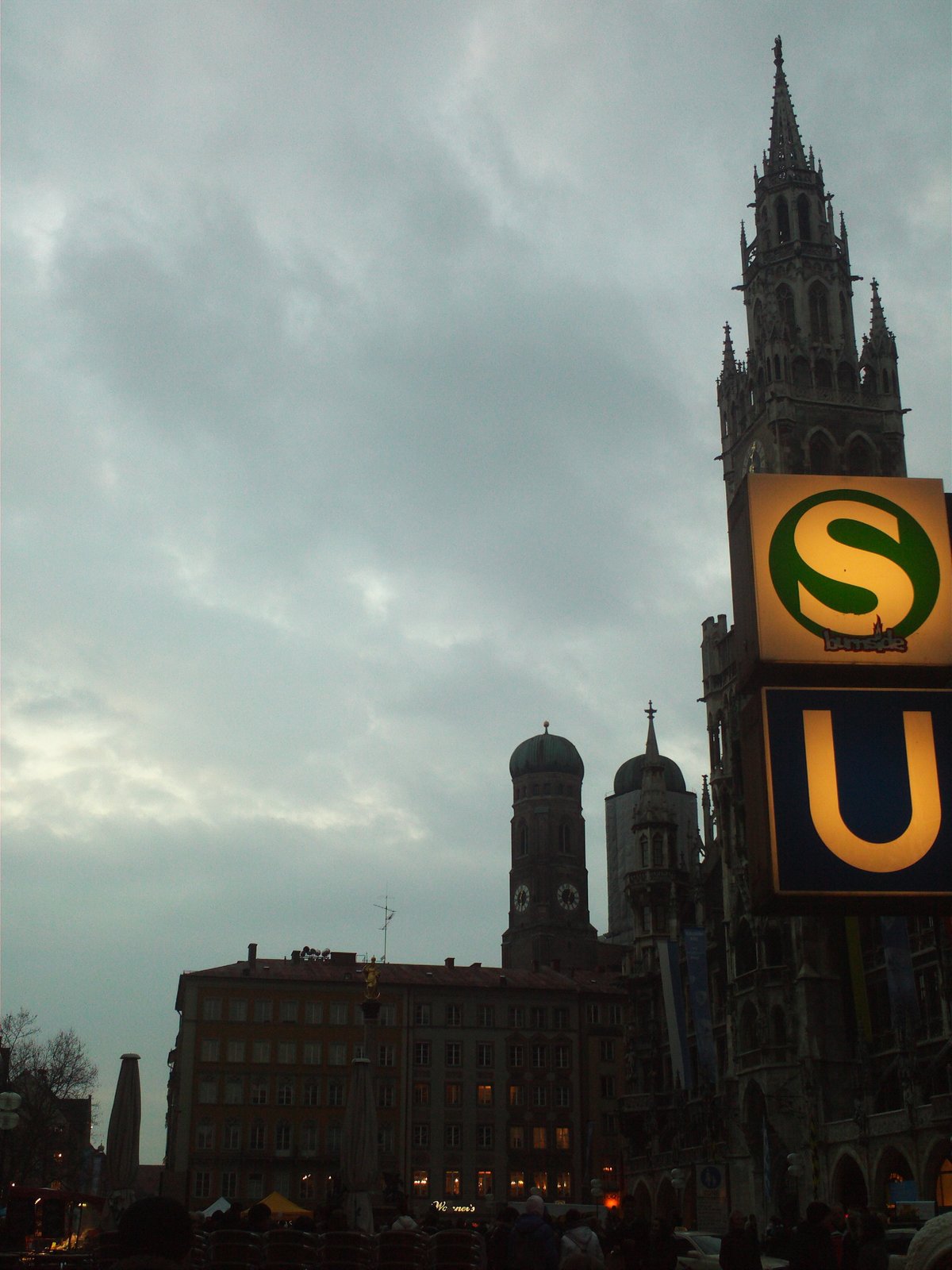
It's a 7-minute walk from Marienplatz, easy to reach from the Isartor S-Bahn station. Admission is €4. The museum is open Monday through Saturday, generally 1:00 PM to 7:00 PM, though hours can shift — carry cash and check locally before you go. Afterward, the ground-floor Museumsstüberl serves Augustiner beer and Brotzeit in a room that feels less like a museum café and more like someone's very old, very good living room.
Researched by the Audiala editorial team from historical records, architectural archives, and local expertise.
What to see
The Brewing History Floors
The ceiling beams above your head date to 1340 — older than the printing press, older than Columbus, older than the idea of Germany itself. That's the first thing that hits you as you climb the absurdly steep staircase locals call the "Himmelsleiter" (ladder to heaven), ducking through doorframes built for people a full head shorter than today's average adult. The lower exhibition floors trace beer from Babylonian grain fermentation through to Munich's rise as a brewing capital, with displays on raw ingredients, the Reinheitsgebot purity law of 1516, and the powerful "Beer Barons" who shaped the city's economy.
What makes these rooms work isn't the information — you can read about hops anywhere. It's the physical compression of the space. You're standing in a medieval artisan house, surrounded by 680-year-old timber, floors creaking beneath your weight, and the smell of aged wood mixing with whatever's on tap downstairs. The dim, warm lighting forces you close to the display cases, where historical steins sit behind glass like small ceramic monuments to obsession. Buy a beer at the entrance and carry it with you. The museum encourages it, and frankly, it changes the whole experience from academic exercise to something more honest.
The Oktoberfest Exhibition and the 1810 Jeton
Upstairs, the museum pivots from beer itself to the festival that made Munich synonymous with it. Historical posters, flags, and memorabilia line the walls, tracing Oktoberfest from its origin as a royal wedding celebration on October 12, 1810, to the 6-million-visitor spectacle it is today. The multimedia timeline is solid, but the real prize is easy to miss: a small silver jeton — a commemorative token — thrown into the crowd by Crown Prince Ludwig I during that first festival to honor his marriage to Princess Therese of Saxe-Hildburghausen.
Most visitors walk right past it. Don't. This coin-sized piece of metal is arguably the single most direct physical link to the moment Oktoberfest was born. The Theresienwiese meadow where the festival still takes place was named after the bride. That tiny token connects a 19th-century royal wedding to the largest folk festival on earth, and it sits in a case no bigger than a shoebox, in a building you could miss from the street. The upper floors also feature playful signage about "tactical drinking gear" — a wry nod to dirndls and lederhosen — that rewards anyone reading the fine print.
The Full Circuit: Museum, Schwarze Kuchl, and Museumsstüberl
Here's how to do this properly. Start with a beer from the bar — Augustiner, the oldest independent brewery in Munich, founded in 1328. Carry it up the Himmelsleiter, through the brewing floors, past the Oktoberfest exhibits, and make sure you pause at the "Schwarze Kuchl," the reconstructed medieval black kitchen with its open hearth, which represents the domestic heart of this 14th-century house. The soot-darkened walls and low stone arch feel genuinely ancient, not staged.
Then descend to the Museumsstüberl, the in-house tavern that stays open until midnight long after the exhibits close. Order a Brotzeit — cold cuts, radish, pretzel, the works — and sit in a room where the line between museum and living beer culture dissolves entirely. The whole visit takes 60–90 minutes and costs €4 (€2.50 reduced). Bring cash; card payment can be unreliable. Walk from Marienplatz in 7 minutes via the Tal. And avoid Oktoberfest season itself — the building gets swelteringly crowded. April or May gives you the space to actually read, breathe, and listen to 680-year-old floors groan under your feet.
Plan your visit
Getting There
A 7-minute walk from Marienplatz — head east through the Tal toward Isartor and turn right onto the narrow Sterneckerstraße. Both Marienplatz (U3/U6, all S-Bahn lines) and Isartor (S1–S8) stations work equally well; Tram 16 and Bus 132 also stop at Isartor. No dedicated parking exists, so leave the car behind and walk from the center of Munich.
Opening Hours
As of 2026, the museum is open Monday–Saturday, 11:00 AM to 7:00 PM. Closed Sundays and public holidays. The Museumsstüberl tavern downstairs keeps longer hours, typically staying open until midnight.
Time Needed
A quick pass through the three compact floors takes 30–45 minutes. Budget a full hour if you linger over the digital stein collection and the Oktoberfest timeline, then add another 30 minutes for a beer in the Museumsstüberl — which is really the whole point.
Accessibility
This is a 1340 townhouse, and it shows: steep original wooden staircases, low doorframes, uneven creaking floors, and no elevator. The museum is explicitly not barrier-free and unsuitable for wheelchairs, mobility aids, or large strollers. Sensible flat shoes are genuinely necessary here, not a suggestion.
Cost & Tickets
As of 2026, adult admission is just €4, reduced €2.50 (students, children, pensioners), and groups of 6+ pay €3 per person. Tickets come from a machine at the entrance accepting both cash and card. CityTourCard Munich holders get a €1.50 discount — select the 'Reduced' option on the machine.
Tickets & tours.
These are guided options from our partners — same price as booking direct.
Prices are indicative — final pricing and availability are confirmed at checkout. Audiala may earn a commission from bookings made through these links.
History
The House That Beer Preserved
The building at Sterneckerstraße 2 sits in the Angerviertel, one of Munich's four original medieval quarters. Records show its oldest ceiling beams date to 1340 — making it roughly contemporary with the Black Death's first sweep across Europe. It was an artisan's house, narrow and vertical, built on one of the cramped lots that lined the city valley known as the Tal. Most of its neighbors were destroyed by Allied bombing raids in World War II. This one, improbably, survived.
For centuries it served as a working-class dwelling, passing through anonymous hands. By the late 20th century it was derelict, occupied by a single tenant living in conditions that hadn't changed much since the Baroque era. The building's rescue — and its transformation into a museum — is a story of one man's stubborn belief that Munich owed its identity to barley and hops.
The turning point
Ferdinand Schmid and the Ruin on Sterneckerstraße
Ferdinand Schmid was the former head of the Augustiner Brewery, Munich's oldest, and he had a problem with forgetting. Not his own memory — the city's. By the 1990s, Munich's brewing heritage was being consumed by tourism clichés and corporate beer brands. The actual history — how brewing had been the city's largest industry by the 1860s, how it had funded infrastructure and public works — was fading into novelty coasters and souvenir steins.
Schmid found the building at Sterneckerstraße 2 in a state of near-collapse. No electricity. No plumbing. Walls blackened by centuries of open-hearth cooking. As first chairman of the Edith-Haberland-Wagner Foundation, he purchased the property and launched a painstaking renovation that took years. His insistence was specific: the museum would remain independent, foundation-funded, and deliberately small. No state money, no corporate sponsors dictating the narrative. The building would keep its medieval bones — the steep "Himmelsleiter" staircase, the uneven floors, the cramped rooms — because that discomfort was the point. You were supposed to feel the past pressing in.
The museum opened in 2005. Schmid's gamble paid off in a quiet way: the institution became the city's primary archive for Oktoberfest's origins and Munich's brewing evolution, run today by Catherine Demeter, a descendant of the Wagner family who were the last private owners of the Augustiner brewery. The building that nearly crumbled into rubble now holds, among other things, a silver jeton — a commemorative coin thrown to the crowd by Crown Prince Ludwig I and Princess Therese during their 1810 wedding, the very event that gave Oktoberfest its name.
The Purity Law and Munich's Brewing Monopoly
Munich's relationship with beer regulation predates the famous Reinheitsgebot of 1516. A local purity ordinance from 1487 already restricted brewing ingredients to barley, hops, and water. The museum documents how these laws weren't just about quality — they were economic weapons, designed to protect Munich's brewers from competition and ensure steady tax revenue. By the mid-19th century, brewing was the single largest industry in the city, employing thousands and generating the wealth that built the infrastructure visitors walk through today.
Surviving the Bombs
The Angerviertel was devastated during World War II. Allied raids flattened block after block of Munich's medieval core, and most of the timber-framed houses that once lined the Tal were reduced to rubble. The building at Sterneckerstraße 2 survived — scholars attribute this partly to luck, partly to its stone-and-timber construction. Its persistence makes it a rare physical link to pre-war Munich, a city that largely had to rebuild its "old town" from photographs and memory. Walking its floors, you're standing in something most of the neighborhood lost.
Tips for visitors
Beer While Browsing
This is one of the few museums on earth where you're actively encouraged to carry a beer through the exhibits. Grab one from the Museumsstüberl before heading upstairs — it makes the 1340 ceiling beams feel even more atmospheric.
Eat Nearby
The on-site Museumsstüberl serves proper Bavarian Brotzeit (cold cuts, pretzels, Obatzda) at budget prices with beer from wooden barrels. For something different, the Viktualienmarkt is a 5-minute walk west with dozens of stalls. HANS IM GLÜCK on the Tal offers solid mid-range burgers if you've had enough pork for one day.
Add a Beer Tasting
For €4.50 per person, the museum offers a guided tasting of three 0.1-liter beers — plus a €30 flat fee for a moderator, split across your group. With 8 people, that's under €8 each for a proper education in Bavarian brewing. Book ahead through the website.
Come Early, Avoid Crowds
The rooms are genuinely small — some barely fit six people. Arriving right at 11 AM on a weekday means you'll likely have the steep staircases and the medieval schwarze Kuchl (black kitchen) almost to yourself.
Travel Light Inside
There's no luggage storage, and the maze-like layout with narrow doorways and tight turns makes large backpacks or rolling suitcases a genuine obstacle. Drop your bags at your hotel or a locker at Marienplatz station before visiting.
Combine With Isartor
The Isartor gate — one of Munich's three surviving medieval gates — is a 3-minute walk east. Pair the museum with a stroll through the Tal to Marienplatz and you've covered 700 years of the city's history in under two hours.
Where to Eat
local_dining
Don't Leave Without Trying
Weißwurst—traditional Bavarian white sausage made from minced veal and pork back bacon, typically eaten before noon with sweet mustard and a pretzelSchweinshaxe—roasted pork knuckle with crispy skin, a hearty Munich classicBayerische Brotzeit—traditional snack platter featuring various cheeses, meats, spreads like Obatzda, and rye breadMünchner Hell—pale lager, the everyday beer of MunichWeißbier—wheat beer, a Munich stapleStarkbier—strong seasonal beer, traditionally brewed in spring
Max & Moritz Tagesbar
local favorite
Bar€€star4.9(1205)directions_walk5 min walk from Beer & Oktoberfest Museum
Order: Local Munich beers paired with traditional Bavarian bar snacks. The wine selection is also excellent if you want to break from beer.
With over 1,200 reviews and a stellar 4.9 rating, this is where locals actually go—not tourists hunting for Instagram moments. It's the real deal for authentic Munich bar culture near the museum.
Bakery€€star5.0(26)directions_walk10 min walk from Beer & Oktoberfest Museum
Order: Fresh Bavarian pastries and pretzels—perfect for breakfast or a quick morning bite before museum hours. Their bread selection is exceptional.
A perfect 5-star bakery for those who want authentic Munich carbs done right. Ideal for grabbing breakfast before your museum visit or picking up provisions for a quick snack.
Restaurant€€star5.0(1)directions_walk2 min walk from Beer & Oktoberfest Museum
Order: Traditional Bavarian fare and local beer—this is a proper Wirtschaft (tavern) in the heart of the Altstadt, steps from the museum.
Located directly on Tal street, this is as close as you can get to the museum without stepping inside. A genuine local spot perfect for a post-tour meal in an authentic setting.
Cafe€€star5.0(2)directions_walk3 min walk from Beer & Oktoberfest Museum
Order: Munich specialty coffee and traditional Bavarian pastries. A refined take on local cafe culture.
Also on Tal street, this cafe offers a more refined atmosphere than the beer halls—perfect if you want coffee and something light after your museum visit without the heavy beer-hall vibe.
checkThe Beer and Oktoberfest Museum building dates to 1340—you're dining in one of Munich's oldest structures. The Museumsstüberl inside the museum itself offers the most atmospheric post-tour experience.
checkWeißwurst is traditionally eaten before noon—order it early in the day for authenticity.
checkThe Altstadt (Old Town) where the museum sits is dense with traditional Bavarian Wirtshäuser. Most are within a 5-minute walk.
checkViktualienmarkt, Munich's premier central food market, is nearby and perfect for grabbing fresh local delicacies, cheeses, meats, and a quick beer in the market's beer garden.
Food districts:Altstadt/Tal—the historic heart of Munich, packed with traditional beer halls and restaurants within walking distance of the Beer and Oktoberfest MuseumViktualienmarkt area—Munich's premier central market with food stalls, local cheeses, meats, and a central beer garden
Restaurant data powered by Google
Watch & Explore Beer and Oktoberfest Museum.
Explore Munich
10 WWII Sites Every Visitor Should See in Munich
Matt the Battlefield Guide13 min59K
Explore Munich
Dhruv Rathee Visits Munich's Famous Oktoberfest | Take a Tour of the World’s Largest Volksfest
DW Travel13 min164K
Frequently asked
Is the Beer and Oktoberfest Museum in Munich worth visiting?
Yes, especially if you want the story behind Munich's beer culture rather than just another stein of it. The museum is housed in one of Munich's oldest surviving townhouses — ceiling beams dating to 1340 — and you can carry a beer while walking through exhibits on brewing history and the origins of Oktoberfest. It's small, independent, and the opposite of a tourist trap: expect creaking floors, steep medieval staircases, and a cozy on-site tavern called the Museumsstüberl where you can finish with a proper Bavarian Brotzeit.
How long do you need at the Beer and Oktoberfest Museum?
Most visitors spend 30 to 60 minutes inside the museum itself. The exhibition spans three compact floors connected by steep, narrow staircases, so the physical space doesn't demand hours. Budget extra time if you plan to sit down in the Museumsstüberl afterward — the tavern stays open until midnight and serves Augustiner from wooden barrels.
How do I get to the Beer and Oktoberfest Museum from Munich city center?
It's a 7-minute walk from Marienplatz, tucked into a narrow alley called Sterneckerstraße in the historic Angerviertel district. Take the U3, U6, or any S-Bahn line to Marienplatz, or ride the S-Bahn to Isartor — both stations put you within easy walking distance. There's no dedicated parking, so public transport or your own two feet are the way to go.
What is the best time to visit the Beer and Oktoberfest Museum?
Visit in April, May, or early summer for the quietest experience. During Oktoberfest season in late September and early October, the already tight corridors become crowded and warm — the building was designed as a 14th-century home, not a convention center. Weekday mornings right at the 11:00 AM opening tend to be the emptiest.
Can you visit the Beer and Oktoberfest Museum for free?
No, but admission is remarkably cheap at €4 for adults and €2.50 reduced. CityTourCard Munich holders get a €1.50 discount. Tickets are purchased from a machine at the entrance — carry cash just in case, though cards are generally accepted.
What should I not miss at the Beer and Oktoberfest Museum?
Don't walk past the silver wedding jeton from 1810 — it's a tiny commemorative coin thrown to the crowd by Crown Prince Ludwig I and Princess Therese during the celebration that literally invented Oktoberfest. The Schwarze Kuchl, a 14th-century open-hearth kitchen with smoke-blackened walls from an era before chimneys, is easy to overlook but tells you more about medieval Munich life than most city museums. And look up: the exposed ceiling beams are older than the printing press.
Is the Beer and Oktoberfest Museum accessible for wheelchairs?
Unfortunately, no. The building dates to 1340 and has steep, original wooden staircases — locals call them the "Himmelsleiter" (ladder to heaven) — along with low door frames and uneven floors across three levels. There is no elevator or ramp. Visitors with mobility impairments will not be able to access the exhibition floors.
Can you drink beer inside the Beer and Oktoberfest Museum?
Yes — it's one of the few museums in the world where carrying a beer through the exhibits is actively encouraged. You can grab one before you start and sip your way through 700 years of brewing history. The on-site Museumsstüberl serves Augustiner beer and traditional Bavarian snacks if you'd rather sit down first.
Sources & attribution15
Researched and written by the Audiala editorial team from historical records, architectural archives, and local expertise. Last updated April 2026.
Strictly necessary cookies keep the site working. Analytics (PostHog, Google Analytics) measures how each visitor uses our pages. Marketing loads YouTube videos and walking-route maps without a tap and lets Google Analytics set advertising cookies. We never sell your data. You can change this any time from the footer.
Analytics and marketing cookies are optional and only load if you agree. Details under Customize.
Privacy
Cookie preferences
Pick what you're okay with. You can change this any time from the footer.
Strictly necessary
Always on
Sign-in, language, navigation. Always on.
Product analytics
PostHog (EU) and Google Analytics record which pages you view and how you use them, under a random identifier stored in your browser. Helps us see which pages work and which need fixing. Google's ad personalisation stays off. No selling.
Marketing
Loads YouTube videos and the walking-route maps (OpenFreeMap) without a tap; without it, they load only when you tap them. If analytics is also on, Google Analytics may set advertising cookies. Ad personalisation stays off.