


Place
Germany Updated Apr 2026
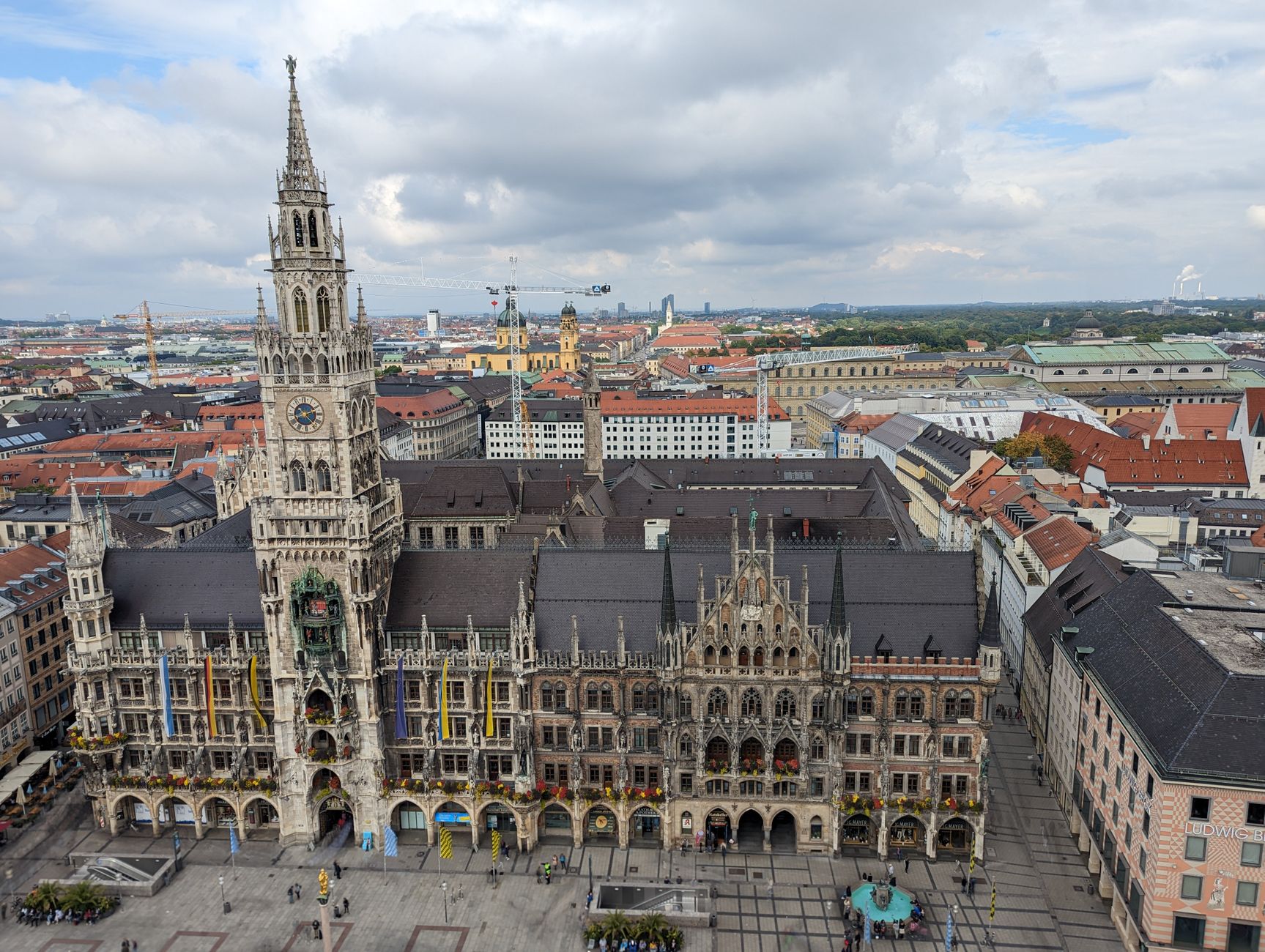
The first time you stand in Marienplatz at 11 a.m. and hear the Glockenspiel’s mechanical joust clang overhead while the smell of Weisswurst and fresh pretzels drifts from Viktualienmarkt, you realize Munich is not the lederhosen caricature outsiders expect. This is a city that quietly runs one of Europe’s great museum clusters, keeps an Eisbach surfer riding a standing river wave year-round, and still expects you to bring your own radishes to the beer garden. It is Bavarian and cosmopolitan at once, a place where Rococo palaces sit beside brutalist landmarks and the Alps loom on clear days like an afterthought.
 Photo: Alina Chernii / Pexels
Built from cited sources · see the method · How we make our guides →
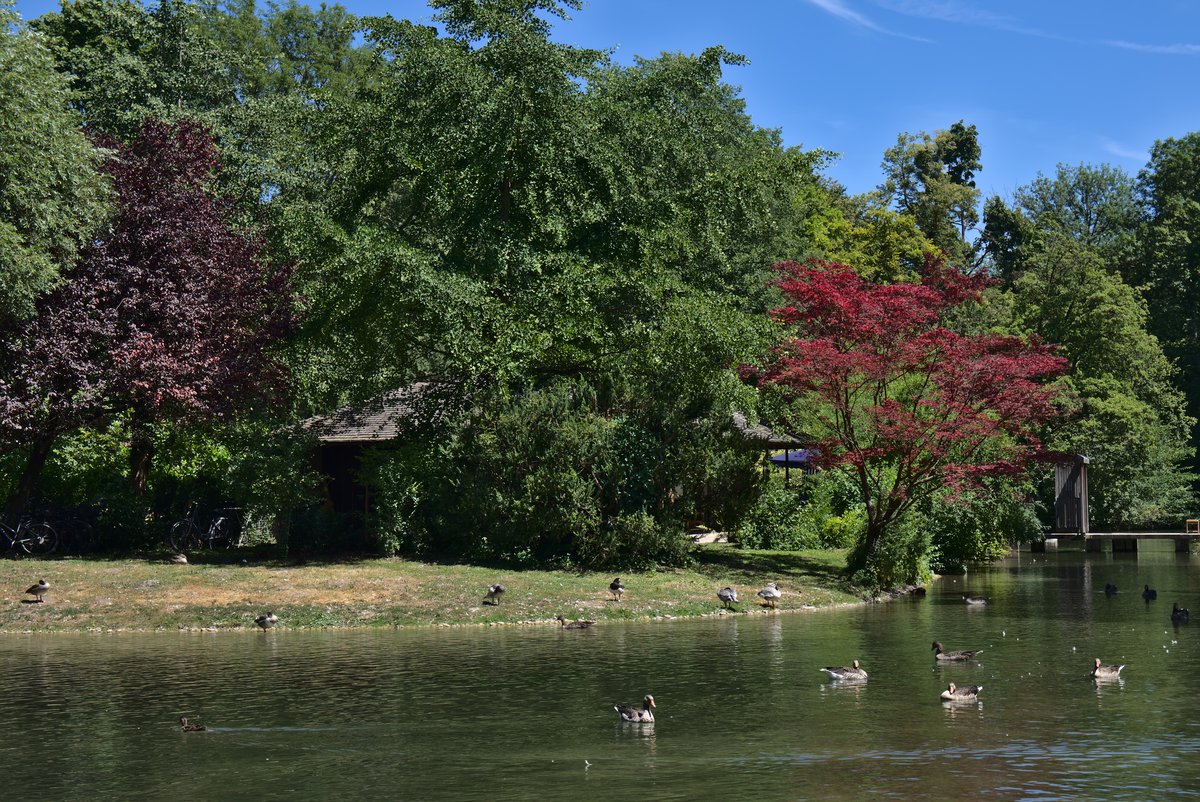
Munich’s real character lives in the tension between tradition and reinvention. In the Kunstareal you can walk through five thousand years of art in a single afternoon, then step outside and watch skateboarders use the same monumental steps that once staged Nazi rallies. The English Garden feels like deep countryside until you notice the beer garden at the Chinesischer Turm serving Augustiner to three generations of locals who treat the place like their living room. Even the beer gardens have rules that feel like small philosophy: you may bring your own food but you must buy the beer on site, a perfect Munich compromise between thrift and ritual.
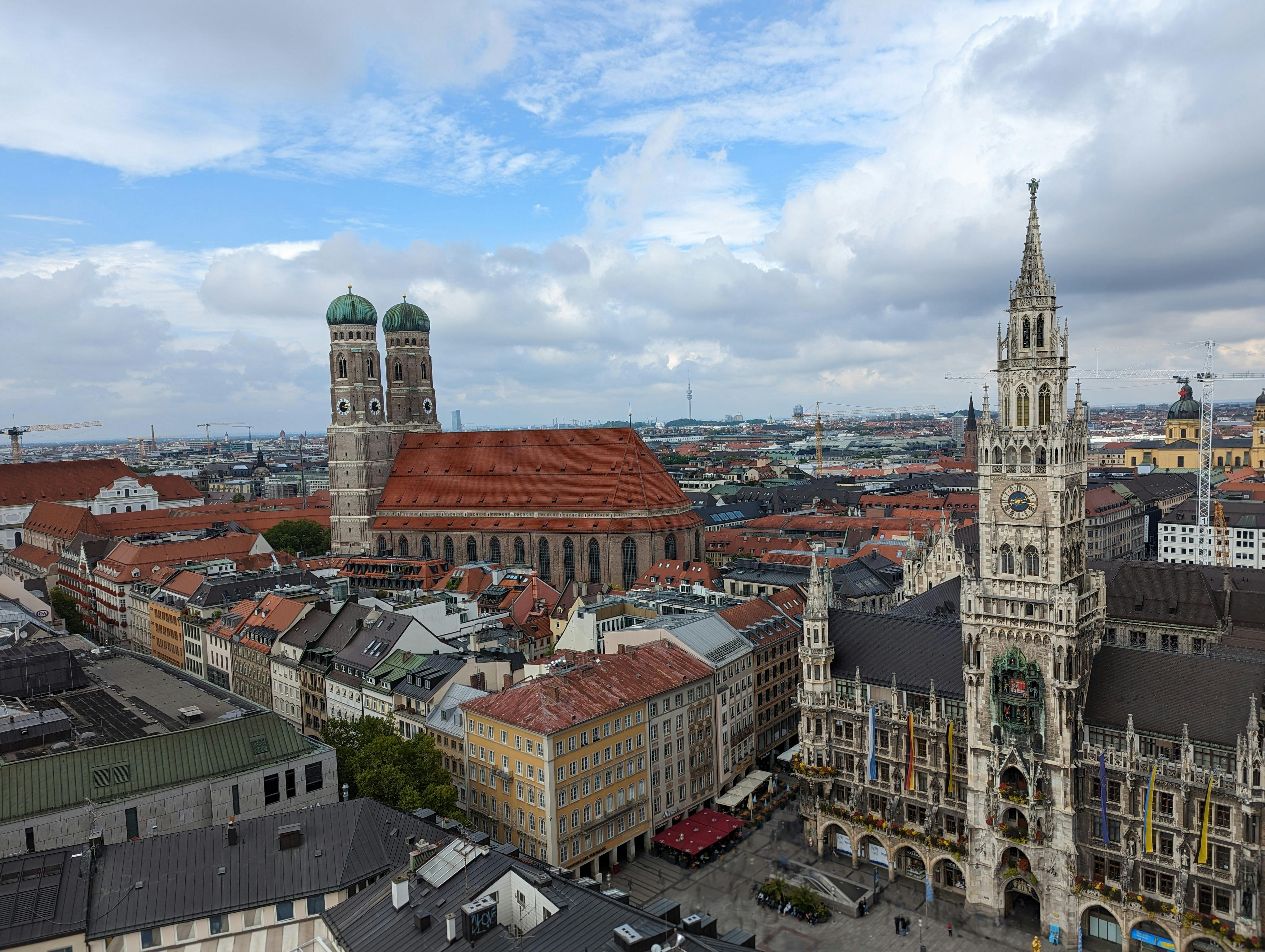
What changes how you see the city are the quieter discoveries. Climb the south tower of the Frauenkirche for the classic roofscape-and-Alps view that orients every local. Walk the Alter Südfriedhof at golden hour among the graves of Leo von Klenze and Carl Spitzweg. Or sit on the Friedensengel terrace at dusk when the light turns the Isar into molten copper. These are the moments when Munich stops performing for visitors and simply lets you in.
By the second or third day you understand that Munich is less a checklist of sights than a rhythm: market in the morning, coffee in Maxvorstadt, river or park in the afternoon, and a neighborhood bar at night. The city rewards those who slow down enough to notice the small high-quality museums, the street-art corridors, and the distinct personalities of its districts.
Not every monument, just the ones we'd walk you past ourselves.
Where to wander, by quarter — each with its own rhythm.
Before you go
Curated from places in this city. Same price as official sites.


Prices shown are indicative — final pricing and availability are confirmed at checkout. Audiala may receive a commission from bookings made via these links.
A Wittelsbach stronghold that became a cradle of revolution, art, and dark history
At the Diet of Augsburg, Emperor Frederick Barbarossa ruled in favor of Henry the Lion, who had destroyed the Bishop of Freising's bridge and market on the salt road. Henry moved the market to a new spot by the Isar called Munichen — "by the monks." The city received its first documentary mention and official birth certificate on 14 June. Within two decades it had town rights and walls. This pragmatic real-estate coup laid the foundation for Munich's future as a trading and political center.
After Bavaria was split between rival Wittelsbach branches, Munich was chosen as the seat of Upper Bavaria. The small market town suddenly became a court city. The Wittelsbachs would rule from here, in one form or another, until 1918. The decision transformed the city's destiny from regional trading post to capital.
Duke Louis IV of the Munich Wittelsbach line was elected King of the Germans. Fourteen years later he became Holy Roman Emperor. For a brief, heady period Munich tasted life as an imperial residence city. The emperor's court brought prestige, but also the usual medieval plagues and pogroms.
The plague tore through Munich. In the panic and hysteria of 1349, the Jewish community was massacred. Similar horrors had already occurred in 1280 and would repeat in 1442 with full expulsion. The cycle of disease and scapegoating left deep scars on the young city.
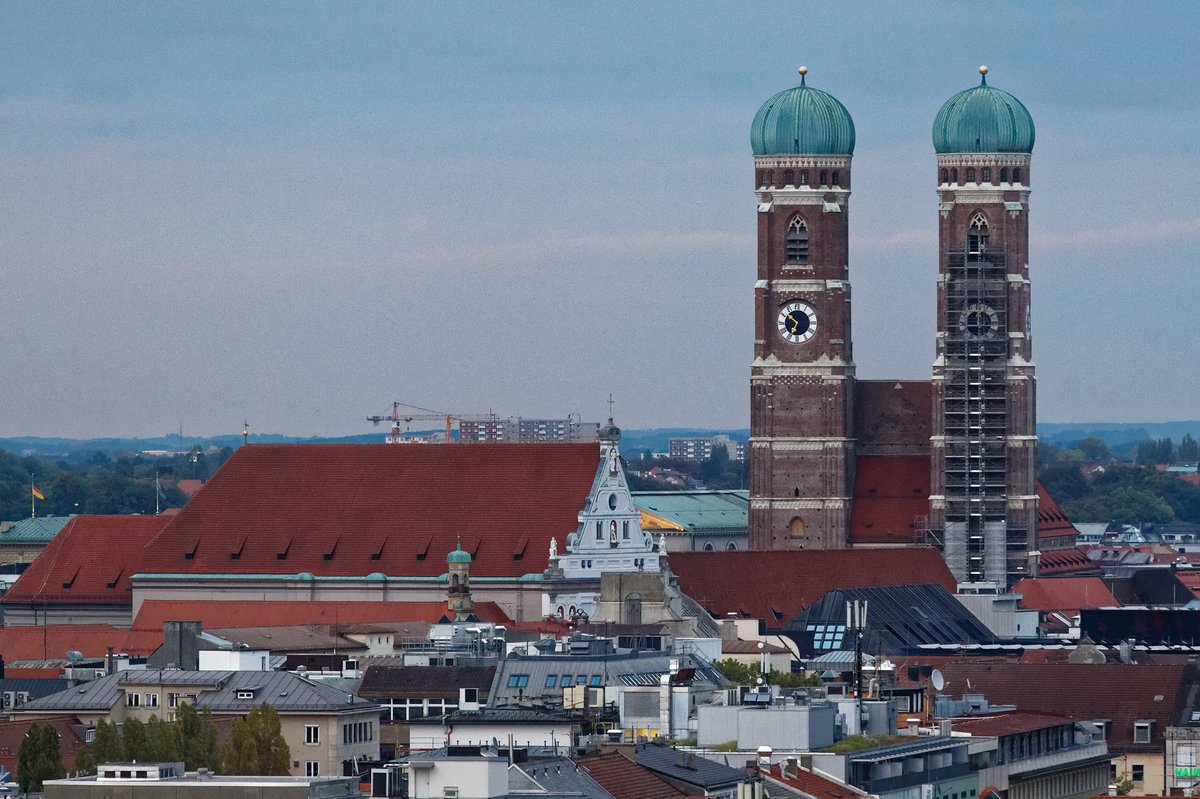
Construction began on the brick Gothic cathedral that would define Munich's skyline. The two distinctive onion domes were added in 1525. Built in just twenty years, the Frauenkirche became both spiritual heart and unmistakable symbol of the city — so tall that legend claims the devil left a footprint in the nave after losing a bet.
Duke Wilhelm IV issued the first anti-Lutheran religious edict. Munich deliberately positioned itself as a Catholic bastion against the Protestant tide. Jesuits arrived in 1559, St. Michael's church rose as a statement of faith, and the city earned its nickname "German Rome."
Duke Wilhelm V established the Hofbräuhaus to supply the court with beer. The institution would later become the most famous brewery name in the world. In classic Munich fashion, the ruler solved both a supply problem and a prestige problem with one decisive act.
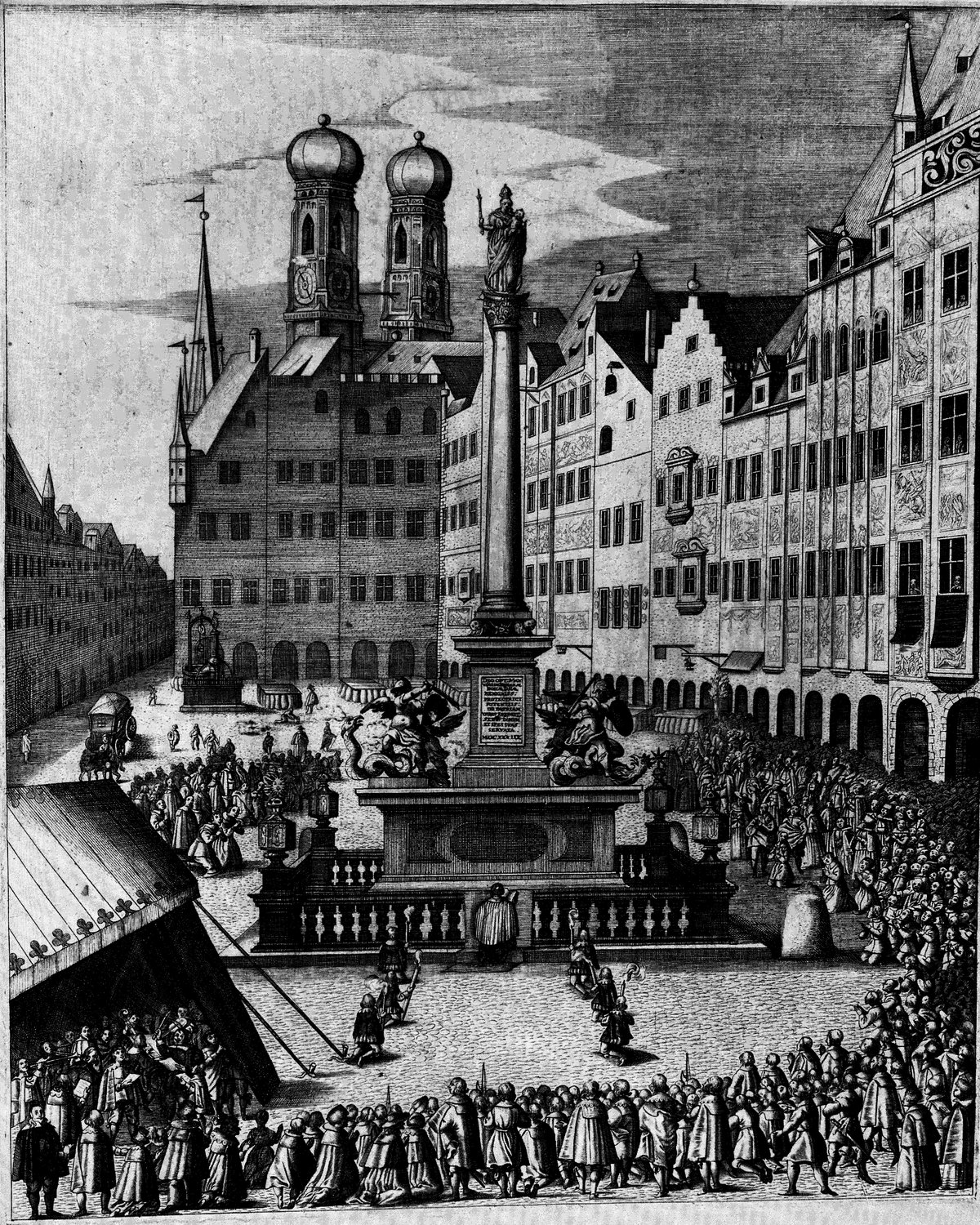
During the Thirty Years' War, Swedish troops under Gustavus Adolphus occupied the city in 1632. Then the plague struck with apocalyptic force. Roughly 7,000 people died in 1634 alone — about one third of the population. In gratitude for the city's survival, the Mariensäule was erected on Marienplatz in 1638.
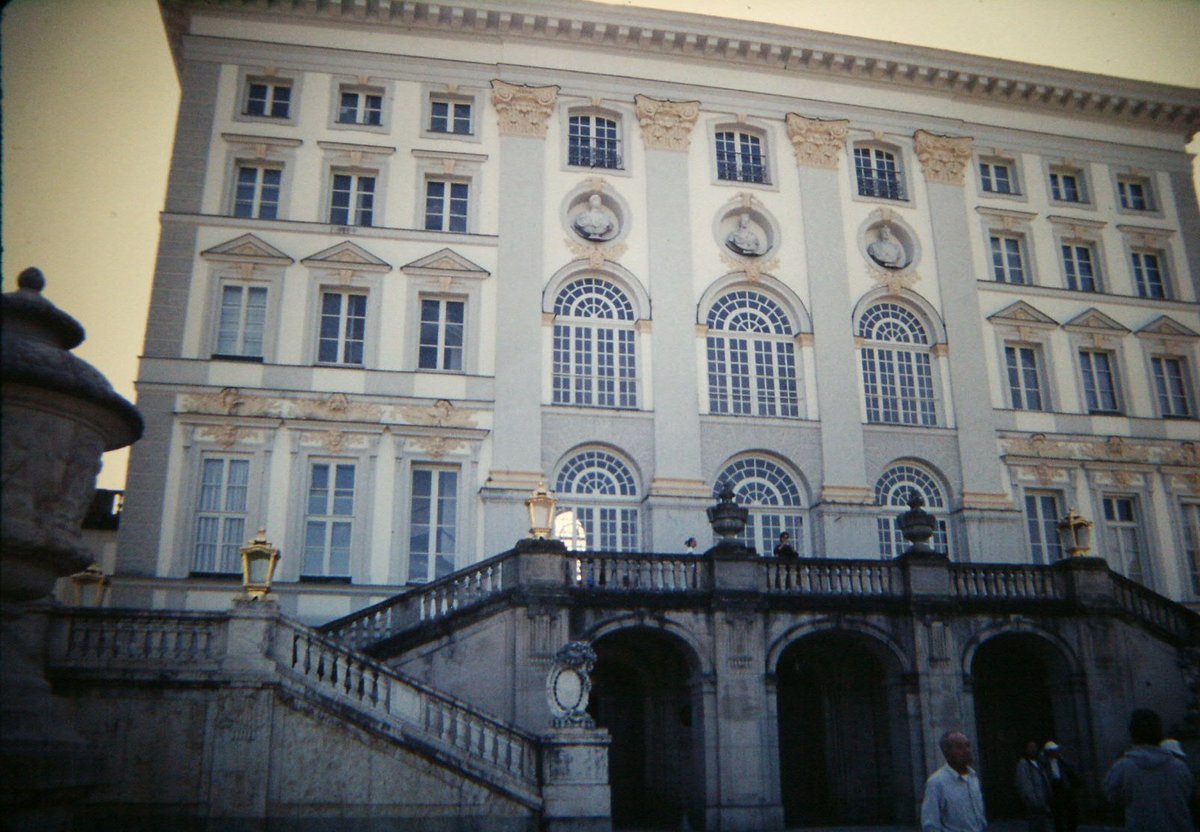
Construction started on the summer residence that would grow into one of Europe's most magnificent Baroque palace complexes. Expanded and enriched over generations, Nymphenburg became the Wittelsbachs' answer to Versailles — complete with canals, pavilions, and a porcelain factory.
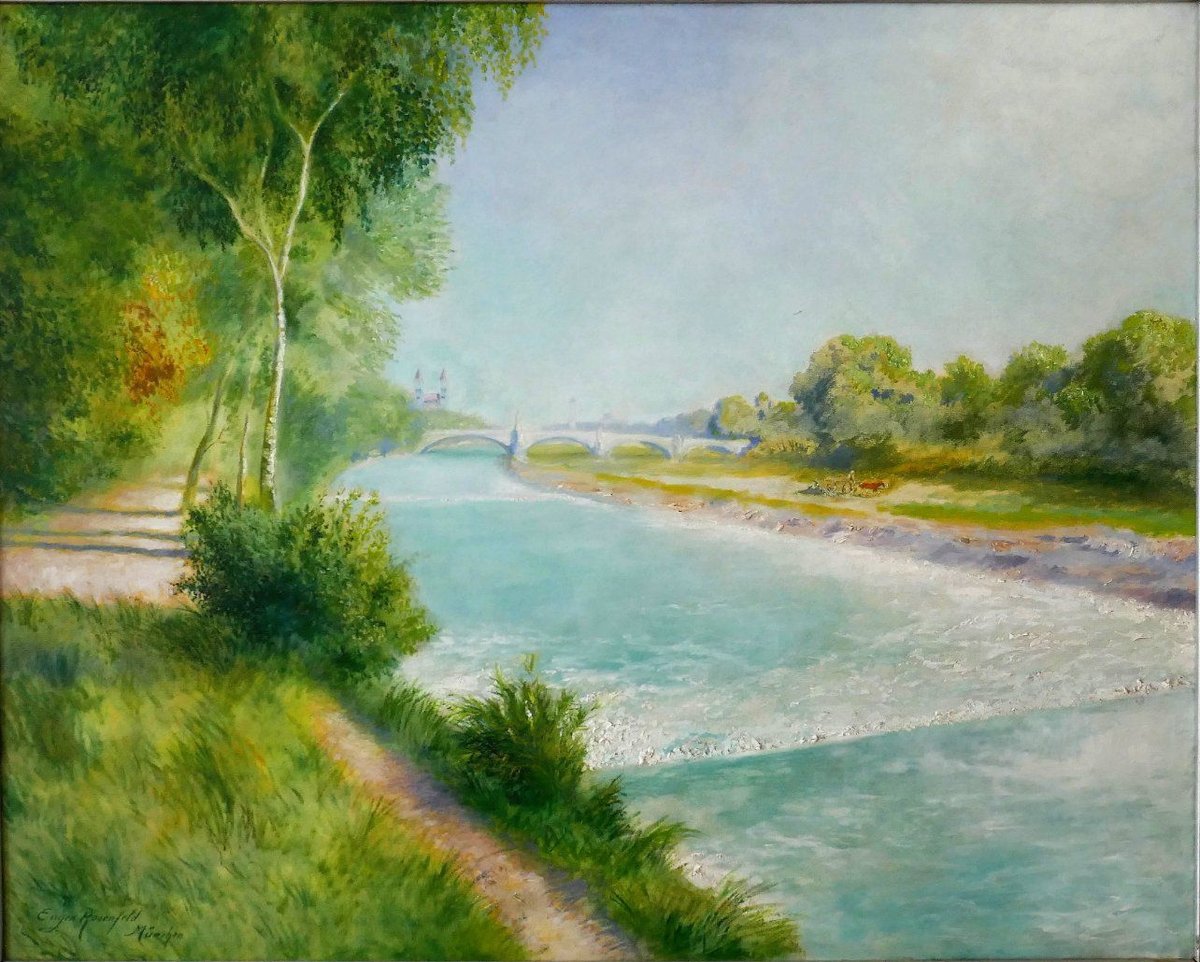
The American-born Count Rumford, in service to the Elector, began laying out one of Europe's first great public parks on the Isar floodplain. Designed in the naturalistic English style, it quickly became the city's green lung and social stage — still one of Munich's most beloved spaces two centuries later.
In the Napoleonic reshuffling of Europe, Max I Joseph was elevated to King. Munich officially became a royal capital. The move brought new status, new territory, and the beginning of Munich's transformation into the grand neoclassical city we recognize today.
On 12 October, the wedding celebrations for Crown Prince Ludwig and Princess Therese of Saxe-Hildburghausen included a horse race on the fields outside the city. The event proved so popular it was repeated the following year — and has continued almost without interruption ever since.
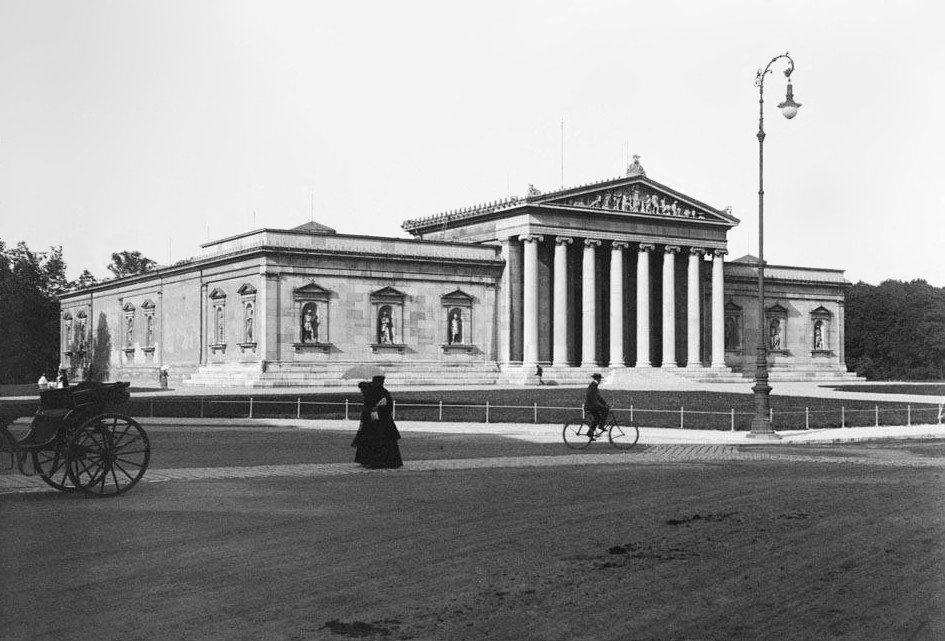
The new king embarked on an extraordinary building program that earned Munich the nickname "Isar-Athen." Königsplatz, Ludwigstraße, the Glyptothek, Alte Pinakothek, and Ruhmeshalle all date from his reign. He turned a provincial capital into a museum city of European standing.
The Russian painter settled in Munich and studied at the Academy. Here he met Gabriele Münter and Franz Marc, eventually forming Der Blaue Reiter group. The city’s avant-garde atmosphere helped transform him from figurative painter to one of the pioneers of abstract art.
After Kurt Eisner was assassinated, radicals proclaimed the Bavarian Soviet Republic in Munich. For a few chaotic weeks in April, red flags flew over the city. Government troops crushed the republic in early May with street fighting and summary executions. The trauma helped radicalize Bavarian politics.
On the night of 8 November, Adolf Hitler and his followers attempted to seize power in Munich, marching from the Bürgerbräukeller toward the Feldherrnhalle. The coup collapsed in gunfire the next morning. Sixteen Nazis and four policemen died. Hitler was arrested and used his trial to gain national notoriety.
At Ludwig-Maximilians-Universität, siblings Hans and Sophie Scholl, along with friends, distributed anti-Nazi leaflets calling for resistance. Arrested on 18 February after Sophie scattered the last leaflets from the university atrium, they were tried and executed by guillotine within days. Their courage still resonates in Munich today.
By the time American troops entered Munich on 30 April, the city had endured 73 bombing raids. The Altstadt was approximately 90% destroyed, the entire city roughly 50% in ruins. Over 6,000 civilians were dead. The proud Wittelsbach capital had been reduced to rubble.
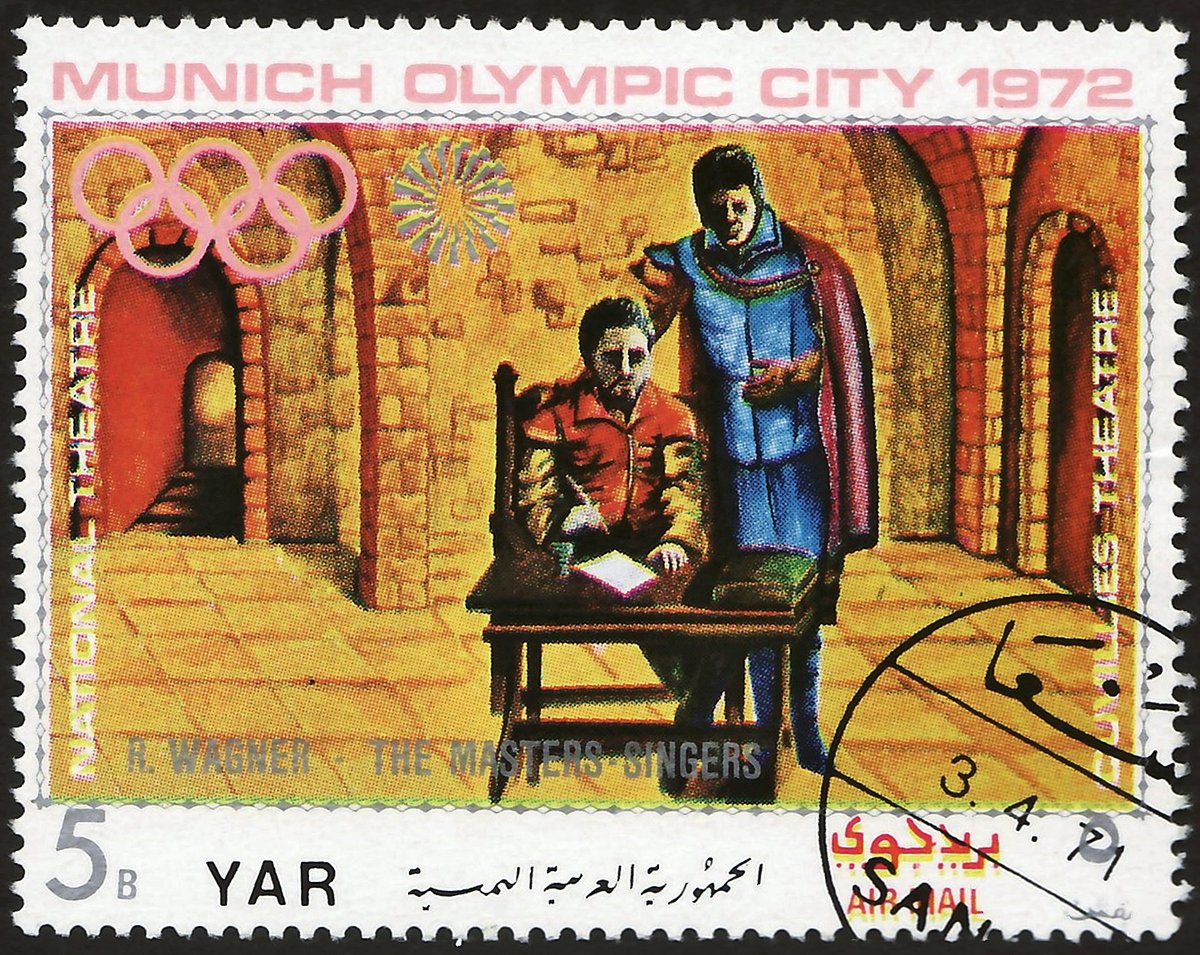
The Summer Olympics were meant to present a new, democratic, modern Germany. Instead, on 5 September, Palestinian terrorists murdered 11 Israeli athletes and coaches in the Olympic Village. The Games continued after a memorial service. The tragedy still shapes how Munich remembers that summer.
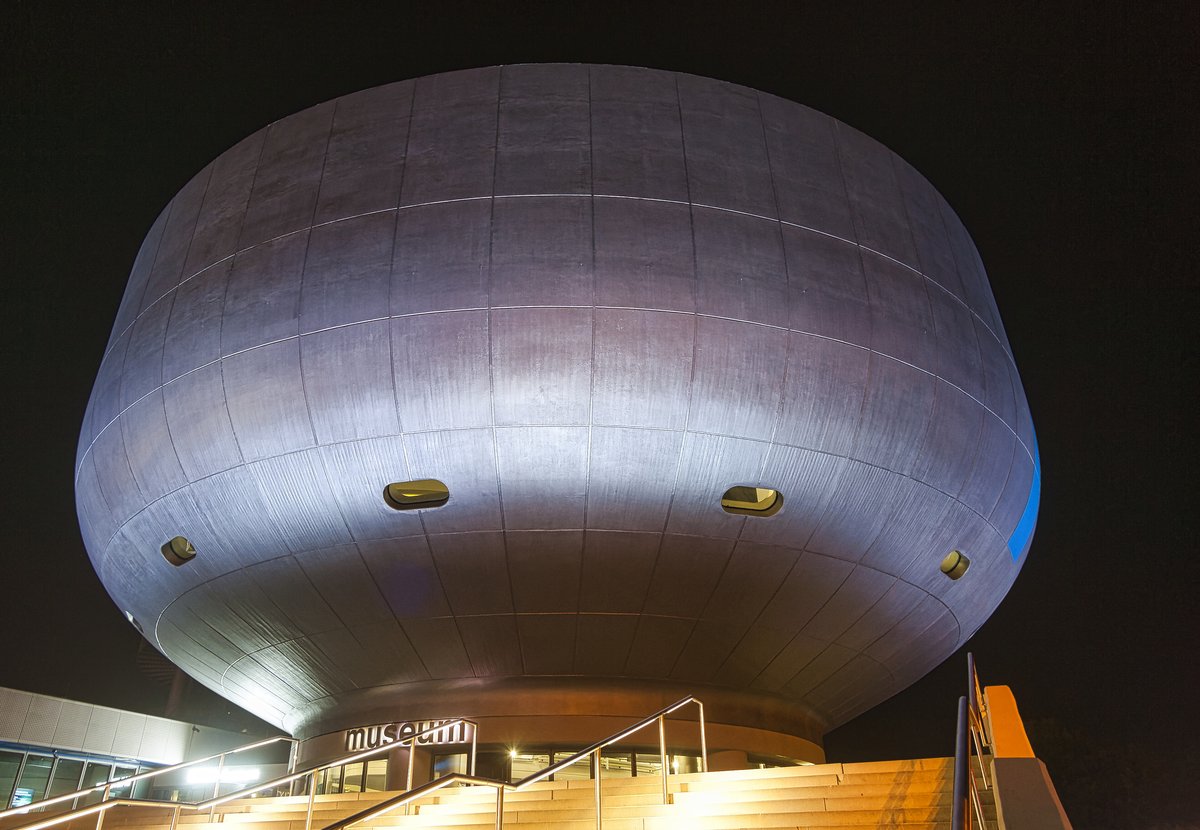
The futuristic, inflatable stadium on the northern edge of the city welcomed its first match on 30 May. Its glowing exterior can change color depending on which team is playing. It quickly became both a modern landmark and the new spiritual home of FC Bayern München.
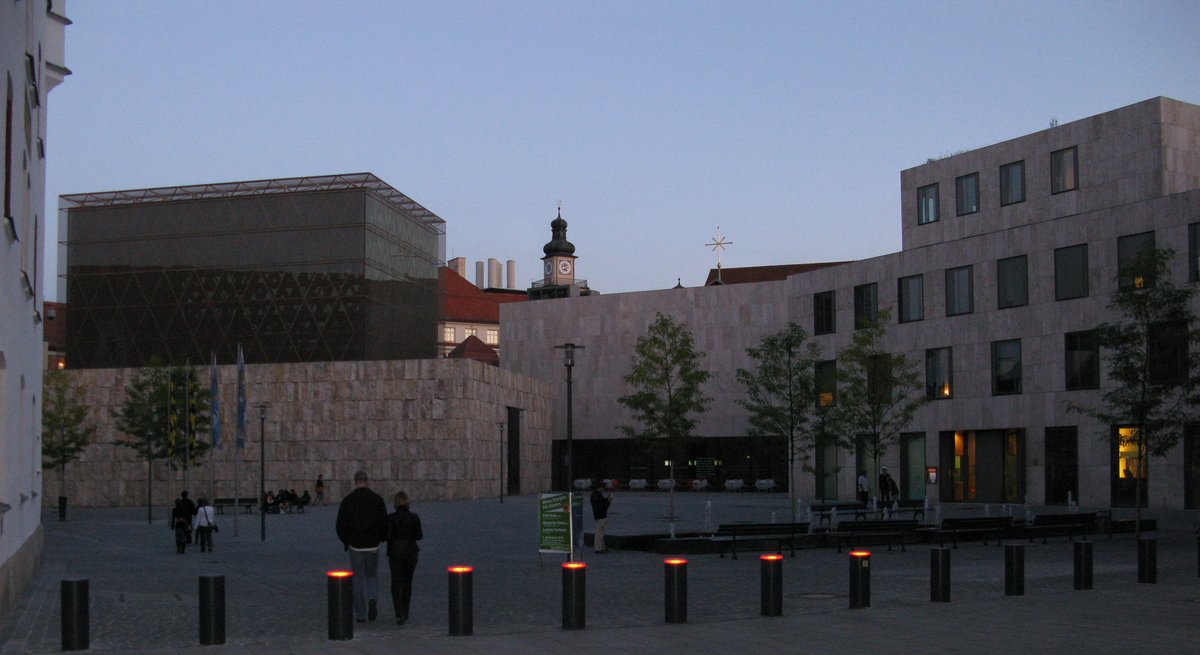
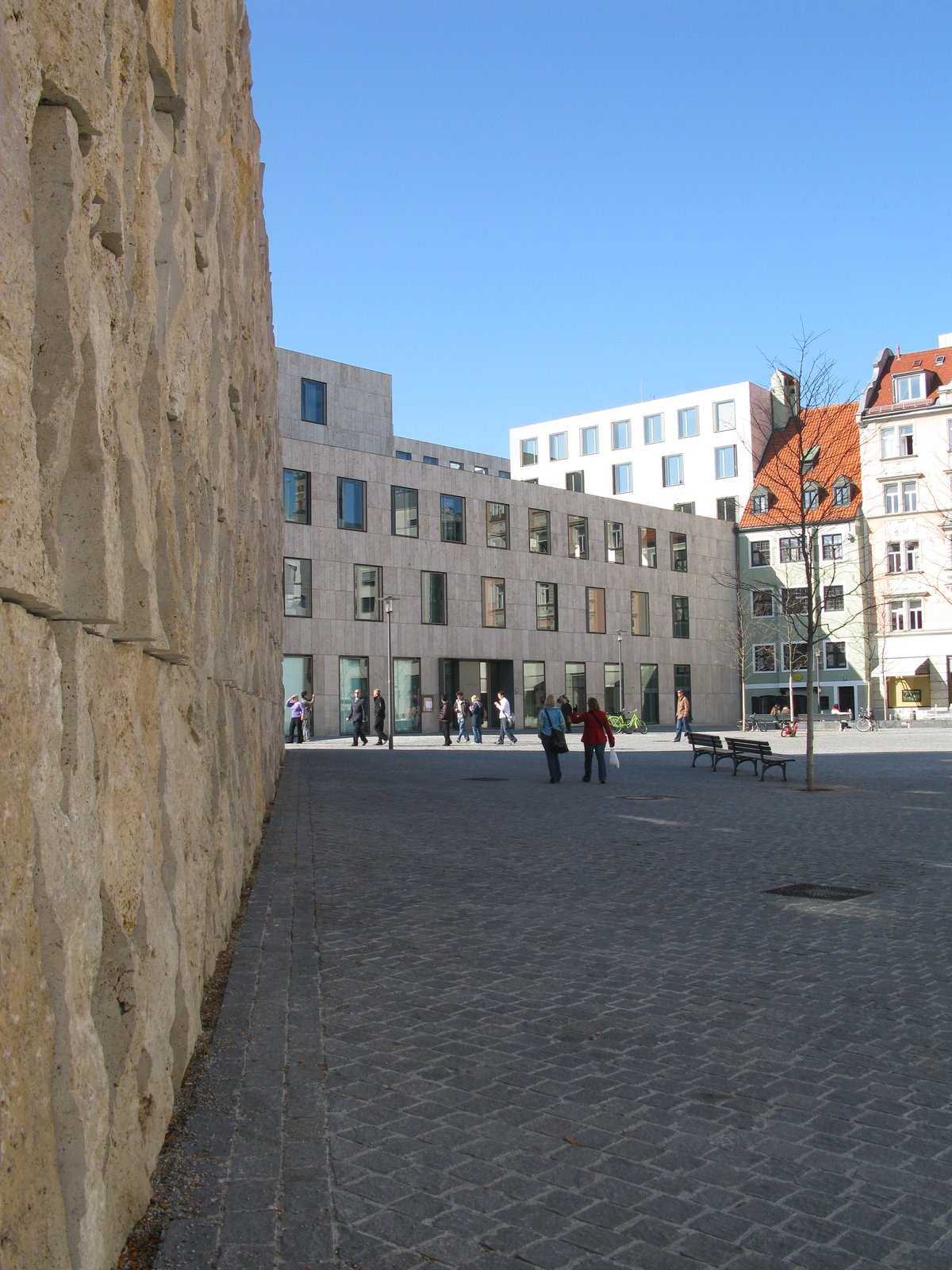
On the site of the former main synagogue destroyed in 1938, the new Ohel Jakob Synagogue at St.-Jakobs-Platz opened. Its granite cube and bronze mesh represent both permanence and fragility. The building marked a profound act of Jewish renewal in the city that had once tried to eradicate that presence.
Composer · 1864–1949
Born in Munich
Born above his father’s beer garden in Munich, Strauss grew up hearing the sounds that would later fill his tone poems. He conducted at the Bavarian State Opera and his music still echoes in the city’s concert halls. Today he would probably smile at the fact that his hometown remains as serious about both high culture and beer as it was in his youth.
Architect · 1784–1864
Designed major Munich buildings
King Ludwig I’s favorite architect shaped the neoclassical face of Munich with the Glyptothek, Königsplatz, and parts of the Residenz. His buildings still frame the city’s most photographed squares. Walking Ludwigstrasse today, you can almost hear him explaining to the king exactly how the proportions should feel.
Painter and sculptor · 1863–1928
Lived and worked in Munich
Stuck built his golden villa in what was then the outskirts of Munich as a temple to his own artistic vision. The house became a meeting point for Munich’s Jugendstil scene. He would likely be pleased that Villa Stuck reopened in 2025 and still draws people into his extravagant, slightly decadent world.
Where locals actually book dinner — not the tourist menus.
Small things that change how the city treats you.
The city, as it actually looks.



Yes, Munich rewards visitors who stay beyond the first-day checklist. The city’s real character emerges in its neighborhood beer gardens, viewpoints like the Frauenkirche south tower, and the contrast between Bavarian tradition and serious contemporary architecture. Three to five days lets you see both the postcard sights and the quieter local Munich.
Three days is enough for the classic circuit of Marienplatz, English Garden, and museums. Four to five days allows time for hidden spots like Westpark, Alter Südfriedhof, or a day trip to Dachau or Andechs. The city’s excellent public transport makes it easy to adjust your pace.
Take the S1 or S8 S-Bahn from the airport. Both run every 10 minutes and reach Hauptbahnhof in about 35-40 minutes. The Airport-City-Day-Ticket (€17.50) covers the journey plus all Munich transport for the rest of the day.
Munich is one of Europe’s safer major cities. Standard precautions apply in busy areas like Marienplatz and around the Hauptbahnhof at night. The city’s extensive night transport network, including weekend night U-Bahn since 2025, makes getting home safer.
June through August offers the best weather for beer gardens and the English Garden. Spring and autumn provide comfortable temperatures for sightseeing and fewer crowds. December brings Christmas markets but also the coldest weather.
Munich is one of Germany’s pricier cities, especially for accommodation and central restaurants. However, many museums have free or low-cost days, beer gardens allow you to bring your own food, and the public transport day ticket (€10.10 in Zone M) offers good value.
232 places to discover






Showing 1–48 of 232 places
Saved and recently read places — kept on this device only.
Photos may have been resized or cropped.