What the sites are
Luis Emilio Recabarren is a towering figure in Chilean social and political history, widely recognized as the father of the Chilean labor movement and an advocate for workers’ rights and social justice. Santiago commemorates him in several places, including the monument in Plaza Luis Emilio Recabarren, the bust in Parque Almagro, his gravesite and memorial plaza at Cementerio General, and the Centro de Extensión e Investigación Luis Emilio Recabarren (CEILER).
These sites offer ways to explore Recabarren’s life and influence on Chile’s working class and leftist political culture. Public transport connects many of them, and most major sites are described as wheelchair accessible. The city also has murals, plaques and other tributes to his legacy in neighborhoods including Yungay, Brasil and Matta.
History and legacy
Luis Emilio Recabarren Serrano (1876–1924) was born in Valparaíso and raised in a working-class family. Self-taught, he worked as a typesetter from a young age and immersed himself in political literature, later becoming a publisher and labor organizer (Wikipedia, Taylor & Francis).
He joined the Partido Demócrata at age 18. By 19, he was publishing socialist newspapers and advocating for labor rights. He organized reading circles and workers’ schools, and his years in Santiago exposed him to urban labor struggles. As the city grew as an industrial hub, it became an important center of his organizing activity (tarapacaenelmundo.com).
Recabarren founded the Partido Obrero Socialista (POS) in 1912 in Iquique, where he also carried out major activism; the party became the Communist Party of Chile in 1922. He founded organizations including the Federación de Trabajadores de Chile and played a role in the broader South American socialist movement. His leadership during the Nitrate Era, parliamentary involvement and international activism helped establish his reputation as a labor leader (archivonacional.gob.cl).
His publishing and political activity included El Despertar de los Trabajadores, a key publication from 1912–1926. His writing, including La materia eterna e inteligente (1917), promoted rationalism, secular education and women’s emancipation (academia.edu). Recabarren championed education as a means of emancipation, establishing libraries and publishing newspapers (Memoria Chilena).
His legacy shaped Chile’s left, blending parliamentary and grassroots activism (Piensa Chile). The centenary of his death in 2024 was marked by commemorations and conferences (CEFB-Chile). His influence remains visible in Chilean political culture and working-class identity (Rueda, 2021).
What to see
Plaza Luis Emilio Recabarren monument
The monument in central Santiago features a bronze statue of Recabarren and reliefs representing nitrate workers’ struggles. Informational plaques in Spanish and English provide historical context.
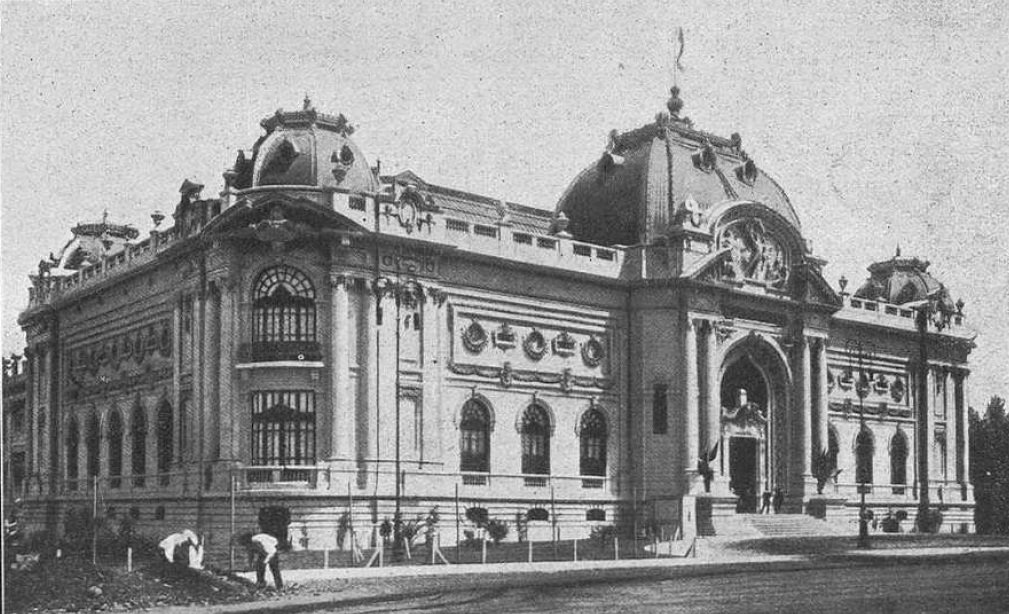
The monument is at Plaza Luis Emilio Recabarren, Avenida Libertador Bernardo O’Higgins. It is described as being near landmarks including the National Museum of Fine Arts and Plaza de Armas.
Parque Almagro bust
The Busto de Luis Emilio Recabarren in Parque Almagro is a site for public commemorations, particularly those organized by the Partido Comunista de Chile (PC Chile). It hosts ceremonies around party anniversaries and Recabarren’s birthday.
Cementerio General de Santiago
Recabarren’s gravesite and the cemetery’s memorial plaza are sites for annual tributes and public ceremonies (CEILER). December 19 is a key date for commemorating the anniversary of his death.
CEILER
The Centro de Extensión e Investigación Luis Emilio Recabarren is a cultural hub for lectures, concerts and awards. Its events may take place at various venues.
Pasaje Luis Emilio Recabarren, San Joaquín
This residential street reflects Recabarren’s public recognition. It offers urban context and has local cafés (Moovit).
Practical visiting information
Hours, admission and access
| Site | Hours | Admission | Access and transport |
|---|---|---|---|
| Plaza Luis Emilio Recabarren monument | Daily, 9:00 AM–7:00 PM | Free | Wheelchair accessible, with ramps and paved pathways. Metro Line 1, Universidad de Chile station, and multiple bus routes. |
| Busto de Recabarren, Parque Almagro | 6:00 AM–10:00 PM | Free | Wheelchair accessible; Metro Universidad de Chile. |
| Recabarren’s gravesite and memorial plaza, Cementerio General | 8:00 AM–6:00 PM | Free; guided tours for a fee | Wheelchair accessible; Metro Line 2, Cementerios station. |
| CEILER | Event-based; check the website | Most events are free; some are ticketed | Generally wheelchair accessible. |
| Pasaje Luis Emilio Recabarren, San Joaquín | Public street, always open | Not specified | Metro Line 5, Camino Agrícola; listed as accessible. |
| Archivo Nacional de Chile, Miraflores 50 | Mon–Fri, 9:00 AM–5:00 PM | Free entry | Wheelchair accessible; Metro Line 1, Miraflores station. |
| National History Museum of Chile | Tue–Sun, 10:00 AM–6:00 PM | Generally free | Accessibility details are not specified. |
| Biblioteca Nacional | Mon–Fri, 9:00 AM–8:00 PM; Sat, 10:00 AM–2:00 PM | Not specified | Accessibility details are not specified. |
Weekend guided tours at the Plaza Luis Emilio Recabarren monument are at 11:00 AM and 3:00 PM. Walking tours with local operators are also available daily; advance booking is recommended. Some museums may charge for special exhibitions. Community centers named after Recabarren should be checked through local listings.
Santiago’s Metro, buses and taxis provide transport between sites (Moovit App Santiago Transit). Most major sites are described as accessible, but accessibility varies by site.
Commemorative dates
Public ceremonies and performances take place around Recabarren’s birthday on July 6 and the anniversary of his death on December 19. The Parque Almagro bust is a place to visit on July 6 or during party anniversaries; December 19 is a key date for tributes at Cementerio General. The founding anniversary of the Partido Comunista de Chile is another occasion for commemorations.
Tips
- Visit the Archivo Nacional’s website for events.
- Wear comfortable shoes for walking tours and check weather conditions in advance.
- Visit libraries and bookstores for Recabarren’s works.
- Check local tour operators for booking details; advance booking is recommended for walking tours.
- Follow CEILER online for event updates and check its website for event schedules.
- Santiago is described as generally safe; be mindful at large events.
- For itinerary ideas, consult Santiago Turismo. The Audiala app is also mentioned for guided audio tours and real-time updates.
Nearby places
- Explore the National Museum of Fine Arts (National Museum of Fine Arts) and Plaza de Armas (Plaza de Armas Santiago).
- Find dining options in nearby Barrio Lastarria.
- Walk through Yungay, Brasil and Matta, where murals, plaques and statues commemorate Recabarren and working-class history.
- Other historical locations to combine with Recabarren sites include the Museo del Trabajo and Plaza de la Dignidad.
- Avenida Luis Emilio Recabarren in Iquique, Tarapacá, honors nitrate workers and has local businesses and cultural references (Santorini Restobar).
FAQ
What are the monument’s opening hours?
The Plaza Luis Emilio Recabarren monument is listed as open daily from 9:00 AM to 7:00 PM. The Parque Almagro bust has hours of 6:00 AM–10:00 PM.
Is there an entrance fee?
Entry to the Plaza Luis Emilio Recabarren monument, Parque Almagro bust and Cementerio General is free. Most CEILER events are free, but some are ticketed. Cemetery guided tours have a fee, and some museums may charge for special exhibitions.
Are guided tours available?
The monument has weekend tours at 11:00 AM and 3:00 PM. Local operators offer daily walking tours, for which advance booking is recommended. Cementerio General also offers guided tours for a fee.
How can I get to the monument by public transport?
Use Metro Line 1 to Universidad de Chile station or nearby bus routes.
Are the sites accessible to people with disabilities?
The monument, Parque Almagro bust, Cementerio General and Archivo Nacional are listed as wheelchair accessible. CEILER is generally accessible, and most major sites are described as accessible; confirm details with individual sites.
Where can I see Recabarren memorials in Santiago?
Sites include Plaza Luis Emilio Recabarren, Parque Almagro, Cementerio General and Pasaje Luis Emilio Recabarren in San Joaquín. Murals and plaques are also found in Yungay, Brasil and Matta.
Is there a dedicated Recabarren museum?
No single museum is dedicated to him, but his legacy appears across multiple sites and cultural institutions.
Where can I watch Los Funerales de Recabarren?
The historic film is available online through the Cineteca Nacional, and related documentaries are also mentioned on the Chilean Ministry of Culture’s YouTube channel.
Further sources and visitor links