

Urban Development and Origins
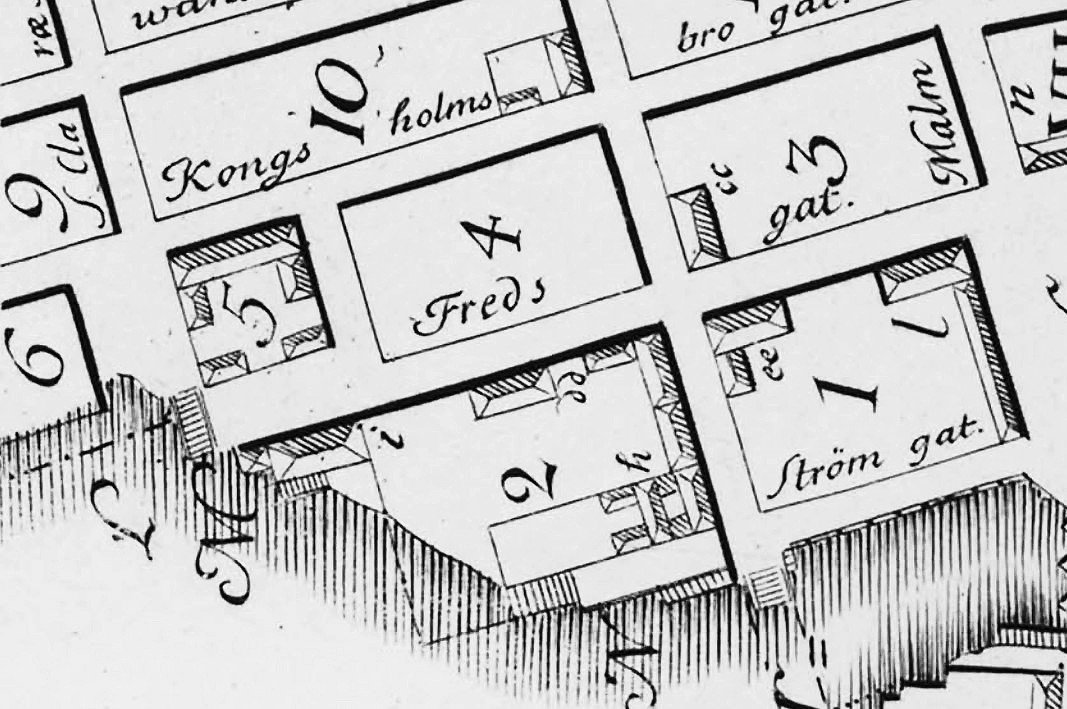
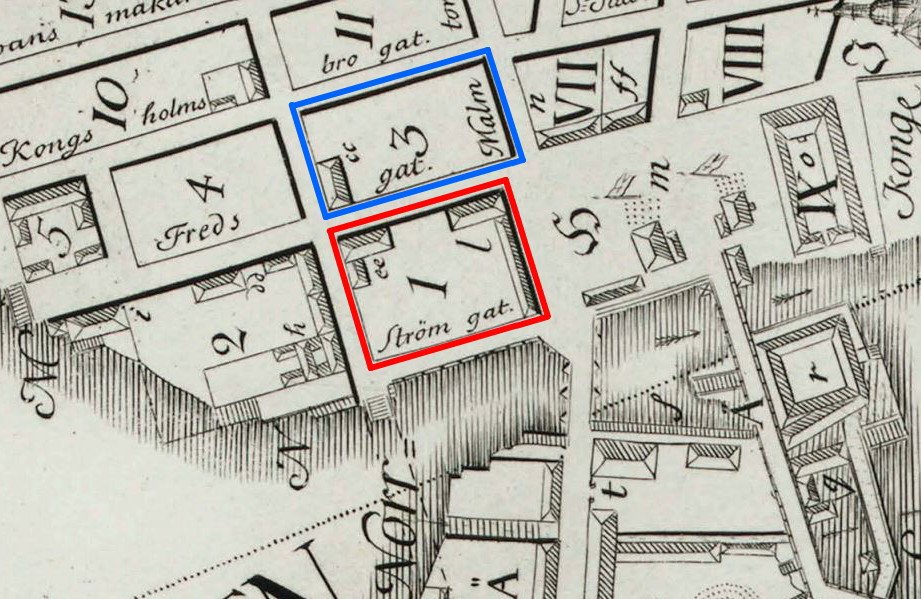
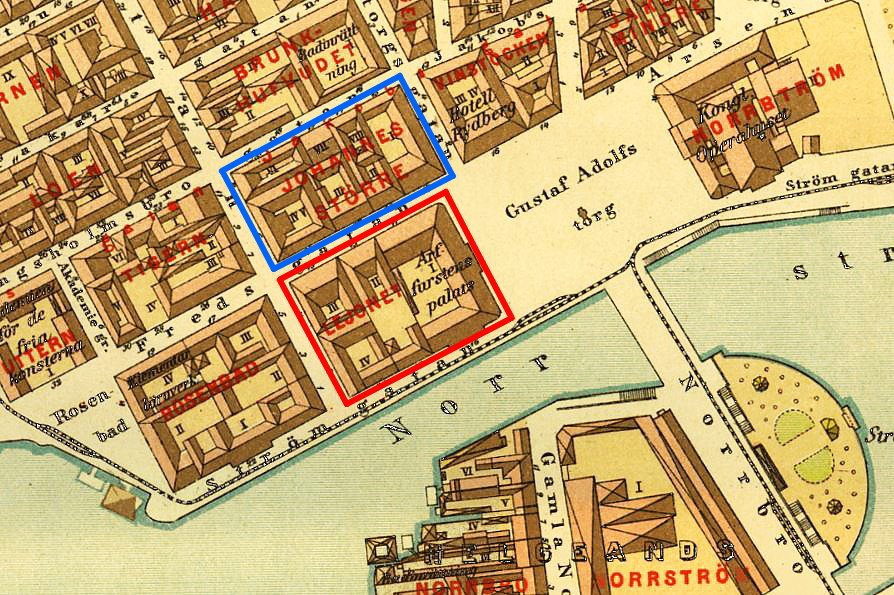
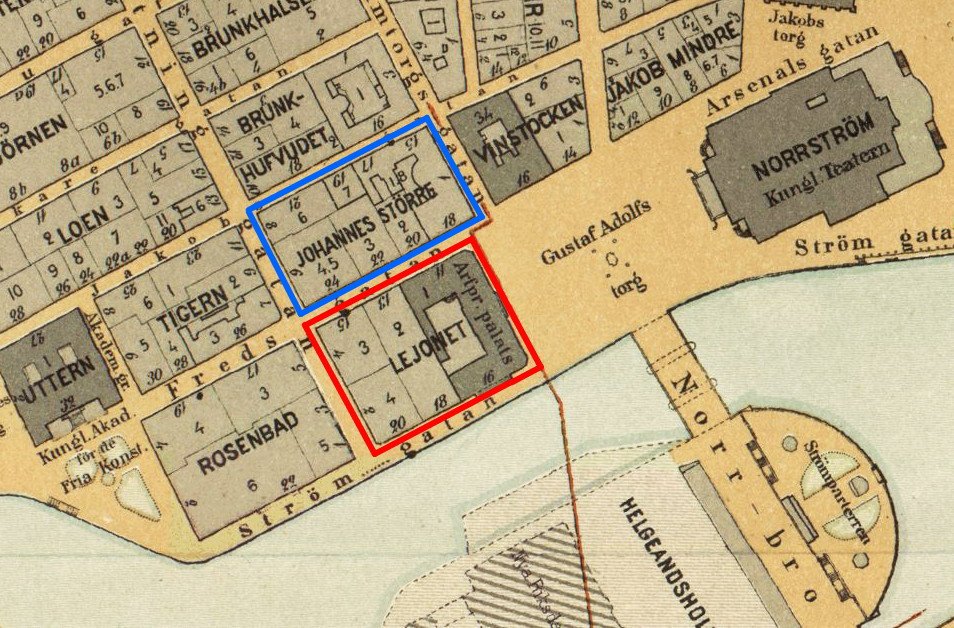
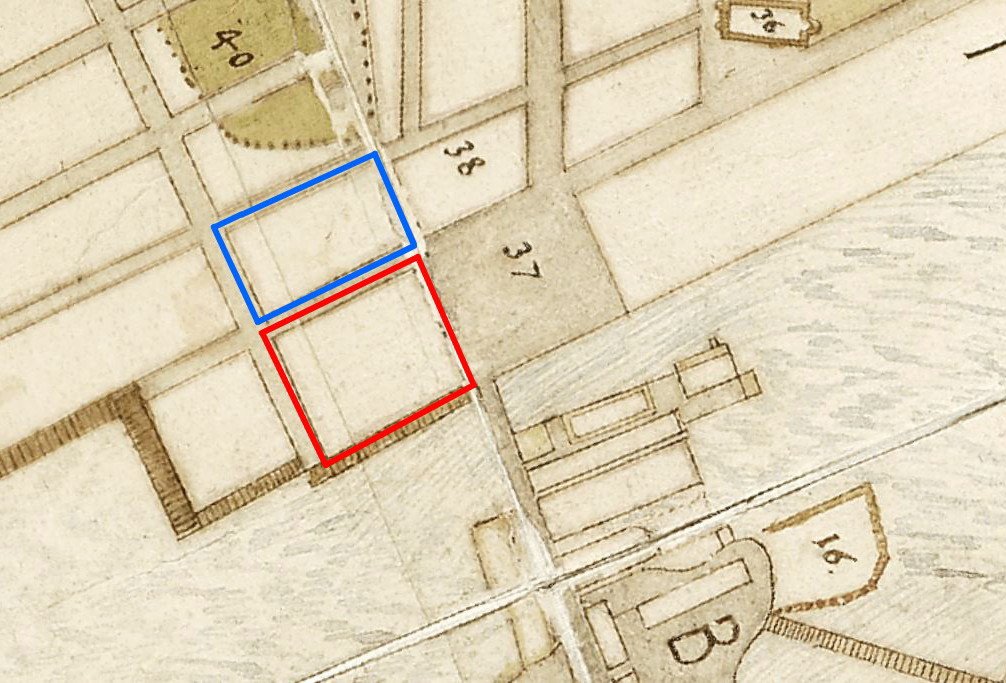
The origins of Kvarteret Johannes Större trace back to Stockholm’s grid plan expansion in the 1630s and 1640s, spearheaded by Klas Fleming. The original name, S:t Johannes or “St John the Greater,” first appeared on Petrus Tillaeus’s 1733 map, following the tradition of naming city blocks after saints.
Architectural Evolution: 17th to 19th Centuries
17th Century Foundations
Early buildings like Sadelmakarens hus and Kanngjutarmästarens hus were constructed in the 1640s, featuring stone walls, vaulted cellars, and painted beam ceilings. These residences, built by master craftsmen, remain among the best-preserved examples of 17th-century urban architecture outside Gamla Stan.
18th and 19th Century Modifications
The block evolved with 18th-century expansions (e.g., the Jakobsgatan wing, 1767) and 19th-century updates, including Empire-style interiors and masonry kitchen stoves. Gustav Horns palats, built in the 1640s and later remodeled, now houses the Medelhavsmuseet and exemplifies the area’s architectural transitions.
Preservation and Modern Use
Kvarteret Johannes Större survived the major Norrmalmsregleringen urban renewal thanks to its high cultural value. Today, it is protected as a state monument, with four buildings “blåmärkta” (blue-marked) by the Stockholm City Museum, denoting the highest heritage protection.
Visitor Information: Hours, Tickets, and Accessibility
St. Johannes Church
- Opening Hours Monday–Friday 10:00–16:00; Sunday 11:00–18:00.
- Entry Free. Donations are appreciated.
- Guided Tours Available seasonally and during special events; check the official website for schedules.
- Accessibility Ramps at main entrances, accessible restrooms, and level pathways.
Medelhavsmuseet
- Opening Hours Tuesday–Sunday 10:00–17:00; closed Mondays.
- Tickets Free entry for permanent exhibitions; special exhibitions may require tickets.
- Accessibility Fully wheelchair-accessible.
Sadelmakarens hus & Kanngjutarmästarens hus
- Not open for interior tours (government offices), but exterior can be viewed anytime.
- Included in many guided walking tours—see Visit Stockholm for schedules.
Getting There
- Metro Hötorget (Green Line), 5-minute walk.
- Train Stockholm Central, 10–15 minutes on foot.
- Bus Multiple lines nearby.
- Parking Limited and expensive; public transport is recommended.
Key Attractions and Activities
- St. Johannes Church Neo-Gothic masterpiece, concerts, and events.
- Medelhavsmuseet Museum of Mediterranean and Near Eastern Antiquities.
- Historical Buildings Admire the exteriors of Sadelmakarens hus, Kanngjutarmästarens hus, and Gustav Horns palats.
- Johannes Church Park & Observatorielunden Green spaces for relaxation, picnics, and city views.
- Drottninggatan Bustling shopping and dining street.
Cultural Insights and Local Experience
Kvarteret Johannes Större offers a relaxed, local atmosphere distinct from the tourist-heavy Old Town. Enjoy a traditional Swedish fika at nearby cafés, attend a church concert, or explore the area’s public art and green spaces. Events like Lucia (St. Lucy’s Day) and Midsummer festivities at St. Johannes Church offer authentic glimpses into Swedish culture.
Practical Tips for Visitors
- Best Time to Visit Summer (June–August) for mild weather and long daylight; winter for festive lights and fewer crowds.
- Language English widely spoken; signage often bilingual.
- Payments Predominantly cashless (cards or mobile).
- Safety Central Stockholm is safe, with standard urban precautions.
Dining, Shopping, and Events
- Dining Local bakeries and cafés serve kanelbullar, gravlax, and traditional Swedish dishes. Vegetarian and vegan options are common.
- Shopping Boutiques and bookstores line Drottninggatan and nearby streets.
- Events Church concerts, art fairs, and seasonal markets occur regularly—check local listings.
Photography and Souvenirs
- Photo Spots St. Johannes Church’s façade and stained glass, leafy park paths, historic building exteriors.
- Souvenirs Swedish crafts, design items, and specialty foods available in local shops.
Sustainability and Responsible Tourism
Stockholm emphasizes sustainability: use public transport, recycle, and support eco-friendly businesses. Many local cafés and attractions adopt green practices.
Frequently Asked Questions (FAQ)
Q: What are the visiting hours for St. Johannes Church?
A: Monday–Friday 10:00–16:00; Sunday 11:00–18:00.
Q: Are tickets required?
A: No tickets for general entry; some events or guided tours may require advance booking.
Q: Is the area accessible for people with mobility challenges?
A: Yes, most streets and public buildings are accessible, though some cobblestones and older structures may present challenges.
Q: Can I take photos?
A: Yes, photography of exteriors and inside the church is generally allowed—avoid flash during services/events.
Q: What are nearby attractions?
A: Observatorielunden park, Drottninggatan shopping, Medelhavsmuseet, and Gamla Stan (Old Town).
Discover More
Plan your visit to this remarkable district and enhance your experience with the Audiala app for audio guides and insider tips. Follow us on social media and subscribe to our newsletter for updates, events, and special travel features.
Summary
Kvarteret Johannes Större is a living chronicle of Stockholm’s urban, architectural, and cultural history, offering visitors a harmonious blend of historic charm, modern amenities, and enriching experiences. From the striking St. Johannes Church and well-preserved 17th-century buildings to tranquil parks and lively cafés, the district invites you to explore, learn, and immerse yourself in Stockholm’s vibrant heritage.
For the latest information, event schedules, and expert insights, visit the Medelhavsmuseet, St. Johannes Church, and the Stockholm City Museum. Download the Audiala app to get the most from your visit.