Early History of the Oakhill Site
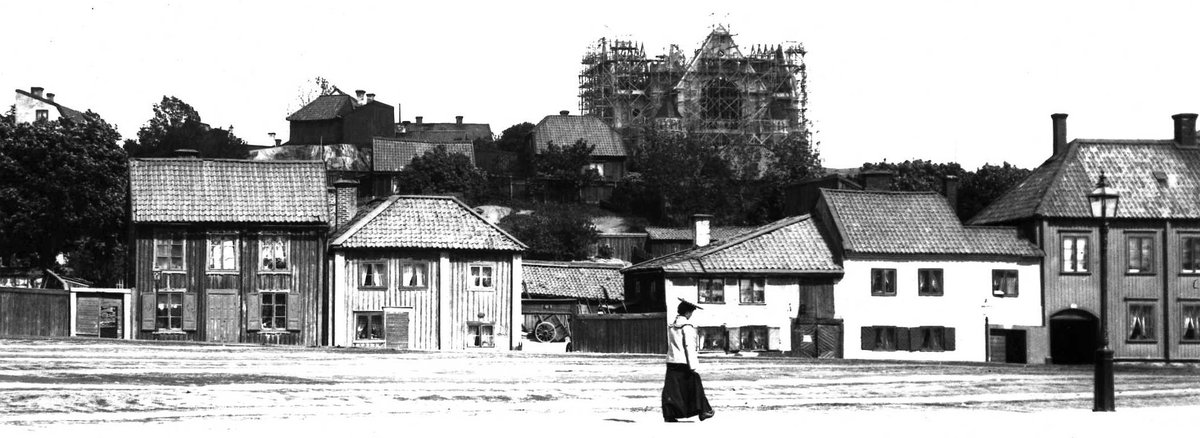
Oakhill, in southern Djurgården, has a rich history dating to the early 19th century. Originally called Ryssbacken, the area was a favored summer retreat for Stockholm’s elite. In 1820, the first transportable house was erected by Fredrik Blom for Admiral Thomas Backer. The property became known as Oakhill, a name bestowed by Earl Erik Ruuth (ambstoccolma.esteri.it). Throughout the 19th century, the area transitioned from summer houses to permanent residences, culminating in a new era of grandeur at the turn of the 20th century.
The Royal Connection: Prince Wilhelm and Princess Maria Pavlovna
In 1907, Prince Wilhelm of Sweden acquired Oakhill. Upon his marriage to Russian Princess Maria Pavlovna, the couple commissioned architect Ferdinand Boberg to design a new palace as a wedding gift from the Princess’s stepmother, Grand Duchess Sergius-Elisabeth Feodorovna. Boberg’s 1910 creation combined Art Nouveau and National Romantic elements, resulting in a 40-room palace. The couple resided there until their divorce in 1914, after which the palace remained empty for several years (ambstoccolma.esteri.it).
Transition to Diplomatic Use
After its royal chapter, the palace was temporarily rented to the U.S. Minister Plenipotentiary before being purchased by the Italian government in 1926. Since then, it has served as the Italian embassy, signifying nearly a century of Italian diplomatic presence in Sweden (ambstoccolma.esteri.it). Its location, near significant cultural sites such as Skansen and the ABBA Museum, further emphasizes its role as a cultural bridge (embassies.info).
Architectural Significance
Oakhill palace is a prime example of early 20th-century Swedish architecture, blending royal opulence with functional diplomatic spaces. Architect Ferdinand Boberg’s design features grand facades, period interiors, and stately reception halls. The Italian government has prioritized preservation and sensitive adaptation, maintaining the palace’s historical integrity while supporting modern embassy operations (ambstoccolma.esteri.it).
Visiting the Italian Embassy in Stockholm
Visiting Hours and Access
The embassy is not generally open for casual visits or ticketed entry. Public access is restricted to those with appointments or during special cultural events such as European Heritage Days and the Italian National Day. For up-to-date information on visiting hours and event schedules, consult the official embassy website.
How to Visit
- By Appointment Guided visits and most consular services require a pre-arranged appointment. Bookings can be made through the embassy’s website.
- Consular Services Services such as visa applications, passport renewals, and notarial acts are provided during official hours, typically Monday to Friday, 9:00 AM–1:00 PM (ambstoccolma.esteri.it).
- Special Events During open days and cultural occasions, the embassy may offer tours and host public events. Announcements are posted on their website and social media channels.
Accessibility and Travel Tips
- Location The embassy's address is Djurgårdsvägen 174, easily reachable by tram (line 7 to Djurgårdsbron), metro (Karlaplan station), taxi, or on foot from the city center (visitstockholm.com).
- Accessibility The building features ramps and accessible restrooms; visitors with additional needs should notify the embassy in advance.
- Nearby Sites Combine your embassy visit with trips to Skansen, the Vasa Museum, and the ABBA Museum, all located on Djurgården.
- Security Visitors must present valid ID and comply with security screening. Photography is prohibited inside.
- Travel Parking is limited; public transport is recommended (SL Stockholm Public Transport).
The Embassy’s Role in Italy–Sweden Relations
The embassy fosters political, economic, and cultural collaboration between Italy and Sweden. It supports the Italian community, promotes language and cultural initiatives, and works closely with the Italian Institute of Culture in Stockholm, established in 1954 (en.wikipedia.org).
Notable Events and Cultural Engagement
The embassy regularly hosts Italian Republic Day celebrations, art exhibitions, concerts, and Italian language and culinary events. These initiatives not only highlight Italian culture but also strengthen Italy–Sweden relations (ambstoccolma.esteri.it). The building features in guided tours and cultural programs across Djurgården (visitstockholm.com).
Summary of Key Historical Dates
- 1820 Fredrik Blom constructs the first house on Oakhill.
- 1907 Acquisition by Prince Wilhelm.
- 1910 Palace designed by Ferdinand Boberg completed.
- 1910–1914 Residence of Prince Wilhelm and Princess Maria Pavlovna.
- 1926 Italian government purchases Oakhill; embassy established.
- 1954 Italian Institute of Culture founded in Stockholm (en.wikipedia.org).
The Embassy within Stockholm’s Diplomatic Landscape
The Italian Embassy is one of 144 foreign missions in Stockholm and is renowned for its historic setting on Djurgården (embassypages.com). Its prominent location adds to the international atmosphere of the island, which is home to several other diplomatic establishments.
Frequently Asked Questions (FAQ)
Can I visit the embassy without an appointment?
No, visits require an appointment except during special public events.
Are tickets or entrance fees required?
No tickets are required for consular visits; special events may have their own arrangements.
Is the embassy accessible?
Yes, but contact the embassy in advance for specific needs.
What documents should I bring?
A valid ID and any required documents for your consular service.
What are some nearby attractions?
The Vasa Museum, Skansen, and the ABBA Museum are all within walking distance.
Related Articles
- Explore More Stockholm Historical Sites
- Guide to Diplomatic Missions in Stockholm
- Learn About Italian Culture in Sweden