
Historical Background and Construction
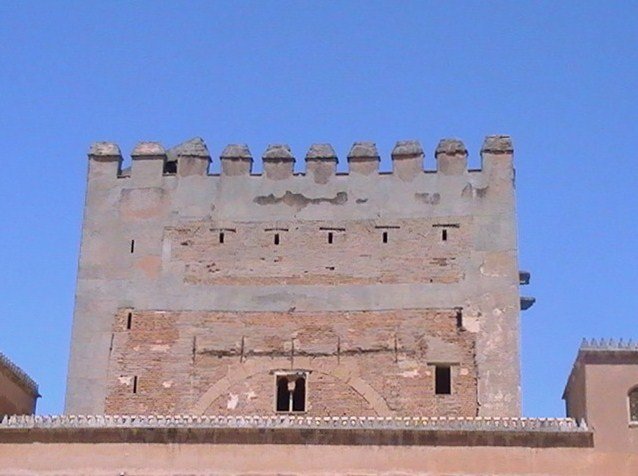
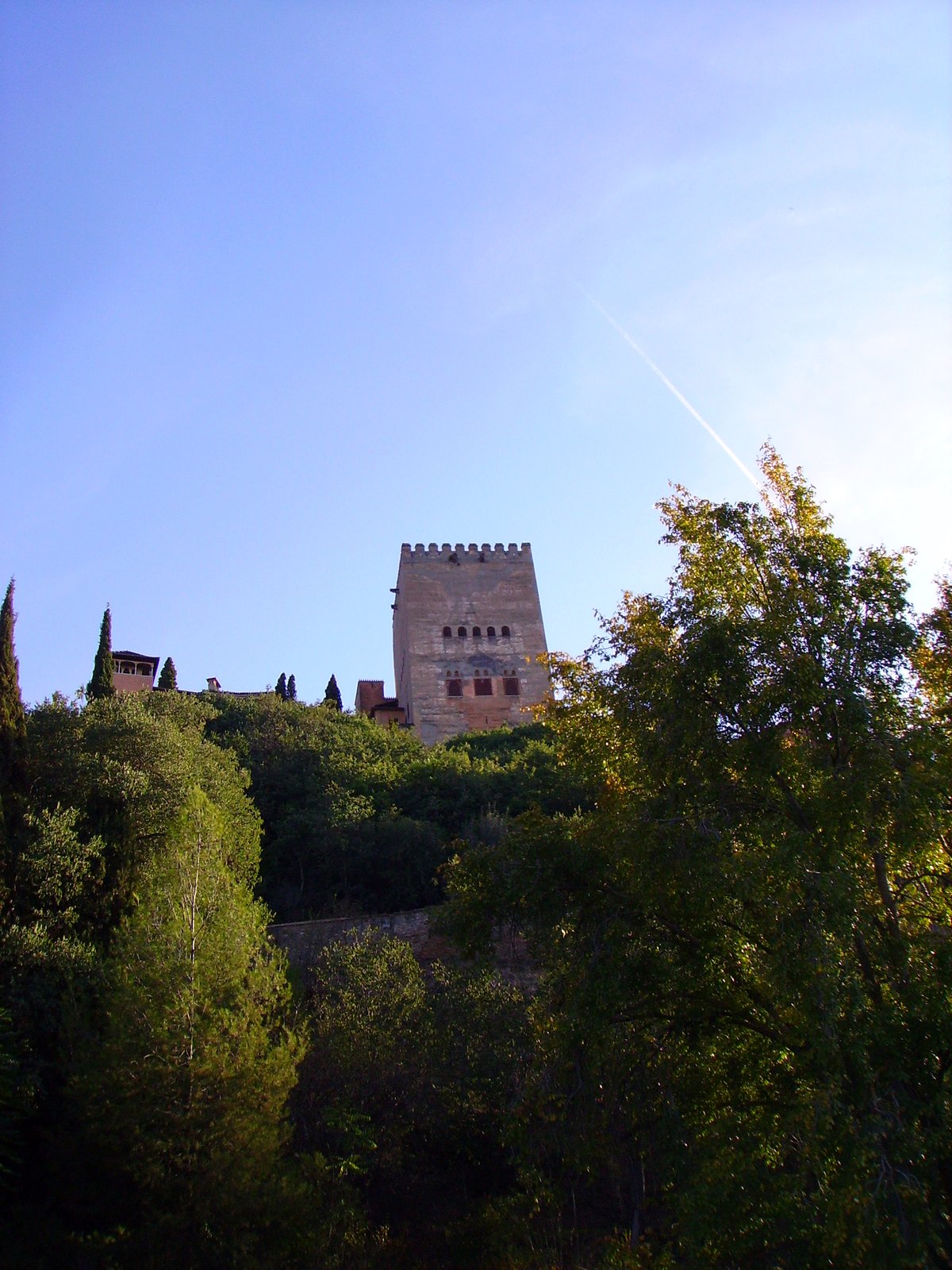
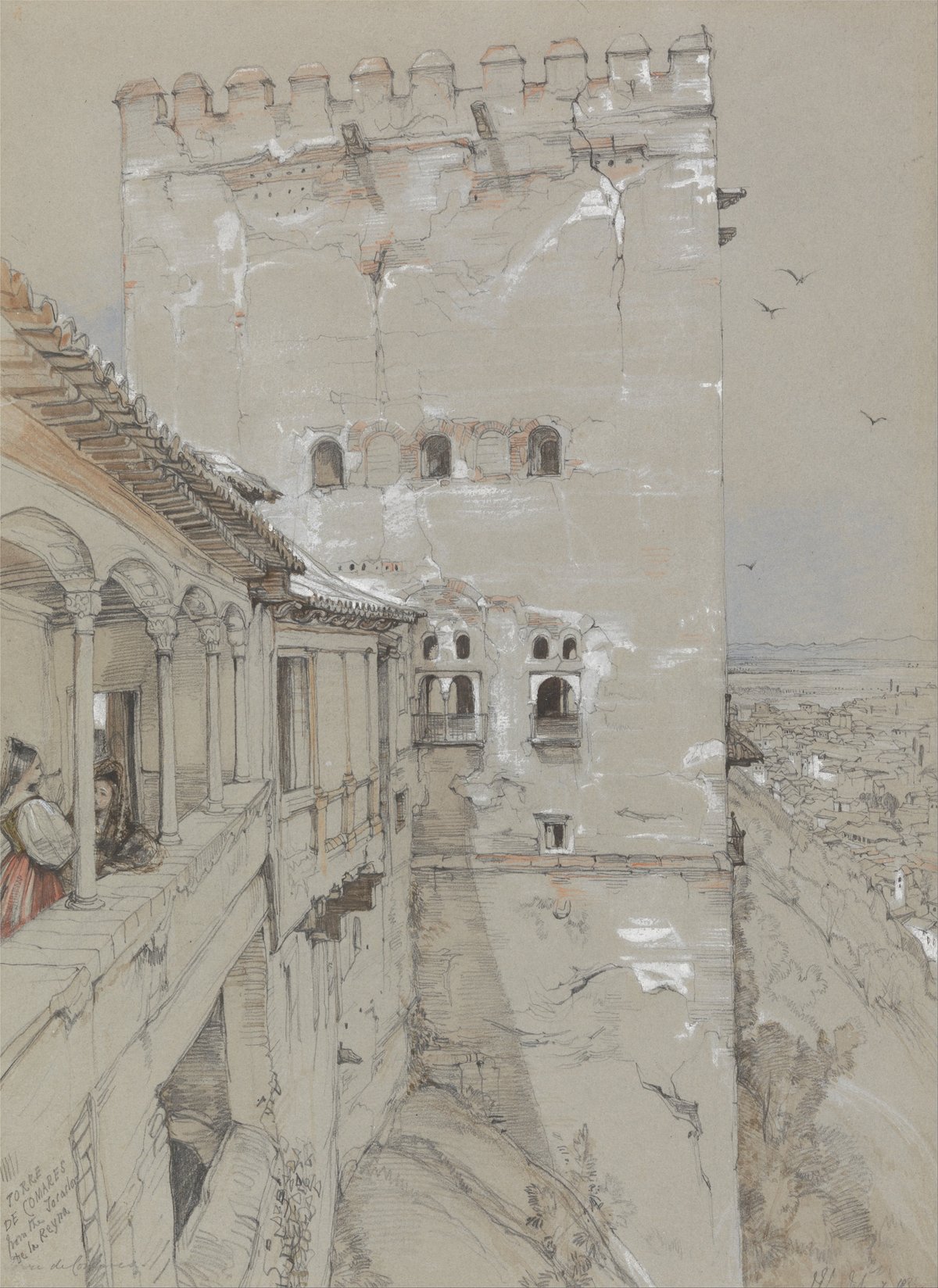
The Torre de Comares was commissioned during the reign of Sultan Yusuf I (1333–1354) and completed by his son Muhammad V, at the zenith of the Nasrid dynasty’s power in 14th-century Granada (alhambra.info; entradasalhambragranada.com). The tower, measuring around 18 meters per side and rising to 45–46 meters, dominates the Alhambra’s northern edge and overlooks the Darro Valley.
Its original purpose was dual: as a defensive stronghold and as the formal seat of Nasrid royal authority. The exterior, with few windows and a fortress-like appearance, contrasts starkly with the opulent interior, signifying the private and fortified nature of Nasrid power (LaSexta).
Architectural Features and Artistic Highlights
Patio de los Arrayanes (Court of the Myrtles)
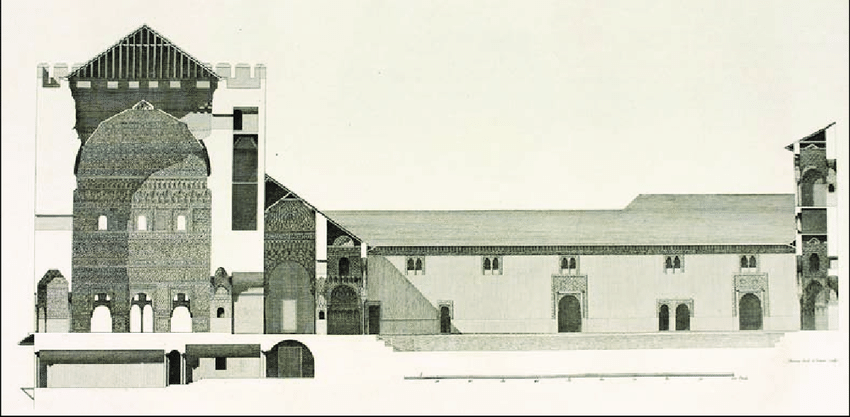
The entrance to the Torre de Comares is through the Patio de los Arrayanes, one of the most iconic courtyards in the Alhambra. Its elongated reflecting pool, flanked by lush myrtle hedges, mirrors the arcades and the tower itself. This space unites function and symbolism: it creates a microclimate, amplifies the sense of grandeur, and demonstrates Nasrid mastery of water, light, and space (alhambra.info).
Hall of the Ambassadors (Salón de los Embajadores)
Occupying the entire interior of the tower, the Hall of the Ambassadors was the throne room and the ceremonial heart of Nasrid power. Its square layout, monumental proportions, and alcoves for dignitaries provided the perfect setting for official receptions and pivotal negotiations. The hall is illuminated by a domed ceiling of cedar wood, intricately carved to represent the seven heavens of Islamic cosmology—a metaphor for the sultan’s role as a bridge between earth and the divine (LaSexta).
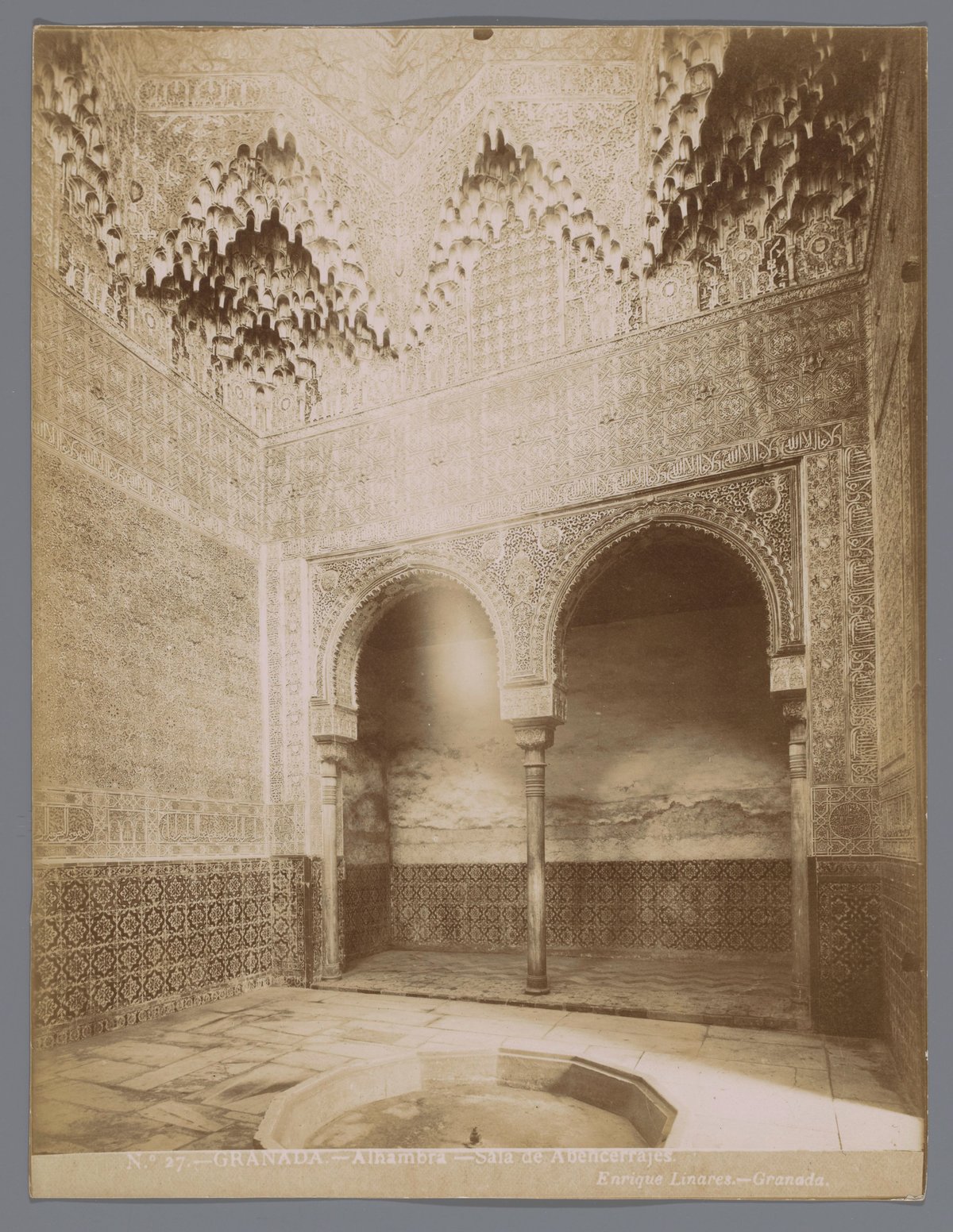
The walls are adorned with stucco and tilework, including Qur’anic inscriptions, geometric patterns, and poetic verses—testaments to the intellectual and artistic refinement of Nasrid Granada (Lonely Planet).
Sala de la Barca and Oratory
Before the Hall of the Ambassadors, visitors pass through the Sala de la Barca, distinguished by its wooden ceiling and transitional role. Adjacent, a small oratory with a horseshoe arch provided the sultan a private space for prayer (Alhambra de Granada).
Political and Cultural Significance
The Torre de Comares was not just a residence but the epicenter of Nasrid governance and diplomacy. It was here that historic events unfolded, including the council that agreed to surrender Granada to Ferdinand and Isabella in 1492—marking the end of Muslim rule in Spain (LaSexta). Legend holds that Christopher Columbus secured royal backing for his voyage to the Americas within these very halls.
The tower’s design and decoration—its inscriptions, celestial motifs, and careful play of light—reflect the Nasrid rulers’ claim to both earthly and spiritual authority, as well as the blending of defensive strength with artistic beauty (Nomads Travel Guide).
Visiting Torre de Comares: Practical Information
Opening Hours and Ticketing
- General Opening Hours 8:30 AM to 6:00 PM (April to October); 8:30 AM to 4:00 PM (November to March). Last entry is one hour before closing. Closed January 1 and December 25.
- Tickets Access to the Torre de Comares is included with Alhambra general admission, which must be reserved in advance due to strict daily visitor limits (ticket.alhambra-patronato.es).
- Price General admission ~€14; discounts for EU residents and youth. Combined tickets for Nasrid Palaces, Generalife, and Alcazaba are recommended.
Booking, Accessibility, and Visitor Tips
- Advance Booking Tickets often sell out weeks ahead, especially in high season—book early online (Alhambra Patronato).
- Timed Entry Access to the Nasrid Palaces (including Torre de Comares) is strictly timed; arrive at your slot or risk losing entry.
- Accessibility Some uneven surfaces and steps. Wheelchair access is limited; contact the visitor center for detailed info.
- Visitor Tips Wear comfortable shoes, bring water in summer, and plan at least 2–3 hours for the full Alhambra experience.
- Photography Allowed without flash; tripods are not permitted.
Guided Tours and Photography
- Guided Tours Available in multiple languages and highly recommended for deeper historical context (Gretas Travels). Some tours offer access to areas not open to general visitors.
- Best Photo Spots Reflective pool in the Patio de los Arrayanes; the dome ceiling in the Hall of the Ambassadors; panoramic terrace views over Granada.
Nearby Attractions
- Within the Alhambra Generalife Gardens, Alcazaba fortress, Palace of Charles V, and the Alhambra Museum.
- Beyond The Albaicín neighborhood, with its winding streets and viewpoints.
Frequently Asked Questions (FAQ)
Q: Can I visit the Torre de Comares separately from the Alhambra?
A: No, admission is included with the Alhambra general ticket; separate entry is not available.
Q: Are guided tours available in multiple languages?
A: Yes, many operators provide tours in Spanish, English, and other languages.
Q: Is photography allowed within the Torre de Comares?
A: Photography without flash is permitted; tripods are generally prohibited.
Q: How far in advance should I book my ticket?
A: At least several weeks in advance, especially during peak season.
Q: Is the Torre de Comares accessible for visitors with disabilities?
A: Some areas may be challenging; contact the Alhambra visitor center for details.
Summary and Visitor Recommendations
The Torre de Comares is a must-see highlight of Granada’s Alhambra, uniting breathtaking Nasrid artistry, profound history, and panoramic views. Plan ahead by securing your tickets early, choosing a guided tour for a richer experience, and exploring the full Alhambra complex to appreciate the cultural tapestry of Andalusia. Apps like Audiala can further enhance your visit through interactive tours and up-to-date information. Respect conservation rules, arrive early, and prepare to be inspired by the legacy of Moorish Spain.