Historical Background
Iglesia de San Cecilio is among Granada’s earliest post-Reconquista churches. Construction began in 1528, led by architects such as Diego de Siloé, atop a former mosque, itself possibly built over earlier sacred sites. Consecrated in 1553, the church honors Saint Caecilius, whose legacy is rooted in Granada’s Christianization. Over time, it has evolved as a spiritual and communal anchor, mirroring the city’s complex layers of history (granadaescultura.com).
Architectural Highlights
Exterior
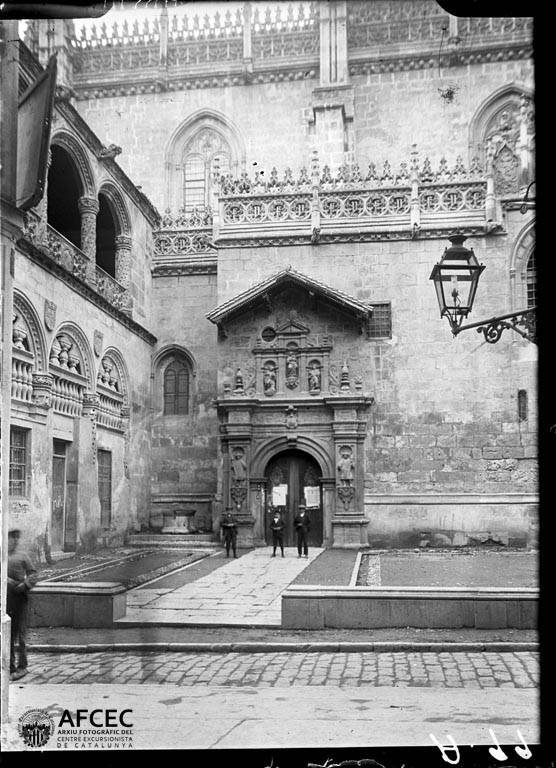
The church’s lateral Plateresque portal, attributed to Juan de Marquina and Nicolás de León, features a semicircular arch with Ionic pilasters and a niche housing San Cecilio’s statue. The rectangular bell tower, with painted decorations and a two-tiered structure capped by a tiled roof and metal cross, punctuates the skyline (Rincones de Granada).
Interior
Inside, a single nave flanked by pointed ogival arches and Gothic capitals creates a harmonious space. The coffered Mudéjar wooden ceiling is a highlight, complemented by Renaissance altarpieces and artworks like the "Cristo atado a la columna" and statues linked to local brotherhoods (Horarios Misa; Guías de Arte).
Visiting Hours and Tickets
As of June 2025, Iglesia de San Cecilio functions mainly as an active parish, with visiting hours tied closely to mass times and religious events:
- Monday–Saturday 10:00 AM – 1:00 PM, 5:00 PM – 7:00 PM
- Sunday 10:30 AM – 1:30 PM
- Note Hours may change for feast days or special events. Always check the Archdiocese of Granada or the Granada Tourism Official Site for current updates.
Admission: Entry is free during services and events. No standard tickets are required; however, donations are encouraged to support restoration efforts. For private visits or group tours, contact the parish in advance.
Accessibility and Facilities
- Mobility The main entrance is wheelchair accessible, though some interior areas retain uneven flooring. Assistance is available on request.
- Facilities No public restrooms; use nearby cafés and restaurants. Seating is available inside the nave.
- Shops No on-site gift shop; religious items found in adjacent shops.
Guided Tours
Iglesia de San Cecilio does not offer regular guided tours, but group visits can be arranged through the parish or Hermandad. Local tour agencies may include the church in broader Realejo district walks, especially during Holy Week (Guías de Arte).
Religious and Cultural Significance
Patronage of San Cecilio
San Cecilio, venerated as one of the Seven Apostolic Men, is intimately linked to Granada’s spiritual identity. The church is the seat of the Hermandad del Santísimo Cristo de los Favores y María Santísima de la Misericordia Coronada, which orchestrates major liturgical functions, including processions during Holy Week (granadahoy.com).
Annual Festivities and Community Traditions
The highlight is the Romería de San Cecilio, held annually on the first Sunday of February. Pilgrims journey to Sacromonte Abbey, believed to be the site of the saint’s martyrdom, participating in a blend of solemn liturgy and lively Andalusian celebration—music, dance, and the sharing of “salaíllas” and broad beans (granadaescultura.com).
Location and Urban Context
Situated in Campo del Príncipe, Plaza Campo del Príncipe, s/n, 18009 Granada, the church is a short walk from the city center and the Alhambra. The Realejo district, once the Jewish quarter (Garnata Alyahud), is renowned for its narrow streets, vibrant culture, and proximity to major landmarks (Rincones de Granada).
Getting There:
- On Foot 10–15 minutes from Plaza Nueva or the Alhambra.
- By Bus Lines C3 and C4 stop near Campo del Príncipe (Granada city transport).
- By Taxi Available citywide.
- Parking Limited; nearest public garages are Parking Puerta Real and Parking Alhambra.
Events and Restoration Efforts
Recent restoration (Plan Alhambra, completed late 2024) preserved the church’s south façade, sacristy, bell tower, and 18th-century murals (granadahoy.com; Archdiocese of Granada). The church hosts the "Siete Palabras" Good Friday ceremony and plays a key role in Corpus Christi and Holy Week processions.
Nearby Attractions and Travel Tips
- Campo del Príncipe Bustling square with tapas bars and local eateries.
- Alhambra The city’s crown jewel, a short uphill walk away.
- Realejo District Discover historic streets, the Palacio de los Mendoza, and vibrant street art.
- Other Churches Visit nearby Iglesia de Santo Domingo and Granada Cathedral.
Travel Tips:
- Visit early or on weekdays for quieter moments.
- Comfortable shoes recommended for cobblestoned streets.
- Combine your visit with nearby sites for a full day of cultural exploration.
Visitor Etiquette
- Dress modestly—shoulders and knees covered, especially during services.
- Maintain silence during liturgies and prayer.
- Ask permission before photographing interiors, particularly during religious events.
Frequently Asked Questions (FAQ)
Q: What are the visiting hours?
A: Generally, Monday–Saturday 10:00 AM–1:00 PM and 5:00 PM–7:00 PM; Sunday 10:30 AM–1:30 PM. Check the parish or Archdiocese of Granada for updates.
Q: Is there an admission fee?
A: No; entry is free. Donations are appreciated.
Q: Are guided tours available?
A: Not regularly, but group visits can be arranged. Local tours may include the site.
Q: Is the church accessible?
A: The main nave is wheelchair accessible but some areas have steps or uneven floors.
Q: Can I take photographs inside?
A: With discretion and outside of services; always ask for permission.
Visual and Interactive Media
- High-resolution images of the Plateresque façade, Mudéjar ceiling, and annual festivities.
- Map of Realejo district showing proximity to Alhambra and key sights.
- Virtual tour links (when available) from official or cultural heritage sites.