
History and Significance
A Legacy of Scientific Curiosity
Founded at the dawn of the 19th century, the NHG emerged from a movement of scholarly collaboration and civic pride. Its founders—local naturalists, physicians, and scholars—set out to document and preserve Franconia’s natural history, quickly amassing a collection that now encompasses fossils, minerals, plants, animals, and ethnological artifacts. Over two centuries, the NHG has served as both a research institution and a public museum, fostering environmental awareness and scientific literacy across generations (The Museum Scholar).
Cultural Significance
The NHG not only complements Nuremberg’s celebrated historical landmarks but also offers a unique perspective on the region’s relationship with the natural world. Through its exhibitions and educational initiatives, the NHG connects local experiences to global issues, encouraging visitors to explore the interplay between nature, culture, and science (Germany Travel).
Visitor Information
Location and Accessibility
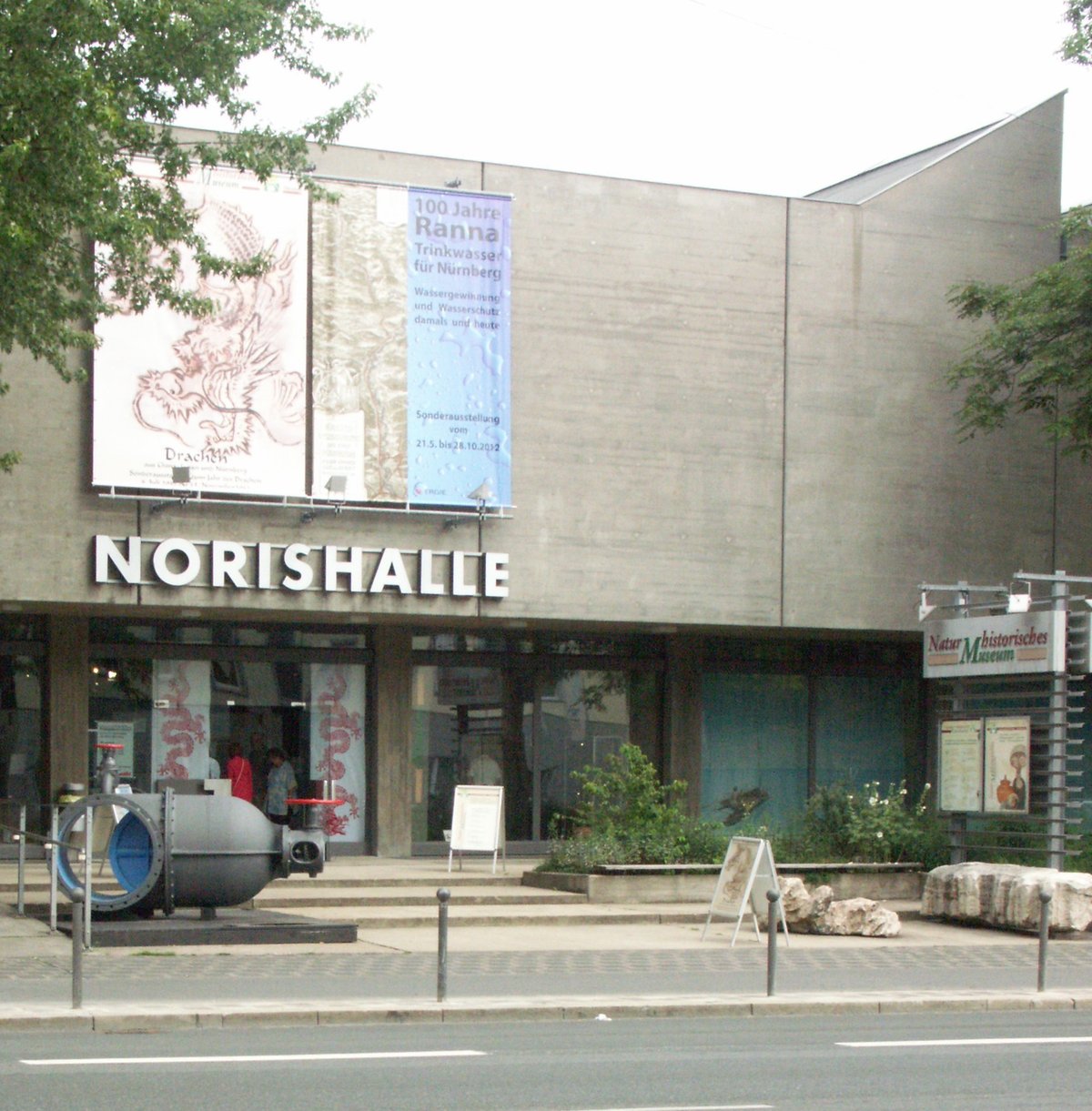
- Address Marientorgraben 8, Nuremberg, Germany (Norishalle/Charterhouse)
- Access Centrally positioned in Nuremberg’s Old Town and easily reachable by tram, bus, or a short walk from the main train station. Public transport is recommended due to limited parking.
- Accessibility The museum is wheelchair accessible with ramps and elevators. Facilities for visitors with disabilities include accessible restrooms and service animal accommodations. For more specific needs, contact the museum in advance (whichmuseum.com).
Visiting Hours
- Tuesday to Sunday 10:00 AM – 5:00 PM
- Closed Mondays and major public holidays
- Note Opening hours may vary on special occasions. Always check the official NHG website for current information.
Tickets and Admission
- General Admission €6–8 (verify latest rates on the official site)
- Reduced Rate €4–5 (students, seniors, groups)
- Children under 6 Free
- Family Tickets Available
- Purchase Options Tickets can be bought at the entrance or online via the NHG ticketing portal.
- NÜRNBERG CARD Grants free entry and public transport for 48 hours (Globe Guide).
Facilities and Accessibility
- Lockers/Cloakroom Available for bags and coats
- Museum Café Offers refreshments and seating
- Shop Sells educational materials and souvenirs
- Restrooms Accessible facilities
- Audio Guides Provided in German and English; inquire at the entrance
- Photography Non-flash photography generally permitted; observe posted restrictions
Collections and Exhibitions
Permanent Collections
- Ethnology Artifacts from global cultures, illustrating daily life, rituals, and traditions (whichmuseum.com).
- Prehistory and Archaeology Local and international finds, including a notable Jordanian archaeology exhibition (inuremberg.com).
- Geology and Mineralogy Franconian minerals and fossils, including ammonites and regional rock specimens.
- Paleontology Dinosaur skeletons, prehistoric animals, and fossilized plants presented in engaging, family-friendly displays.
- Zoology, Entomology, and Botany Rotating exhibitions of animal specimens, insect diversity, and local flora.
- Karst and Speleology Geological models and cave specimens reflecting ongoing research in the Franconian Jura (bavarikon.de).
Special Exhibitions
Each year, the museum curates temporary exhibitions on diverse topics—from world cultures to innovative environmental themes. These displays often include interactive elements, guest lectures, and workshops. Check the museum’s website for current and upcoming exhibitions.
Exhibition Design
Exhibits are organized thematically and chronologically, with bilingual (German/English) labels, multimedia displays, and interactive learning stations. Recent updates have increased hands-on and digital engagement, especially for younger visitors.
Educational Programs and Community Outreach
- Guided Tours Available in German and English for groups (10+), bookable in advance. Self-guided audio tours are also offered.
- School Programs Aligned with the Bavarian curriculum, including downloadable materials (education portal).
- Workshops and Events Regular public lectures, Children’s Discovery Days, and science workshops.
- Citizen Science Ongoing community projects and volunteer opportunities (community page).
Travel Tips & Nearby Attractions
- Best Time to Visit Weekdays and mornings for fewer crowds.
- Time Needed 2–3 hours; families may want extra time for interactive stations.
- Nearby Attractions Nuremberg Castle, Germanisches Nationalmuseum, Albrecht Dürer House, Documentation Centre Nazi Party Rally Grounds.
- NÜRNBERG CARD Offers free transport and discounted museum entries (Germany Travel).
Frequently Asked Questions (FAQ)
Q: What are the visiting hours?
A: Tuesday to Sunday, 10:00 AM – 5:00 PM. Closed Mondays and holidays.
Q: How much do tickets cost?
A: €6–8 general admission, with reduced and family rates available.
Q: Is the museum wheelchair accessible?
A: Yes, with ramps, elevators, and accessible restrooms. Contact for special accommodations.
Q: Are guided tours available?
A: Yes, in German and English, for groups by appointment; self-guided audio tours are also offered.
Q: Can I take photographs?
A: Non-flash photography is generally allowed unless otherwise indicated.