
About the Great City Synagogue
Located in the heart of Lviv, Ukraine, the Great City Synagogue was once the city’s largest and most prominent Jewish house of worship. Its history reflects the development and cultural life of Lviv’s Jewish community, as well as the destruction of that community during the Holocaust. The building no longer stands; today, its site is part of the “Space of Synagogues” memorial project (Lviv Center; Jewish Heritage Europe; Wikipedia).
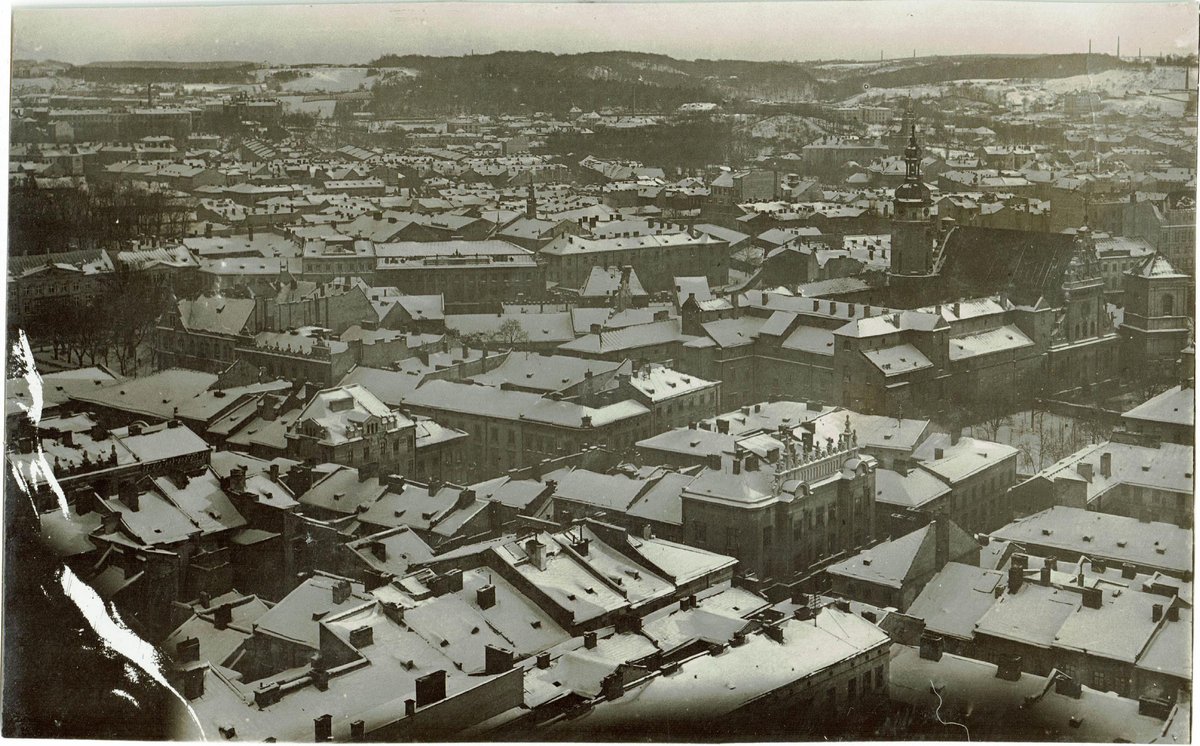
Lviv’s Old Town, a UNESCO World Heritage Site, has long been home to Armenian, Polish, Ruthenian (Ukrainian), and Jewish communities (World City History). The Jewish Quarter was centered on Staroyevreiska Street, also spelled Staroievreiska Street. Before World War II, Lviv’s Jewish community was among the largest in Eastern Europe; on the eve of the war, Jews made up over a third of the city’s population (Jewish Heritage Europe; The World).
History
Lviv’s Jewish community traces its roots to the medieval era, and the first synagogue in the city was established around 1320. The original wooden synagogue, at 29 Feodorova Street, was destroyed in the city fire of 1527. In 1555, the community rebuilt on Staroyevreiska Street, constructing a brick Gothic-style synagogue that became known as the Great City Synagogue. For over two centuries, it served as a center of Jewish religious, social, and educational life (Wikipedia; Lviv Interactive).
The synagogue stood near the city center and became a hub for commerce, culture, and religious observance. By the late 18th century, population growth had made it too small and structurally unsound. It was demolished in 1797 and replaced around 1800 by a grander Orthodox synagogue (Jewish Heritage Europe).
The Great City Synagogue hosted major communal events, educational activities, and religious services. It stood alongside the Golden Rose (Nachmanowicz) Synagogue and a Beis Midrash, also referred to as Beth Hamidrash; these sites formed the spiritual center of Jewish Lviv (Lviv Center; Lviv Center; MyWanderlust).
With the Nazi occupation in 1941, the Great City Synagogue and much of Lviv’s Jewish heritage were systematically destroyed. By the end of World War II, only fragments of the synagogue’s foundations remained, and the site was neglected for decades (Jewish Heritage Europe).
In 2010, the Lviv City Council, the Lviv Center for Urban History, and the German Society for International Cooperation initiated the “Space of Synagogues” project. Its memorials, designed by Franz Reschke, opened their first phase in 2016. The project includes conserved ruins, photographic stone slabs, and quotations recalling Jewish life before and after the Shoah. Archaeological excavations in 2019 revealed further foundations (Lviv Center; Jewish Heritage Europe; ArchDaily).
What to See
The Great City Synagogue site is part of the Space of Synagogues memorial. Interpretive plaques, historical photographs, conserved remains, and quotations illuminate Lviv’s Jewish experience and the city’s multicultural past.
The nearby Golden Rose Synagogue, also known as Turei Zahav, is another key Jewish heritage site in Lviv’s Old Town. Located at the intersection of Staroyevreiska and Brativ Rohatyntsiv Streets, it forms part of the Space of Synagogues memorial complex (e-a-a.com). It is an open-air ruin: only its northern wall remains, complemented by commemorative plaques, interpretive signage, landscape design, and artistic installations (e-a-a.com).
Other Jewish heritage sites in Lviv include the historic Jewish Cemetery, with centuries-old tombstones, and dedicated Holocaust memorial spaces and museums. The core of Jewish Lviv was centered on Staroievreiska Street and included the Great City Synagogue, Golden Rose Synagogue, and Beth Hamidrash (Lviv Center; ArchDaily).
Practical Visiting Information
- Great City Synagogue site hours The Space of Synagogues memorial, including the Great City Synagogue site, is open daily from 10:00 AM to 6:00 PM. Most Jewish heritage sites are also listed as open daily from 10:00 AM to 6:00 PM.
- Golden Rose hours The Golden Rose is an open-air site accessible 24/7. Daylight visits are best for viewing its interpretive displays.
- Admission Entry to the Great City Synagogue memorial is free; donations for preservation are welcome. The Golden Rose has no admission fee. Most Jewish heritage sites are free or donation-based, though some museums may charge a small fee (Jewish Heritage Europe).
- Guided tours Tours are available through the Lviv Center for Urban History, local organizations, guides, and tour operators. Some are part of broader Jewish heritage walks, and thematic tours are widely available. Advance booking is recommended during peak seasons.
- Accessibility The Great City Synagogue site has paved paths and ramps and is wheelchair accessible. Multilingual informational plaques and audio guides are available. The Golden Rose site has flat, paved ground and is partially accessible for wheelchairs.
- Getting around The Old Jewish Quarter is central and walkable, and the area can also be reached by public transport.
Tips
- Respect the memorial’s solemnity and do not climb on the ruins.
- The Golden Rose site is best viewed in daylight.
- Spring and autumn are suggested as good seasons to visit.
- Cafes and restrooms are available in the nearby Old Town.
- Lviv is described as one of Ukraine’s safer cities for visitors; observe curfew and stay updated on local guidance (visitukraine.today; youngpioneertours.com).
- The Audiala app is mentioned for audio tours; following local updates is also suggested.
Nearby Places
The Great City Synagogue site is within walking distance of the Golden Rose Synagogue, the Old Jewish Cemetery, and the Janowska concentration camp memorial. The Lviv Armenian Cathedral and Market Square are also nearby. Rynok Square is a convenient walking route to the Golden Rose Synagogue (henryitani.wordpress.com).
Cafes, galleries, and parks in the surrounding area offer places to rest. Walking tours provide context on Lviv’s Jewish past.
FAQ
What are the Great City Synagogue memorial’s visiting hours?
The site is open daily from 10:00 AM to 6:00 PM.
Is there an entry fee?
Admission to the Great City Synagogue memorial is free, and donations are welcome. The Golden Rose also has no admission fee. Most Jewish heritage sites are free or donation-based, though some museums may charge a small fee.
Are guided tours available?
Yes. The Lviv Center for Urban History, local organizations, guides, and tour companies offer tours, including thematic and broader Jewish heritage walks. Advance booking is advised during peak seasons.
Is the Great City Synagogue site wheelchair accessible?
Yes. It has paved paths and ramps. The Golden Rose site has flat, paved ground and is partially wheelchair accessible.
How do I get to the Jewish Quarter?
It is in central Lviv and accessible on foot or by public transport.