Museum History and Evolution
Early Foundations (1914–1975)
Founded in 1914, the Museo Histórico Militar de Valencia originally served as a repository for military memorabilia, reflecting early 20th-century nationalist sentiments. During the Francoist era, the museum's narrative focused on the valor and unity of Spain’s armed forces, with exhibitions that often highlighted military achievements while overlooking the complexities and human costs of conflict (La Libre Opinión).
Modernization and Transformation (1975–Present)
With Spain’s transition to democracy after 1975, the museum embraced a more nuanced and inclusive approach. The collection expanded to incorporate diverse perspectives, including those of civilians, women, and marginalized groups affected by war. Recent investments have modernized the facilities and digitized collections, opening the museum to a global audience through virtual tours and online resources.
Today, the museum is recognized for its critical, pluralistic narratives and its dedication to fostering public engagement with history (Experiences Valencia; Patrimonio Cultural de Defensa).
Collections and Highlights
Permanent Collections
The museum houses over 10,000 items, including:
- Weapons and Armaments From 17th-century cannons to Spanish Civil War rifles, many manufactured in Valencia (museomilitarvalencia.es).
- Uniforms and Regalia More than 1,500 uniforms, tracing military fashion from the 18th century to the present.
- Banners and Standards Rare regimental flags and unit standards.
- Archival Materials Maps, diaries, correspondence, and photographs documenting military life and campaigns.
- Medals and Decorations Medals awarded for valor and distinguished service.
- Dioramas and Models Detailed scale models and educational dioramas depicting key battles (whichmuseum.com).
A notable centerpiece is the 1679 “pedrero” cannon, cast locally and emblematic of the region’s military history (Patrimonio Cultural de Defensa).
Thematic Galleries and Layout
- Ground Floor Spanish Civil War artifacts, locally produced weapons, and large-scale artillery displayed in a central courtyard (cultural.valencia.es).
- Upper Floor Uniforms, banners, dioramas, and a projection room for audiovisual presentations.
- Courtyard Outdoor exhibits of heavy artillery and armored vehicles, set against a mural symbolizing Spain’s unity.
Visiting Hours, Tickets, and Location
Opening Hours
- Tuesday to Saturday 10:00–14:00 and 16:00–20:00
- Sundays and Public Holidays 10:00–14:00
- Closed on Mondays
Admission
- Free for all visitors—no ticket purchase or advance reservation required.
Location
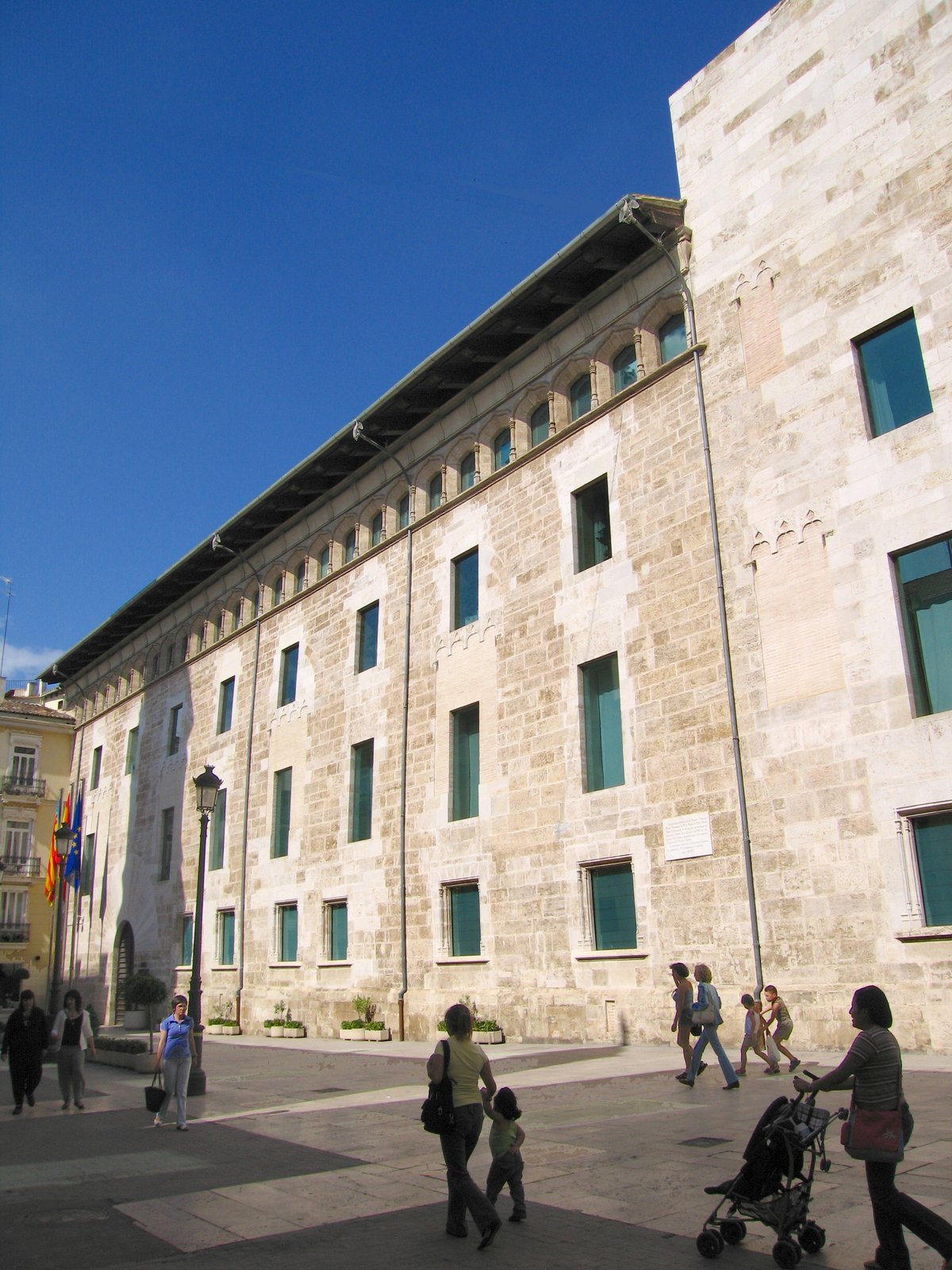
- Address Cuartel de San Juan de Ribera, C/ General Gil Dolz, 6, Valencia, El Llano del Real district, adjacent to the Turia Gardens (Valencia.es; JDíezArnal).
Accessibility and Visitor Services
The museum is committed to inclusivity, offering:
- Wheelchair access Ramps, platform lift (1.21 x 0.80 m), and adapted restrooms (VisitValencia.com).
- Visual/Sensory accessibility Non-slip flooring, contrasting signage, uniform lighting, tactile models, and an induction loop for hearing aid users (Aseci.es).
- Rest Areas Garden with accessible seating.
- Shop and Café Accessible gift shop and on-site cafeteria for refreshments.
Special and Temporary Exhibitions
Playmobil Diorama Exhibition (2025)
- Dates April 10 – September 11, 2025
- Highlights Six large Playmobil dioramas depicting historical battles and military life, including scenes from the Reconquista and Spanish Civil War (AESCLICK, valenciasecreta.com).
- Collectors’ Market May 23–25, 2025, featuring rare Playmobil items (locosporvalencia.com).
Other Temporary Exhibitions
Topics include the roles of women in the armed forces, military engineering, and Spain’s peacekeeping missions, often with interactive and multimedia features (Guía de Museos).
Educational Activities and Guided Tours
- Guided Tours Available in Spanish and other languages upon request; advance booking recommended.
- School Programs Interactive workshops, history quizzes, and curriculum-aligned activities for students.
- Family Activities Storytelling, creative workshops, and hands-on experiences during special exhibitions.
- Conferences and Seminars Regular lectures and seminars by historians and military experts.
Visitor Experience and Recommendations
- Visit Duration Allow at least 2–3 hours to explore both floors and the courtyard.
- Best Time to Visit Mornings or weekdays to avoid crowds, especially during special exhibitions.
- Photo Opportunities The courtyard mural, artillery displays, and Playmobil dioramas are highly photogenic.
- Atmosphere The museum is generally uncrowded, with positive reviews for its staff and organization (Aseci.es).
Nearby Attractions and Travel Tips
- Adjacent Sites Turia Gardens, City of Arts and Sciences, Torres de Serranos, Valencia Cathedral, Almoina Archaeological Center.
- Transport Accessible by bus (lines 5B, 6, 8, 9, 10, 11, 13, 28, 32, 62, 70, 71, 72, 81, N1, N4, N5, N6, N7) and metro (Alameda station, lines 3 & 5).
- Parking Accessible spaces available nearby; general street parking is limited during peak hours (VisitValencia.com).
Frequently Asked Questions (FAQ)
Is admission free?
Yes, entry is free for all visitors.
What are the opening hours?
Tuesday to Saturday, 10:00–14:00 and 16:00–20:00; Sundays and public holidays, 10:00–14:00; closed Mondays.
Is the museum accessible to people with disabilities?
Yes, with ramps, lifts, adapted restrooms, tactile models, and an induction loop.
Are guided tours available?
Yes, by advance request; check the official website for details.
Can I take photos?
Photography is generally permitted, but check for restrictions in some exhibitions.
Are there activities for children and families?
Yes, especially during special exhibitions like the Playmobil Diorama event.