Medieval Origins and Civic Symbolism
Casa da Câmara was established in the mid-15th century as the seat of Porto’s municipal power. Strategically located just meters from the Sé Cathedral and the city’s primitive wall, its presence asserted the city’s autonomy and the balance between civic and ecclesiastical authorities (pt.wikipedia).
Known as Casa dos 24 in reference to the 24 “homens-bons” (guild representatives) who convened to govern, the building was the site of municipal decision-making, justice administration, and local celebrations (cultura.cm-porto.pt).
Architectural Features and Functions
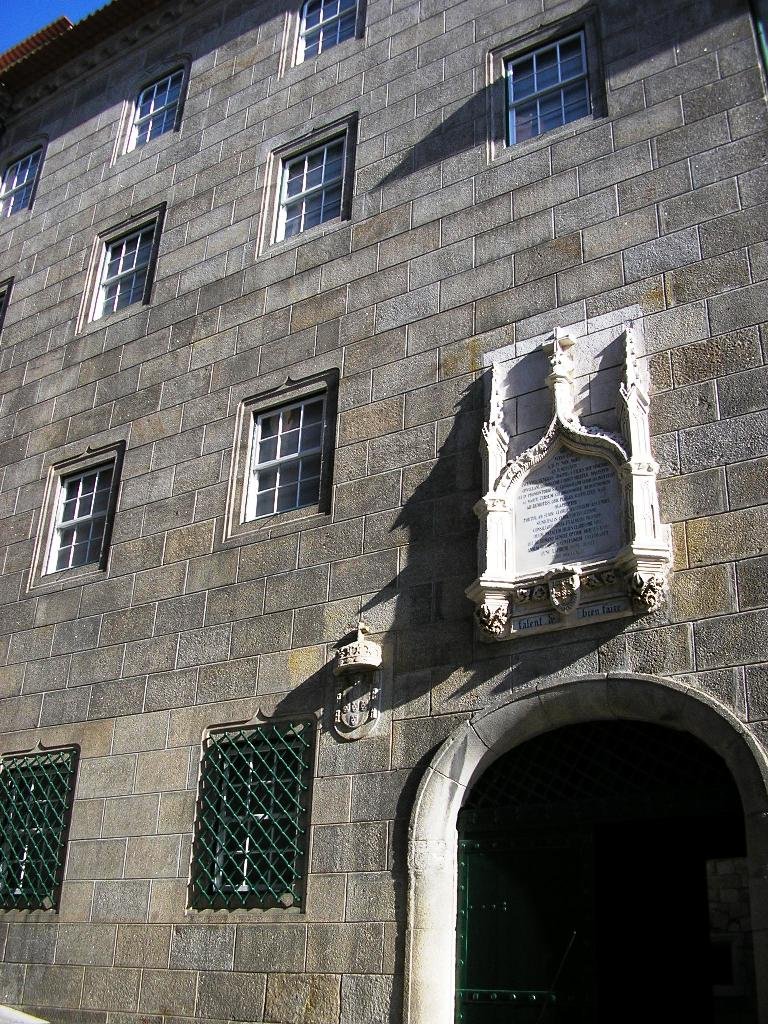
Constructed of robust granite, Casa da Câmara reached approximately 22 meters in height and featured battlements, Gothic arches, and a U-shaped layout. Its three floors served distinct purposes:
- Upper Floor Main assembly hall (Sala de Vereações) and archives, with a gilded ceiling denoting civic pride.
- Ground Floor Public audience hall for petitions and administrative matters.
- Lower Floor Commercial spaces and judicial offices (museudoporto.pt).
Its fortress-like appearance and minimal decorative elements reflected both defensive needs and the pragmatic spirit of Porto’s governance.
Decline, Ruin, and Archaeological Rediscovery
By the 16th century, structural issues led to the transfer of the municipal assembly to Rua das Flores, and Casa da Câmara was repurposed as a prison and shelter. A devastating fire in 1875 left the building in ruins, and decades of neglect followed (en.wikipedia). Excavations in the 1980s revealed Romanesque and Gothic foundations, rekindling public and academic interest.
Modern Restoration and Museum Integration
In the late 20th century, architect Fernando Távora led a controversial yet symbolic reconstruction, blending original granite with contemporary materials such as iron, glass, and concrete (pt.wikipedia). Completed in 2002, the new structure features panoramic city views and a gold-leaf ceiling homage.
Today, Casa da Câmara is integrated into the Museu do Porto, hosting exhibitions and events that celebrate Porto’s layered history (museudoporto.pt; publico.pt).
Visiting Casa da Câmara
Opening Hours and Tickets
- Standard Opening Hours Tuesday to Sunday, 10:00 AM – 6:00 PM; closed Mondays and public holidays.
- Tickets Adults €5; students/seniors €3; free for children under 12 and Museu do Porto members. Tickets can be purchased onsite or online (museudoporto.pt).
Note: Occasionally, Casa da Câmara may be closed for maintenance or during special events. Always check the official museum website before your visit.
Accessibility
- The site is wheelchair accessible via ramps and elevators.
- Assistance is available for visitors with disabilities upon request.
Getting There
- Address Terreiro da Sé, Porto historic center.
- Access Short walks from landmarks like Sé Cathedral, Rua das Flores, and São Bento station. Served by city buses and metro lines.
Guided Tours and Events
- Guided tours (in Portuguese, English, Spanish) are available on weekends and for groups—advance booking recommended.
- Temporary exhibitions and cultural events are held regularly; check the schedule online (cultura.cm-porto.pt).
Nearby Attractions
- Sé Cathedral (Sé do Porto) Porto’s oldest monument, a short walk away (Porto Cathedral).
- Episcopal Palace Historic residence with baroque architecture and city views.
- Ribeira District Colorful riverside area known for its lively atmosphere and traditional dining.
- Dom Luís I Bridge Iconic 19th-century bridge connecting Porto to Gaia.
- Rua das Flores Bustling pedestrian street with shops, cafes, and historic façades.
Visitor Tips and Photography
- Timing Visit early in the morning or late afternoon for fewer crowds and optimal lighting.
- Footwear Wear comfortable shoes for cobblestone streets and hilly terrain.
- Photography Capture cityscapes from inside Casa da Câmara’s glass wall; exterior shots with the cathedral make for stunning images.
- Festival Season The area is especially lively during the São João Festival and summer events (São João Festival).
Frequently Asked Questions (FAQ)
Q: What are Casa da Câmara’s opening hours?
A: Tuesday to Sunday, 10:00 AM – 6:00 PM; closed Mondays.
Q: How do I buy tickets?
A: Tickets are available onsite or via the Museu do Porto website.
Q: Is Casa da Câmara accessible for people with disabilities?
A: Yes, the site is wheelchair accessible.
Q: Are guided tours available?
A: Yes, on weekends and for groups with advance booking.
Q: Can I visit Casa da Câmara during festivals?
A: Yes, but check event schedules for possible closures or special programming.