Type 2+ letters to search all countries, cities, and places
/Ctrl KEsc
travel_explore
Type 2+ letters to search all countries, cities, and places
Press Enter to open the top result
Parco Virgiliano
Naples·Italy·40° N · 14° E·Updated Apr 2026
Built in 1931 as a war memorial, Parco Virgiliano is Naples at full stretch: Vesuvius, Nisida, Bagnoli, sea wind, and sunset from Posillipo, all at once.
At roughly 150 meters above the sea, as high as a 45-story building, Parco Virgiliano in Naples, Italy lets you watch two different worlds at once: the Gulf of Naples on one side, Pozzuoli and the Phlegraean coast on the other. That split view is the reason to come. You get the postcard version of the city, yes, but also its rougher truth: Roman luxury below, 20th-century memorial planning underfoot, and Bagnoli's industrial west in the same sweep of air and light.
Most visitors arrive expecting a pretty lookout named for Virgil. The surprise is that the place is far stranger than that. This is not the little park at Piedigrotta tied to Virgil's supposed tomb, but a 1931 remembrance park on the Posillipo headland, later wrapped in Virgilian symbolism.
The setting does a lot of the writing for you. Pine resin hangs in the air on hot days, gulls cut across the cliff edge, and the yellow tuff below Trentaremi looks less like untouched nature than a coast that has been worked, cut, and reused for centuries.
Come for the views near sunset, when the water turns metallic and the islands look close enough to pocket. Stay because Parco Virgiliano changes what you think you are seeing: not a neutral belvedere, but a place where memory, myth, quarrying, Roman ambition, and modern Naples all crowd the same ridge.
Researched by the Audiala editorial team from historical records, architectural archives, and local expertise.
What to see
The Main Belvederes on the Posillipo Spine
Parco Virgiliano works best when you stop treating it like a park and start reading it as a cliff with paving. The main avenue runs out along the Posillipo headland about 150 meters above the sea, roughly the height of a 45-story tower, and each terrace seems to swing the view a few degrees: Vesuvius one moment, Capri and the Sorrentine coast the next, then Nisida and the hard edge of Bagnoli. Wind does half the writing here. You smell rosemary, myrtle, pine resin, then hear almost nothing but distant traffic and the sea working far below, while Naples spreads out in that familiar local way, half theater set, half geological accident.
The Valley of the Kings and the Trentaremi Drop
Most people take the obvious terrace, photograph Capri, and leave too early. The better move is the lower belvedere known as the Valley of the Kings, where the ground falls away toward Cala Trentaremi and Cala Badessa and the yellow tuff cliffs finally claim your attention; look down, not out, and you see the volcanic rock that built this whole ridge, rough and sun-bleached like broken loaves. That shift changes the place. What first felt like a scenic balcony starts to read as a piece of raw coast with a memorial park laid carefully on top of it.
A 45-Minute Sunset Walk Through Memory
Start at the monumental entrance and give the formal axis its due, because records show this park opened in 1931 as a remembrance park for the dead of World War I before it settled into its Virgilian identity. Then drift off the central spine toward the quieter side paths, watch for the literary panels with Grand Tour voices, and end facing Coroglio and Nisida as the light flattens the sea into sheet metal and turns the post-industrial shoreline oddly beautiful. Late afternoon is the right hour. You leave with a sharper sense of Naples: a city that rarely separates beauty from damage, memory from view, or poetry from stone.
Plan your visit
Getting There
From central Naples, the cleanest transit route is Metro Line 2 to Campi Flegrei, then ANM bus C1 to Pascoli, followed by about 14 minutes on foot uphill to Viale Virgilio. From Mergellina, buses 140 and C21 climb toward Capo Posillipo; from Vomero, bus C31 is the useful line, with the stop roughly 800 meters from the gate. If you drive, expect street parking outside the park, often paid blue-line spaces, and tighter competition around sunset.
Opening Hours
As of 2026, sources disagree: the city tourism page shows daily opening from 07:00 to 22:00, while the municipal regulation still lists seasonal hours, with April under the 07:00 to 21:00 schedule, extended to 22:00 on Saturdays and Sundays. Last entry is 30 minutes before closing, and the park can shut during strong wind or storms, which matters on this exposed Posillipo ridge 150 meters above the sea, about the height of a 45-story tower.
Time Needed
Give it 30 to 45 minutes if you only want two or three belvederes and a fast look at the gulf. Most visitors need 1 to 1.5 hours; 2 hours makes sense if you walk the terraces slowly, wait for the light to change, or stay through sunset when the Phlegraean side starts to glow.
Accessibility
The official Naples listing marks Parco Virgiliano as accessible, and recent visitor sources mention an accessible entrance, accessible parking, and public toilets. The catch is under your wheels: terraced routes, mixed surfaces, and some bumpy stretches mean wheelchair users should expect the main paths and central viewpoints to be easier than every terrace, and I found no evidence of elevators.
Cost & Tickets
Entry is free as of 2026, with no official booking system and no skip-the-line product because this is a municipal public park, not a ticketed monument. Every open day is effectively a free-entry day, so spend your money on the bus up or a coffee afterward instead.
Photo Gallery
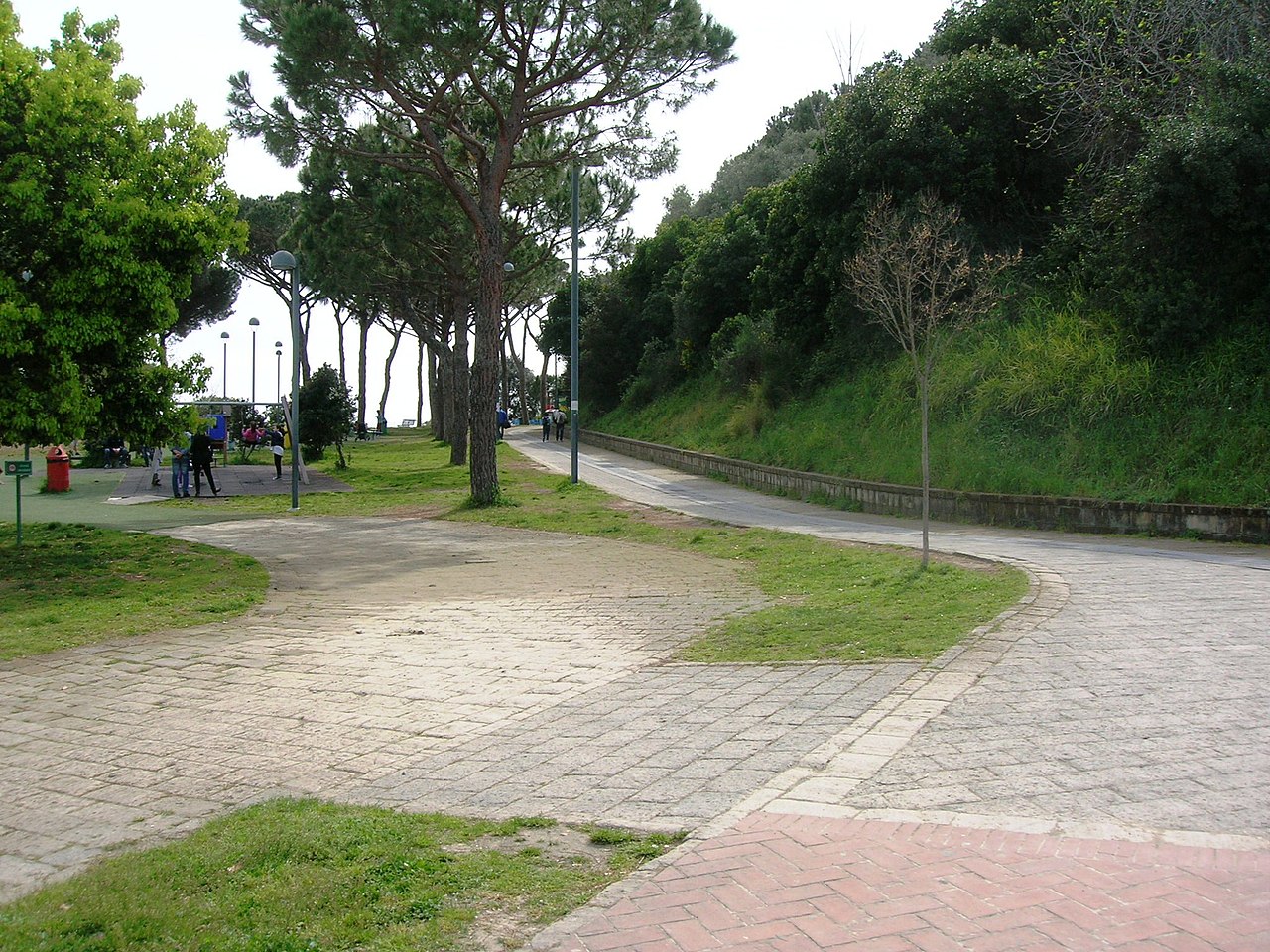
Visitors enjoy a peaceful twilight view over the Gulf of Naples from the scenic overlooks of Parco Virgiliano in Italy. · Fr~itwiki at Italian WikipediaThe dramatic circular amphitheater at Parco Virgiliano in Naples, Italy, captured at night with striking high-contrast lighting. · Dr.Conati Roberto De MartinoA historic aerial perspective of the winding roads and grand entrance gates at Parco Virgiliano, overlooking the scenic coastline of Naples, Italy. · Unknown authorUnknown authorA peaceful day at Parco Virgiliano in Naples, Italy, where paved paths wind through lush greenery and recreational areas. · MentnafunangannA view of Parco Virgiliano, Naples, Italy. · MentnafunangannA peaceful, sunlit path winds through the beautiful Parco Virgiliano in Naples, Italy, offering a relaxing atmosphere with shaded walkways and a small cafe. · MentnafunangannA peaceful view of the lush greenery and coastal vistas at Parco Virgiliano in Naples, Italy. · Mentnafunangann
History
A Memorial Park Above an Older Drama
Records show that Parco Virgiliano opened in 1931 as Parco della Vittoria, also called Parco della Bellezza, before taking the more openly commemorative name Parco della Rimembranza. The park most people see as timeless is, in fact, a 20th-century act of civic memory for the dead of World War I.
That modern park sits on a headland with a much older pulse. Below the terraces lie the Pausilypon ruins, the Grotta di Seiano, the cliffs of Trentaremi, and traces of a coast shaped by Roman pleasure, extraction, wartime shelter, and later neglect.
The turning point
Vedius Pollio, Augustus, and the Headland That Changed Hands
The most gripping figure connected to this place is Publius Vedius Pollio, the Roman equestrian who built the Pausilypon estate on this coast in the 1st century BC. For Pollio, the stake was personal and sharp: status. He was rich, close to power, and needed architecture grand enough to make that closeness visible from the sea.
Ancient writers also gave him a vicious afterlife. According to literary tradition, Pollio tried to feed slaves to lampreys; whether embellished or not, the story stuck because it matched the moral theater of elite Rome. Then came the turning point: Pollio died in 15 BC, and Augustus inherited the estate.
That transfer changed the meaning of the headland. Records and archaeological summaries show that Augustus reworked the property into imperial space, softening or erasing Pollio's imprint. Even now, a mosaic found in 2022 may belong to Pollio's earlier phase, but scholars have not settled that point yet.
From Remembrance to Rebranding
Records show that educator Guido Della Valle later pushed the park toward the name "Virgiliano," tying it to Naples' long Virgil myth rather than to any documented tomb on this ridge. That shift matters. It turned a Fascist-era memorial park into something softer and more literary, which is why so many visitors still misread it as an ancient Virgil site instead of a carefully staged 1930s public work.
Storm, Closure, and a Second Life
The modern turning point came on 29 October 2018, when violent wind hit this exposed crest and damaged trees in and around the park. The scene would have been brutal: trunks down, access blocked, the pines snapping in gusts off the sea. Local reporting and civic campaigns then pushed Parco Virgiliano back into public argument, helping lead to restoration phases that officially resumed on 19 March 2025 and were still continuing into 2026.
Tips for visitors
Go For Sunset
Late afternoon is the smart move, but do not stop at the first terrace. The park faces both the Gulf of Naples and the Pozzuoli side, so the light keeps changing; one belvedere gives you postcard Naples, the next gives you Bagnoli, Nisida, and the rougher edge of the city.
Drone Assumption
Casual photography is normal, but drone rules are not posted clearly on site. Treat the area as authorization-only unless you have checked D-Flight first; dense urban fabric and protected coastal zones sit too close for guesswork.
Rules Matter
Municipal rules ban entry during storms and strong wind, forbid balls, and allow dogs only on leash, with muzzle and waste bags. Bikes are limited to the main central avenue and must move slowly, so this is a walk-and-look park, not a free-for-all.
Parking Scam Watch
The park itself sits in a relatively calm part of Posillipo, but the bigger annoyance nearby is informal parking rackets, especially if you continue toward Marechiaro or arrive by car at busy hours. Use marked spaces, keep interactions brief, and avoid isolated approach roads late at night if you are on foot.
Eat Nearby
For a quick, casual stop near the park, Posillipo Underground works for pizza and mid-range prices. Caffè Lucrezia on Via Posillipo is the better budget pause for coffee and pastry, while Cicciotto a Marechiaro dal 1942 is the seafood splurge if you want to keep following the headland downhill.
Pair It Well
Parco Virgiliano makes more sense when you treat it as the balcony before the coast, then continue toward the Posillipo-Gaiola-Pausilypon side of Naples rather than rushing back to the center. If you want a sharp contrast afterward, return to the city core and duck into Museo Dell'Opera Pia Purgatorio Ad Arco, where Naples trades sea wind and open sky for skulls, candles, and underground devotion.
Where to Eat
local_dining
Don't Leave Without Trying
Pizza NapoletanaPizza frittaCuoppoGenoveseRagù napoletanoPasta e patateCuzzetielloSfogliatellaBabà
Lucrezio Cafè
quick bite
Bar, Italian€€star4.1(2859)
Order: Zeppoline with seaweed and mixed fried starters for a quick, satisfying bite
A lively local spot with late-night hours, perfect for a casual drink or snack after exploring the park. The atmosphere is energetic, and it's a favorite among locals for its hearty bar food.
Order: Dry-aged beef cuts or the Granfuoco burger for a hearty meal
This is the go-to spot near the park for meat lovers. The emphasis on dry-aging and family butcher traditions makes it a standout for quality and authenticity.
Order: Scialatielli with clams or mixed grilled fish for a classic seafood experience
With a high rating and a focus on seafood, this restaurant offers a polished dining experience right by the park. It's a great choice for those looking for a more refined meal.
checkPosillipo Market is open on Thursdays around 7:30 AM-2:00 PM for a local market experience.
checkFor a proper terrace-over-the-water meal, al Faretto is worth the slightly longer walk.
Food districts:Posillipo for seafood and scenic diningFuorigrotta for larger local markets
Restaurant data powered by Google
Frequently asked
Is Parco Virgiliano worth visiting?
Yes, especially if you want the one Naples view that makes the city’s contradictions visible at once. From about 150 meters above sea level, roughly the height of a 45-story building, you look over Capri, Nisida, Bagnoli, the Phlegraean coast, and the yellow tuff cliffs of Posillipo, while walking through a park that began in 1931 as a World War I memorial rather than a simple scenic stop.
How long do you need at Parco Virgiliano?
Most visitors need 1 to 2 hours. The official Naples listing suggests 120 minutes, which feels right if you want a slow walk, a few belvederes, and time to reach the lower viewpoints instead of stopping at the first terrace.
How do I get to Parco Virgiliano from Naples?
The easiest route from central Naples is usually public transport to Posillipo, then a bus and a short uphill walk. As of April 14, 2026, ANM routes 140, C21, C31, and C1 all help depending on where you start, and one practical route from the historic center is Metro Line 2 to Campi Flegrei, then C1, then about 14 minutes on foot.
What is the best time to visit Parco Virgiliano?
Late afternoon into sunset is the best moment. The light turns the gulf metallic, the islands separate from the haze, and the western terraces toward Coroglio, Nisida, and Bagnoli carry more emotional weight than the postcard view around noon; just check the same day’s opening hours because official schedules still conflict and wind can close the park.
Can you visit Parco Virgiliano for free?
Yes, entry is free. As of April 14, 2026, I found no official ticketing system, no booking requirement, and no skip-the-line setup for normal visits, because this is a municipal public park rather than a gated monument.
What should I not miss at Parco Virgiliano?
Don’t miss the lower belvedere known as the Valley of the Kings, the terraces facing Trentaremi, and the yellow tuff cliffs below the viewpoints. Most people photograph Capri and Vesuvius, then leave; the smarter move is to look down as well as out, because the worked rock, quarry scars, and coast below explain why this headland mattered long before the park opened in 1931.
Sources & attribution12
Researched and written by the Audiala editorial team from historical records, architectural archives, and local expertise. Last updated April 2026.
Napoli For Me - Parco Virgiliano — Official city listing used for free entry, accessibility, official visit length, panoramic features, and general orientation.
Coesione Napoli - Parco Virgiliano — Used for the lower belvedere called the Valley of the Kings and for restoration details tied to viewpoints and paths.
Saved and recently read places — kept on this device only.
Photo credits (10)
View from Parco Virgiliano near Naples — Jwslubbock — CC BY-SA 4.0 (https://creativecommons.org/licenses/by-sa/4.0/) — Source: https://commons.wikimedia.org/wiki/File:View_from_Parco_Virgiliano_near_Naples.jpg
Parco Virgiliano a Posillipo — Giuseppe Guida — CC BY-SA 4.0 (https://creativecommons.org/licenses/by-sa/4.0/) — Source: https://commons.wikimedia.org/wiki/File:Parco_Virgiliano_a_Posillipo.jpg
Baia di Trentaremi 1 — Mentnafunangann — CC BY-SA 3.0 (https://creativecommons.org/licenses/by-sa/3.0/) — Source: https://commons.wikimedia.org/wiki/File:Baia_di_Trentaremi_1.JPG
Napoli. Baia di Trentaremi. 074 — Giuseppe Guida — CC BY-SA 4.0 (https://creativecommons.org/licenses/by-sa/4.0/) — Source: https://commons.wikimedia.org/wiki/File:Napoli._Baia_di_Trentaremi._074_.jpg
Strictly necessary cookies keep the site working. Analytics (PostHog, Google Analytics) measures how each visitor uses our pages. Marketing loads YouTube videos and walking-route maps without a tap and lets Google Analytics set advertising cookies. We never sell your data. You can change this any time from the footer.
Privacy
Cookie preferences
Pick what you're okay with. You can change this any time from the footer.
Strictly necessary
Always on
Sign-in, language, navigation. Always on.
Product analytics
PostHog (EU) and Google Analytics record which pages you view and how you use them, under a random identifier stored in your browser. Helps us see which pages work and which need fixing. Google's ad personalisation stays off. No selling.
Marketing
Loads YouTube videos and the walking-route maps (OpenFreeMap) without a tap; without it, they load only when you tap them. If analytics is also on, Google Analytics may set advertising cookies. Ad personalisation stays off.