What the Place Is
Vietnam Germany Hospital, also known as Viet Duc Hospital, is a major medical institution in central Hanoi and a leading center for surgery and trauma care. Founded in 1906, it is associated with the development of Vietnamese healthcare and a lasting tradition of Vietnamese-German cooperation (Viet Duc Hospital Introduction).
The Viet Duc Friendship Hospital Monument, within the hospital grounds, commemorates more than a century of medical progress and partnership. The hospital is at 40 Tràng Thi Street, Hoàn Kiếm District, near Hoàn Kiếm Lake and the Old Quarter. The monument is a point of interest for visitors interested in Hanoi’s medical history and Vietnamese-German relations (The Viet Duc Friendship Hospital Monument).
History and Significance
The hospital was established in 1906 as “Hôpital indigène du Protectorat.” It introduced Western surgical and medical practices to northern Vietnam and served as both a healthcare facility and a training center for Vietnamese clinicians (Viet Duc Hospital Introduction).
Its name changed alongside Vietnam’s political history: it became Yersin Hospital in 1943, honoring Alexandre Yersin, and Phu Doan Hospital in 1954. In 1958, it was renamed the Vietnam – Democratic German Friendship Hospital, marking the start of technical and educational cooperation with East Germany. The monument’s history is also described as reflecting a partnership with East Germany in 1973 (The Viet Duc Friendship Hospital Monument).
Long affiliated with Hanoi Medical University, Viet Duc has trained generations of Vietnamese doctors and advanced research in surgery and trauma care (Hektoen International). Among its notable medical figures are:
- Professor Ton That Tung, developer of the internationally acclaimed “Ton That Tung method” for liver resection and leader of Vietnam’s first heart surgery in 1958.
- Professor Ho Dac Di, an innovator in surgical techniques and hospital management who helped advance the institution’s reputation for clinical excellence.
The East German partnership brought equipment, staff exchanges and scholarships, and is described as continuing today. By 2016, the hospital had expanded to more than 1,300 beds and become a leading referral center for complex surgical cases (Viet Duc Hospital Introduction).
Today, Viet Duc is described as Vietnam’s foremost center for surgery and trauma, performing complex procedures including organ transplants and advanced surgical interventions (VietnamNet). It attracts international patients, including people from Poland, Hungary, Japan and the UK, and contributes to the growth of medical tourism in Vietnam (Tuoi Tre News).
The hospital also collaborates with international partners, including the Vietnamese-German Center for Medical Research (VG-CARE), on infectious disease, surgery and public health research (Wikipedia). Its medical exchanges, research and educational programs continue the Vietnamese-German partnership, which is also marked by commemorative events (German Embassy Hanoi).
What to See
The Viet Duc Friendship Hospital Monument commemorates the hospital’s medical legacy and Vietnamese-German cooperation. Its architecture and surrounding gardens offer photo opportunities. The hospital and monument are located within a working hospital complex, and visitors can enter only designated public areas.
Practical Visiting Information
Hours and Admission
- Hospital general visiting hours 8:00 AM–9:00 PM daily. Confirm current hours and visitor policies on the official hospital website, as protocols may change due to health and safety needs.
- Monument Daily, 8:00 AM–6:00 PM, except major national holidays.
- Admission No tickets are required for general visits to the hospital or monument. Monument admission is free.
Medical Visits and Tours
Appointments are required for patient consultations and medical tourism services. International patients should arrange appointments in advance through the hospital’s international department.
Educational tours can be arranged by appointment, particularly for groups and medical professionals. Monument guided tours are available upon request and require advance booking for groups; they are free.
Annual ceremonies, including Vietnam Doctors’ Day and the hospital’s anniversary, feature performances and exhibitions.
Location, Transport and Accessibility
The hospital is at 40 Tràng Thi Street, Hoàn Kiếm District, Hanoi. It can be reached by taxi, bus or ride-hailing service; bus routes 09, 14 and 22 serve the area. The hospital is within walking distance of the Old Quarter and major historical sites. The monument is a 15-minute walk from Hoàn Kiếm Lake.
Ramps and accessible pathways are provided at the hospital and monument. Contact the hospital in advance about specific accessibility needs.
Tips
- Check the hospital’s official website for current hours and visitor policies.
- For monument photography, early morning or late afternoon offers natural light. Photography is allowed; avoid flash.
- Arrange medical appointments and group or educational tours in advance.
Nearby Places
Vietnam Museum of Fine Arts
The Vietnam Museum of Fine Arts presents Vietnamese artistic heritage from ancient to modern times. Founded in 1966, it occupies a building combining French colonial and traditional Vietnamese architectural styles. Its collection includes artifacts from the ancient Cham and Dong Son cultures, as well as contemporary works, and reflects Vietnam’s ethnic diversity and creative history (Vietnam Museum of Fine Arts).
- Address 66 Nguyen Thai Hoc Street, Ba Dinh District.
- Hours Tuesday–Sunday, 8:30 AM–5:00 PM; closed Mondays and public holidays.
- Tickets 40,000 VND for adults; discounts for students and seniors; free for children under 6.
- Getting there Accessible by taxi or public transport; about 30 minutes from Noi Bai International Airport.
- Highlights Ancient bronze drums, ceramics and sculpture; lacquerware and silk paintings; contemporary and ethnic minority art.
- Visiting tips Weekdays are quieter. Allow 2–3 hours to explore and wear comfortable shoes. Photography is permitted in most areas; check signs for restrictions.
Hanoi Opera House
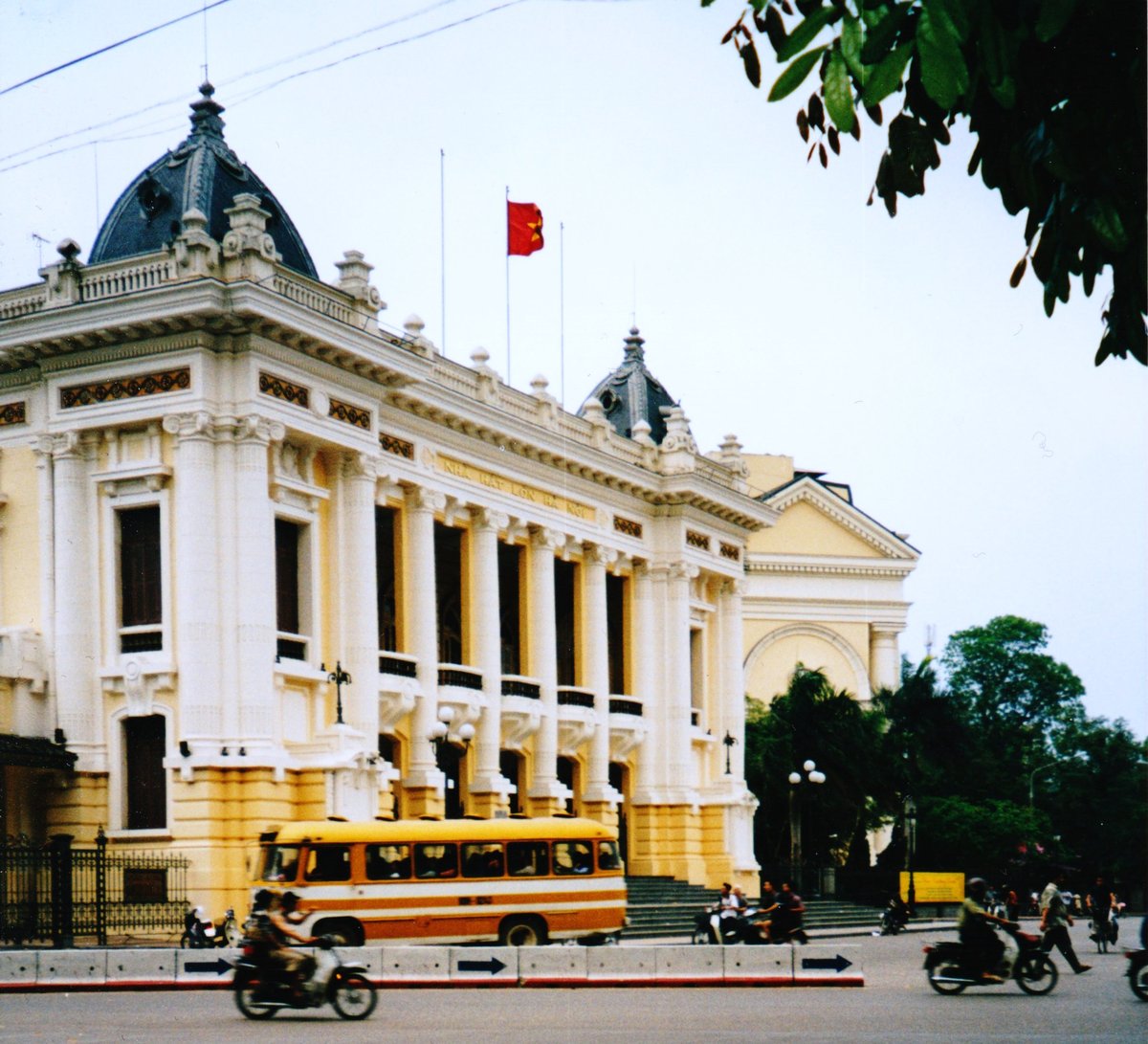
Built in 1911, the Hanoi Opera House is a French colonial-era landmark and performance venue. Modeled after Paris’s Palais Garnier, it combines neoclassical design with Vietnamese details and has hosted major political and cultural events (Hanoi Opera House Official Site).
- Address 1 Trang Tien Street, Hoan Kiem District.
- Getting there Reachable on foot from the Old Quarter, by taxi or by public bus.
- Tours Daily, 8:30 AM–5:00 PM. Guided tours cover the building’s history and architecture; English tours are available with advance booking.
- Tickets Tour tickets start at 50,000 VND; performance prices vary.
- Performances Regular programs include opera, ballet and traditional Vietnamese music.
- Visiting tips Morning tours are less crowded; evening performances offer a different ambiance. Dress smart casual for performances. Tours last 45 minutes to 1 hour. Accessibility is limited; contact the venue in advance for details.
Other Nearby Attractions
Other nearby places include:
- Hoàn Kiếm Lake and Ngoc Son Temple
- The Old Quarter
- St. Joseph’s Cathedral
- The Temple of Literature
Frequently Asked Questions (FAQ)
What are the visiting hours at Viet Duc Hospital and the monument?
The hospital’s general visiting hours are 8:00 AM–9:00 PM daily. The monument is open daily from 8:00 AM–6:00 PM, except major national holidays. Check the official hospital website for current hospital information.
Do I need a ticket to visit the hospital or monument?
No. General visits to the hospital and monument do not require tickets, and monument admission is free. Medical consultations require appointments.
Can I enter the hospital grounds?
Access is limited to designated public areas.
Are guided tours available?
Educational tours can be arranged by appointment, particularly for groups or medical professionals. Monument guided tours are free but require prior booking.
Is the hospital and monument accessible to disabled visitors?
Ramps and accessible pathways are provided. Contact the hospital in advance about specific needs.
Is photography allowed at the monument?
Yes. Avoid flash.
Is the monument open year-round?
It is open daily except during major national holidays.
Is the Vietnam Museum of Fine Arts wheelchair accessible?
Yes. It has ramps and elevators.
Are resources available for international visitors at the museum?
Yes. English-language brochures and tours are available.
Can museum tickets be bought online?
Tickets can be purchased at the entrance; online booking may be available through tourism websites.
Can I take photos inside the Hanoi Opera House?
Yes, but avoid flash and tripods.
Are English tours available at the Opera House?
Yes, with advance booking.
Is the Opera House open on holidays?
It may be closed or have limited hours on holidays; check the official site.