Origins and Early Development
The hospital began in 1997 as the Vietnam International Hospital, a joint venture between Bach Mai Hospital and an Australian company. In January 2000, it became a French-Vietnamese joint venture. By September 2000, it had transitioned to full foreign ownership and was renamed L’Hôpital Français de Hanoï (Vietnam Online; HFH Official Site). By 2000, it had become the region’s first 100% foreign-invested hospital.
Pioneering International Healthcare in Hanoi
Emerging alongside Vietnam’s Đổi Mới reforms, Hanoi French Hospital set a precedent for private, internationally managed healthcare. It introduced modern medical technology and practices, combining French clinical standards with Vietnamese expertise. This approach served expatriates and local residents alike (The Shiv; Vietnam Travel; Expat Info Desk).
Growth, Expansion, and Modernization
A seven-floor inpatient building added in 2019 increased the hospital’s capacity and introduced advanced medical technology in a European-inspired environment. The hospital has also refurbished its outpatient and emergency departments and established a dedicated health check center for preventive medicine (Vietnam Investment Review; HFH Official Site).
In 2022, it received the Green Energy 5-Star certificate for environmentally responsible operations (Vietnam Investment Review).
Role in Hanoi’s Healthcare Ecosystem
The hospital serves expatriates, diplomats, and local residents, and is recognized for its multicultural staff and internationally recognized management (Vietnam Online; YESD). It influences local medical practices through standards in patient care, hygiene, and service quality (Insights10). It also fosters medical knowledge exchange and recruits French-speaking Vietnamese doctors, contributing to professional development in the sector (Vietnam Investment Review).
Impact on Medical Tourism and Expatriate Life
The hospital contributes to Hanoi’s reputation as a medical tourism destination. Its specialties and 24/7 emergency care, together with multilingual staff and international standards, serve visitors and residents (Vietnam Travel; Expat Info Desk).
What to See
Hanoi French Hospital
The hospital complex includes a modern seven-floor inpatient building, a refurbished outpatient and emergency department, and a dedicated health check center. Its European-style architecture and landscaped grounds are also noted as photographic spots.
Hanoi Opera House
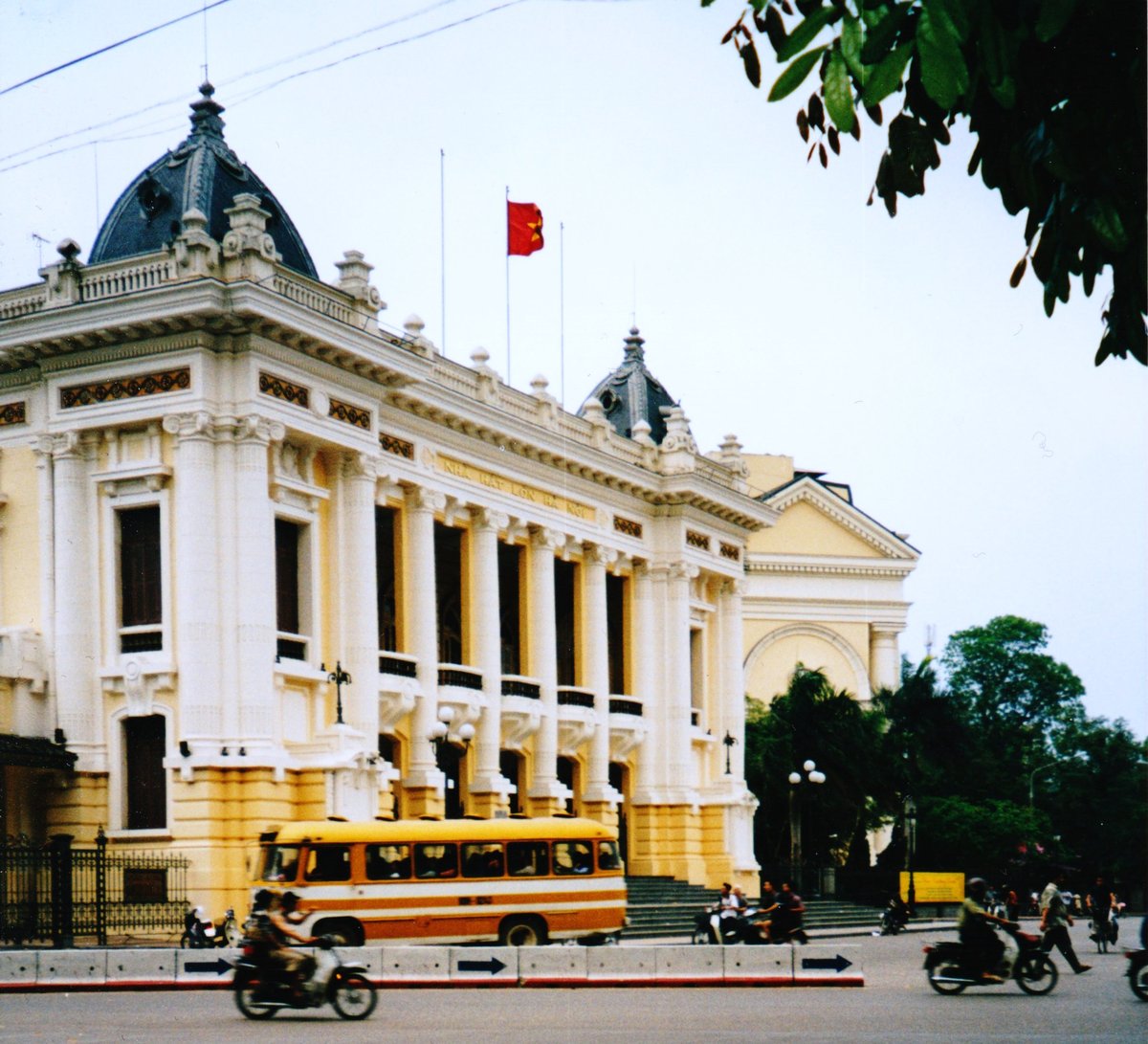
Located in central Hanoi, the Hanoi Opera House is a French colonial architectural landmark. Built by the French administration between 1901 and 1911, it was modeled after Paris’s Palais Garnier. It has hosted operas, ballets, and major national events.
Architectural highlights include ornate Baroque columns and a façade, a lavish auditorium with red velvet seating and chandeliers, and frescoes and sculptures blending European and Vietnamese influences. The venue hosts traditional Vietnamese opera, international performances, and national celebrations.
Temple of Literature
Founded in 1070 during the Ly Dynasty, the Temple of Literature (Văn Miếu) honors Confucius and marks Vietnam’s first national university. The site has five courtyards, ancient pavilions, and the Stelae of Doctors, stone slabs commemorating top scholars.
Highlights include the Great Courtyard and gardens, Khue Van Pavilion—an emblem of Hanoi—the Stelae of Doctors on turtle statues, and the Well of Heavenly Clarity pond. The site also hosts ceremonies during Tet and other festivals, with music and cultural performances.
Visitor Information
Visiting Hours and Appointment Booking
Hanoi French Hospital
- General visiting hours Daily, 7:00 AM–7:00 PM
- Emergency services Available 24/7
- Appointments Recommended for outpatient and specialist consultations. Book via the official website or by phone.
Hanoi Opera House
- Exterior viewing Open daily; daylight is best for viewing.
- Guided tours 8:00 AM–6:00 PM. Tours are offered in English, French, and Vietnamese; booking ahead is recommended.
- Performances Prices vary by show; booking ahead is recommended for popular events. All performances require a ticket.
Temple of Literature
- Hours Daily, 8:00 AM–5:00 PM; last entry at 4:30 PM.
- Guided tours Offered in English, French, and Vietnamese. Tours are an extra fee, and booking ahead is recommended.
- Tickets can be bought online via official tourism websites.
Directions and Accessibility
Hanoi French Hospital
- Address 1 Phuong Mai Street, Dong Da District, Hanoi.
- Transport Accessible by taxi, private car, or public bus. Nearby bus stops connect to central Hanoi.
- Parking On-site parking is available; check the hospital website for details.
- Accessibility Wheelchair ramps, elevators, and accessible restrooms are available. Multilingual staff can assist.
Hanoi Opera House
The venue is wheelchair accessible, with assistance available on request. Photography is allowed in public areas but restricted during shows.
Temple of Literature
- Location 58 Quoc Tu Giam Street, Dong Da District, near the Old Quarter.
- Transport Easily reached by taxi, bus, or ride-hailing apps.
- Accessibility Wheelchair access is available at the main entrance. Most pathways are paved, though some areas may be uneven.
Tickets and Fees
Hanoi French Hospital
- General access No ticket is required for entry.
- Service fees Vary by specialty and procedure. Payment can be made by cash, card, or accepted international insurance. Transparent billing is standard.
Hanoi Opera House
- Guided tours Tickets cost 50,000–100,000 VND and are available at the box office or online.
- Performances Prices vary by show; tickets are required.
Temple of Literature
- Adults 30,000 VND
- Children and students 15,000 VND
- Free entry Children under 6 and seniors over 70
Tickets can also be bought online through official tourism websites.
Tips
- For the Opera House, arrive early for photos and to avoid crowds. Wear comfortable shoes for walking tours, and check the weather; summers can be hot and humid.
- At the Temple of Literature, visiting early or late may mean fewer crowds and cooler weather. Dress modestly and wear comfortable shoes.
- At the hospital, outpatient and specialist appointments are recommended. The hospital’s website or mobile apps like Audiala can provide real-time updates and appointment management.
Nearby Places
- Temple of Literature A historic Confucian site within walking distance of the hospital.
- Vietnam National Museum of History A nearby museum with extensive exhibits on Vietnam’s past.
- Hanoi Opera House Hoan Kiem Lake is a 10-minute walk away; St. Joseph’s Cathedral is nearby, and the Old Quarter has shops and eateries.
- Around the Temple of Literature The Old Quarter, Hoan Kiem Lake, and the Vietnam Museum of Ethnology can be combined with a visit. Restaurants are available in Dong Da District.
- Around the Opera House Many cafes and restaurants are nearby.
Frequently Asked Questions (FAQs)
Q: What are the Hanoi French Hospital visiting hours?
A: Visiting hours are daily from 7:00 AM to 7:00 PM. Emergency services are available 24/7.
Q: Do I need an appointment to visit the hospital?
A: Appointments are recommended for consultations and check-ups. Emergencies do not require appointments.
Q: Is the hospital wheelchair accessible?
A: Yes. It has ramps, elevators, and accessible restrooms.
Q: What languages are spoken by hospital staff?
A: Vietnamese, French, and English.
Q: How can I book a hospital appointment?
A: Use the official website or call the hospital directly.
Q: Can I attend an Opera House performance without a ticket?
A: No. All performances require ticket purchase.
Q: Is photography allowed inside the Opera House?
A: Photography is allowed in public areas but restricted during shows.
Q: Are guided tours included at the Temple of Literature?
A: No. They are available for an extra fee.
Q: Can I buy Temple of Literature tickets online?
A: Yes, via official tourism websites.
Q: Is the Temple of Literature suitable for children?
A: Yes, with supervision.