

Place
France Updated Oct 2026
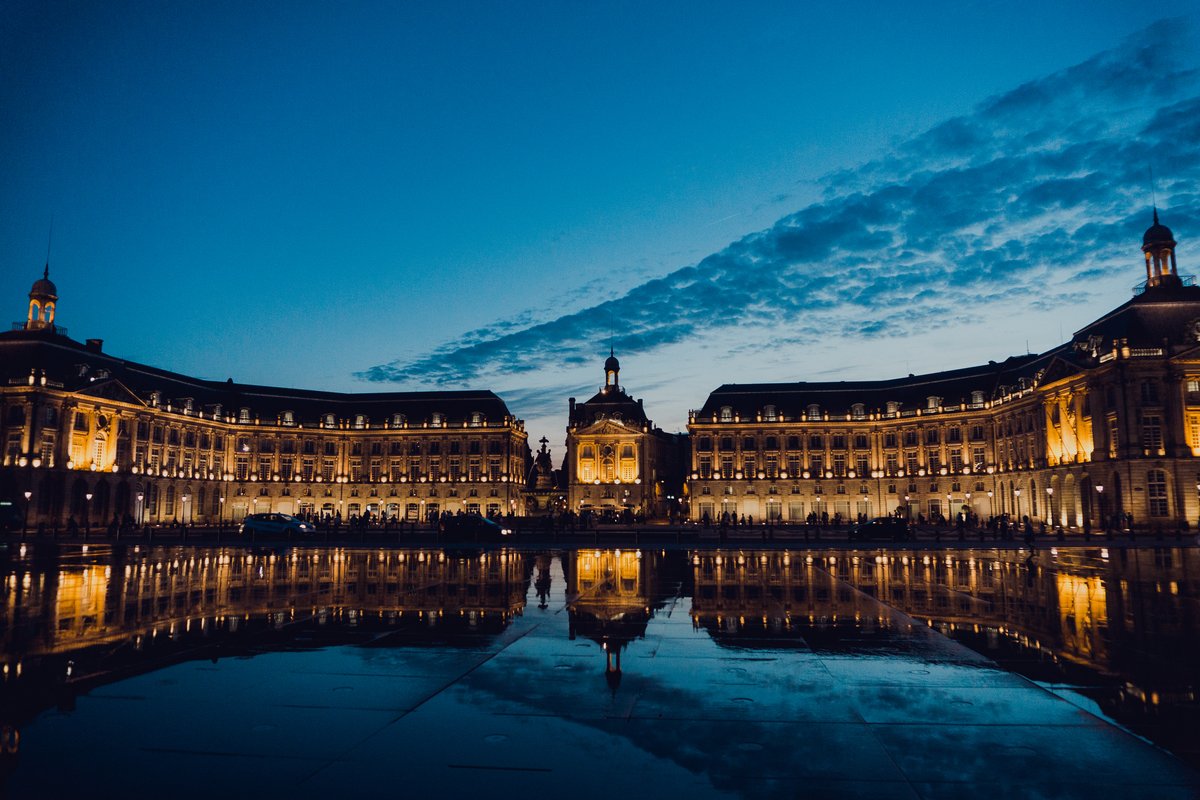
At Place de la Bourse, 3,450 square meters of water turn Bordeaux’s pale limestone into a second, wavering façade before the pool releases a low veil of mist. That is the city’s particular trick: Bordeaux, France, pairs an 18th-century riverfront with art projected across the dark water of a former German submarine base.
 Photo: Patrick Despoix · CC BY-SA 4.0
Built from cited sources · see the method · How we make our guides →
UNESCO inscribed Bordeaux’s crescent-shaped “Port of the Moon” in 2007, recognizing an urban center shaped by the Garonne and the 18th-century Age of Enlightenment. The Musée d’Aquitaine adds a harder chapter to that polished story, tracing the city’s role in the Atlantic slave trade.
Wine is part of daily life here, but Bordeaux’s tastes reach well beyond the cellar. At the Marché des Capucins, locals linger over Arcachon oysters and crisp white wine; the city’s dark-crusted, rum-scented canelés make a fine counterpoint.
The old port keeps finding new uses: La Cité du Vin looks out over the river from its eighth-floor belvedere, while Bassins des Lumières fills a wartime submarine base with enormous moving images. Bordeaux feels less like a wine label with façades attached than a working river city still reckoning with what its history built.
Not every monument, just the ones we'd walk you past ourselves.
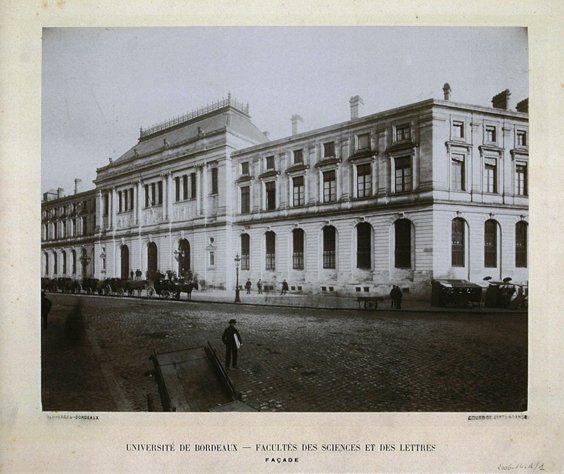
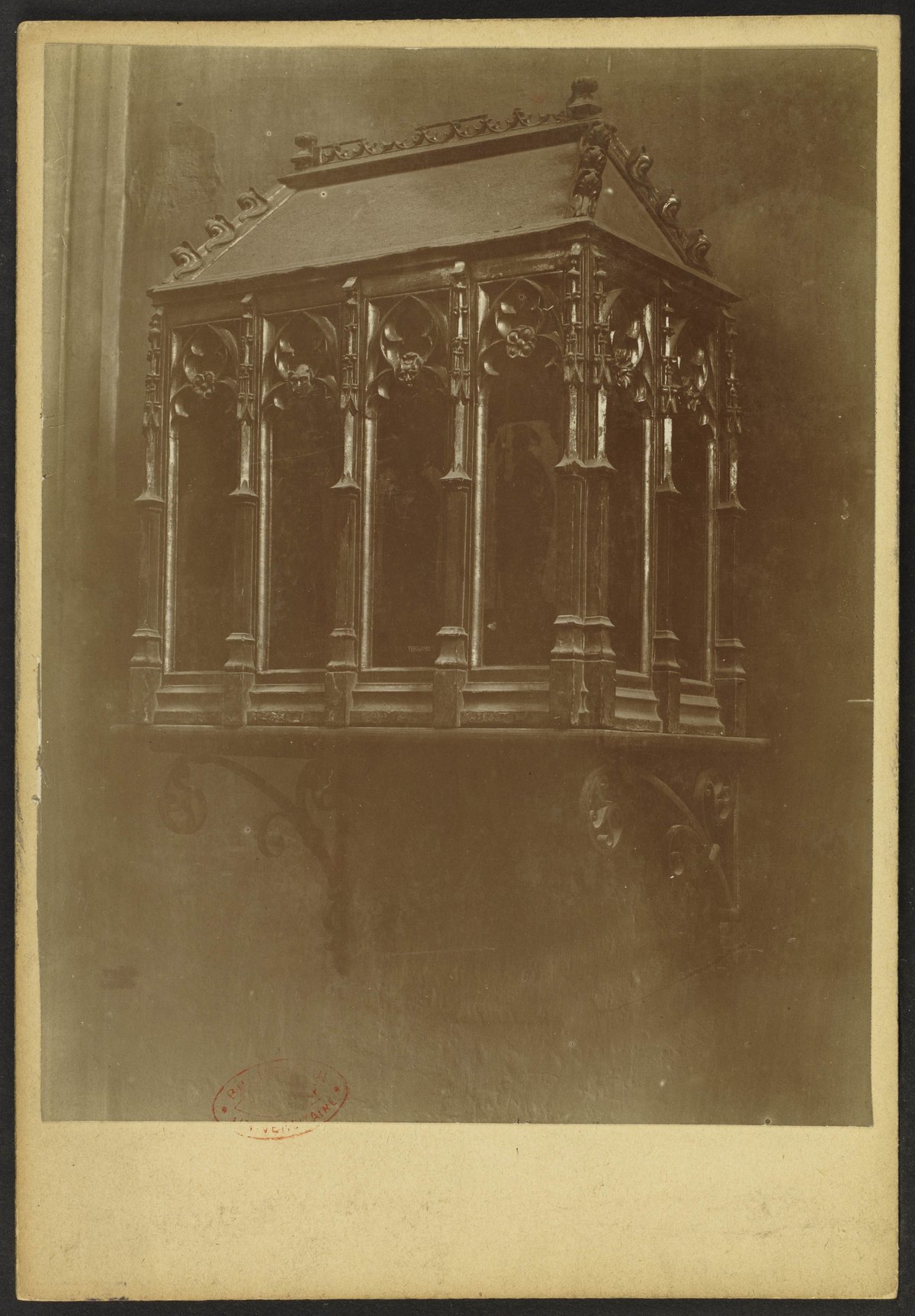
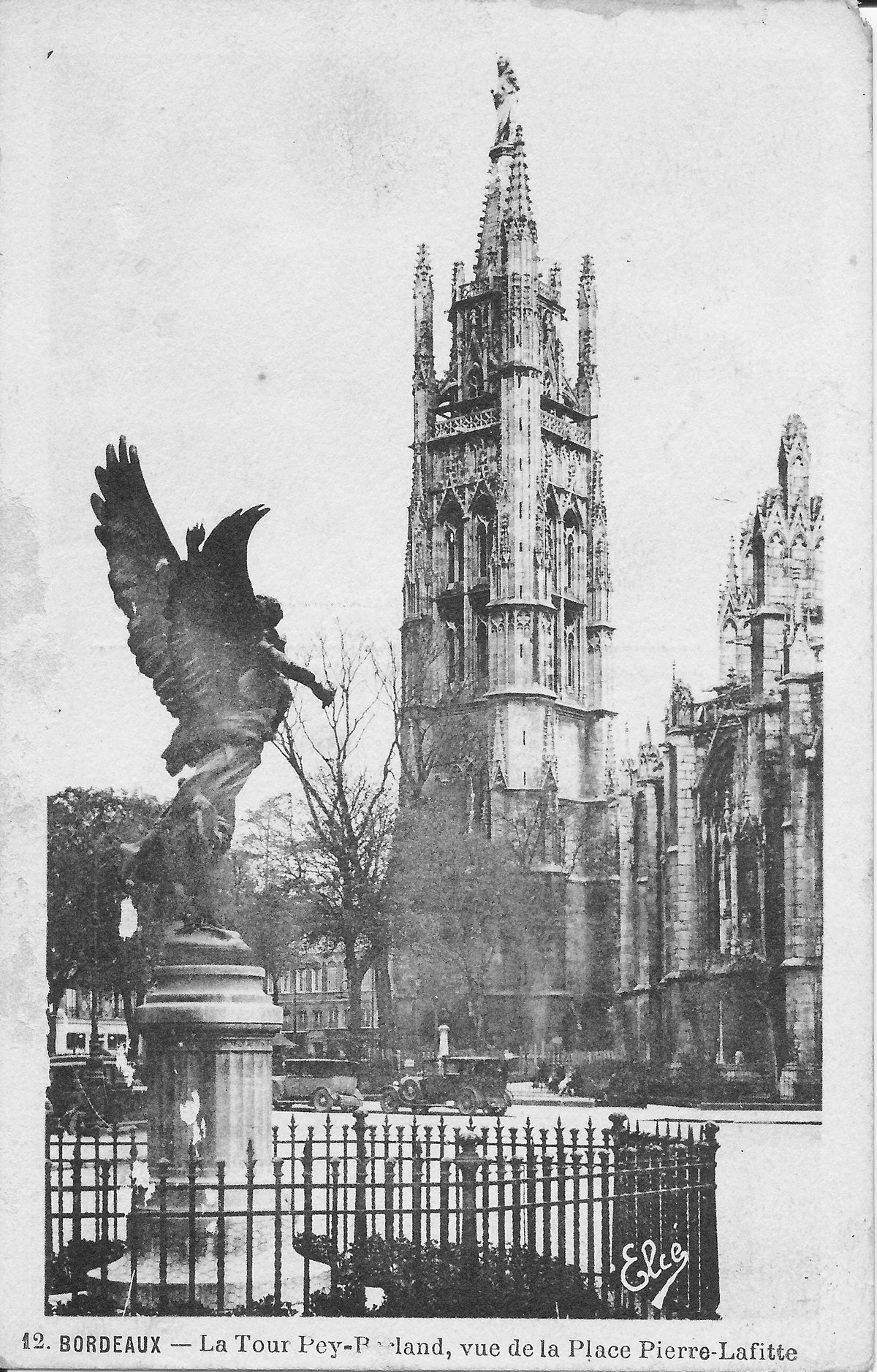
Where to wander, by quarter — each with its own rhythm.
Before you go
Curated from places in this city. Same price as official sites.


Prices shown are indicative — final pricing and availability are confirmed at checkout. Audiala may receive a commission from bookings made via these links.
From Celtic Burdigala to the stone façades of the Port of the Moon
Most accounts trace Bordeaux to a Celtic trading settlement called Burdigala, founded by the Bituriges Vivisci on the Garonne’s left bank. The river offered a natural route for goods and people; the city’s long history as a port began before Rome arrived.
After Rome’s campaigns in Gaul, Burdigala joined the Roman sphere and its river port entered wider trade routes. The town grew into an administrative center of Aquitania, linking inland communities with shipping bound for Britain and the Mediterranean.
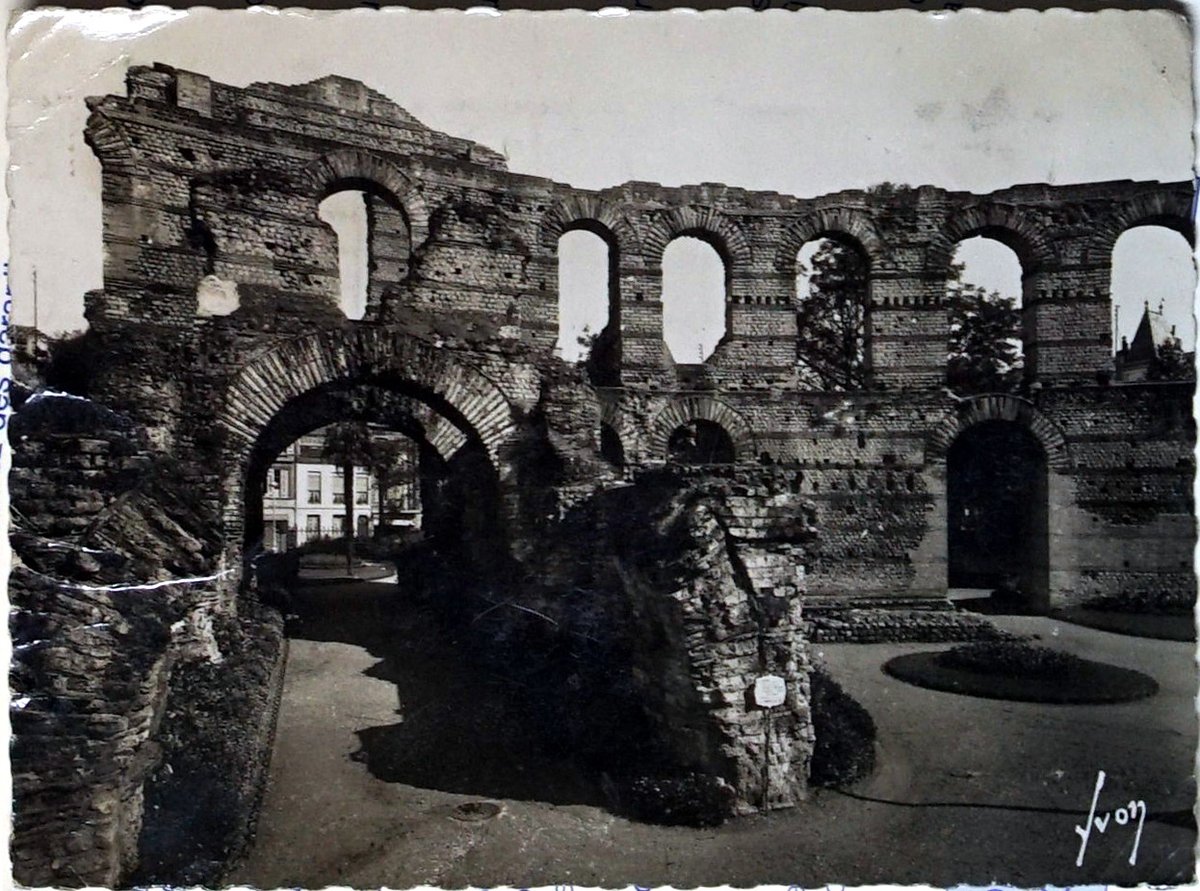
Burdigala’s amphitheatre, later known as the Palais Gallien, offered a public stage for spectacles beyond the city’s walls. Its surviving arches hint at the scale of a Roman town whose stonework and street plan extended far beyond the settlement’s Celtic beginnings.
Born in Burdigala, the poet and teacher Decimius Magnus Ausonius made the city part of Roman literary life. He taught rhetoric here before serving at the imperial court, and his poems preserve glimpses of the people, schools, and vineyards of his home region.
An anonymous traveler from Burdigala recorded a route from the city to Jerusalem in the work now called the Bordeaux Itinerary. Its plain lists of roads, stations, and distances make it the earliest surviving Christian travel itinerary—and let us follow an ancient journey one stop at a time.
During the upheavals that crossed the western Roman Empire, Vandals, Alans, and Suebi moved through Aquitaine and Bordeaux was sacked. The city’s Roman order weakened, leaving its river position valuable but its political future unsettled.
Eleanor, duchess in her own right, married the future Louis VII at Bordeaux’s Saint-André Cathedral. The match briefly tied Aquitaine to the French crown; her later marriage to Henry Plantagenet would place the region in a far larger contest.
When Henry Plantagenet became Henry II of England, Bordeaux entered a long period under English rule as part of Aquitaine. English demand for local wine shaped the port’s fortunes, while Bordeaux’s merchants and civic leaders retained privileges that gave them room to bargain with distant rulers.
A medieval tally puts Bordeaux’s annual wine exports at more than 102,000 tuns, bound chiefly for England and Flanders. Barrels crowded the quays of the Port of the Moon, and the trade helped make political control of the city worth fighting over.
Richard, later King Richard II of England, was born in Bordeaux while his father, Edward the Black Prince, governed Aquitaine. His birthplace gave him the lasting name “Richard of Bordeaux,” a reminder that the city was then a seat of English royal power on the continent.
French artillery shattered English hopes at the Battle of Castillon, where commander John Talbot was killed. After a siege by land and river, Bordeaux surrendered in October, ending English rule and bringing the Hundred Years’ War to a close.
Bordeaux raised Porte Cailhau as a ceremonial gateway to honor King Charles VIII; local tradition links it to his victory at Fornovo. Its pointed stonework and emerging Renaissance details turn a fortified entrance into a statement of royal authority.
Michel de Montaigne began his career as a magistrate in Bordeaux’s Parlement, where he formed a close friendship with Étienne de La Boétie. He later served two terms as mayor, from 1581 to 1585, trying to keep a divided city from tipping into religious violence.
Charles-Louis de Secondat, later known as Montesquieu, joined the Parlement of Bordeaux as a magistrate. His work with the city’s courts and learned circles fed a political imagination that would reach readers far beyond Aquitaine through The Spirit of the Laws, published in 1748.
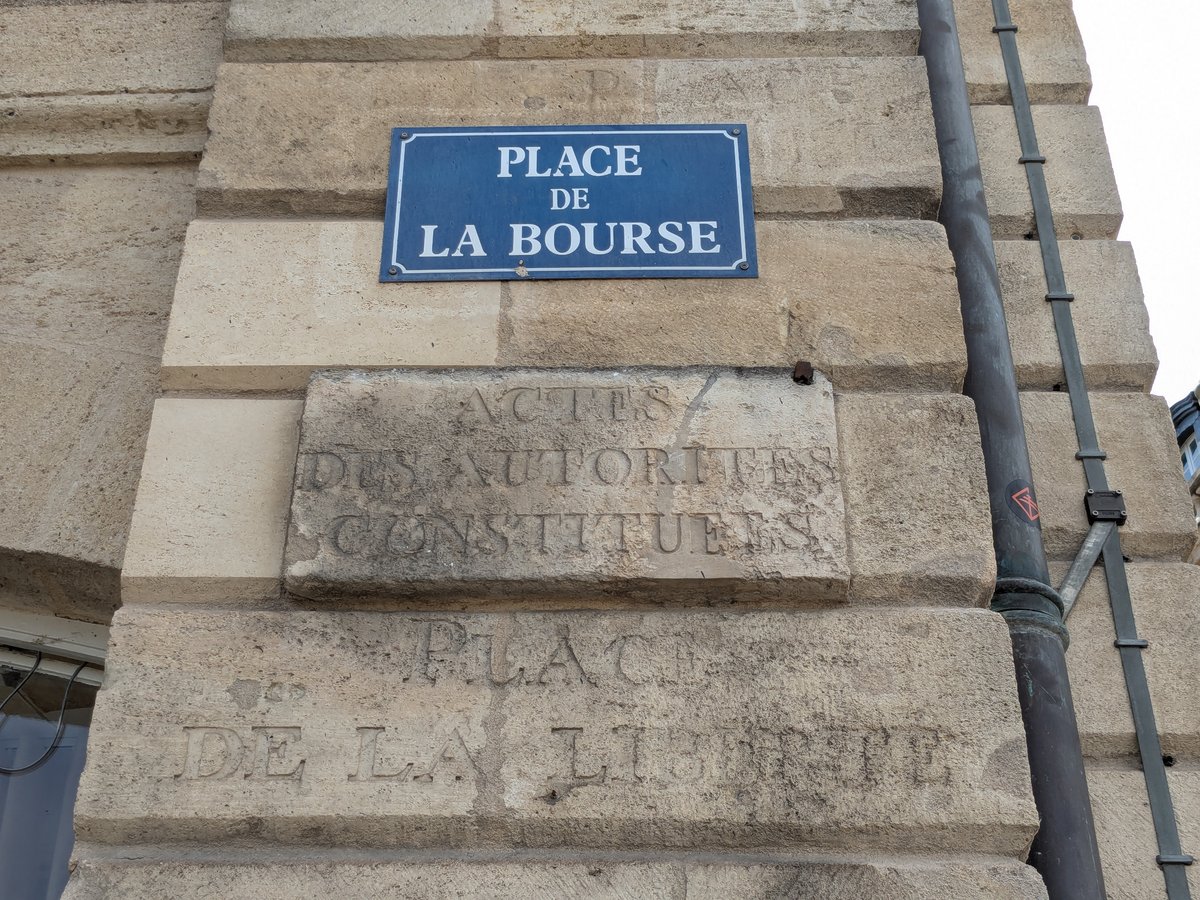
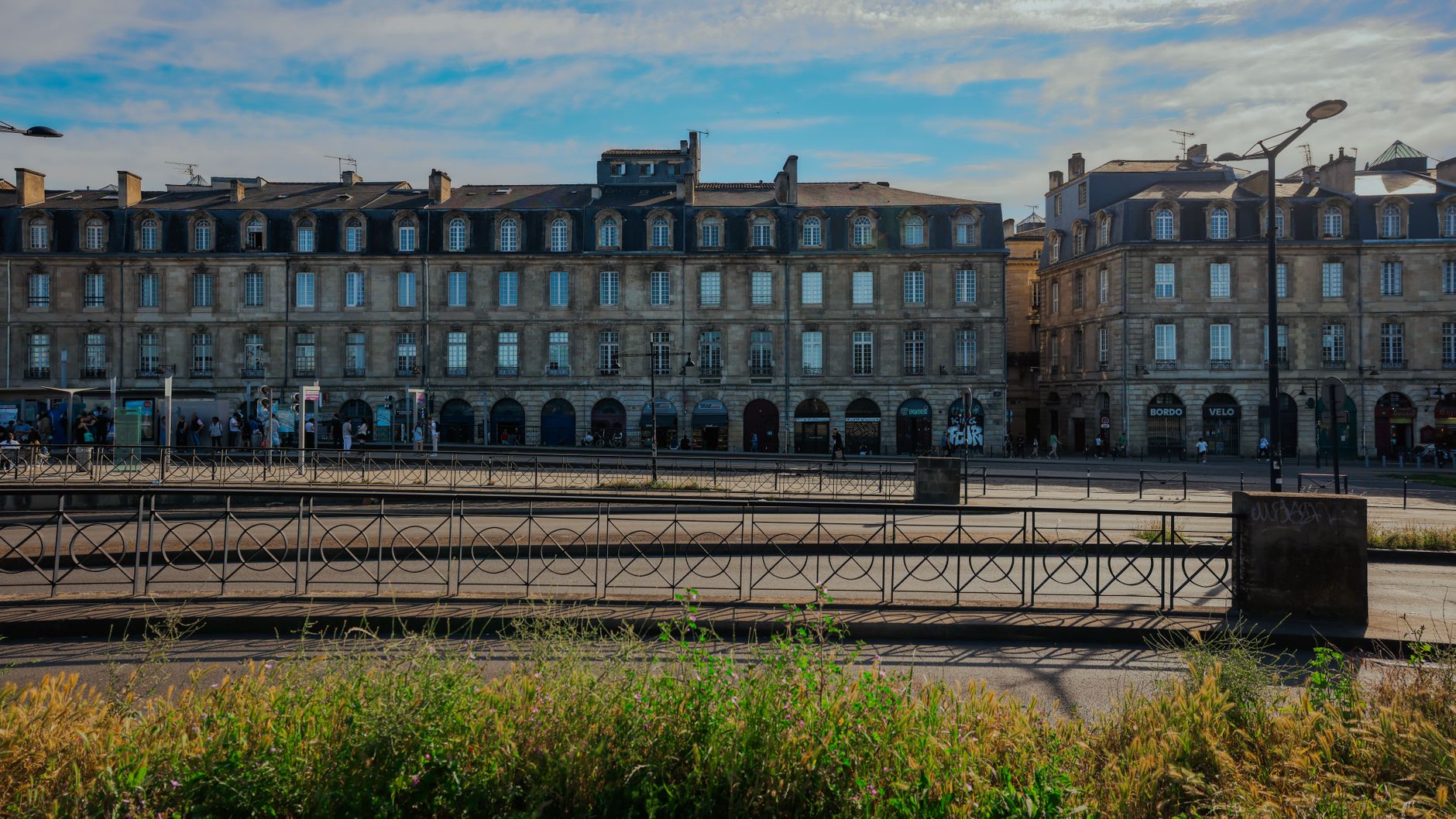
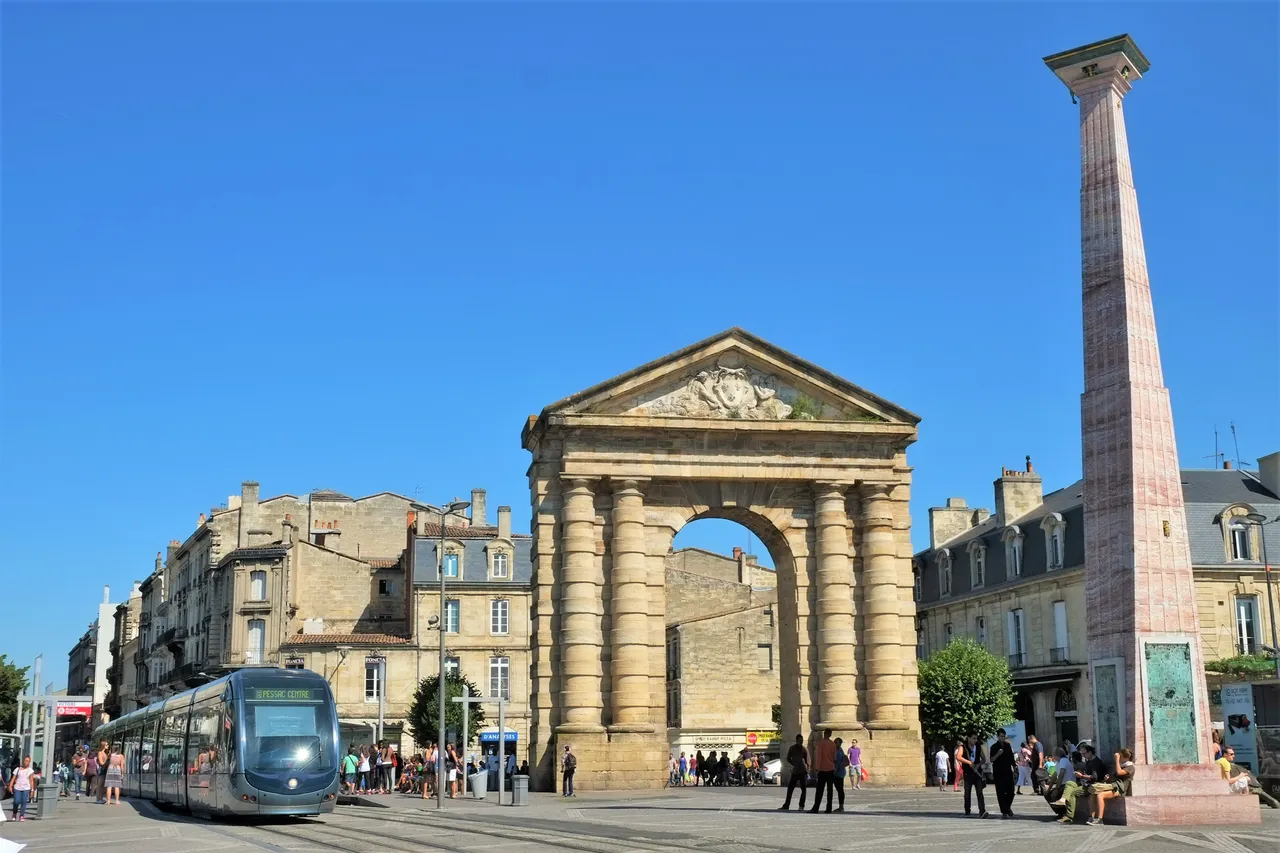
Royal architect Ange-Jacques Gabriel designed Place Royale, now Place de la Bourse, as a formal opening between Bordeaux and the Garonne. Its balanced stone façades replaced the feeling of a walled medieval town with a city that presented itself directly to the river and its commerce.
Victor Louis’s Grand-Théâtre opened with a Corinthian portico of 12 columns, its roofline watched over by statues of the Muses and Graces. Inside, candlelight and gilded decoration framed opera and civic ceremony in a city enriched by Atlantic trade.
The Girondins, a revolutionary faction named for the department around Bordeaux, lost their struggle with the radical Montagnards. Their leaders were arrested and executed during the Terror, leaving the city’s revolutionary reputation shadowed by political defeat and fear.
As Napoleon’s empire faltered, Bordeaux declared for the Bourbon claimant Louis XVIII and welcomed British troops in March. The move made the city an early center of royalist resistance, though the country’s political future remained unsettled.
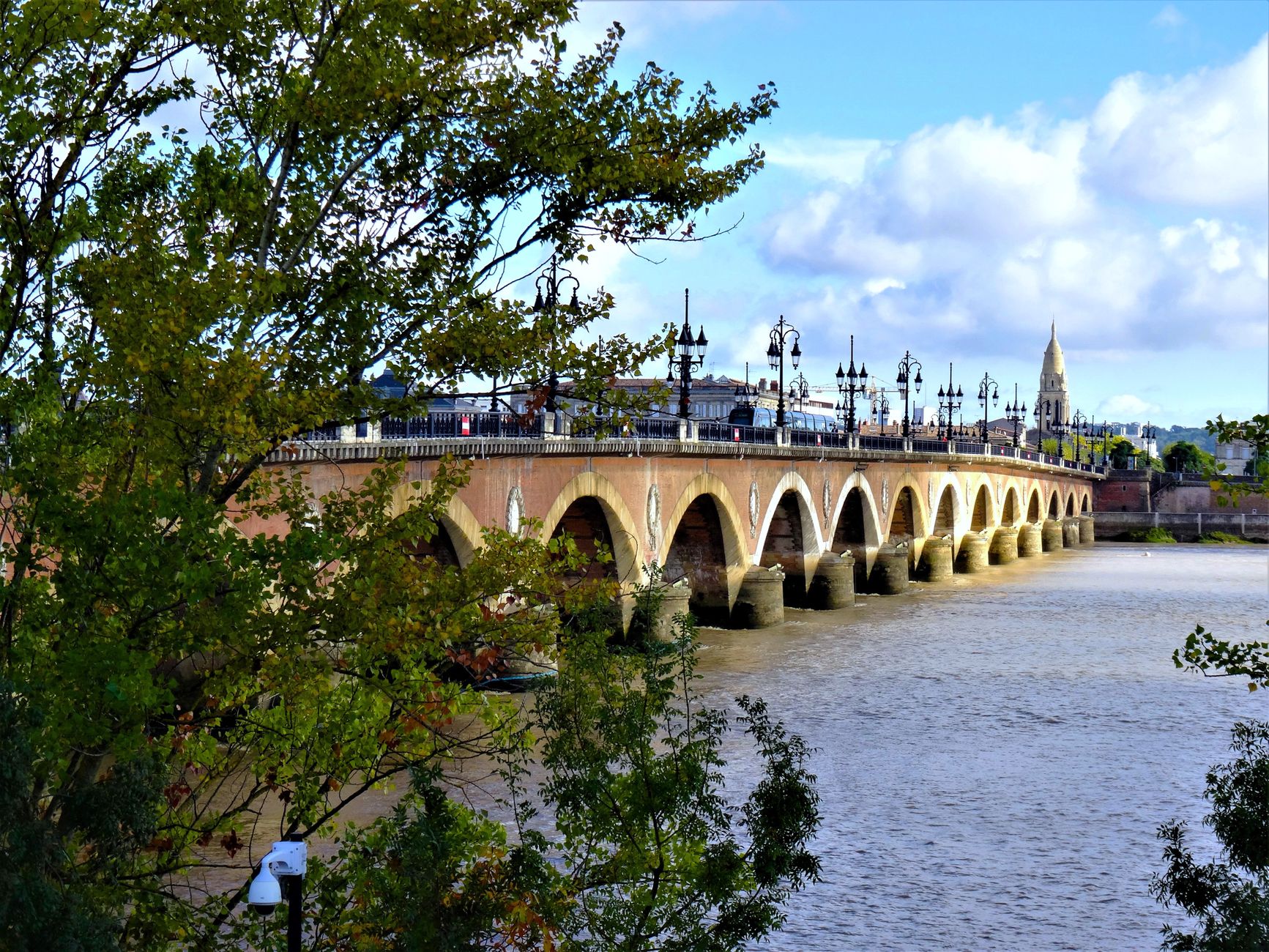
The Pont de Pierre became Bordeaux’s first permanent road bridge across the Garonne, replacing the ferry crossings that had divided the banks. Its 17 arches carried people and traffic over the broad river, joining neighborhoods once separated by water and weather.
Spanish painter Francisco Goya settled in Bordeaux in self-imposed exile, spending his final years among fellow Spanish refugees. He made late works here, including The Milkmaid of Bordeaux, and was first buried in the city’s Chartreuse Cemetery.
For the Paris Exposition Universelle, Napoleon III requested a hierarchy of Bordeaux wines, and merchants helped produce the classification of 1855. Its rankings gave selected Médoc châteaux and Sauternes estates a lasting public identity—and made a trade judgment into a reference still recognized around the world.
As German forces advanced, the French government moved to Bordeaux before the armistice and the division of France. Refugees and officials crowded the city’s streets and stations; for a brief, anxious interval, Bordeaux served as the country’s seat of government.
Portuguese consul Aristides de Sousa Mendes defied his government’s orders at the Bordeaux consulate, issuing visas to refugees fleeing Nazi persecution. Thousands received documents that helped them escape France, an act of conscience carried out amid the collapse of the French state.
German occupiers built a vast concrete submarine base beside the Garonne, part of the naval complex known as BETASOM that also served the Italian navy. Its bunker cells were designed to withstand air attack; decades later, water inside those same chambers would catch projected light instead of military craft.
German forces withdrew from Bordeaux in August as the occupation of the city came to an end. Resistance fighters entered a port left damaged and strategically important, while the concrete submarine base remained as a hard-edged trace of the war.
Jacques Chaban-Delmas, a former Resistance fighter, was elected mayor and held the office until 1995. His long administration expanded infrastructure and university facilities, reshaping a postwar city whose political reach extended across Aquitaine.
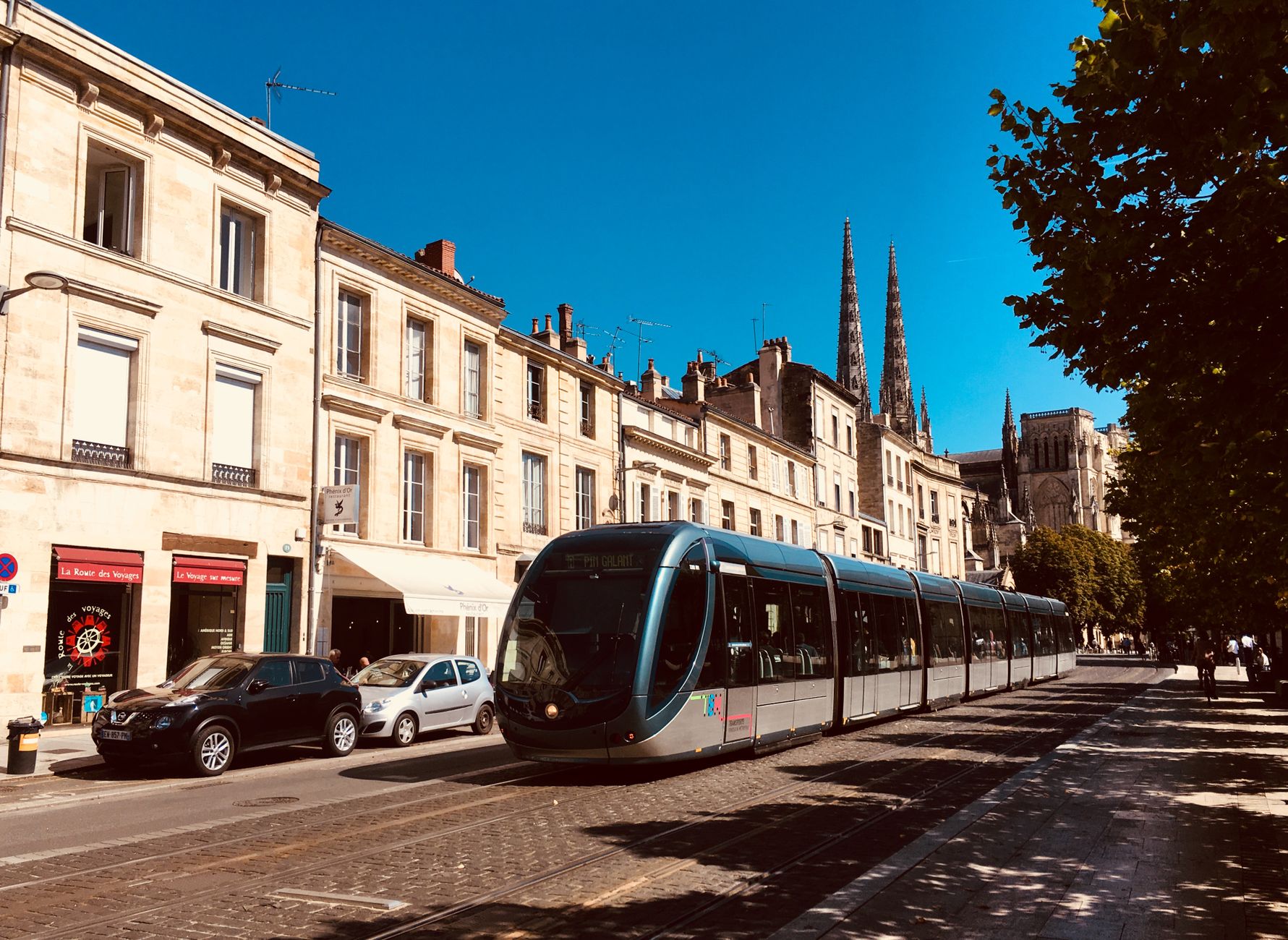
Bordeaux opened a new tram network, bringing rail transport back to central streets after decades without it. The system’s ground-level power supply avoided overhead wires in the historic core, part of a broader renewal that restored stone façades and reopened the quays to public life.
UNESCO inscribed Bordeaux’s historic center and port as the Port of the Moon, recognizing an exceptional urban ensemble shaped along the Garonne’s crescent curve. The listing covered a city where classical façades, quays, and squares tell the story of trade as clearly as any surviving warehouse ledger.
La Cité du Vin opened as a museum devoted to wine cultures across the world, not just Bordeaux’s own vineyards. Its contemporary form makes a striking counterpoint to the city’s pale eighteenth-century stone, bringing a centuries-old trade into a building made for the present.
Bassins des Lumières opened inside the former German submarine base, filling its vast concrete chambers with digital projections reflected in the water. The conversion changed the bunker’s purpose without erasing its weight: art now moves across walls built for war.
Philosopher and essayist · 1533–1592
Mayor of Bordeaux, 1581–1585
Montaigne served as Bordeaux’s mayor for two terms after years as a magistrate in the city. His cenotaph is kept at the Musée d’Aquitaine; he might find today’s cafés and bookshops a fitting setting for the art of observing people.
Philosopher and political thinker · 1689–1755
Magistrate and academy member in Bordeaux
Montesquieu worked in Bordeaux’s Parliament and took part in the city’s Academy of Sciences, Letters and Arts before writing works that shaped political thought across Europe. The city still carries his name in places such as Rue Esprit des Lois; he might enjoy seeing his ideas remain part of its daily geography.
Novelist and Nobel laureate · 1885–1970
Born and educated in Bordeaux
Mauriac was born in Bordeaux and studied at its university, then turned the region’s bourgeois families into the tense, closely observed world of his novels. He might recognize the city’s old stone facades—and the social codes behind them—as material for another story.
Painter and printmaker · 1746–1828
Lived in Bordeaux from 1824 until his death
Goya spent his final four years in Bordeaux in self-imposed exile, producing late works including The Milkmaid of Bordeaux. He died here and was first buried at Chartreuse Cemetery; the city he knew might surprise him today with its easy movement between old stone and contemporary art.
Portuguese diplomat · 1885–1954
Portuguese consul-general in Bordeaux in 1940
During the Fall of France in June 1940, Sousa Mendes issued visas from Bordeaux to people fleeing Nazi persecution, defying orders from Portugal’s government. The city’s handsome consular streets were the setting for a decision that turned official paperwork into a chance at survival.
Painter and sculptor · 1822–1899
Born in Bordeaux
Bonheur was born in Bordeaux into a family of artists and became known for her exacting paintings of animals, including The Horse Fair. She might find a modern city of trams and stone promenades oddly familiar in one respect: it still rewards the patient observer.
Where locals actually book dinner — not the tourist menus.
Small things that change how the city treats you.
The city, as it actually looks.

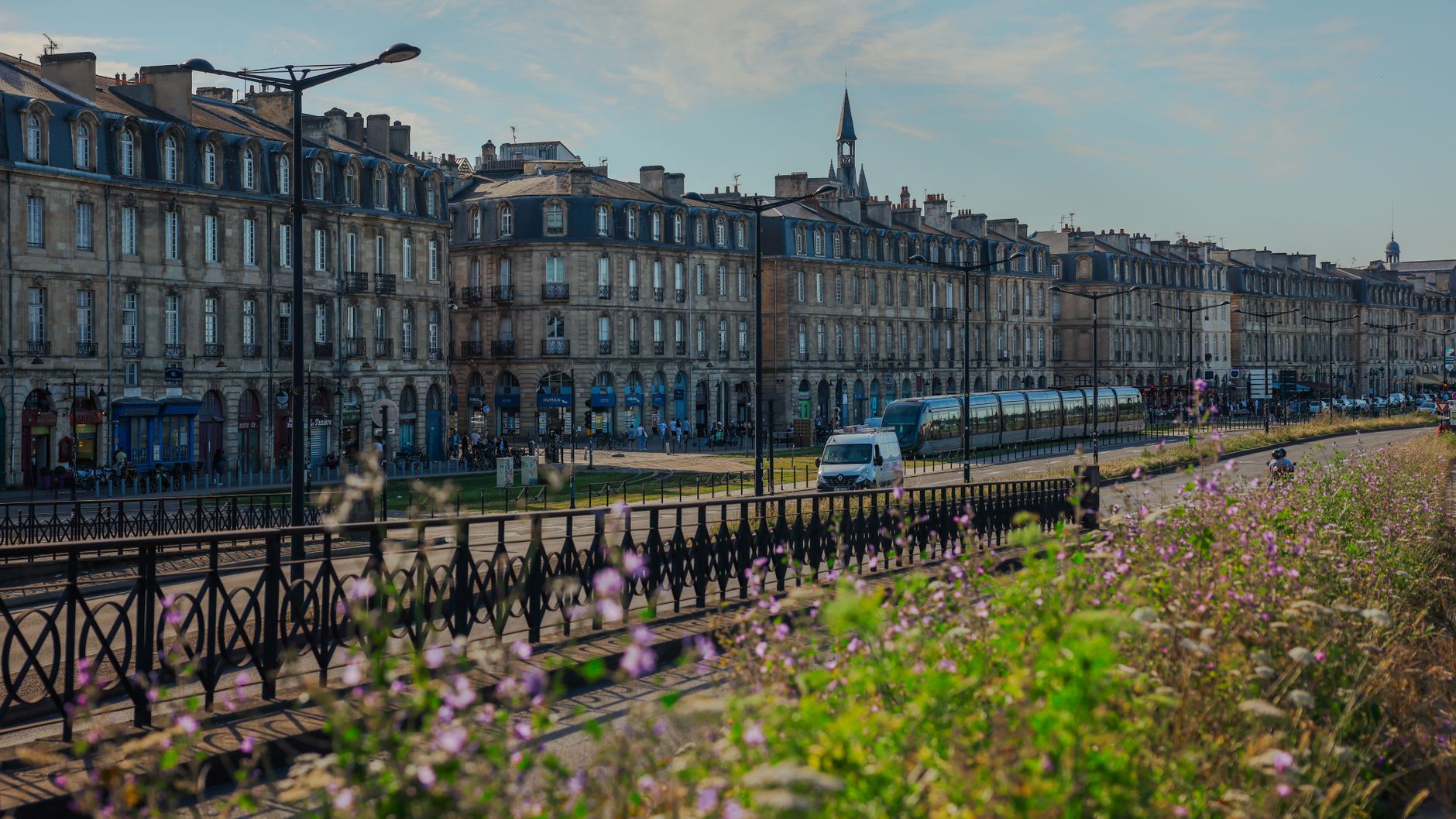


Yes, especially if you like historic architecture, wine culture and a city you can explore on foot. Its UNESCO-listed center follows the Garonne, while former industrial and wartime structures now house places such as La Cité du Vin and Bassins des Lumières.
Plan for three days to see the historic center, visit a museum and spend time along the river. Add a fourth day for La Cité du Vin, Bassins des Lumières or a vineyard excursion.
May, June, September and October are strong choices for comfortable sightseeing weather. September and October overlap with grape harvest season, while July and August can bring heat and August restaurant closures.
Tram A runs from Bordeaux–Mérignac Airport to central stops including Hôtel de Ville, in roughly 35–45 minutes. An express shuttle also connects the airport with Gare Saint-Jean in about 30 minutes, though road traffic can slow it down.
Bordeaux is generally considered safe for visitors, but use normal city precautions. Watch for pickpockets on crowded trams and in busy shopping streets, and stay alert around Gare Saint-Jean late at night.
Yes, the historic center is well suited to exploring on foot, with pedestrian streets and riverside promenades. Use the tram for longer trips, such as reaching La Cité du Vin or the airport.
Costs depend on where you stay and how many wine visits you book, but public transport is relatively manageable: research estimates put a single TBM ticket around €1.80–€1.90 and a 24-hour pass around €5–€5.50. Check current fares before travel, and compare attraction entry prices with the CityPass if you plan several visits.
81 places to discover










Showing 1–48 of 81 places
Saved and recently read places — kept on this device only.
Photos may have been resized or cropped.