Historical Context and Significance
Medieval Origins and Urban Role
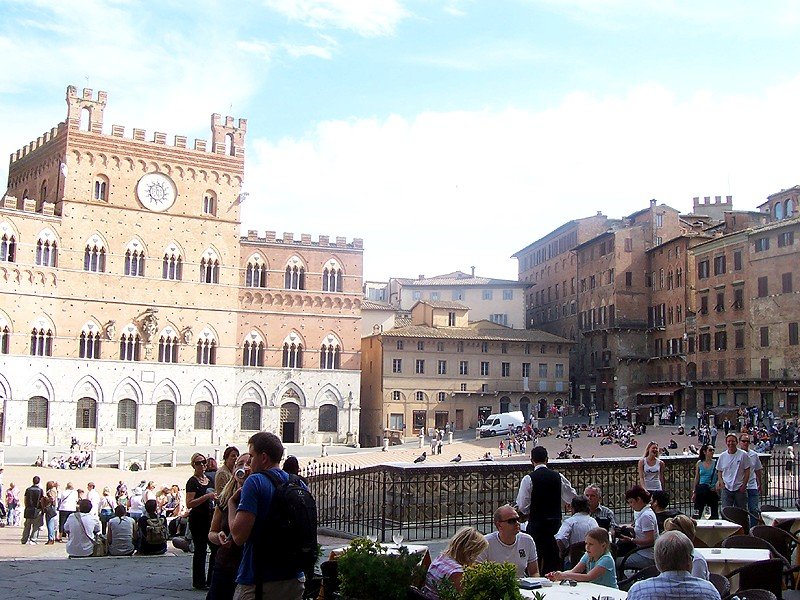
Piazza del Sale—literally “Square of Salt”—originated as Siena’s primary salt market. Its strategic position along the Via Francigena, near city gates like Porta Camollia, made it a hub for merchants and travelers. Salt, essential for food preservation and a key source of municipal revenue, was strictly regulated. The Gabella del Sale (salt tax office) stood adjacent to the square, reflecting the commodity’s importance to Siena’s economy and its rivalry with nearby cities (ITS Tuscany).
Evolution Through the Ages
Initially lined with warehouses and merchant stalls, the square evolved architecturally during the Renaissance, gaining symmetrical façades, arcades, and public fountains. It became a flexible space, hosting markets, fairs, and local gatherings, and remained a focal point for community life through Siena’s transitions—from an independent republic to Medici rule and beyond (Italy Heaven).
Archaeological and Cultural Legacy
Recent excavations have unearthed remains of the Cassero del Sale (salt warehouse) and additional medieval structures, visible today and offering tangible connections to Siena’s layered history. The square’s shifting role—from salt depot to military assembly space, then a civic venue—mirrors the city’s resilience and adaptability (Terre di Siena).
Visiting Information: Hours, Tickets, and Accessibility
Visiting Hours
- Piazza del Sale is open 24/7, year-round. As a public square in Siena’s pedestrian center, it is always accessible.
Tickets and Entrance
- No ticket is required, and entry is free. There are no barriers or controlled access points.
Accessibility
- Pedestrian-friendly The square and surrounding streets are mostly flat with cobblestone paving.
- For visitors with mobility impairments Most areas are accessible, but some uneven surfaces may require caution. Wheelchair users may need assistance in certain spots.
Facilities
- Restrooms Public facilities are located nearby, especially in larger squares such as Piazza del Campo and Piazza del Duomo.
- Seating Limited benches; nearby cafés provide comfortable rest stops.
- Safety Siena’s historic center is safe and largely car-free, though uneven paving warrants attention.
Cultural Highlights and Events
Local Markets & Community Life
Piazza del Sale has long served as a vibrant market square, with regular stalls offering local produce, crafts, and antiques. While the main weekly market has relocated, the square still hosts occasional fairs, seasonal events, and public celebrations, preserving its role as a gathering place (Italy Heaven).
Architectural Features
- Loggia del Sale The historic open arcade where salt was weighed and traded.
- Cassero del Sale Archaeological remains of the fortified salt warehouse.
- Medici Walls Nearby remnants underscore the square’s strategic importance.
Photography Tips
- Best light is in the early morning or late afternoon (“golden hour”).
- Capture the interplay of light on red-brick façades and the irregular geometry of the square.
- Explore side streets for candid shots of daily Sienese life.
Nearby Attractions and Travel Tips
Key Sites Within Walking Distance
- Piazza del Campo Siena’s iconic main square, home to the Palio horse race.
- Siena Cathedral (Duomo di Siena) A masterpiece of Italian Gothic architecture.
- Santa Maria della Scala An ancient hospital complex now housing museums and archaeological sites.
- Pinacoteca Nazionale Renowned collection of Sienese art from the 13th to 16th centuries.
- Piazza Salimbeni Headquarters of Monte dei Paschi di Siena, the world’s oldest bank.
Travel and Accommodation Tips
- Best times to visit Shoulder seasons (April–May, September–October) are less crowded; early mornings and late afternoons offer tranquility and soft light.
- Getting there Siena is best reached on foot from the city’s main bus station (Piazza Gramsci) or via public parking lots outside the city walls.
- Dining Sample local specialties in nearby trattorias; avoid eating directly on major tourist squares for better value (Rough Guides).
Guided Tours and Photography Spots
Tours
- Walking tours Numerous local guides and operators include Piazza del Sale in their Siena itineraries, offering insights into its history, architecture, and social life.
- Audio guides Enhance your visit with digital tours—try the Audiala app for curated routes and historical context (Audiala App for Siena Audio Tours).
Best Photo Spots
- In front of the Loggia del Sale for architectural shots.
- By the Medici walls for panoramic views and archaeological interest.
- Exploring surrounding alleys for atmospheric street photography.
Frequently Asked Questions (FAQ)
Q: What are the opening hours of Piazza del Sale?
A: The square is open 24/7, with no closing hours.
Q: Is there an entrance fee?
A: No, it is a public space and free to enter.
Q: Are guided tours available?
A: Yes, many local operators and digital apps offer guided or audio tours.
Q: Is the square accessible for those with disabilities?
A: Generally yes, though some cobblestone areas may require caution.
Q: What events are held here?
A: Occasional markets, fairs, and community celebrations take place throughout the year.
Q: Are restrooms and refreshments available?
A: Public restrooms are nearby; multiple cafés and shops line the square.