
Guide dated 14/06/2025.
What Gare de Laon Is
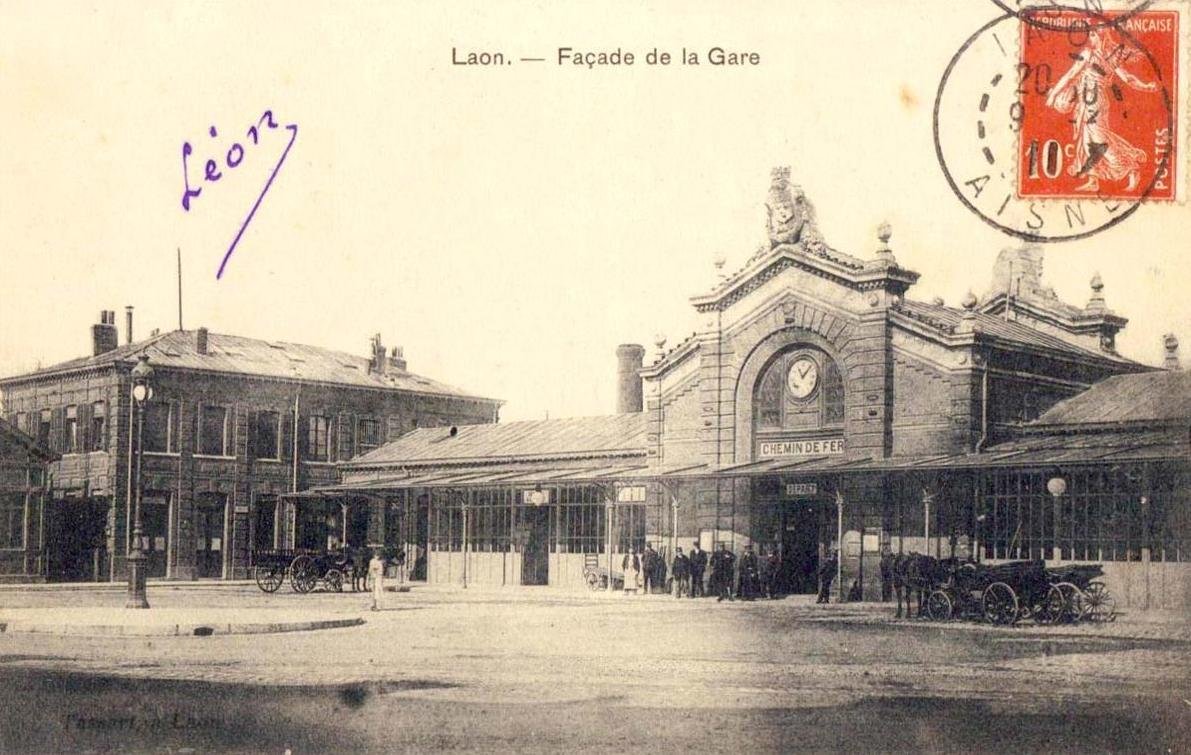
At the foot of Laon’s limestone hill, Gare de Laon is the principal rail gateway to the medieval city perched on the Montagne Couronnée. The station connects Laon with major cities including Paris, Reims, Amiens, and Saint-Quentin, and stands near the cité des cheminots, the railway workers’ neighborhood.
The station’s mid-19th-century architecture and industrial heritage sit alongside Laon’s medieval character. Practical information is available from the SNCF Official Gare de Laon, the Laon Tourism Office, and InfosGare.com.
History
Gare de Laon opened in 1857 under the Compagnie des chemins de fer du Nord. It became a key point in the expanding French railway network and once formed part of a “railway star” with six major lines. The station was the region’s largest industrial employer, prompting the development of the nearby railway workers’ district. Although some routes have since closed, the station remains an important transport hub, with more than 770,000 annual passengers recorded in 2016.
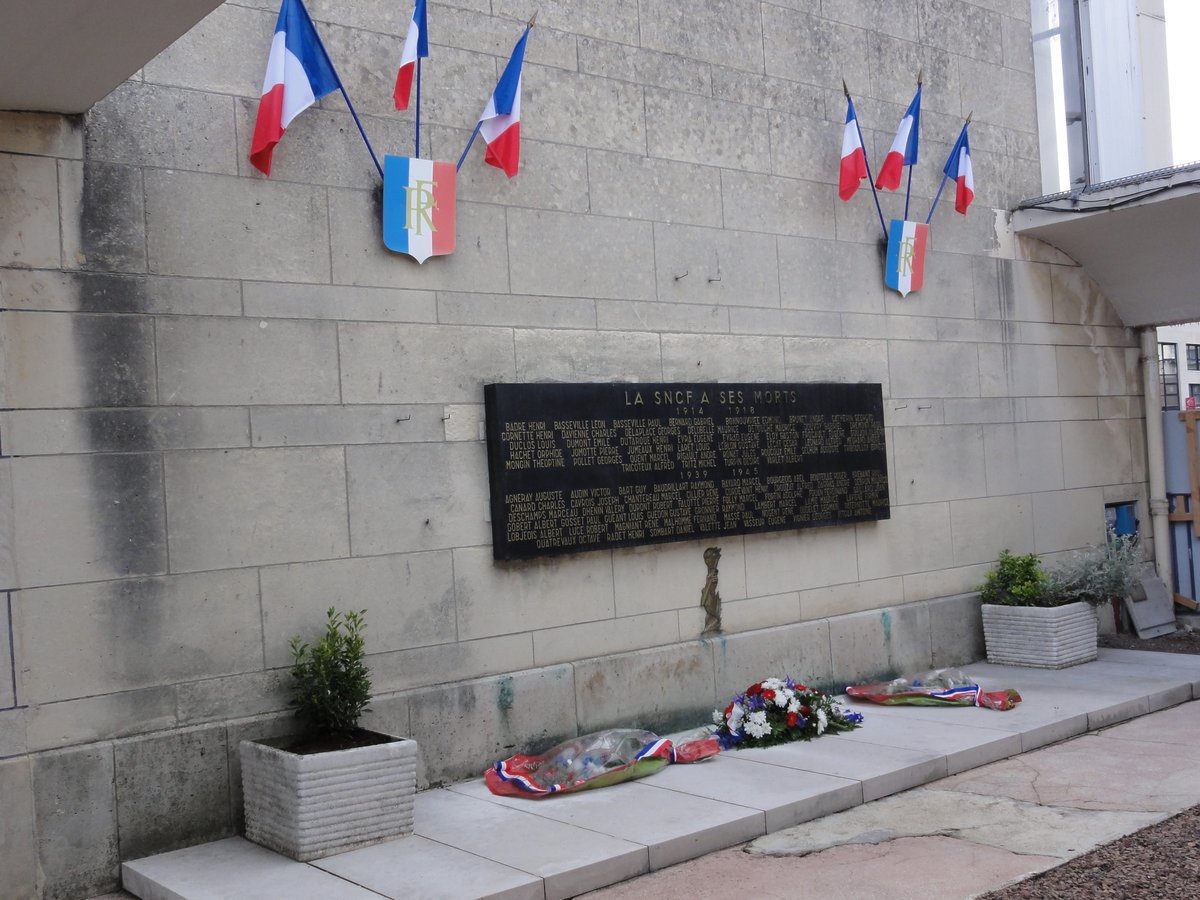
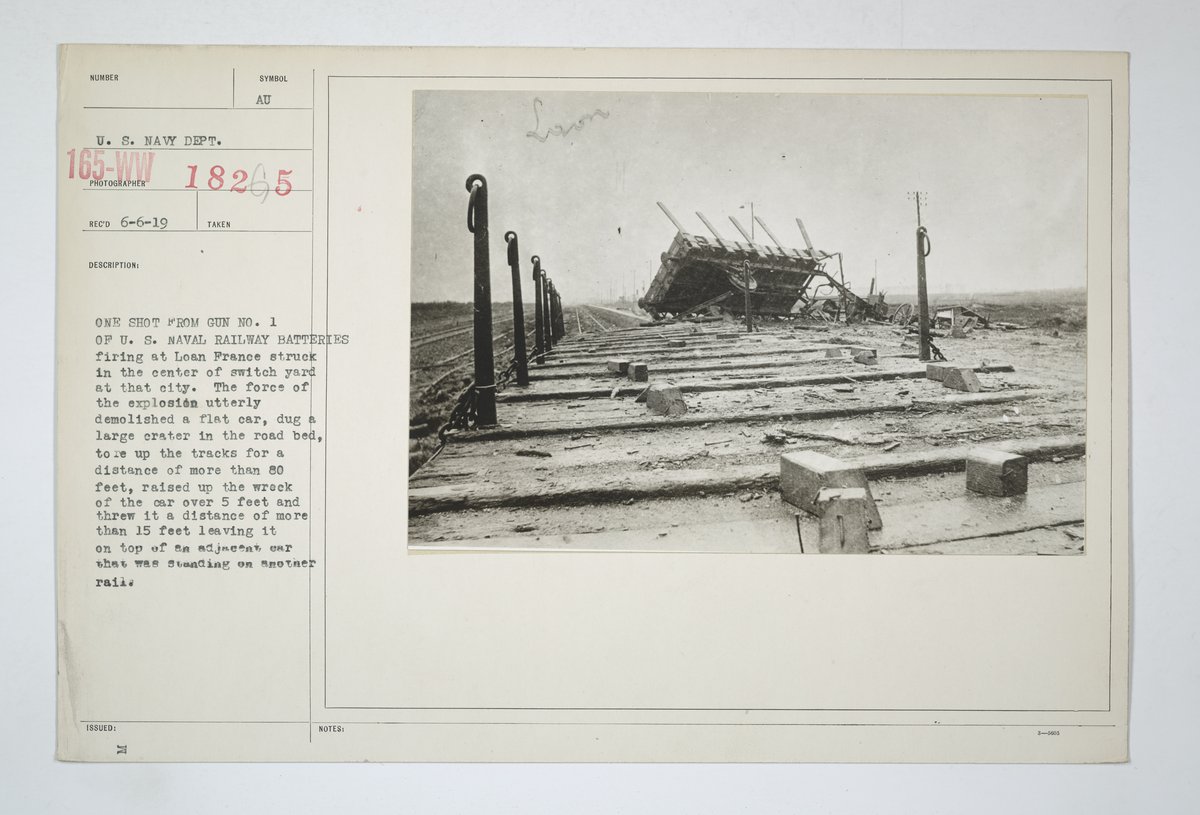
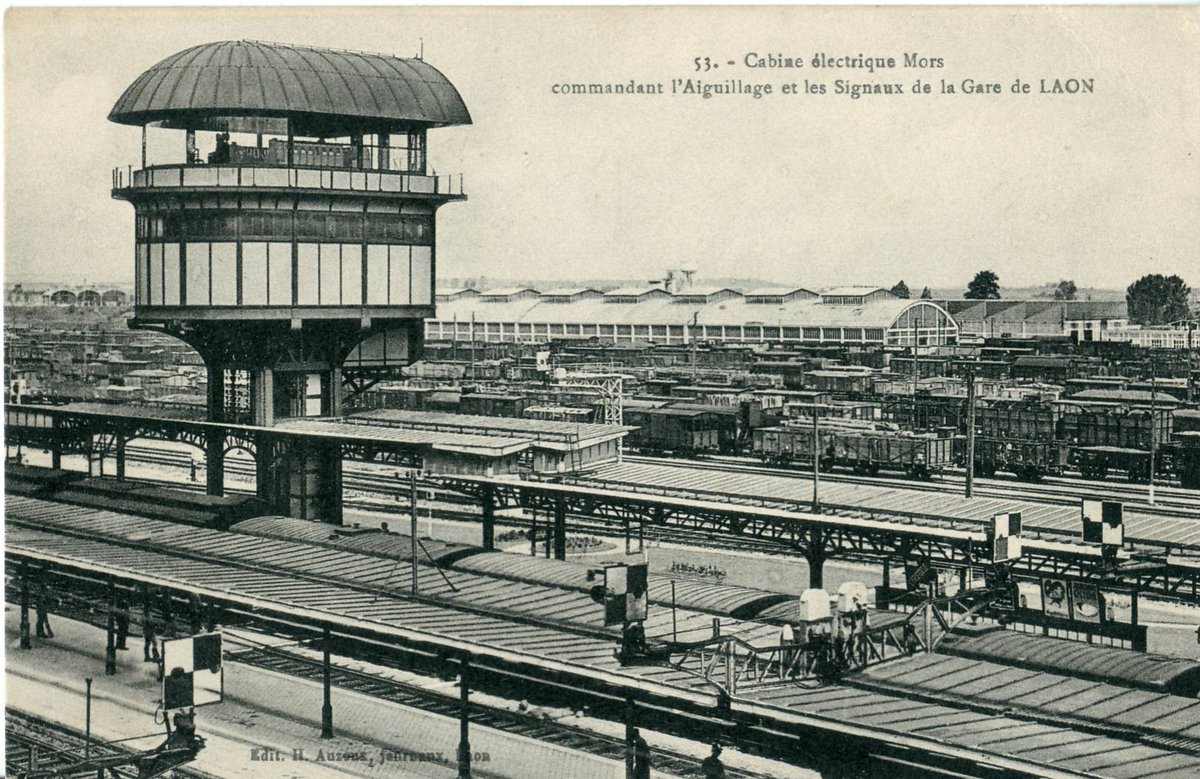
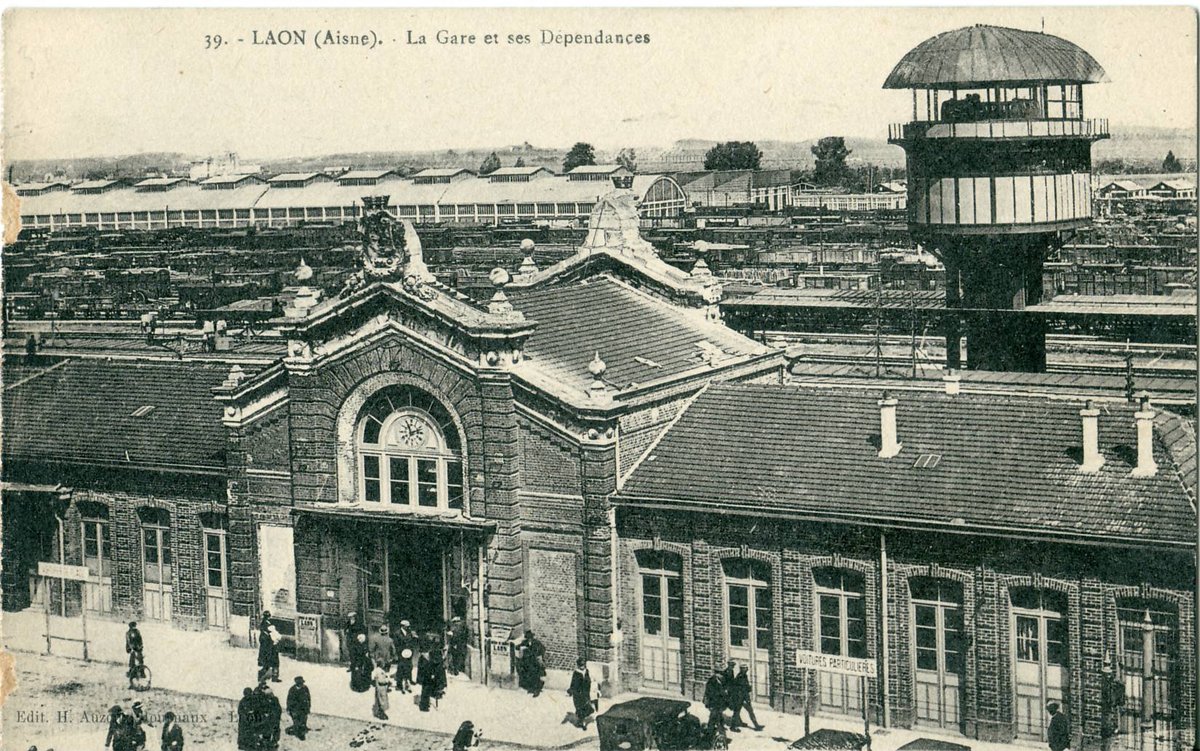
After wartime destruction during WWII, the station was rebuilt. Its roundhouse (rotonde) and workshop hall (halle-atelier) are rare surviving examples of railway engineering and are classified as historical monuments. A nearby 1920s signal box and the cité des cheminots also reflect the station’s place in the city’s daily life (infosgare.com).
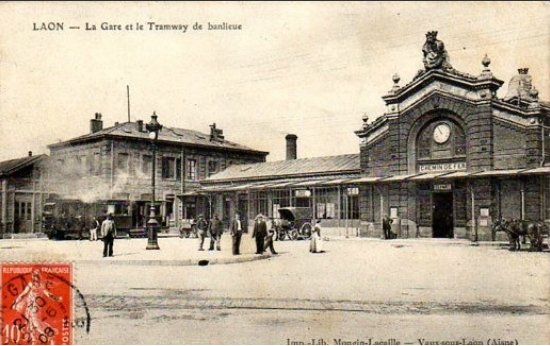
The main station building has symmetrical façades and arched windows characteristic of 19th-century French railway architecture. Renovations in 2011 improved accessibility while respecting historic features. Heritage protection supports the ongoing preservation of the roundhouse and workshop hall.
From 1899 to 1971, a funicular tramway connected Gare de Laon with the upper town. The old tramway ceased operations, but the modern Poma funicular, when operational, and local bus routes provide alternative connections between the lower and upper towns.
What to See
- Cathédrale Notre-Dame de Laon A 12th-century Gothic cathedral, about 850 metres uphill from the station.
- Medieval ramparts Historic walls and walking paths with panoramic views.
- Musée d’Art et d’Archéologie Regional art and archaeology.
- Belfry A historic tower with visitor access.
- Souterrains de Laon Guided tours of the underground sites.
- Chapelle des Templiers A rare octagonal chapel, accessible on foot.
- Cité des cheminots The railway workers’ district, with early 20th-century architecture.
Guided tours, often starting near the station, cover Laon’s railway and medieval history. Tours may be available especially during festivals and peak seasons.
Practical Visiting Information
Station Hours and Tickets
The station is generally reported as open daily from around 5:30 AM to 11:00 PM. Reported counter hours differ: ticket offices are listed as operating from 6:00 AM to 8:00 PM, while another listing gives staffed-counter hours of 5:30 AM to 9:00 PM. Self-service ticket machines are available 24/7. Check current schedules on the SNCF website.
Tickets are available at station counters, vending machines, and online through SNCF Connect, Omio, and thetrainline.com. Regional passes and advance bookings are recommended for popular routes, especially to Paris, and during events.
Gare de Laon is served by TER Hauts-de-France trains, with frequent daily departures to Paris (about 1 hour 40 minutes), Reims, and Saint-Quentin. The station also connects Laon with Amiens.
Historical Sites: Hours and Admission
- Cathedral Free entry. One listing gives daily hours of 9:00 AM–6:00 PM; another gives 9:00 AM–6:00 PM from April to October and until 5:00 PM from November to March. Tower access is €5.
- Belfry 10:00 AM–6:00 PM; admission is approximately €5.
- Museum Tuesday–Sunday, 10:00 AM–6:00 PM; entry is approximately €4.
- Souterrains de Laon Guided tours cost €8 for adults and €5 for children. Book through the Tourist Office.
Access, Transport, and Facilities
The station is at Place du 8 Mai 1945, 02000 Laon, France, approximately 1.5 km from the upper town (Ville Haute). Short- and long-term parking is available adjacent to the station, with ample parking nearby.
Ramps, elevators, adapted restrooms, tactile paving, and staff assistance are available at the station. The station and most key sites offer wheelchair access and tactile guides; contact the Laon Tourist Office for details. The funicular is accessible. Cobblestones in the medieval upper town can be challenging, although main attractions provide ramps.
Station facilities include ticketing, waiting rooms, accessible restrooms, Wi-Fi, and refreshments. There are no left-luggage lockers.
Local transport includes:
- Buses The TUL network connects the station with major sites.
- Poma funicular Connects Ville Basse and Ville Haute when operating. Tickets are €1.50 per ride and are integrated with buses. Listed service hours are 7:00 AM–9:00 PM.
- Taxis Available outside the station. A taxi to Ville Haute is listed at €8–€12.
Walking uphill takes around 15–20 minutes by one estimate. Another estimate is about 15 minutes, while the route via Rue Eugène Leduc and Rue Saint-Jean is given as 20–30 minutes and offers panoramic views.
Contact and Lost Property
- Address Place du 8 Mai 1945, 02000 Laon, France
- SNCF +33 8 92 35 35 35
- Tourist Office +33 3 23 20 28 62
- Station information Omio - Gare de Laon
- Lost property Report lost items at the information desk or through SNCF lost property.
Tips and Suggested Itinerary
- Book tickets ahead through the SNCF app or online, and check current train and bus schedules before travelling.
- Allow extra time for the ascent to the upper town.
- Spring and autumn, including early autumn, are cited as good seasons for visiting, with lighter crowds.
- Dress for walking and changing weather. French is the primary language; some English is spoken at tourist points. Basic French greetings are useful.
- CCTV and security patrols are present at the station. Laon is described as safe; use standard travel precautions.
A suggested walking itinerary:
- Start at Gare de Laon and pick up a map.
- Ascend by funicular or on foot.
- Visit the cathedral and Tourist Office.
- Walk the ramparts.
- Take a Souterrains tour.
- Explore the museum and chapels.
- Dine in the upper town before returning.
Downloadable maps and guides, as well as images and virtual tours of the cathedral, ramparts, funicular, and station, are available through the Laon Tourism Office website. The Audiala app is also mentioned as a travel resource.
Nearby Places and Events
Cafés and bakeries are located near the station. The upper town has bistros and restaurants serving regional cuisine. Accommodation options listed include Hotel Inn Design, Ibis, Kyriad Direct, and Camping La Chenaie; booking early during events is advised (Scenic Car Tours).
The Circuit Historique de Laon, an annual classic car rally held in early June, draws thousands of visitors. The 2025 event was scheduled for June 6–9; increased traffic, extended service hours, and a festive atmosphere were noted (Dyler).
Regular trains and buses make Laon a base for exploring the Aisne region and nearby cities. Festivals, fairs, and art events may also begin near the station (francerent.com; france-voyage.com).
Frequently Asked Questions
How do I reach the upper town from Gare de Laon?
Take a local bus, use the Poma funicular when it is operating, take a taxi, or walk uphill. Walking estimates range from about 15 minutes to 20–30 minutes, depending on the route.
Where can I buy train tickets?
At staffed counters, vending machines, or online through SNCF Connect and Omio.
Is there parking at the station?
Yes. Short- and long-term parking is available adjacent to the station.
Is the station accessible?
Ramps, elevators, adapted restrooms, tactile paving, and staff assistance are available.
Are guided tours available?
Yes. Tours cover Laon’s railway and medieval history, and may start near the station, especially during festivals and peak seasons.