
Origins and Construction
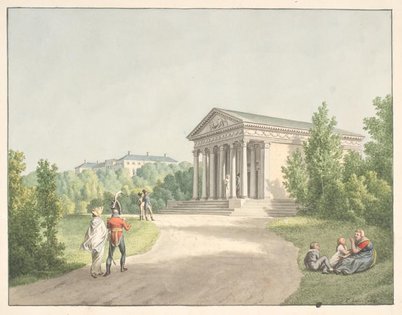
Commissioned by Crown Prince Frederik (later King Frederik VI) and designed by Nicolai Abildgaard, the Apis Temple was part of Frederiksberg Gardens’ transformation from a Baroque park to a naturalistic English landscape. Built between 1802 and 1804, the temple reflects the Romantic era’s interest in integrating decorative follies inspired by classical and exotic motifs into public green spaces (Academia.edu).
Architectural Inspiration and Symbolism
The temple’s design is rooted in neoclassical principles, featuring a colonnaded portico with ten columns (eight originals salvaged from Moltke’s Palace and two replicas). Its name and decorative motifs pay homage to Apis, the sacred Egyptian bull deity symbolizing fertility, strength, and kingship. Architectural highlights include:
- Colonnaded façade with Roman-inspired symmetry.
- Relief of a charging bull and ox cranium frieze, reflecting the Apis cult.
- Domed roof and Ionic columns, enhancing its classical silhouette.
- Strategic placement by the pond, offering scenic reflections and tranquil views.
The temple’s symbolic references to ancient Egypt and Rome illustrate the era’s fascination with global cultures and the integration of art, history, and nature (Visit Copenhagen).
Historical Functions and Restoration
Initially conceived as a picturesque folly for royal tea gatherings, the Apis Temple later served as the entrance to Copenhagen Zoo from 1874 to 1970. Over the years, it has hosted art exhibitions and cultural events, reinforcing its status as a cherished Copenhagen landmark. Restoration efforts in the late 20th century addressed weathering and preserved the temple’s structural and decorative features, ensuring its continued role as a protected heritage site (Frederiksberg Gardens Official Website).
Visiting Hours, Tickets & Accessibility
- Opening Hours Frederiksberg Gardens and the Apis Temple are open daily from 6:00 AM to 10:00 PM (hours may vary seasonally; check the official website for updates).
- Entry Fee Free for all visitors.
- Accessibility Paved paths offer wheelchair access throughout the gardens. Access inside the temple may be limited due to preservation concerns.
- COVID-19 Guidelines Adhere to current local health regulations; updates are available on the official site.
Note: If you plan to visit the adjacent Copenhagen Zoo, separate admission fees apply.
Travel Tips & Best Times to Visit
- Seasonal Advice Spring and summer offer lush landscapes and vibrant blooms, making them ideal for visits.
- Photography Early mornings and late afternoons provide optimal lighting for capturing the temple's neoclassical features.
- Visitor Comfort Consider weekdays and off-peak hours to avoid crowds. Bring a camera and comfortable walking shoes.
Nearby Attractions
Extend your visit by exploring these cultural and historical sites within walking distance:
- Copenhagen Zoo Family-friendly, with diverse animal exhibits.
- Frederiksberg Palace A historic royal residence with guided tours.
- Chinese Pavilion Another charming folly in Frederiksberg Gardens.
Frequently Asked Questions (FAQ)
Q: What are Apis Temple’s visiting hours?
A: The temple is accessible during Frederiksberg Gardens’ opening hours, 6:00 AM to 10:00 PM year-round.
Q: Is there an entry fee?
A: No, both the gardens and the Apis Temple are free to visit.
Q: Are guided tours available?
A: Many Copenhagen tour operators include the Apis Temple on walking tours of Frederiksberg Gardens, especially in peak seasons.
Q: Is the site wheelchair accessible?
A: Main paths are accessible, but some areas may be uneven. Assistance is recommended for those with mobility challenges.
Q: Can I visit during COVID-19 restrictions?
A: Check the official Frederiksberg Gardens website for current guidelines and updates.