
Historical Background and Ownership
Can Oms traces its origins to the 16th century, initially owned by Hug de Berard Palou, notable for reclaiming the Archipelago of Cabrera from Saracen rule—a feat that earned him a noble title from King Felipe II (Mallorca Photo Blog). The property changed hands in 1642 to Jerònim Doms, whose family maintained residency through the 17th and 18th centuries. By the 19th century, marriage alliances linked it to the Marquises de la Torre and eventually the Truiols Vilallonga family. In 1982, the Ajuntament de Palma acquired Can Oms, transforming it into a public cultural site.
Architectural Highlights
The Courtyard (Pati) and Façade
Can Oms is celebrated for its 18th-century baroque courtyard—a defining feature of Mallorcan noble architecture. The patio’s grand staircase, elegant arches, and d’Oms family coat of arms exemplify elite tastes and offer a serene atmosphere ideal for photography (Lonely Planet; Accés Mallorca).
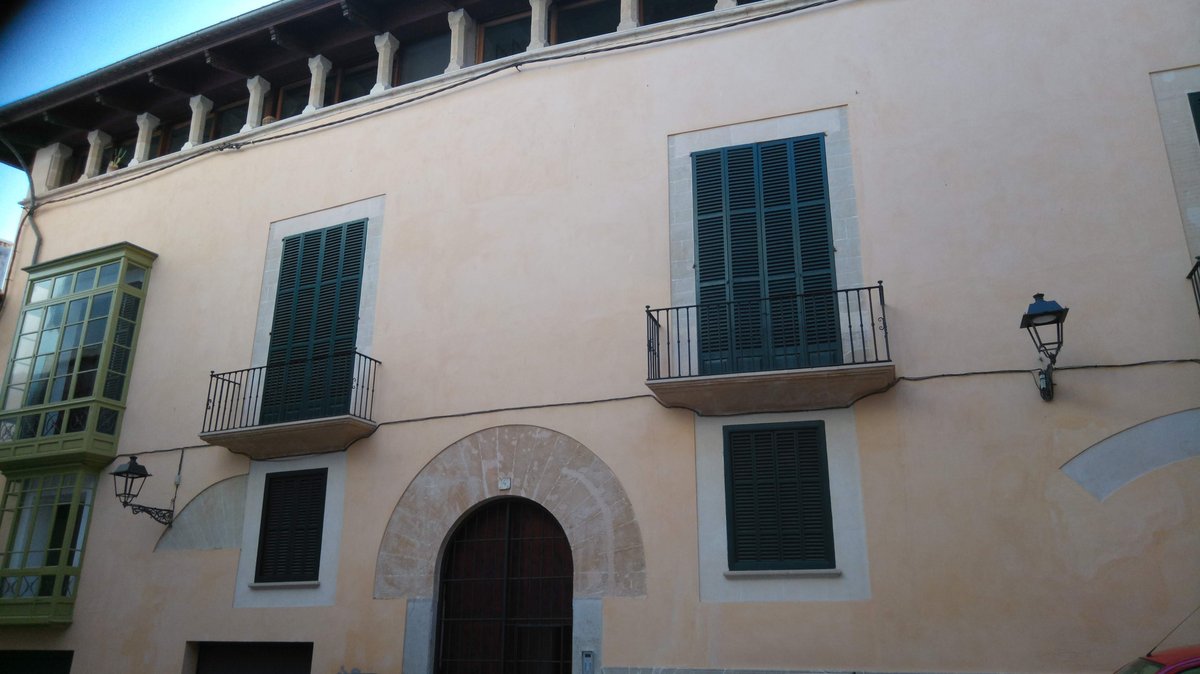
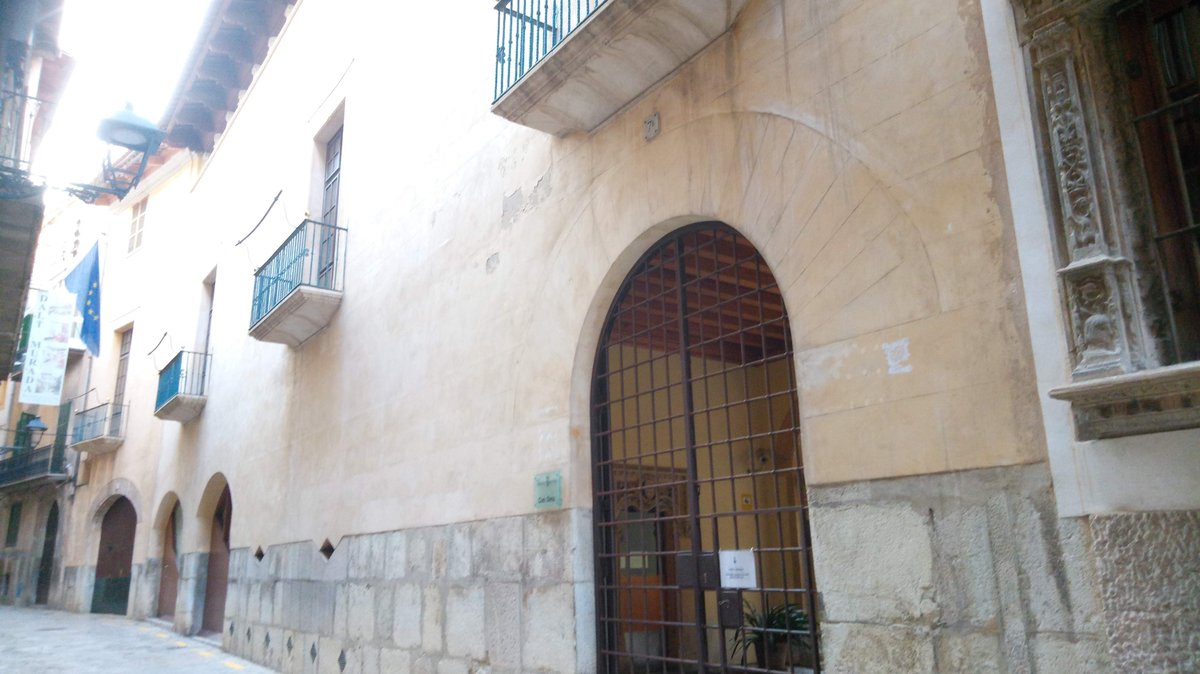
The façade, marked by a grand arched portal and stone balconies, displays a restrained elegance with symmetrical windows, wrought-iron railings, and a warm marès sandstone entrance. The vestibule’s Gothic portal, featuring the Armadans family crest, was relocated from a medieval residence, further enriching the site’s historical narrative (Mallorca Runaway).
Interior Features
Inside, Can Oms preserves original beamed ceilings, period tilework, decorative plasterwork, and an octagonal well. The layout—rooms arranged around the patio—maximizes light and ventilation typical of Mediterranean homes. The interior reveals a blend of Gothic, Renaissance, and Baroque styles, reflecting centuries of evolving artistic trends (View Mallorca).
Cultural Significance
Can Oms is more than an architectural gem; it is a living symbol of Palma’s aristocratic heritage and multicultural evolution. Drawing on Roman, Islamic, and Christian influences, the building’s design fuses traditions from across the Mediterranean (SeeMallorca.com). Today, as a municipal office and cultural venue, Can Oms continues to host art exhibitions, public meetings, and civic ceremonies—bridging Palma’s noble past with its vibrant present (World Tourism Organization).
Visiting Hours and Tickets
Typical Visiting Hours:
- Monday to Friday: 9:00 AM – 2:00 PM
- Closed on weekends and public holidays
Note: Hours may vary during special exhibitions or municipal events. Always check with the Palma tourist office or Ajuntament de Palma for up-to-date information.
Admission:
- Entry to the courtyard and public areas is generally free.
- Some special exhibitions or guided tours may require a nominal fee (Accés Mallorca).
Guided Tours and Accessibility
- Guided Tours Available in multiple languages through the Palma tourist office or as part of broader old town walking tours. These tours provide historical context and, during special events, may grant access to additional interior spaces. Advance booking is recommended (World Tourism Organization).
- Accessibility The main courtyard and ground floor are generally accessible for visitors with limited mobility, though upper floors may not be due to the historic nature of the building. Contact the tourist office for specific accessibility concerns.
Visitor Experience and Tips
Best Time to Visit
- Weekday mornings offer quieter conditions and better lighting for photography.
- Spring (April–June) and autumn (September–October) provide pleasant weather and fewer crowds (Weather25).
- Avoid peak tourist months (July–August) and major festival dates for a more tranquil visit.
Photography
- Photography is permitted in the courtyard and other public areas. Restrictions may apply during exhibitions or inside administrative spaces—always check signage or ask staff.
Visitor Etiquette
- As both a working municipal building and heritage site, visitors should remain respectful, keep noise levels low, and avoid restricted areas.
Nearby Attractions
- Palma Cathedral (La Seu) Iconic Gothic cathedral, a short walk away (Voyage Tips).
- Almudaina Palace Former royal residence and museum.
- Plaça Major Lively city square with shops and cafés.
- Passeig des Born Elegant boulevard lined with boutiques and restaurants (Salt in Our Hair).
Combine your Can Oms visit with a walking tour of these landmarks for a comprehensive exploration of Palma’s historic center.
Practical Information
- Address Carrer de l’Amudaina 7, 07001 Palma, Mallorca, Spain
- Public Transport Several city bus lines stop nearby; taxis and bicycle rentals are available; Estació Intermodal (main train and bus station) is about a 15-minute walk away.
- Parking Limited in the old town; use public parking garages on the outskirts.
- Restrooms Not always available inside Can Oms; use nearby cafés or public facilities.
- Language Spanish and Catalan are official, but English is widely spoken in tourist services.
Frequently Asked Questions (FAQ)
Q: What are Can Oms visiting hours?
A: Typically Monday to Friday, 9:00 AM – 2:00 PM; closed on weekends and holidays. Hours may vary for special events.
Q: Is there an admission fee?
A: Admission to public areas is generally free. Special exhibitions or tours may have a small fee.
Q: Are guided tours available?
A: Yes, bookable through the tourist office or as part of old town walking tours. Advance booking recommended.
Q: Is Can Oms accessible for visitors with limited mobility?
A: The main courtyard and ground floor are accessible; upper floors may not be due to historic staircases.
Q: Can I take photographs inside Can Oms?
A: Photography is allowed in public areas and the courtyard but may be restricted during exhibitions or municipal activities.