
Akhmet Baitursynov: Life and Achievements
Akhmet Baitursynov (1872–1937) was a pioneering educator, poet, linguist, and a central leader of the Alash Orda movement. He is best known for creating the first Kazakh alphabet based on the Arabic script, later advocating for a Latin-based script to increase literacy and unify the Kazakh people. Baitursynov’s work in publishing, most notably the newspaper "Qazaq," and his numerous textbooks and literary contributions, laid the groundwork for modern Kazakh language, literature, and education (Kazakhstan National Encyclopedia, astanatimes.com).
Historical Significance and Political Context
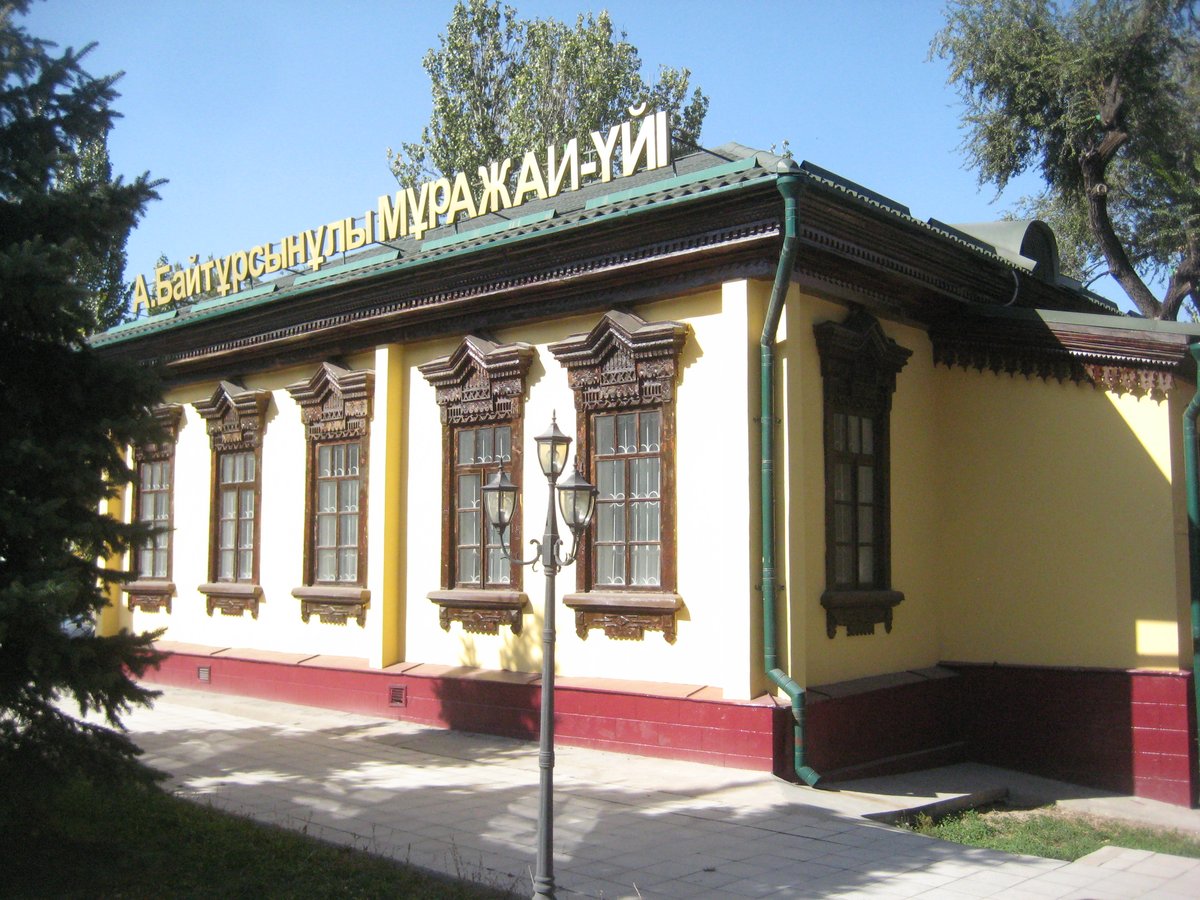
Baitursynov’s advocacy for Kazakh autonomy and cultural revival, as part of the Alash movement, drew the attention of Soviet authorities. He was repeatedly arrested and ultimately executed during the Stalinist purges in 1937. Posthumously rehabilitated in 1988, Baitursynov was re-established as a national hero, and his home was transformed into a museum to commemorate his enduring legacy (dknews.kz).
Museum Exhibitions and Collections
Thematic Rooms and Artifacts
The museum features three primary rooms—the dining room, children's room, and study—each furnished to reflect the intellectual and family life of Baitursynov (baitursynov.ksu.edu.kz). Over 260 exhibits, many donated by relatives, include:
- Original manuscripts and rare books (including "Sorok Basen," "Bukvar," and "Literaturovedenie")
- Personal belongings and family photographs
- Handwritten letters and archival documents related to the Alash Orda government
- A solemn room dedicated to Baitursynov’s arrest and tragic fate
These collections illuminate both Baitursynov’s personal life and his central role in Kazakh modernization (almatymuseums.kz, ibnbattutatravel.com).
Rare Books and Archival Treasures
The museum also houses over 500 rare manuscripts and books from the 17th to the 19th centuries, offering valuable resources for researchers and enthusiasts (visitalmaty.kz).
Visiting Information: Hours, Tickets, and Accessibility
- Opening Hours
Tuesday to Sunday, 10:00 AM – 6:00 PM. Closed Mondays for maintenance; hours may vary on public holidays (almatymuseums.kz). - Admission Fees
Standard tickets generally range from 500–800 KZT (~$1–2 USD); students and children receive discounts. Some periods or events may offer free admission—always check the official website ahead of your visit. - Tickets
Purchase tickets on-site or online via the Almaty Museums Association portal. Advance booking is recommended for groups and during peak times. - Accessibility
The museum is wheelchair accessible with entrance ramps and adapted restrooms. Some historical building features may limit access to certain areas—contact staff in advance for assistance. - Photography
Permitted in most areas without flash or tripods; always confirm on arrival.
Location, Directions, and Travel Tips
- Address 60 Baitursynov Street, Almaty, Kazakhstan, 050012
- Metro Closest is Baikonur station, a 10–15 minute walk
- Bus Multiple bus lines serve nearby stops
- Taxi Yandex Taxi and Uber are reliable and affordable options
- On Foot The museum is within walking distance of major hotels, cafes, and other museums in central Almaty (My Wanderlust).
Guided Tours and Educational Programs
Guided tours are available in Kazakh, Russian, and English (advance booking recommended), offering in-depth insights into Baitursynov’s life and the broader context of Kazakh history. The museum also hosts lectures, workshops, and special events focused on language reform, literature, and national heritage (bilimger.kz).
Nearby Cultural Attractions
Enhance your visit by exploring nearby landmarks:
- Central State Museum
- Abai Opera House
- Museum of D. Kunaev
- Literary Memorial Museum of S. Mukanov
- Museum of Folk Musical Instruments
- Panfilov Park and Zenkov Cathedral
These sites together enrich the narrative of Almaty’s historical and cultural landscape.
Frequently Asked Questions (FAQ)
Q: What are the museum’s opening hours?
A: Tuesday to Sunday, 10:00 AM – 6:00 PM; closed Mondays.
Q: How much does admission cost?
A: Standard tickets are 500–800 KZT; students and children receive discounts. Check for free admission offers during special events.
Q: Are guided tours available in English?
A: Yes, with advance booking.
Q: Is the museum accessible for visitors with disabilities?
A: Yes, though some historic elements may limit access to certain rooms.
Q: Is photography allowed?
A: Non-flash photography is permitted; always ask staff for specific restrictions.
Q: How do I purchase tickets?
A: On-site or online via the official portal.