Historical Background: Margarethe Salomon and the Stolpersteine Project
The Stolpersteine Project: Origins and Purpose
The Stolpersteine ("stumbling stones") project, initiated by artist Gunter Demnig in the early 1990s, is Europe’s largest decentralized Holocaust memorial. Over 100,000 small brass plaques have been embedded in pavements across more than 1,800 cities, each commemorating an individual victim of Nazi persecution (Stolpersteine.eu; Wikipedia).
Each Stolperstein is placed in front of the victim’s last freely chosen residence or workplace and bears their name, date of birth, fate (such as deportation or escape), and, if known, date of death. This grassroots project invites local communities, organizations, and individuals to sponsor stones, research biographies, and participate in installation ceremonies, making remembrance a living, participatory act (Stolpersteine.eu).
Margarethe Salomon: Her Life and Tragic Fate
Margarethe Salomon was born in 1882 into a Jewish family deeply involved in Halle’s civic and intellectual life. She lived with her sisters Elise and Franziska, while her brothers Oskar and Paul were among the first Jewish students at the prestigious Stadtgymnasium. The rise of the Nazi regime brought escalating persecution: the Salomon sisters faced forced relocations to a "Judenhaus" and then to a so-called "Altersheim," both common Nazi tactics to isolate Jewish families. In September 1942, facing imminent deportation to the Theresienstadt ghetto, Margarethe chose to end her life. Her story is a testament to both the resilience and the desperation experienced by countless victims (zeit-geschichten.de; Stolpersteine Gera).
The Margarethe Salomon Stolperstein: Location and Meaning
The Stolperstein for Margarethe Salomon is situated at Adolf-von-Harnack-Straße 9, Halle (Saale), marking her last freely chosen residence before Nazi persecution forced her displacement. The inscription reads:
Hier wohnte
Margarethe Salomon
Jg. 1882
Flucht in den Tod 16.9.1942
("Here lived Margarethe Salomon, born 1882, fled to death 16.9.1942")
This Stolperstein, like others across Europe, transforms a simple walkway into a site of remembrance and reflection—for both residents and visitors. It stands not only as a memorial to Margarethe but as a call to remember the broader tragedy experienced by millions under the Nazi regime (zeit-geschichten.de).
Visiting Information
Location and Accessibility
- Address Adolf-von-Harnack-Straße 9, 06108 Halle (Saale), Germany
- The Stolperstein is embedded in the sidewalk at the entrance to the building.
- The area is wheelchair accessible and suitable for all visitors.
Visiting Hours and Admission
- Hours Accessible 24/7, as it is located outdoors on public pavement.
- Admission Free; no tickets or permits are required.
How to Visit Respectfully
- Pause to read the inscription and reflect on Margarethe Salomon’s story.
- Consider bowing or kneeling when reading the plaque as a sign of respect.
- Avoid standing directly on the Stolperstein.
- Some visitors choose to clean the stone or leave a flower as a gesture of remembrance.
Nearby Attractions and Related Memorials
- Halle is home to nearly 300 Stolpersteine at over 130 different locations, each bearing witness to individual stories.
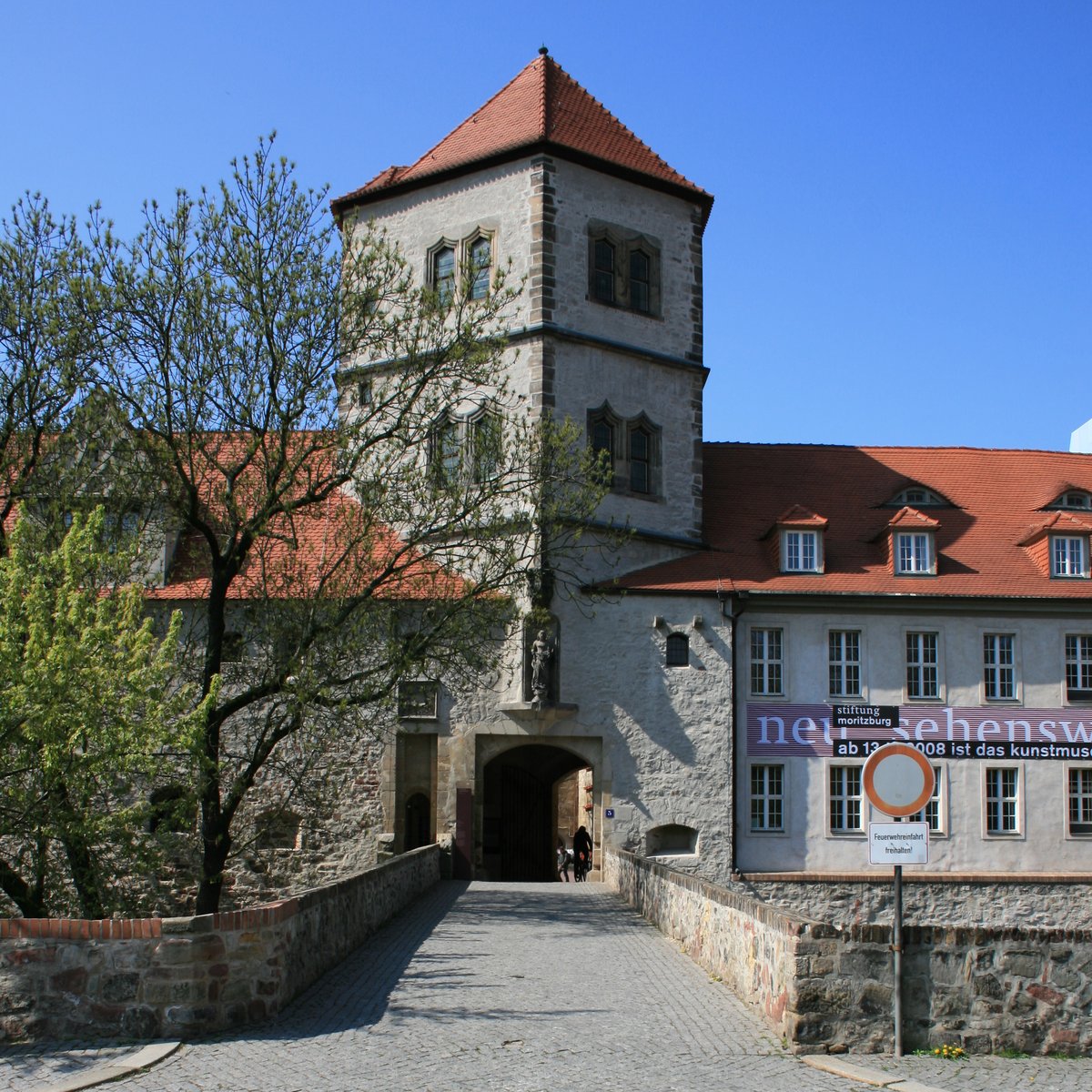
- Additional sites of interest include the Marktkirche Unser Lieben Frauen, the Moritzburg Museum, and the Halle Synagogue.
- Guided walking tours focusing on Holocaust remembrance are available through organizations such as Zeit-Geschichte(n) e.V. (Stolpersteine Guide app).
Special Events and Community Involvement
- Installation ceremonies often feature speeches, music, and participation from local schools and community members.
- On Holocaust Remembrance Day (January 27) and Kristallnacht anniversary (November 9), volunteers clean and decorate Stolpersteine with candles or flowers.
Travel Tips and Guided Tours
- Best Time to Visit Daylight hours are ideal for visibility and photography. Early mornings or weekdays offer quieter moments for reflection.
- Comfortable Walking Shoes Recommended, as Stolpersteine are spread throughout the city.
- Guided Tours Check with Halle’s tourist office or Zeit-Geschichte(n) e.V. for schedules of group or self-guided tours.
- App Resources The Stolpersteine Guide app and Audiala app offer interactive maps, biographies, and visitor tips.
Frequently Asked Questions (FAQ)
Q: Is there an entrance fee or ticket required?
A: No, the Stolperstein is located on a public sidewalk and is free to visit at any time.
Q: Where exactly is the Stolperstein located?
A: Adolf-von-Harnack-Straße 9, 06108 Halle (Saale), Germany.
Q: Is the site accessible to visitors with mobility impairments?
A: Yes, the sidewalk is wheelchair accessible.
Q: Are guided tours available?
A: Yes, guided and self-guided tours are offered by local organizations and through the Stolpersteine Guide app.
Q: How can I support or participate in the Stolpersteine project?
A: Sponsorships and volunteer efforts are coordinated by groups such as Zeit-Geschichte(n) e.V. (zeit-geschichten.de).