Origins and Early History
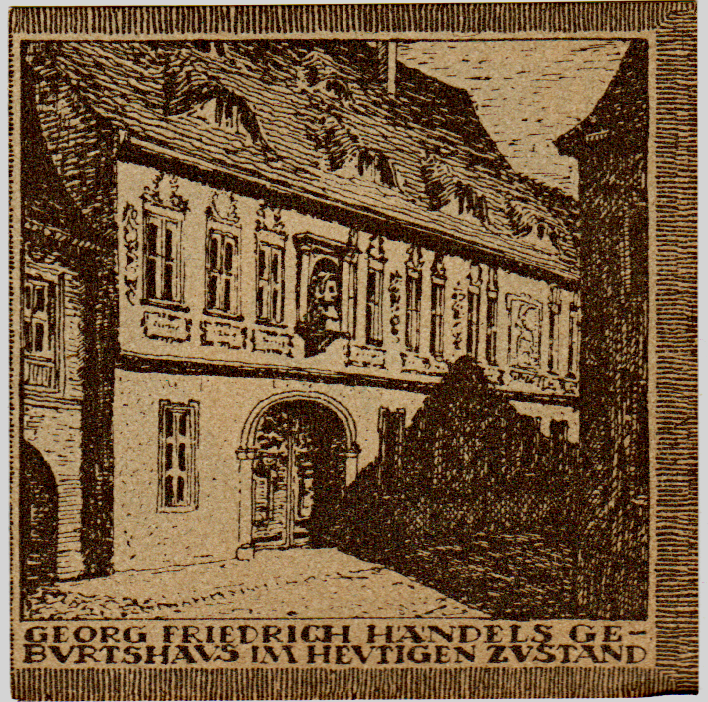
The Händel-Haus, located at Große Nikolaistraße 5, is renowned as the birthplace of George Frideric Handel (Georg Friedrich Händel), born February 23, 1685. The house’s roots trace to the 15th century, with its first documented mention in 1558. In 1666, Georg Händel, the composer’s father, acquired the property known as "Zum Gelben Hirsch" (The Yellow Stag). The Händel family resided here until 1783, and young Handel lived in the house until 1703, when he left for Hamburg to further his musical career (halle.de).
Museum Transformation and Modernization
After being acquired by the City of Halle in 1937, the house was officially opened as a museum in 1948—delayed in part by World War II. In 1985, on the 300th anniversary of Handel’s birth, the museum was expanded by incorporating neighboring historic buildings. The award-winning permanent exhibition "Handel – The European" was introduced in 2009, using multimedia to trace Handel’s journey and influence (halle-dreht-sich.de).
Collections and Exhibitions
The museum’s collections are among the most significant in Central Europe:
- Handel’s Life and Work Original manuscripts, portraits, and personal items illustrating Handel’s biography and milestones.
- Historical Musical Instruments Approximately 750 pieces, including a rare 1599 Ruckers harpsichord and the 1770 Mauer Church organ.
- Halle’s Musical Heritage Documents and artifacts contextualizing local music history.
- Multimedia and Interactive Displays Miniature Baroque theatre, audio guides, and sound studios for hands-on exploration (radiomuseum.org).
Händel-Festspiele and Cultural Impact
Since 1952, the Händel-Haus has been the epicenter of the annual Händel-Festspiele, a leading Baroque music festival featuring over 70 performances each June. The festival is celebrated for its historically informed performances by the Händelfestspielorchester Halle and international artists (haendelhaus.de). In 2025, the orchestra was honored with the Händel-Preis der Stadt Halle for its dedication to authentic interpretation.
Architectural Evolution
The Händel-Haus complex displays Renaissance and Baroque features, with a Romanesque vaulted room dating to the 13th century. Restoration in the 1980s preserved key historical elements while integrating modern exhibition spaces, a chamber music hall, and two courtyards for outdoor events.
Visitor Information
Opening Hours
- April–October Tuesday to Sunday, 10:00–18:00
- November–March Tuesday to Sunday, 10:00–17:00
- Closed on Mondays (except public holidays and during the Händel-Festspiele)
Ticket Prices
- Adults €8
- Reduced (students, seniors, disabled) €5
- Children under 6 Free
- Family Ticket (2 adults + up to 3 children) €18
- Combitickets Available for the Händel-Haus and Wilhelm-Friedemann-Bach-Haus
Tickets can be purchased at the museum entrance or online via the official website.
Guided Tours and Accessibility
- Guided Tours Available in German and English. Advance booking recommended, especially for groups or English-language tours.
- Educational Programs Interactive workshops for school groups and families.
- Accessibility Main exhibition areas and restrooms are wheelchair accessible. Some upper floors in the historic building have limited access. Assistance and tailored tours can be arranged upon request (haendelhaus.de).
- Digital Resources Free audio guides in several languages, NFC tags and QR codes throughout exhibits, and complimentary Wi-Fi.
Best Time to Visit and Travel Tips
- Festival Season The Händel-Festspiele (6–15 June 2025) feature extended hours and additional events. Book tickets and accommodations early.
- Off-Peak Visit on weekday mornings or late afternoons for a quieter experience.
- Nearby Attractions Halle Cathedral (Marktkirche), Francke Foundations, Händel Monument, and Halloren Chocolate Museum are within walking distance (Triplyzer guide).
Frequently Asked Questions (FAQs)
Q: What are the Händel-Haus visiting hours?
A: Tuesday to Sunday, 10:00–18:00 (April–October), 10:00–17:00 (November–March); closed Mondays except public holidays and festivals.
Q: How do I buy tickets?
A: Tickets are available online, at the museum, and at authorized ticket offices (ticket info).
Q: Is the museum accessible by wheelchair?
A: Yes, main areas and restrooms are accessible. Some historic rooms have limited access.
Q: Are guided tours offered in English?
A: Yes, with advance booking.
Q: Are there family-friendly activities?
A: Yes, including workshops and interactive tours for children and families.
Q: Can I take photos inside?
A: Non-flash photography is permitted in permanent exhibitions; restrictions may apply during concerts.
Q: How do I get to Händel-Haus from Halle Hauptbahnhof?
A: A 15–20 minute walk or a short tram ride (approx. 1.5 km).
Museum Features and Services
Layout and Permanent Exhibitions
- “Händel – The European” Award-winning multimedia exhibition chronicling Handel’s life, music, and European influence. Includes original manuscripts, portraits, and interactive displays.
- Historic Instruments Over 750 instruments, including playable replicas.
- Baroque Theatre Miniature theatre with animated opera excerpts for immersive experiences.
- Sound Studio Hands-on sound experiments for all ages.
Special Exhibitions and Events
- Rotating Exhibitions Focused on music history, instrument craftsmanship, and Handel’s influence.
- Händel-Festspiele Premier Baroque music festival every June, featuring international artists and community events.
Facilities and Amenities
- Museum Shop Books, recordings, souvenirs.
- Café Light refreshments and garden seating.
- Cloakroom and Lockers Free for coats and bags.
- Restrooms Accessible facilities available.
Insider Tips
- Allow 1.5–2 hours to explore all permanent exhibitions and interactive features.
- Visit during the Händel-Festspiele for special programming and extended hours.
- Use the free audio guides and digital resources for a richer experience.
- Combine your visit with the Wilhelm-Friedemann-Bach-Haus using a combiticket (haendelhaus.de).
- Check the website for the latest on exhibitions and events.
Contact and Practical Details
- Address Große Nikolaistraße 5, 06108 Halle (Saale), Germany
- Phone +49 (0) 345 / 500 90 444 (festival guest office, 10:00–18:00 during Händel-Festspiele)
- Email [email protected]
- Website https://haendelhaus.de/
Visuals and Media
- Händel-Haus exterior and interior images (alt: "Händel-Haus Halle exterior")
- Baroque instruments exhibition (alt: "Händel-Haus historic instruments exhibition")
- Museum location map (alt: "Händel-Haus location map")
- Interactive virtual tours and multimedia galleries available on the museum’s website.