Place
Germany Updated Oct 2026
At Halle’s Marktplatz, four church towers rise beside a red tower standing entirely on its own: the city’s famous five-tower skyline is made by two buildings. In Halle, Germany, that Gothic silhouette sits above a history shaped by salt brine, Reformation sermons, and a composer born here in 1685. The grand story gives way easily to small pleasures: river air, quiet arcades, and chocolates shaped like salt workers’ silver buttons.
 Photo: Catatine · CC BY-SA 4.0
Built from cited sources · see the method · How we make our guides →
Salt made Halle prosperous, and its memory still has a taste. At the Saline Museum, boiling pans and the Halloren brotherhood’s silver treasures bring that trade to life; the brotherhood’s round coat buttons inspired Halloren Kugeln, made by a chocolate factory operating since 1804.
George Frideric Handel was born in Halle and baptized at the Marktkirche, where Martin Luther preached near the end of his life. The Handel-Haus keeps the composer close, while the annual Handel Festival carries Baroque music into churches and concert halls across town.
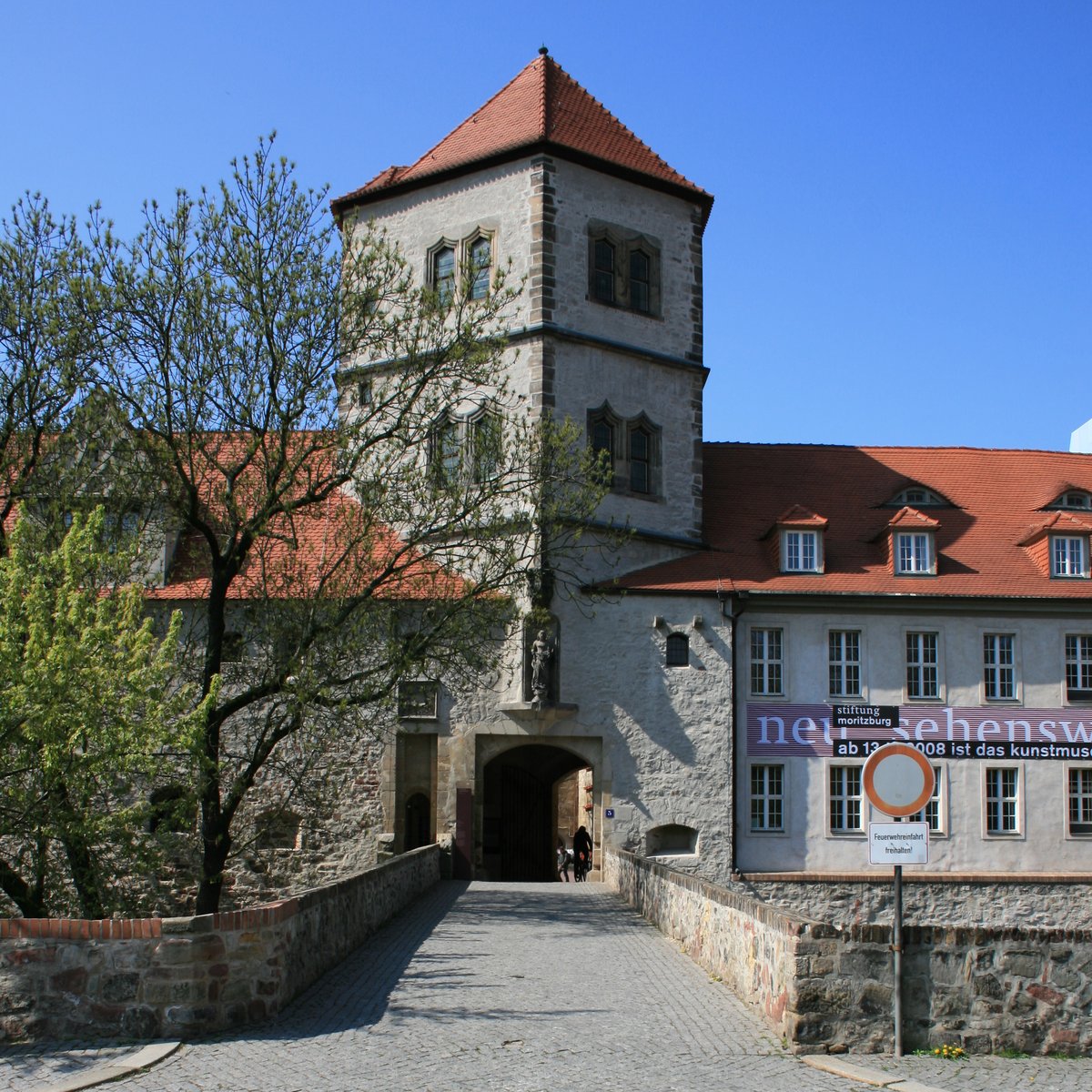
The State Museum of Prehistory holds the Nebra Sky Disc, a 3,600-year-old bronze plate just 32 centimeters across, inlaid with gold images of the sun, moon, and stars. At Moritzburg, modern gallery rooms sit within a late-15th-century fortress; out on Peißnitzinsel, the Saale brings the city back to birdsong, open meadows, and the slow pace of a riverside walk.
Not every monument, just the ones we'd walk you past ourselves.

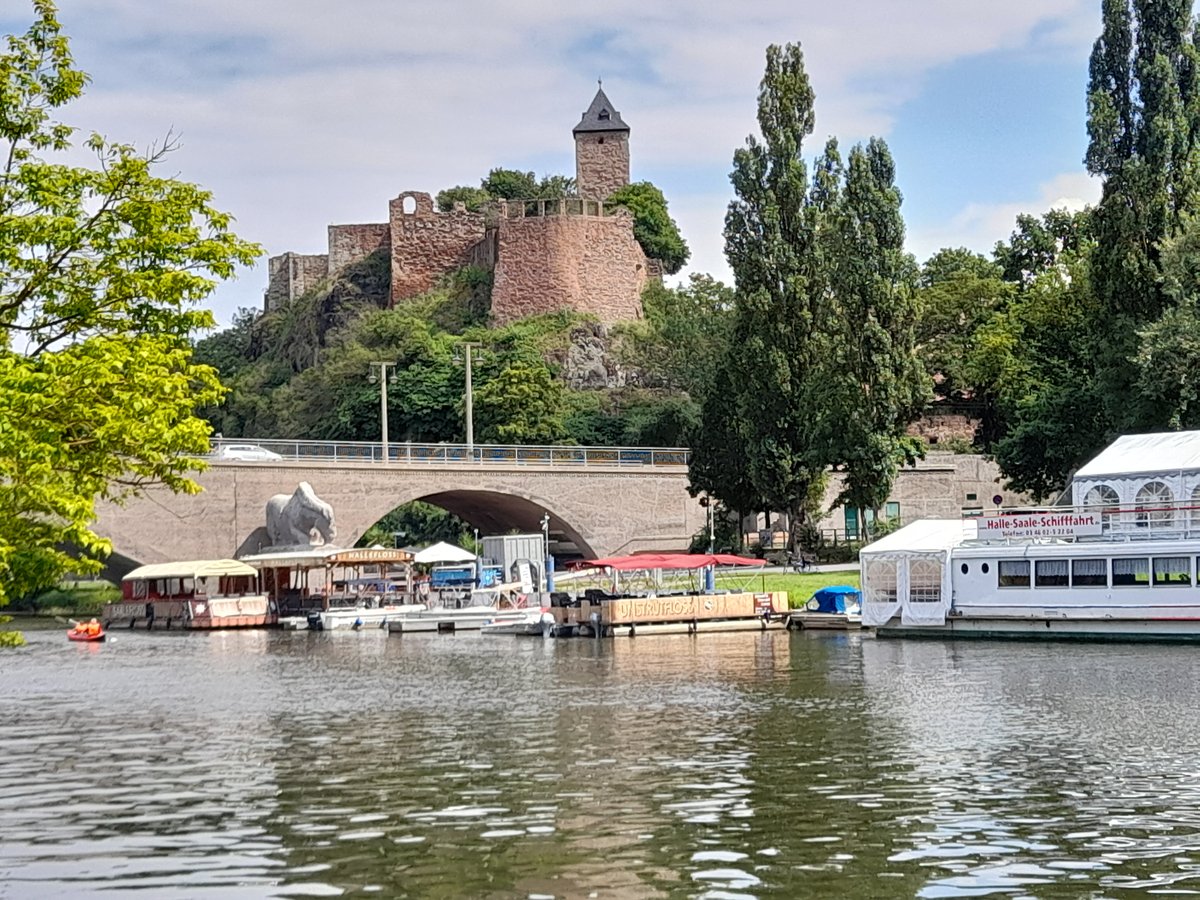
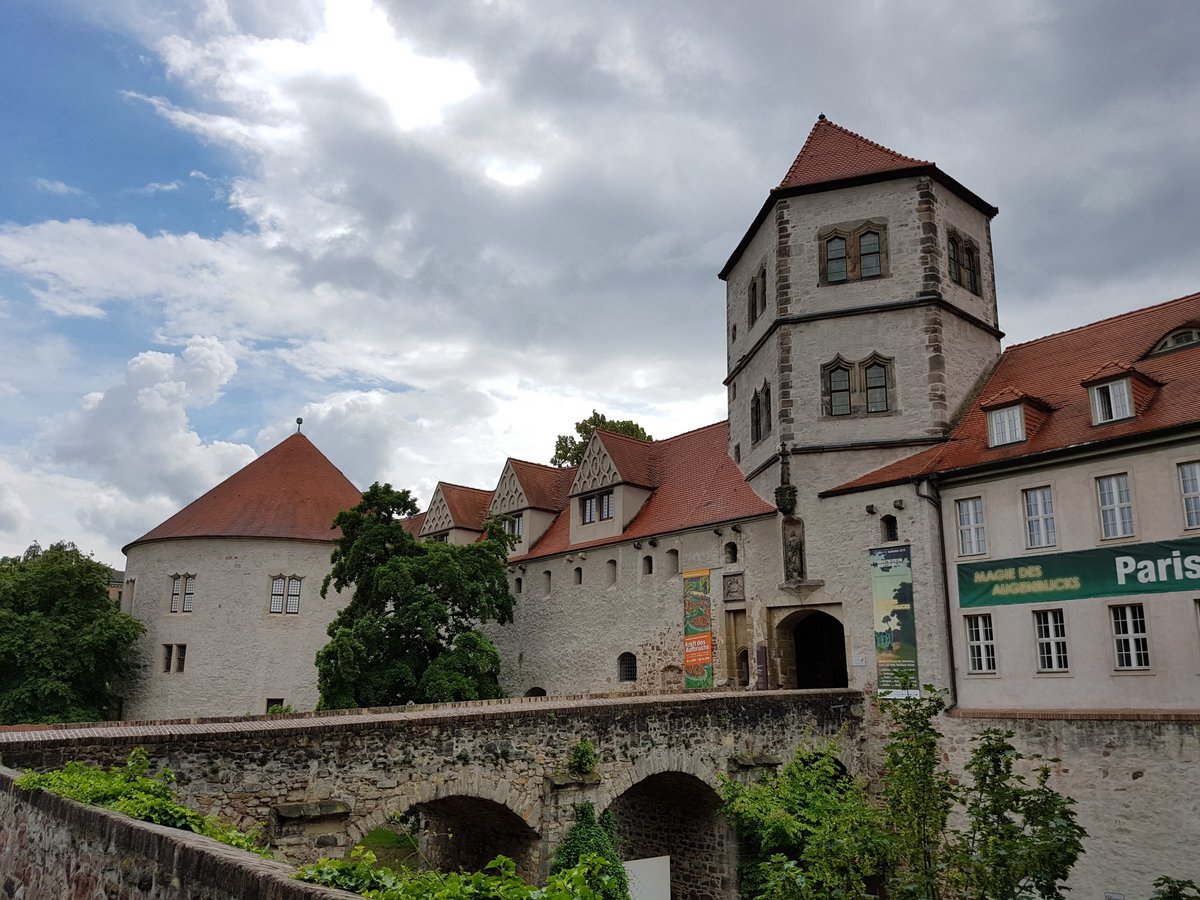
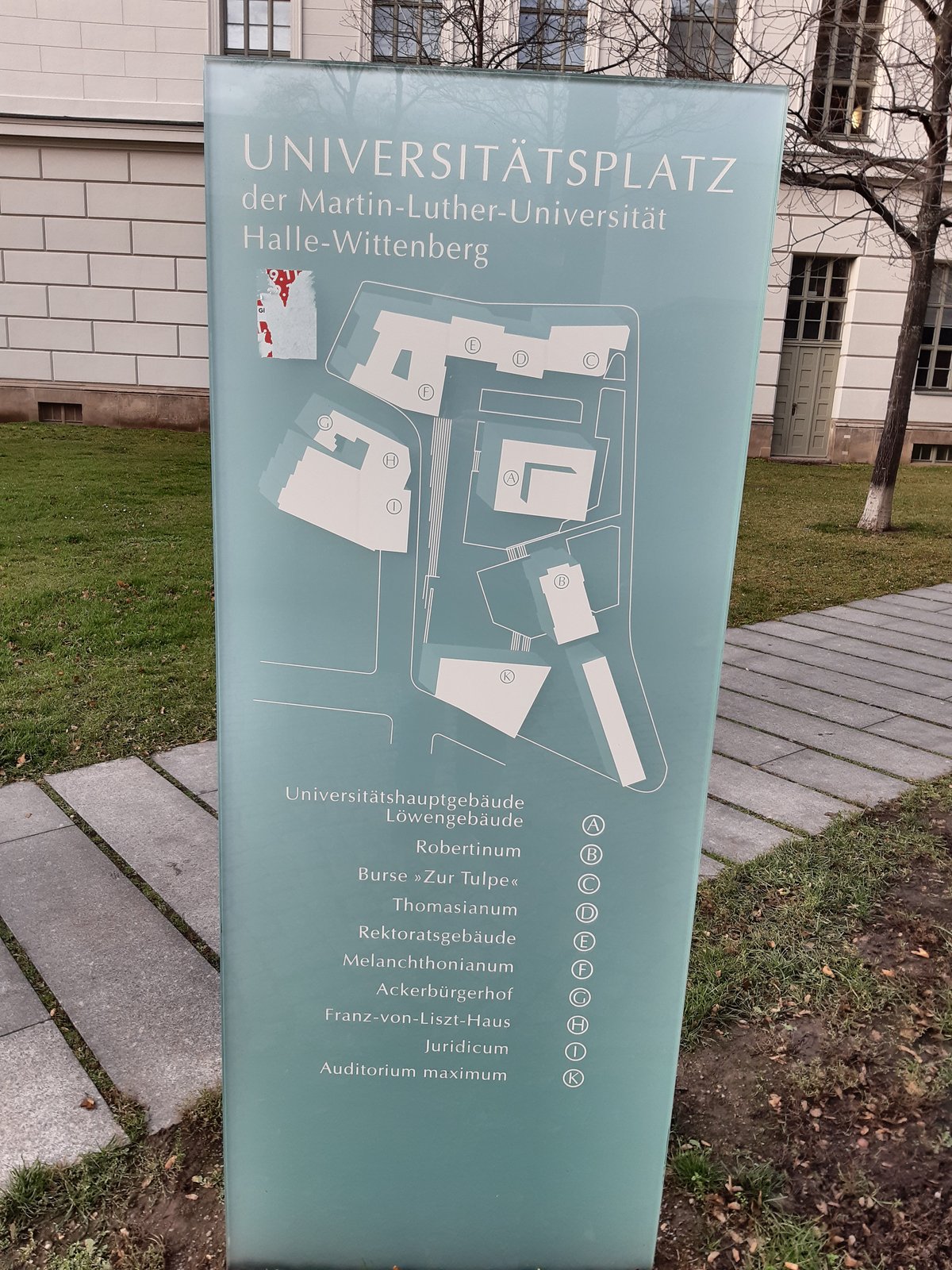


Where to wander, by quarter — each with its own rhythm.
Before you go
How a brine-rich settlement became a city of churches, ideas, and industry
The Nebra Sky Disc was made in the Bronze Age in the region around Halle, though not in the city itself. Discovered near Nebra and now kept at Halle’s State Museum of Prehistory, its gold stars and curved bands turn an ancient object into a startlingly precise image of the sky.
The Royal Frankish Annals mention Halla in 806, linking the place to a fortress built by Charles the Younger near the Frankish-Sorbian frontier. Salt springs would give the settlement its lasting wealth; the written record gives it a name.
Burg Giebichenstein, traditionally dated to around 961, took shape on high ground above the river. Its position made the Saale valley legible as both a trade route and a line of defense.
With the creation of the Archbishopric of Magdeburg, Halle entered the orbit of a powerful church principality. Archbishops would govern the city for centuries, often testing the limits of its merchants’ and salt-makers’ independence.
Commonly cited city histories date Halle’s entry into the Hanseatic League to 1280. Salt from its brine springs travelled beyond the region, turning the work of the Halloren salt-boilers into the basis of a much wider trade.
After repeated clashes with Halle’s self-governing elites, Archbishop Ernst of Saxony revoked many of the city’s municipal liberties. His message soon acquired a physical form: a fortress designed to keep archiepiscopal power close at hand.
Work began on Moritzburg, the archbishops’ late-Gothic stronghold, and on the Red Tower, which would rise above the market square. Halle’s familiar towers were taking shape in an age when architecture could serve as both civic pride and a warning.
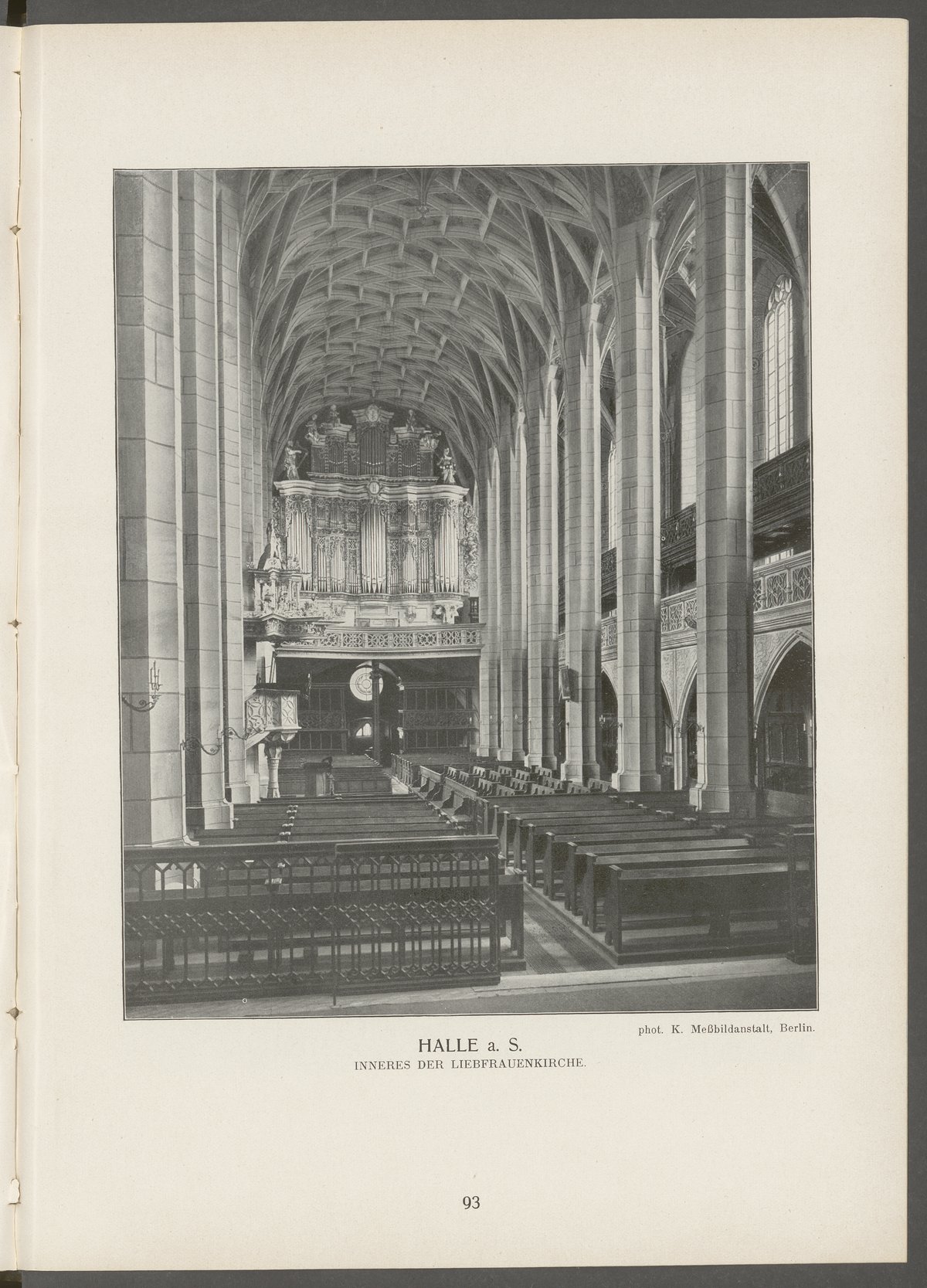
Builders began the Marktkirche Unser Lieben Frauen, joining parts of two older churches into one late-Gothic hall. Its four towers would come to share Halle’s skyline with the solitary Red Tower; its font would later hold the baptism of George Frideric Handel.
The theologian Justus Jonas formally introduced the Reformation in Halle. Cardinal Albrecht of Brandenburg, the archbishop who had made Moritzburg his residence, was forced to leave the city as Protestant worship took root.
During the Thirty Years’ War, Saxon troops besieged Moritzburg and fire destroyed much of its upper halls. The damaged fortress remained a ruin for generations, a blackened reminder that Halle’s stone defenses could not keep war outside its walls.
Halle passed into Brandenburg-Prussian rule as the former Archbishopric of Magdeburg was secularized. A city long governed by prince-archbishops now faced a different authority, one that would soon back ambitious plans for learning and reform.
A severe plague swept through Halle, with local accounts recording more than 4,000 deaths. In a city built on the movement of salt and goods, the epidemic brought trade and ordinary street life to a terrible halt.
George Frideric Handel was born in Halle, where he was baptized at the Marktkirche. His life would carry him across Europe, but the city still holds the beginning of the story in the church where the infant composer was christened.
Frederick III, Elector of Brandenburg, founded the University of Halle, which quickly became a testing ground for new scholarship. Jurist and philosopher Christian Thomasius helped shape its character, teaching in German rather than keeping university learning behind Latin.
The theologian August Hermann Francke began his foundations for schools, an orphanage, a pharmacy, and a printing press. The complex grew into a remarkable expanse of half-timbered buildings, where religious conviction became a practical program of teaching and care.
Christian Wolff returned to Halle at the invitation of Frederick the Great, nearly two decades after his rationalist teaching had led to banishment from Prussia. His lectures and books had already made the university a center of Enlightenment thought; his return gave the city one of its most compelling intellectual homecomings.
Dorothea Christiane Erxleben defended her medical dissertation at the University of Halle, becoming the first woman in German history to earn a doctorate in medicine. The milestone came inside a university still closed to most women, which makes the achievement sharper, not simpler.
On 17 October, Marshal Jean-Baptiste Bernadotte’s French forces defeated the Prussian reserve corps at the Battle of Halle and stormed the Saale bridges. Napoleon visited the city soon afterward and ordered its university closed, a blow that local physician Johann Christian Reil helped reverse the following year.
The University of Wittenberg, closed in 1813, was formally merged with Halle’s university. The resulting Martin Luther University of Halle-Wittenberg joined two places central to the Reformation in a single institution.
Georg Cantor took up a post at the University of Halle, where he would develop the ideas that reshaped mathematics. His work on set theory and different sizes of infinity emerged from a career rooted in the city’s lecture rooms and university life.
The Leopoldina, founded in 1652 and among the world’s oldest continuing academies of natural sciences, made Halle its permanent home. Its arrival added a national scientific institution to a city already shaped by university debate and experiment.
Halle’s main railway station opened as rail links helped accelerate the city’s industrial growth. Its broad concourses and yellow-brick details gave arriving travellers a new first impression: Halle was no longer only a salt town and university city.
Halle became a center of the March Action, an armed communist uprising amid postwar unrest in central Germany. The fighting exposed the deep divisions of the young Weimar Republic, where political argument could still spill into the streets.
During the November pogrom, Nazi violence targeted Halle’s Jewish community and its synagogue. Arrests, destruction, and later deportations dismantled a community that had been part of the city’s life for generations.
As the U.S. Army’s 104th Infantry Division approached, naval officer Felix Graf von Luckner helped negotiate Halle’s surrender in mid-April. The agreement spared much of the historic center from a final artillery assault, though the city had already endured bombing and war.
East Germany’s administrative reorganization made Halle the capital of the new District of Halle. The city became a political center for a region increasingly defined by chemical production at nearby Leuna and Schkopau.
Construction started on Halle-Neustadt, a planned city built west of the old center to house workers from the chemical industries. Its broad roads and apartment blocks embodied a new socialist ideal of urban life, eventually drawing tens of thousands of residents.
Halle joined the Monday demonstrations that challenged the German Democratic Republic, as crowds took to the streets demanding political change. The peaceful revolution brought the regime down; in 1990, Halle-Neustadt was incorporated into the city and Saxony-Anhalt was re-established.
The Saale rose above eight meters during the Central European floods, inundating parts of Halle and putting riverfront neighborhoods under pressure. That same year, the Nebra Sky Disc, discovered nearby and preserved in Halle, entered UNESCO’s Memory of the World Register.
On 9 October, an armed far-right attacker tried to enter Halle’s synagogue during Yom Kippur services. He failed to get inside, then killed two people nearby before his arrest; the attack left the city facing the persistence of antisemitic violence in modern Germany.
Composer · 1685–1759
Born in Halle
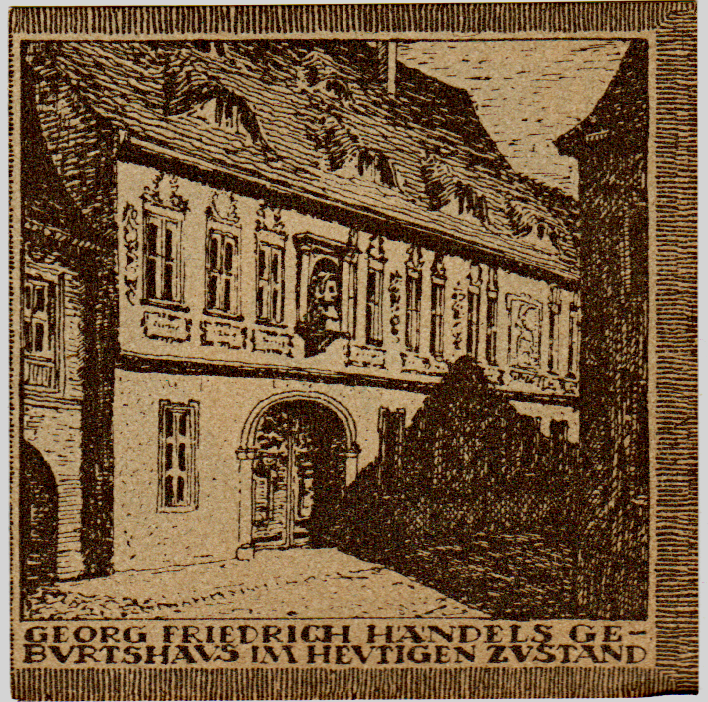
Handel was born in Halle in 1685, and the house where he entered the world now tells the story of his music. His bronze figure still stands on Marktplatz, giving a composer who spent much of his life abroad a very visible place in his hometown.
Reformer · 1483–1546
Preached at the Marktkirche in 1545 and 1546
Luther delivered three of his final sermons at Halle’s Marktkirche in 1545 and 1546. The church preserves his death mask and hand casts, bringing the Reformation close to the pulpit where he spoke.
Composer · 1685–1750
Inaugurated the Marktkirche organ
Bach came to Halle to inaugurate the organ at the Marktkirche, leaving a musical trace in the same church where Handel was baptized. Stand beneath its towers and the city’s two great composers feel less like rivals than neighboring chapters.
Theologian and educator · 1663–1727
Founded the Francke Foundations in Halle
Francke founded an educational and charitable institution that grew into a self-contained complex of schools, libraries and social services. Its long timber-framed buildings still make his ambition tangible: this was a working community, not simply a set of grand façades.
Painter · 1871–1956
Lived and worked in the Moritzburg gate tower, 1929–1931
Feininger used the gate tower at Moritzburg as a studio and made a cycle of paintings drawn from Halle’s buildings. He might recognize the city’s sharp tower silhouettes today, though the streets below them have changed; the museum also preserves the story of works seized by the Nazi regime in 1937.
Where locals actually book dinner — not the tourist menus.
Small things that change how the city treats you.
The city, as it actually looks.

Yes, especially if you like cities where different eras sit close together. Halle pairs the Bronze Age Nebra Sky Disc with the five-tower Marktplatz, a Renaissance cemetery, art inside Moritzburg Castle and green paths along the Saale.
Plan on two days for the historic center, a major museum and time by the Saale. A third day leaves room for an outing to nearby Merseburg or Naumburg without rushing.
Take the S5 or S5X from the airport’s underground station directly to Halle Hauptbahnhof. The ride takes about 10–11 minutes, and trains run roughly every 30 minutes; check the current timetable for your arrival.
The compact historic center is easy to explore on foot, while HAVAG trams link the station, Marktplatz, the Francke Foundations and other districts. A single ticket for Halle’s Zone 210 is reported at about €2.80–€3.30 and is valid for one hour; check current fares before travelling.
Halle is generally safe for visitors, with ordinary city precautions. Take extra care around the main station and Riebeckplatz late at night, use illuminated routes and call 112 for medical or fire emergencies or 110 for police.
A single ride within Zone 210 has been reported at about €2.80–€3.30, and a 24-hour ticket may save money if you take three or more trips. Fares can change, so confirm the price with HAVAG or MDV before buying.
Halle is known for the Nebra Sky Disc, its salt-making heritage and composer George Frideric Handel, who was born here. The four towers of the Marktkirche and the freestanding Red Tower make the city’s five-tower skyline hard to mistake.
34 places to discover







Saved and recently read places — kept on this device only.
Photos may have been resized or cropped.