Pencho Slaveykov: Life and Legacy
Early Life and Education
Born in 1866 in Tryavna, Pencho Slaveykov was deeply influenced by his father, Petko Rachov Slaveykov—a pivotal figure in Bulgaria’s National Revival. Pencho’s early years were shaped by turbulent national events, including the April Uprising and the Russo-Turkish War, but he persevered in his studies, eventually earning a philosophy degree in Leipzig. Despite suffering debilitating pneumonia at age 19, which impacted his mobility and speech, Pencho’s adversity fueled his introspective and philosophical literary output (Britannica; Wikiwand).
Literary Career and Cultural Impact
Pencho Slaveykov became a leading member of the “Misal” (“Thought”) circle, which introduced European modernist ideas into Bulgarian literature. His poetry is noted for its symbolism, existential depth, and exploration of individual and national identity. Pencho also served as director of the National Library and contributed significantly to the modernization of Bulgarian cultural institutions. His close relationship with poet Mara Belcheva provided personal inspiration and depth to his later works (Britannica; PoemHunter).
Pencho’s legacy is so significant that his image features on Bulgaria’s 50 leva banknote, symbolizing his enduring status as a national literary icon (1sousofia.org, p.81).
Commemorating the Slaveykovs: Slaveykov Square and the Monument
Slaveykov Square is named in honor of both Petko and Pencho Slaveykov, reflecting their intertwined contributions to Bulgarian literature and identity. At the heart of the square sits a monumental bronze sculpture by Georgi Chapkanov, depicting the father and son together on a bench. This artwork invites visitors to engage directly with Bulgaria’s literary heritage, creating an accessible and interactive memorial (About Sofia).
- Visiting Hours The square is open to the public 24/7.
- Tickets No fee required to visit the square or the monument.
- Accessibility The area is pedestrianized and wheelchair accessible.
- Photo Tip Sitting on the bench with the Slaveykovs is a tradition among visitors and locals alike.
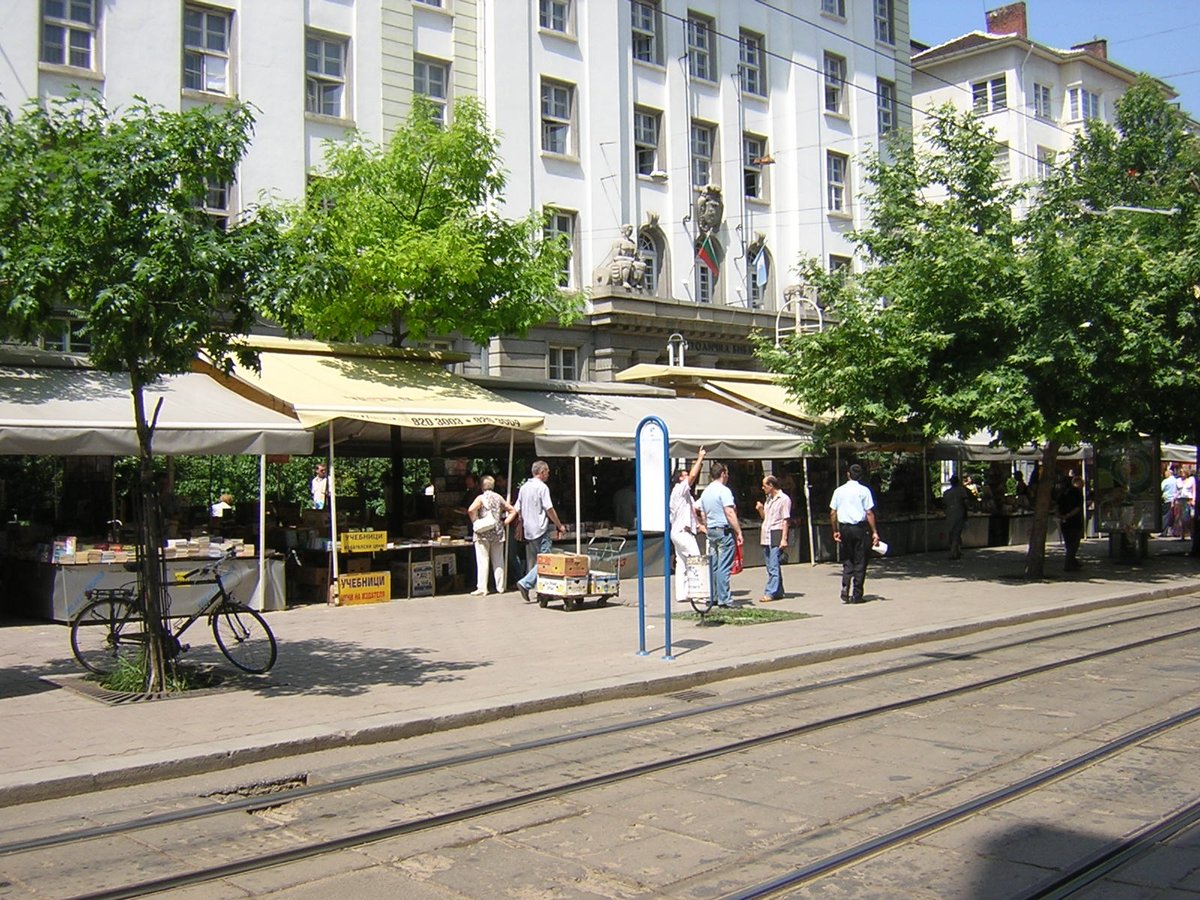
The monument is surrounded by the lively book market, reinforcing the square’s role as a living symbol of literary culture (Bulgaria Info Guide).
History and Development of Slaveykov Square
Origins and Ottoman Era
Slaveykov Square’s origins reach back to the early Ottoman period when the area was known as Kafene Başi, a social and administrative center featuring a coffeehouse and mosque. By the 17th century, it had become a vital crossroads in Sofia, with a public fountain attracting locals and travelers (Wikipedia).
National Identity and Urban Expansion
Following Bulgaria’s liberation in 1878, Sofia rapidly modernized. Slaveykov Square saw the development of elegant residential buildings with gardens, reflecting European influences. The presence of Petko Slaveykov and his family further cemented the square’s role in Bulgaria’s cultural awakening.
20th Century and Modernization
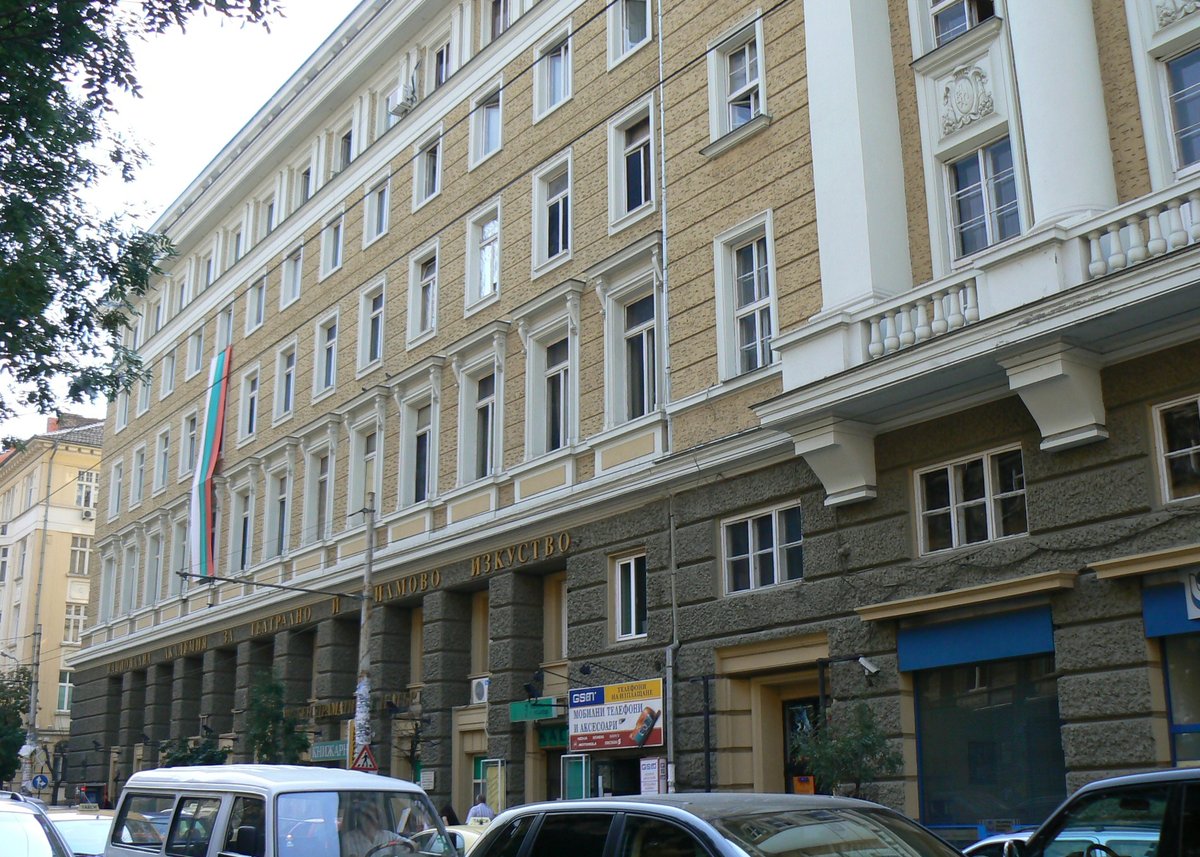
The 1920s and 1930s brought larger buildings, such as the Teachers' Fund and the French Institute, and established the square as a commercial and educational hub. Pedestrianization after World War II fostered social and cultural activities, setting the stage for the vibrant square seen today (Wikipedia).
Recent Renovations
In 1998, a major renovation organized the book stalls, added a new fountain, and installed the Chapkanov monument, balancing historical charm with modern urban needs (About Sofia).
The Open-Air Book Market: A Literary Tradition
Slaveykov Square’s open-air book market is a unique institution in Sofia, operating daily and offering a wide selection of Bulgarian and international literature. Vendors provide everything from academic texts and rare editions to children’s books and contemporary novels (Audiala).
- Operating Hours Daily from 9:00 AM to 7:00 PM.
- Languages Books available in Bulgarian, English, French, Russian, and more.
- Events Occasional book signings, readings, and literary festivals animate the market throughout the year.
The market is both a commercial and cultural platform, supporting local writers and publishers while encouraging public engagement with literature.
Practical Visitor Information
Getting There
Slaveykov Square is centrally located between Georgi S. Rakovski and Graf Ignatiev streets. It is easily accessible by metro (Serdika station), numerous bus and tram lines, or by foot from major downtown landmarks (About Sofia).
Accessibility
- Pedestrian Zone The square is fully pedestrianized and suitable for wheelchairs and strollers.
- Surface Some cobblestone areas may require careful navigation for those with mobility challenges.
Guided Tours
Literary-themed walking tours that highlight Slaveykov Square’s history and cultural importance are available through local operators and platforms like the Audiala app (Nomadic Matt).
Nearby Attractions
- Sofia City Library Adjacent to the square, open Monday–Friday 9:00 AM–7:00 PM, Saturday 9:00 AM–1:00 PM.
- National Theatre Ivan Vazov A key cultural venue and historic landmark.
- Vitosha Boulevard Sofia’s main shopping and dining street.
- Alexander Nevsky Cathedral One of the city’s most impressive religious sites.
Exploring Other Pencho Slaveykov Sites in Sofia
National Library “St. Cyril and Methodius”
Pencho Slaveykov served as director of the National Library, which today houses manuscripts and personal documents related to his legacy (Rough Guides).
- Visiting Hours Monday–Saturday, typically 9:00 AM–6:00 PM.
- Tickets Entry is free; guided tours on request.
Slaveikov’s House (Commemorative Plaque)
A commemorative plaque marks the former residence of the Slaveikov family in the Sredets district. It is accessible at all times and adds historical context to a walking tour (1sousofia.org, p.2).
Central Cemetery
Pencho Slaveykov’s final resting place can be visited at Sofia’s Central Cemetery (open daily from 8:00 AM to 8:00 PM), offering a place for reflection (1sousofia.org, p.80).
Literary Cafés and Bookstores
Several local cafés and bookstores in Sofia’s center, including Chitalnyata in the City Garden, regularly celebrate Slaveykov’s contributions through readings and exhibits (Visit Sofia).
Visitor Tips and FAQs
Practical Tips
- Best Time to Visit Spring and early autumn offer mild weather and bustling market activity.
- Photos Capture your visit at the monument and browse the book market for unique literary finds.
- Events Check the Sofia City Library or Audiala app for current and upcoming literary events.
FAQ
Q: What are Slaveykov Square’s visiting hours?
A: Open 24/7; the book market runs daily from 9:00 AM to 7:00 PM.
Q: Is there an entrance fee?
A: No, both the square and the book market are free to enter.
Q: Are guided tours available?
A: Yes, through local tour operators and via the Audiala app.
Q: Can I buy books in languages other than Bulgarian?
A: Yes, the book market offers a variety of languages.
Q: Is the square suitable for families and children?
A: Absolutely—its pedestrian nature and cultural activities make it family-friendly.