What the Tupolev Tu-143 is
The Tupolev Tu-143 “Reys” is a jet-powered unmanned reconnaissance drone developed by the Soviet Union’s Tupolev Design Bureau in the early 1970s. Designed for tactical battlefield surveillance, it gathered intelligence without putting human pilots at risk. Compact yet powerful, the Tu-143 was widely produced and deployed across the Soviet Union and allied states.
After the dissolution of the Soviet Union in 1991, Ukraine inherited a significant number of Tu-143 units. Today, the drone is displayed at two Kyiv museums: the State Aviation Museum of Ukraine and the National Museum of the History of Ukraine in the Second World War.
History
Development and capabilities
The Tu-143 was conceived as a short-range tactical reconnaissance drone for Soviet and Warsaw Pact forces. Its design prioritized operational simplicity, rapid deployment and survivability. It was rocket-launched from a truck-mounted tube and recovered by parachute, allowing it to be used again in diverse environments (Military Factory).
Its specifications include:
- Length 8.05 meters
- Wingspan 2.25 meters
- Engine Klimov TR3-117 turbojet
- Maximum speed 950 km/h
- Operational range 60 to 180 km, or up to 200 km for some variants
- Ceiling Up to 5,000 meters
- Payload Over 100 kg, including cameras, TV transmitters and radiation sensors
The Tu-143 was engineered for high-speed, low-altitude missions, making it difficult for enemy air defenses to intercept.
Production, service and legacy
The Tu-143 entered service in 1976, and around 950 units were produced. A significant number were built at Ukraine’s Kharkiv State Aircraft Manufacturing Company (GlobalSecurity.org). The drone saw combat in the 1982 Lebanon War and the Soviet–Afghan War. After the Soviet collapse, Ukraine retained a stockpile of Tu-143s and has since maintained and modernized its fleet (Kyiv Post).
Variants such as the M-143 target drone and Tu-243 extended the platform’s capabilities. The Tu-143’s design influenced subsequent UAVs, and its robust airframe later allowed it to be repurposed for strike roles.
Role in modern conflict
Amid the 2022 Russia-Ukraine war, Ukrainian engineers modified stored Tu-143s for kamikaze missions, removing surveillance equipment and fitting them with warheads for deep strikes against Russian targets (Army Recognition, Forbes). The Tu-143 was involved in several high-profile strikes on Russian airbases and oil depots.
What to see
State Aviation Museum of Ukraine
The Oleg K. Antonov State Aviation Museum, near Kyiv’s Zhuliany Airport, opened in 2003. It displays over 70 aircraft and aerospace artifacts, including the Tu-143, and presents an overview of Ukraine’s aviation heritage (State Aviation Museum).
The museum hosts periodic aviation-themed events and special exhibitions. Guided tours can be arranged to provide more information about the Tu-143 and other exhibits.
National Museum of the History of Ukraine in the Second World War
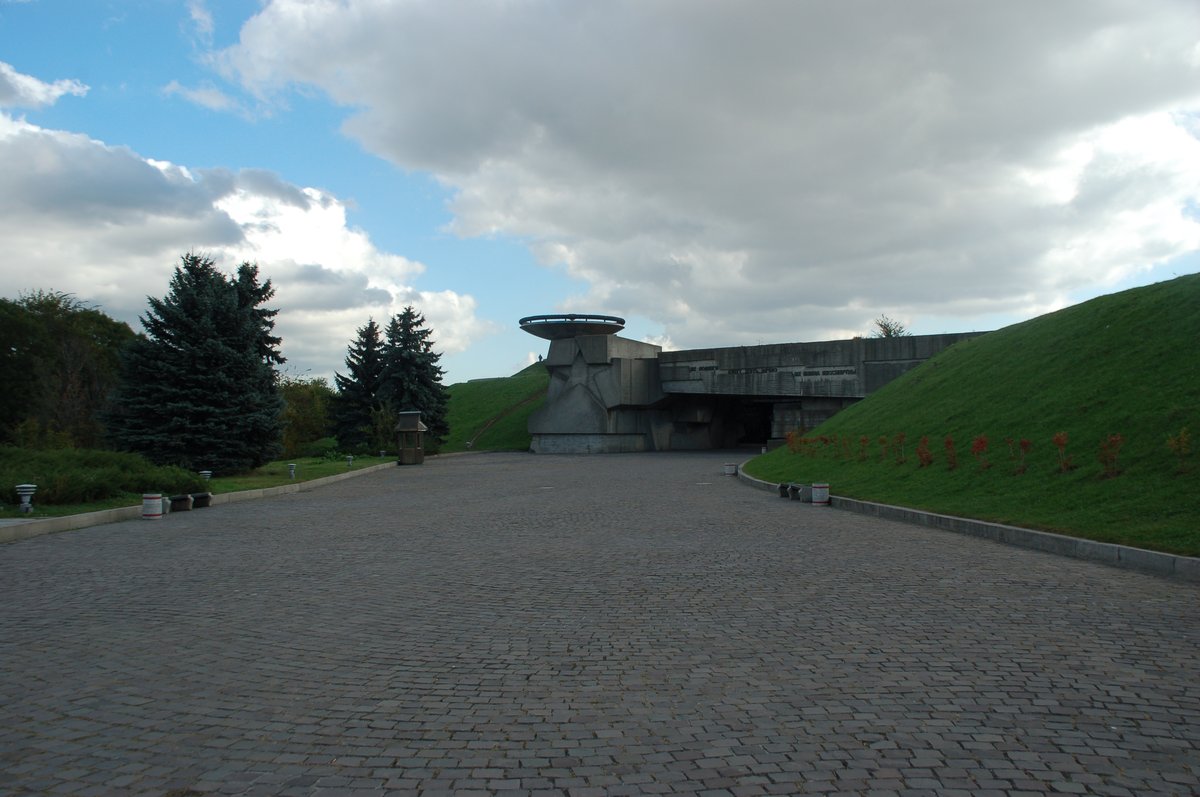
The Tu-143 is displayed outdoors on its launch ramp, with bilingual informational panels. Visitors can see the drone’s fuselage, wings and engine intake, and find information about its technical specifications and operational history. Other UAVs and military vehicles from the Cold War era are also on display.
The museum also offers interactive exhibits, multimedia presentations, guided tours, maps, audio guides and virtual tours for remote visitors.
Practical visiting information
State Aviation Museum
- Hours Tuesday–Sunday, 10:00 AM–5:30 PM; closed Mondays and public holidays.
- Tickets Adults 60 UAH; students and seniors 30 UAH; children under 7 free. Tickets are available at the entrance or through the museum’s official website.
- Getting there The museum is accessible by public transport from central Kyiv.
- Accessibility and facilities The museum is wheelchair accessible, with ramps and appropriate restrooms.
- Photography Photography is permitted.
National Museum of the History of Ukraine in the Second World War
- Address 27 Lavrska Street, Kyiv
- Hours Daily, 10:00 AM–6:00 PM; last admission at 5:00 PM. Confirm the holiday schedule through the museum’s official site.
- Tickets Adults 100–150 UAH, with discounts for students, children and seniors. Outdoor exhibits, including the Tu-143, may be viewed without a ticket; full access requires admission.
- Getting there From Arsenalna Metro Station on the Red Line, it is a 20-minute walk or a short taxi ride.
- Accessibility and amenities The museum is wheelchair accessible, with paved paths and ramps. Facilities include an onsite café, restrooms and a souvenir shop.
Tips
The National Museum’s outdoor displays are exposed to the weather, so prepare for Kyiv’s climate. Respect the exhibits and do not climb or sit on the equipment.
Personal photography is allowed outdoors. Professional equipment and drones may require permission.
Guided tours in English and other languages can be booked at the ticket office or online. Check opening hours before visiting, and consider the weather and accessibility needs when planning a visit. For updates, the guide suggests downloading the Audiala app and following museum social media channels.
Nearby places
The State Aviation Museum is close to the Kyiv Aviation Factory. Visitors can combine a visit with local parks and Kyiv’s historic sites, including the Motherland Monument and Kyiv Pechersk Lavra.
Related guides:
Frequently Asked Questions (FAQ)
Where can I see the Tu-143 in Kyiv?
The Tu-143 is displayed at both the State Aviation Museum and the National Museum of the History of Ukraine in the Second World War.
What are the opening hours and ticket prices?
The museums are generally open from 10:00 AM to 5:30 or 6:00 PM. Ticket prices range from 60 to 150 UAH, with discounts for students, seniors and children.
Is the Tu-143 exhibit suitable for children?
Yes. The exhibits include interactive displays and educational content.
Are the museums accessible for visitors with disabilities?
Yes. Both museums have accessible paths, ramps and restrooms.
Can I take photos of the Tu-143?
Personal photography is allowed outdoors. Professional equipment and drones may require permission.
Are guided tours available in English?
Yes. Guided tours in English and other languages can be booked at the ticket office or online.