
The Armenian Community in Istanbul
Demographics & Cultural Significance
By the early 20th century, Istanbul was home to one of the world’s largest Armenian populations, estimated at over 150,000 (Istanbul Trends). The community shaped city life through schools, hospitals, and architectural achievements—most notably by the Balyan family, architects of Dolmabahçe Palace and Ortaköy Mosque.
Religious Life & Community Role
Armenian churches in Istanbul, including the Holy Mother Of God Cathedral, serve as much more than places of worship. They are hubs for education, charity, and cultural continuity. The cathedral hosts regular services, sacraments, and major festivals. It is also a site for genocide remembrance and interfaith dialogue (Hyetert).
Preservation and Resilience
The 1915 Armenian Genocide and subsequent political shifts led to a sharp decline in Istanbul’s Armenian population. Despite this, the community remains resilient and active. Recent restoration efforts, supported by the Armenian Patriarchate and local foundations, have preserved the cathedral’s architectural and spiritual heritage (Hyetert).
Architectural Features of the Cathedral
Exterior and Interior Design
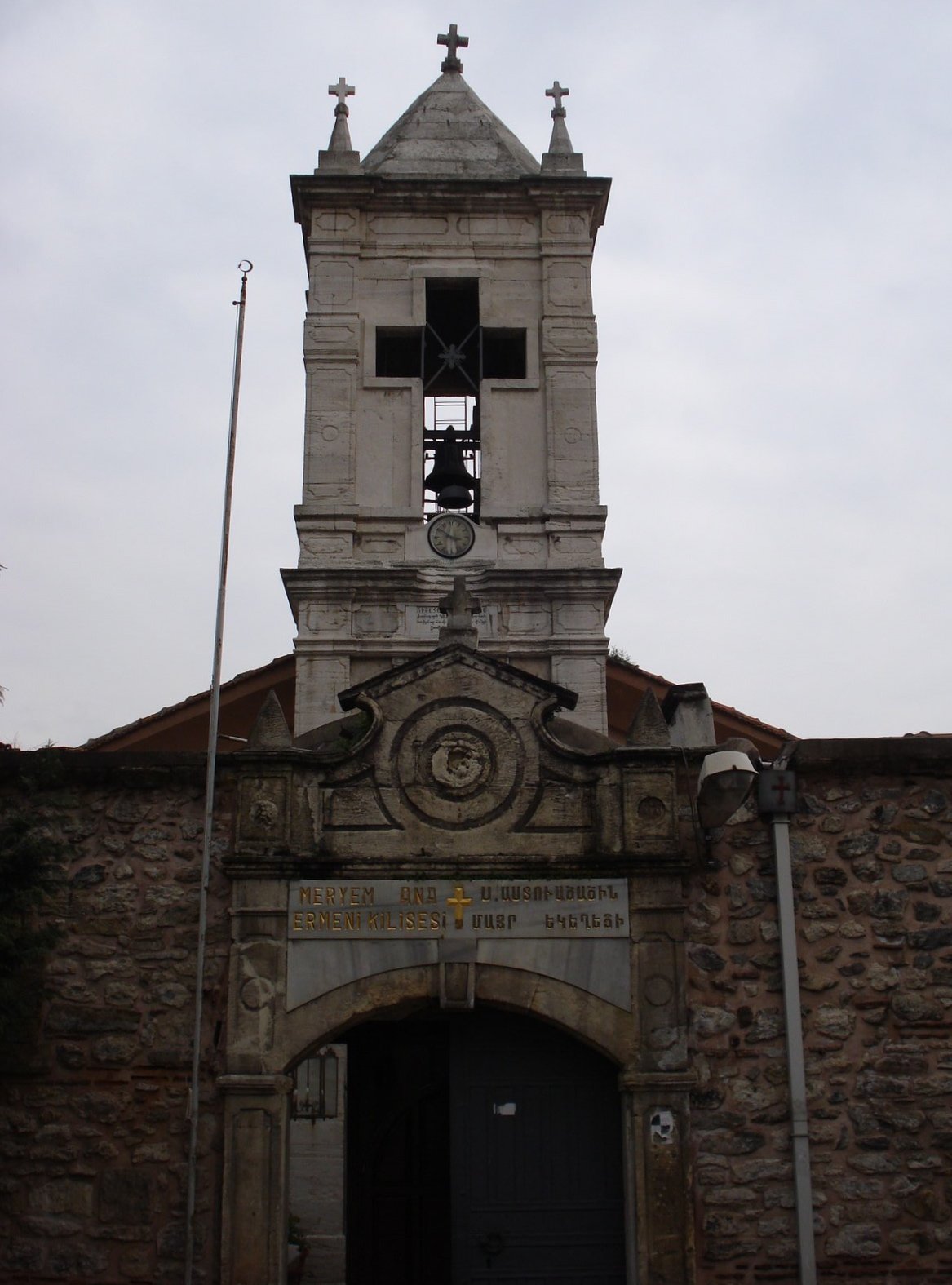
Surp Asdvadzadzin is set apart by its classic Armenian ecclesiastical style, featuring:
- Central Dome Symbolizing heaven, supported by pendentives or squinches.
- Stone Façade Built from tuff or limestone, with an arched entrance and khachkars (ornately carved cross-stones) in the courtyard.
- Bell Tower Freestanding or attached, with arched openings and a conical roof.
- Interior Nave & Apse Spacious nave leading to a semicircular apse. The sanctuary is separated by a richly decorated iconostasis.
- Frescoes & Iconography Walls and dome adorned with scenes from the Virgin Mary’s life and Armenian saints.
- Auxiliary Buildings Parish hall, school, library, and administrative offices, harmoniously integrated into the complex.
Restoration projects have focused on preserving original stonework, frescoes, and woodwork while upgrading accessibility.
Visiting Holy Mother Of God Cathedral
Location & Accessibility
The cathedral is in the Kumkapı quarter of Fatih, near the Sea of Marmara. The area is pedestrian-friendly, but some streets are narrow and uneven (Property Turkey).
Getting There:
- Tram T1 line to Laleli-Üniversite or Aksaray, then a 10-minute walk.
- Metro Aksaray station (M1A line).
- Bus Multiple city buses serve the area.
- Taxi Readily available and convenient.
Visiting Hours & Tickets
- Hours Generally open daily from 9:00 AM to 5:00 PM, except during religious services or special events. Hours may vary on holidays (Travalam).
- Entry Fee Admission is free. Donations are welcome to support restoration.
Guided Tours & Visitor Etiquette
- Tours Guided tours are available in Turkish and English; advance booking recommended. Self-guided brochures are also offered (Tours to Turkey).
- Dress Code Modest clothing is required—shoulders and knees covered; women should wear a headscarf (often provided).
- Conduct Maintain quiet, especially during services. Photography may be restricted—always ask permission.
- Facilities Restrooms and a small gift shop are available. Security personnel are present at the entrance.
Facilities and Amenities
- Accessibility Ramps at entrances; some historic areas may have steps (Istanbul Clues).
- Gift Shop Offers religious items and local souvenirs.
Nearby Attractions
Fatih is rich in historical and cultural sites, all within easy reach:
- Fatih Mosque Ottoman masterpiece by Sultan Mehmed II (Tours to Turkey).
- Blue Mosque & Hagia Sophia Iconic religious landmarks.
- Grand Bazaar & Spice Market Bustling markets for shopping and food.
- Topkapi Palace Historic residence of Ottoman sultans.
- Balat & Fener Colorful neighborhoods with heritage houses and churches (Art and Then Some).
Frequently Asked Questions (FAQ)
What are the Holy Mother Of God Cathedral visiting hours?
Typically 9:00 AM to 5:00 PM daily, but hours can vary during services or events.
Is there a ticket or entry fee?
Entry is free; donations are welcomed.
Are guided tours available?
Yes, in Turkish and English; other languages on request.
What is the dress code?
Modest clothing; women should wear a headscarf.
Is the cathedral accessible for people with disabilities?
There are ramps at main entrances, but some areas may pose challenges.
Can I take photos inside?
Photography may be restricted during services; always ask for permission.