Two men walked into Manuel Severino Hofileña House in Bacolod, Philippines, as ordinary visitors in July 2024 and left with an Amorsolo under their arms. That detail tells you what kind of place this is: not a sealed museum, but a living house where Philippine art, sugar-era memory, and family stubbornness still hang close enough to touch. Visit for the rooms full of paintings and carved wood, yes, but stay for the stranger truth that this house in nearby Silay changed from private wealth into public memory long before heritage became fashionable.
The address matters. Manuel Severino Hofileña House is usually visited from Bacolod, but the house itself stands on Cinco de Noviembre Street in Silay, 14 kilometers north, roughly the length of 150 basketball courts laid end to end. That short drive shifts the story from city sightseeing to the older sugar world that paid for these mansions.
Inside, the mood is less polished than many heritage houses, and better for it. Afternoon light hits religious images, old hardwood, and paintings collected by Ramon Hofileña, while the staircase rises with the quiet authority of something that has already outlived several political eras.
Come if you want a house with personality rather than perfection. The secret here is that the building was never interesting only because a wealthy family built it in 1934; it became interesting because one heir decided in 1962 that memory should be opened to strangers.
Researched by the Audiala editorial team from historical records, architectural archives, and local expertise.
What to see
The Street Front, Stair Hall, and Rooms Below
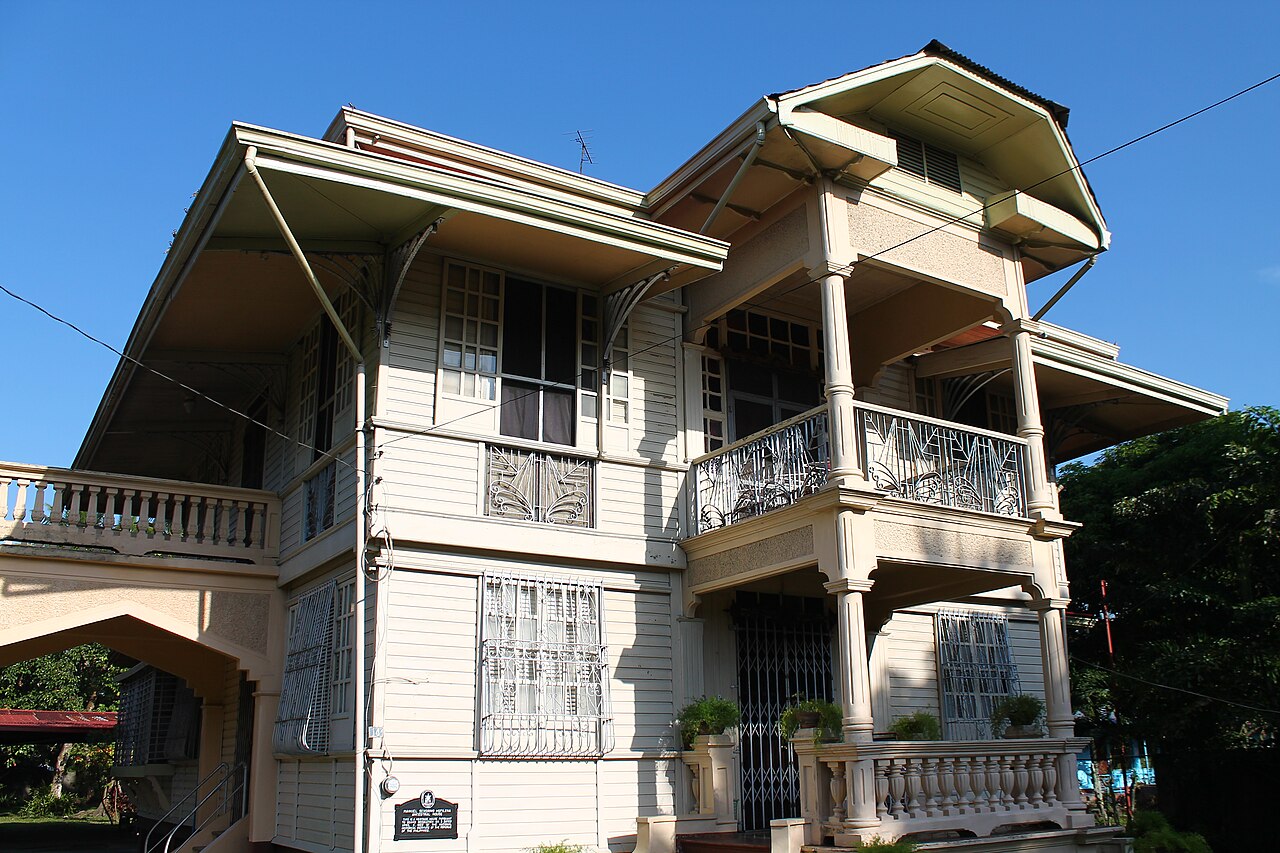
The surprise comes early: from Cinco de Noviembre Street, the Hofileña House looks almost restrained, a 1934 sugar-era home with a cream facade, broad steps, and deep eaves, more composed than theatrical. Step inside and the mood changes at once as polished narra catches the light, the ironwood staircase rises with carved balustrades one by one, and the house starts to feel less like a museum than a family mind made visible in wood, photographs, porcelain, and a 200-year-old German piano that has outlived empires and fashions alike.
Stay downstairs longer than your instincts tell you to. The smaller library off the sala, the callado cutwork above the doors, and the cabinets of curiosities are where the house confesses what it really is: not planter swagger, but private obsession, built room by room by people who kept books, saints, toys, and travel finds close at hand.
The Second-Floor Gallery
Upstairs is the reveal. Visitors come expecting an ancestral house and find an art collection that shifts the whole building onto another register, with works attributed across the rooms to names such as Luna, Hidalgo, Amorsolo, Manansala, H.R. Ocampo, Ang Kiukok, and BenCab, so the air changes from domestic to watchful in the space of a landing.
That tension gives the house its charge. After the 2024 theft and 2025 return of Amorsolo's "Mango Harvesters," the gallery no longer reads as a genteel backdrop for old wealth; it feels like a place where Philippine art history had to be defended in real time, which is why the upstairs silence lands harder than the polished floors below.
A Bacolod-to-Silay Heritage Half-Day
Treat this as a side trip from Bacolod, not a stop inside the city itself, because the house actually stands in Silay, roughly 16 kilometers north, about the length of four airport runways laid end to end. Go in the morning while the light is softer on the wood, then walk Cinco de Noviembre Street after your tour so the Hofileña rooms can recalibrate your eye for the rest of Silay's old houses.
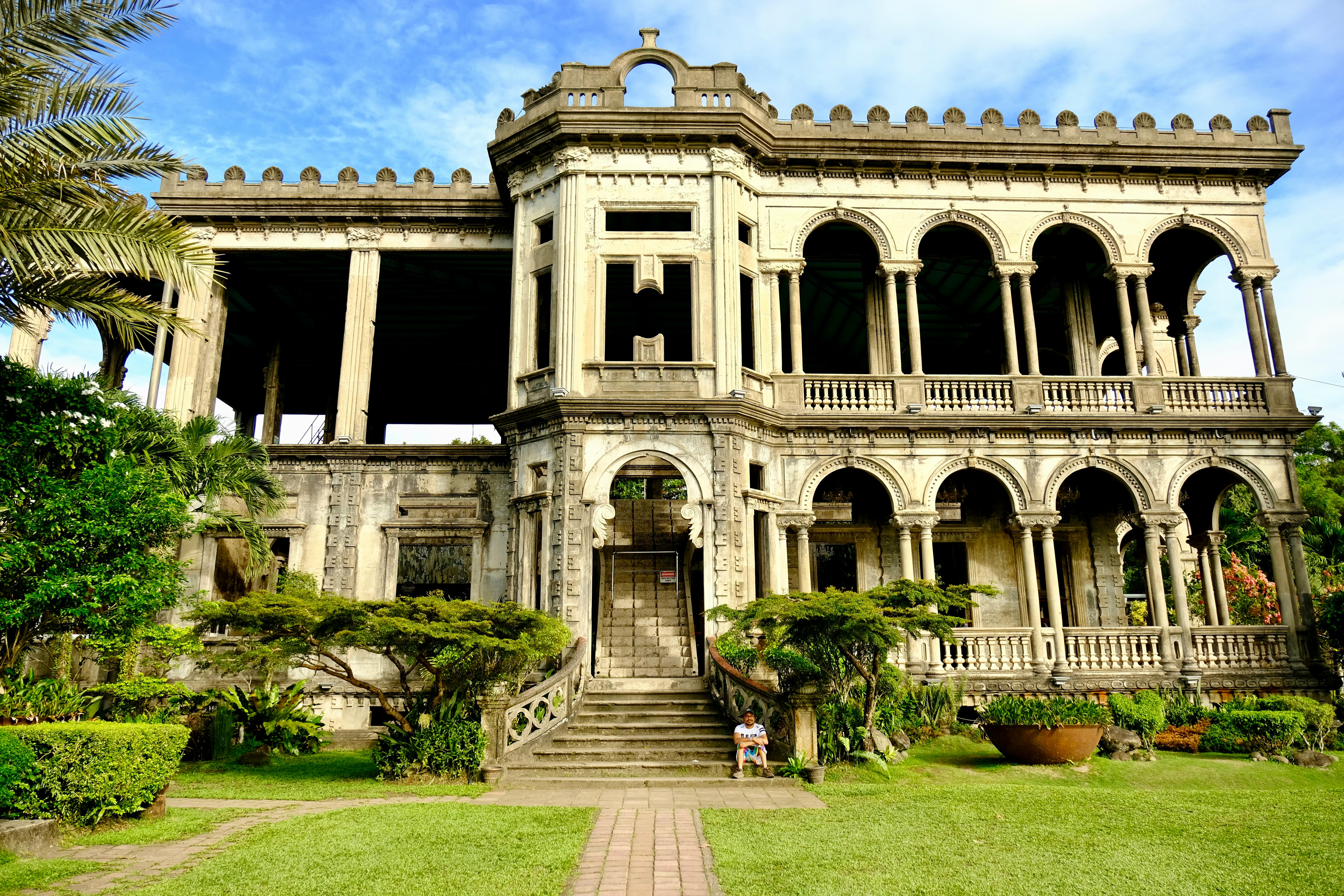
If you want the sugar story in stereo, pair it with The Ruins on another leg of the day. One gives you grandeur after a fire; this one gives you grandeur that stayed indoors, in piano varnish, print blocks, family portraits, and the cool shade of a house that still knows exactly who it was built for.
Plan your visit
Getting There
The house stands on Cinco de Noviembre Street in Silay City, about 14 to 16 km north of Bacolod, roughly the length of a quick airport run. By car or taxi, allow 15 to 20 minutes from central Bacolod; by public transport, take a northbound bus or minivan to Silay, then a tricycle into the heritage zone, where Balay Negrense and San Diego Pro-Cathedral sit within a 250 to 270 meter walk.
Opening Hours
As of 2026, the safest working assumption is Tuesday to Sunday, with Monday closed. Sources disagree on the exact daily schedule, but the most consistent planning window is 9:30 AM to 4:00 PM, and some visits still seem to run in guided batches with a midday break.
Time Needed
Give it 30 to 45 minutes if you arrive just as a tour starts and move briskly. Most visitors need 60 to 90 minutes, and a slower heritage-zone stop with photos, stories, and nearby houses can stretch to 2 hours if you miss a guide cycle and wait 30 to 45 minutes for the next round.
Accessibility
Expect an old two-storey ancestral house with stairs, historic flooring, and no verified elevator. As of 2026, this is not a safe bet for full wheelchair access, so travelers with mobility concerns should treat it as a call-ahead site rather than a casual walk-in.
Cost/Tickets
As of 2026, recent visitor reports put adult admission at PHP 150. Student and senior discounts are mentioned, children may enter free, but I found no official online booking system, no skip-the-line pass, and no confirmed free-entry day.
Photo Gallery
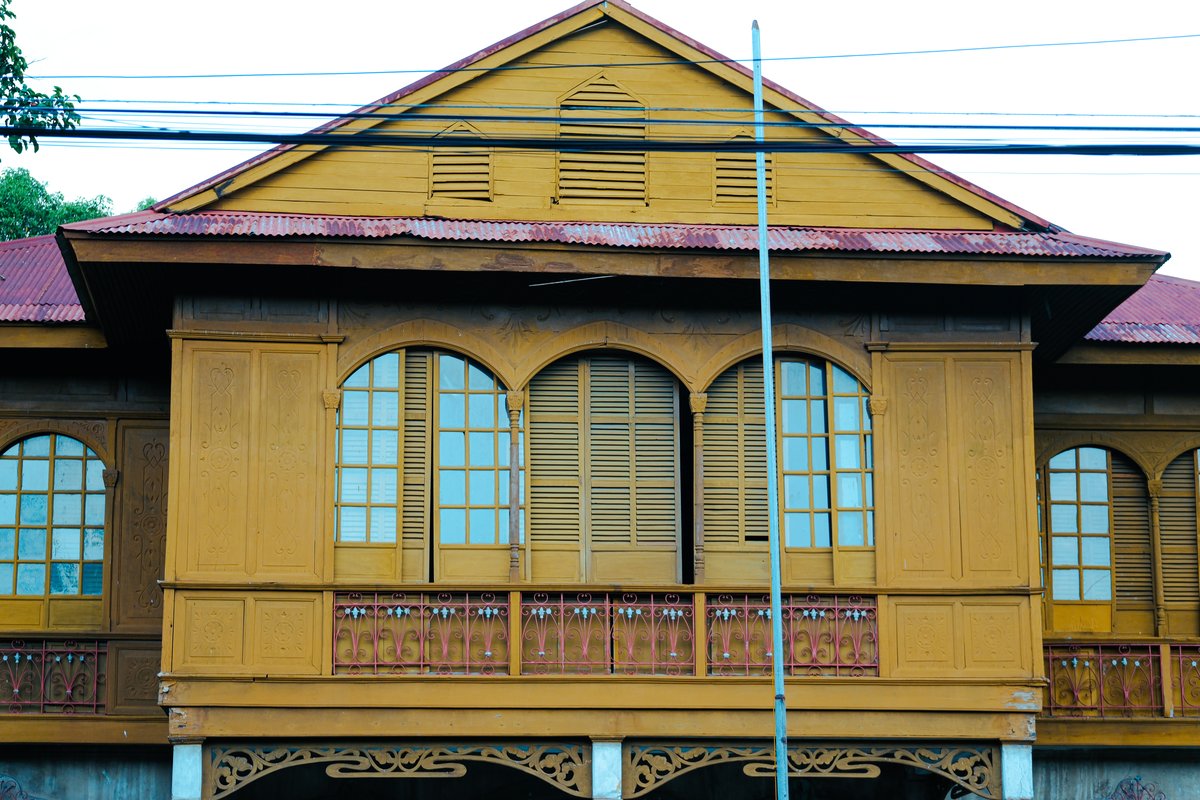
The Manuel Severino Hofileña House is a well-preserved ancestral home in Bacolod, Philippines, showcasing traditional Filipino-colonial architecture. · Elmer B. DomingoThe Manuel Severino Hofileña House is a beautifully preserved ancestral home in Bacolod, Philippines, showcasing classic Filipino-Spanish colonial architecture. · Carlojoseph14The Manuel Severino Hofileña House is a well-preserved ancestral home in Bacolod, Philippines, showcasing classic Filipino-Spanish architectural design. · Patrickroque01A view of the Manuel Severino Hofileña House in Bacolod, Philippines, showcasing its well-preserved wooden facade and classic architectural details. · JoelaldorThe Manuel Severino Hofileña House is a well-preserved heritage site in the Philippines, showcasing traditional Filipino-colonial architecture. · Rachel LeyritanaThe Manuel Severino Hofileña House is a well-preserved heritage site in Silay, Philippines, showcasing classic colonial-era architecture. · Claire AlgarmeA view of Manuel Severino Hofileña House, Bacolod, Philippines. · Claire Algarme
History
The Heir Who Refused To Let The Street Forget
Manuel Severino Hofileña built this house in 1934 for his wife, Gilda Ledesma Hojilla, and their children, records and later reporting agree. But the figure who gave the place its afterlife was Ramon H. Hofileña, the son who turned a family residence into a museum, classroom, and argument against demolition.
That matters because Silay's old houses did not survive by accident. They survived because people decided they were worth defending, and Ramon kept making that decision over and over, first by opening the house to the public in 1962, then by treating Cinco de Noviembre Street as something larger than prime real estate.
The turning point
Ramon Hofileña's Turning Point
Documented sources say Ramon Hofileña opened the house to the public in 1962, making it the first ancestral house in Silay to do so. For him, the risk was personal: a private inheritance could remain comfortable and closed, or it could become a public place full of foot traffic, opinions, and the slow wear that comes with letting strangers in.
The turning point came when he chose the second path. BusinessWorld and family accounts describe a man who returned from the United States, saw that Silay's old houses were vulnerable, and treated this address as a base for cultural rescue rather than nostalgia.
That choice changed the meaning of the building. After April 6, 1993, when the National Historical Commission of the Philippines declared it a Heritage House, the state was honoring something Ramon had already proved in practice: a sugar-era mansion could become a civic act.
Early Life & Vision
Ramon inherited more than furniture. He inherited a house built from planter wealth, a staircase that heritage descriptions attribute to Gilda Hojilla's older ancestral home, and a street loaded with revolutionary memory from November 5, 1898. Local accounts describe him speaking about Cinco de Noviembre Street with the affection of a convert, as if coming home had given him a sharper eye than those who had never left.
Legacy & Influence
His legacy is easiest to see in what the house became after him. When Ramon died on July 29, 2021, documented reporting and later family statements made clear that keeping the museum intact was tied to his wishes, which is why the July 3, 2024 theft of Amorsolo's "Mango Harvesters" felt like more than a property crime. The painting's formal return on April 25, 2025 closed one wound, but it also proved how much of the house's meaning now rests on the public role Ramon invented.
Tips for visitors
Ask Before Shooting
First-floor photos are usually allowed, but upstairs access and photography have become tighter since the 2024 theft of Amorsolo's "Mango Harvesters." Skip flash unless staff say yes, and assume tripods or anything that looks professional needs permission.
Museum Manners
Treat this less like a free-range museum and more like a family house full of serious art. Keep your voice low, don't touch furniture or curios, and expect a host-led rhythm rather than wandering wherever you please.
Eat In Silay
Pair the visit with El Ideal on Rizal Street for guapple pie and old-school merienda at budget to mid-range prices, around PHP 200 to 400. If you want a fuller sit-down meal, 1898 Casa & Restaurante is a natural heritage-zone follow-up, with many dishes in the low PHP 200s to low 300s.
Make It A Walk
Don't treat the house as a single stop. The better move is to walk the compact heritage district and combine it with Balay Negrense, San Diego Pro-Cathedral, and the Cinco de Noviembre marker, all close enough to cover on foot without breaking your stride.
Go Early
Aim for the morning, ideally between 9:30 AM and 11:00 AM, when the streets are gentler and the light lands better on the old wood and capiz. Late arrivals risk hitting a guide gap and losing 30 to 45 minutes to waiting.
Bring Cash
Bring small bills for admission, tricycle fares, and bakery stops around the heritage zone. Silay is close to Bacolod, but the visit works best when you are not hunting for change on a street built for sugar fortunes, not card terminals.
Where to Eat
local_dining
Don't Leave Without Trying
Chicken inasal — Bacolod's signature charcoal-grilled chicken with annatto oilPiaya (piyaya) — flat pastry filled with muscovado sugar, iconic Negros sweetGuapple pie — the Silay-specific classic dessertLumpia ubod — fresh spring rolls with heart of palmEmpanada — savory pastry pocket, a Negros staplePanara, pionono, lubid-lubid, butongbutong — traditional Silay market specialtiesKansi (cansi) — sour beef soup with batwan fruit, a Negros classicNapoleones — layered custard pastry, one of the best-known Negros sweets
Paresan & Palamahawan sa Plaridel
local favorite
Cafe / Filipino Comfort Food€€star5.0(2)
Order: The local paresan (grilled favorites) and palamahawan (traditional Negrense comfort dishes) — this is where locals actually eat, not tourists.
A genuine neighborhood spot on the heritage zone's main street, serving authentic Silay home cooking without pretense. Perfect for a casual, honest meal after touring the ancestral houses.
Order: Fresh pastries and local cakes — grab something for breakfast or as a pasalubong (gift) before leaving Silay.
A small, quality bakery in the heart of the heritage zone offering freshly made pastries. Ideal for a quick, sweet stop without leaving the walking tour route.
Order: Specialty milktea and house blends — a modern, refreshing break from heritage-house touring.
The highest-rated cafe option in the immediate area with consistent five-star reviews. Perfect for an afternoon pick-me-up on Burgos Street, the heritage zone's main drag.
Order: Grilled specialties — a solid sit-down option at the intersection of the heritage zone's two main streets.
Located at a key corner in the Silay City Heritage Zone with five-star ratings, this grill spot offers a more substantial meal option than the cafes if you want something heartier.
checkMost heritage-zone restaurants are concentrated on Burgos Street and Don Generoso (Oso) Gamboa Street — all walkable from Hofileña House on Cinco de Noviembre.
checkSeveral cafes and restaurants close on Mondays; check ahead if visiting early in the week.
checkThe Negros Island Earth Market (Casa A. Gamboa, 5 Rizal St.) operates on the last Saturday of each month, 7:00 AM to 3:30 PM — best for local producers and traditional products if your visit aligns.
checkSilay City Public Market is the everyday option for local snacks, lumpia ubod, and traditional sweets; best visited in the morning.
Food districts:Silay City Heritage Zone — the cluster of ancestral houses, cafes, and restaurants on Burgos and Don Generoso (Oso) Gamboa Streets where Hofileña House sitsSilay City Public Market — local market for everyday snacks and Negros specialties
Restaurant data powered by Google
Frequently asked
Is Manuel Severino Hofileña House worth visiting?
Yes, if you care about houses that still feel inhabited by the family mind. The surprise is that this is not just a 1934 sugar-era residence on Cinco de Noviembre Street in Silay, a short hop north of Bacolod; it is a house-museum opened to the public in 1962, packed with hardwood, family memory, and major Philippine art. Go for the staircase and the guided storytelling, not for a quick photo and exit.
How long do you need at Manuel Severino Hofileña House?
Plan on 1 to 1.5 hours. A fast visit can take 45 minutes, but guided batches and the upstairs collection can stretch that, and missing a tour cycle may cost you another 30 to 45 minutes, about the length of a short film. Give the house time to change shape on you: domestic downstairs, art vault upstairs.
How do I get to Manuel Severino Hofileña House from Bacolod?
The easiest route is a 15 to 20 minute drive north from Bacolod to Silay City, roughly 14 to 16 kilometers, about the distance of a quick airport run. If you are using public transport, take a northbound bus, van, or PUV to Silay, then a tricycle or trisikad to Cinco de Noviembre Street in the heritage zone. Many travelers pair it with a wider day out that might include The Ruins, but the house itself belongs to Silay, not Bacolod.
What is the best time to visit Manuel Severino Hofileña House?
Go on a Tuesday to Sunday morning, ideally between 9:30 AM and noon. That timing gives you softer light on the facade, cooler streets, and a better shot at catching a guided round without a long wait; midday heat in Negros can flatten you fast. Avoid Monday unless you have confirmed otherwise, because current visitor evidence points to closure that day.
Can you visit Manuel Severino Hofileña House for free?
Usually no, and recent visitor reports point to an adult ticket of about PHP 150. Some sources mention discounts for students and senior citizens and free entry for children, but I found no reliable official free-entry day. Think of it less as a ticketed monument than as paying to enter a family house that became a museum decades before that was common here.
What should I not miss at Manuel Severino Hofileña House?
Do not miss the grand ironwood staircase, the callado cutwork above the doors, and the upstairs gallery. The staircase came from Gilda Hojilla's ancestral house, which means you are looking at a piece of older family memory transplanted into a 1934 home, and the upper floor holds the serious art that shifts the visit from elegant residence to collector's obsession. If the printing machine is demonstrated, stay for the sound of it; that clack carries farther than you expect.
Is Manuel Severino Hofileña House in Bacolod or Silay?
It is in Silay City, not Bacolod. Bacolod is the usual base, which is why the confusion keeps surviving, but the house stands on Cinco de Noviembre Street inside Silay's heritage zone, part of the wider sugar-world setting now included in the Philippines' 2024 UNESCO Tentative List submission. Call it a Bacolod attraction and Silaynons will notice.
Sources & attribution63
Researched and written by the Audiala editorial team from historical records, architectural archives, and local expertise. Last updated April 2026.
NHCP Registry Database — Confirmed the house's location in Silay City, official Level II Heritage House status, and April 6, 1993 heritage declaration.
UNESCO World Heritage Centre — Confirmed that the house is not individually inscribed and that its wider setting falls within the 2024 tentative-list property 'The Sugar Cultural Landscape of Negros and Panay Islands.'
NHCP Registry Database — Provided context for the broader Silay heritage district and its historical framing.
BusinessWorld — Used for the 1934 build date, the 1962 museum opening, Ramon Hofileña's role, house interiors, and the heritage advocacy story.
Philippine News Agency — Confirmed Ramon Hofileña's death on July 29, 2021 and supplied obituary context on his heritage work and the house's public identity.
GMA News Online — Confirmed the July 3, 2024 theft of Amorsolo's 'Mango Harvesters' and recent security context.
GMA Regional TV — Used for details of the search after the 2024 theft and the museum-security context.
GMA Regional TV — Confirmed the April 25, 2025 formal return of the stolen Amorsolo and the tighter security measures afterward.
Daily Guardian — Confirmed the 2025 formal return of the Amorsolo painting to the house.
The Philippine Star — Used for the 1962 museum opening, the theft-and-recovery chronology, and the 2025 return ceremony.
Inquirer.net — Echoed the heritage declaration date and reported the 2024 theft.
NCCA Talapamana — Used for the staircase provenance, family details, and house-history summaries.
Silay Heritage — Provided context on Ramon Hofileña's heritage advocacy and the 1970s road-widening fight.
Visayan Daily Star — Used for reporting on the return of the stolen painting and lingering uncertainty around the case.
PNA — Provided context on the broader sugar heritage trail and regional significance.
SunStar — Used for Cinco de Noviembre and revolutionary-street context in Silay.
GMA News Online — Used for Silay cultural context, nearby sights, and the common Bacolod-versus-Silay confusion.
Negros Season of Culture — Supplied oral-memory material around Ramon Hofileña and the staircase story.
Wanderlog — Used for current visitor reports on hours, ticket price, parking, accessibility, waiting times, and photography rules.
PuertoParrot — Listed business-style opening hours and contact information.
Bizippines — Provided business-directory hours and contact details.
Movolio — Used as recent travel-roundup evidence for hours and a PHP 150 ticket price.
Silay City Government — Provided the address context within Silay City's heritage area.
Silay Heritage — Used for practical route planning from Bacolod, heritage-zone context, and nearby attractions.
Rome2Rio — Supplied approximate travel distance and route options from Bacolod to Silay.
Saved and recently read places — kept on this device only.
Photo credits (15)
Hofileña Museum (Cinco De Noviembre, Silay, Negros Occidental; 10-27-2022) — Patrickroque01 — CC BY-SA 4.0 (https://creativecommons.org/licenses/by-sa/4.0/) — Source: https://commons.wikimedia.org/wiki/File:Hofileña_Museum_(Cinco_De_Noviembre,_Silay,_Negros_Occidental;_10-27-2022).jpg
Manuel Severino Hofileña Heritage House — Hbalairos — CC BY-SA 3.0 (https://creativecommons.org/licenses/by-sa/3.0/) — Source: https://commons.wikimedia.org/wiki/File:Manuel_Severino_Hofileña_Heritage_House.jpg
Detail of the Manuel Hofileña Ancestral House facade with the historical marker — Joelaldor — CC BY-SA 4.0 (https://creativecommons.org/licenses/by-sa/4.0/) — Source: https://commons.wikimedia.org/wiki/File:Detail_of_the_Manuel_Hofileña_Ancestral_House_facade_with_the_historical_marker.jpg
Hofileña Ancestral House 04 — Claire Algarme — CC BY-SA 4.0 (https://creativecommons.org/licenses/by-sa/4.0/) — Source: https://commons.wikimedia.org/wiki/File:Hofileña_Ancestral_House_04.JPG
Hofileña Ancestral House 11 — Claire Algarme — CC BY-SA 4.0 (https://creativecommons.org/licenses/by-sa/4.0/) — Source: https://commons.wikimedia.org/wiki/File:Hofileña_Ancestral_House_11.JPG
Hofilena Museum — Elmer B. Domingo — CC BY-SA 3.0 (https://creativecommons.org/licenses/by-sa/3.0/) — Source: https://commons.wikimedia.org/wiki/File:Hofilena_Museum.JPG
Manuel Severino Hofileña Ancestral House — Carlojoseph14 — CC BY-SA 4.0 (https://creativecommons.org/licenses/by-sa/4.0/) — Source: https://commons.wikimedia.org/wiki/File:Manuel_Severino_Hofileña_Ancestral_House.jpg
Hofileña Museum road view (Cinco De Noviembre, Silay, Negros Occidental; 10-27-2022) — Patrickroque01 — CC BY-SA 4.0 (https://creativecommons.org/licenses/by-sa/4.0/) — Source: https://commons.wikimedia.org/wiki/File:Hofileña_Museum_road_view_(Cinco_De_Noviembre,_Silay,_Negros_Occidental;_10-27-2022).jpg
Hofileña Ancestral House — Rachel Leyritana — CC BY-SA 3.0 (https://creativecommons.org/licenses/by-sa/3.0/) — Source: https://commons.wikimedia.org/wiki/File:Hofileña_Ancestral_House.jpg
Hofileña Ancestral House 01 — Claire Algarme — CC BY-SA 4.0 (https://creativecommons.org/licenses/by-sa/4.0/) — Source: https://commons.wikimedia.org/wiki/File:Hofileña_Ancestral_House_01.JPG
Hofileña Ancestral House 02 — Claire Algarme — CC BY-SA 4.0 (https://creativecommons.org/licenses/by-sa/4.0/) — Source: https://commons.wikimedia.org/wiki/File:Hofileña_Ancestral_House_02.jpg
The Art Deco House — Balairos Helton — CC BY-SA 4.0 (https://creativecommons.org/licenses/by-sa/4.0/) — Source: https://commons.wikimedia.org/wiki/File:The_Art_Deco_House.jpg
Manuel Severino Hofileña Heritage House in Silay — CharMel Creations — CC BY-SA 4.0 (https://creativecommons.org/licenses/by-sa/4.0/) — Source: https://commons.wikimedia.org/wiki/File:Manuel_Severino_Hofileña_Heritage_House_in_Silay.jpg
The Heritage House of Grandeur — Helton B. Balairos — CC BY-SA 4.0 (https://creativecommons.org/licenses/by-sa/4.0/) — Source: https://commons.wikimedia.org/wiki/File:The_Heritage_House_of_Grandeur.jpg
The Museum of the Past — Balairos Helton — CC BY-SA 4.0 (https://creativecommons.org/licenses/by-sa/4.0/) — Source: https://commons.wikimedia.org/wiki/File:The_Museum_of_the_Past.jpg
Strictly necessary cookies keep the site working. Analytics (PostHog, Google Analytics) measures how each visitor uses our pages. Marketing loads YouTube videos and walking-route maps without a tap and lets Google Analytics set advertising cookies. We never sell your data. You can change this any time from the footer.
Privacy
Cookie preferences
Pick what you're okay with. You can change this any time from the footer.
Strictly necessary
Always on
Sign-in, language, navigation. Always on.
Product analytics
PostHog (EU) and Google Analytics record which pages you view and how you use them, under a random identifier stored in your browser. Helps us see which pages work and which need fixing. Google's ad personalisation stays off. No selling.
Marketing
Loads YouTube videos and the walking-route maps (OpenFreeMap) without a tap; without it, they load only when you tap them. If analytics is also on, Google Analytics may set advertising cookies. Ad personalisation stays off.