Place
Philippines Updated Mar 2026
Smoke from chicken inasal grills, sweet cane in the air, and jeepney horns at dusk: Bacolod, Philippines announces itself through smell and sound before skyline. What surprises first-time visitors is the contrast—this is a city built by sugar fortunes, yet its most famous symbol is a smiling mask born from collective grief. Come for the food and festivals, yes, but stay long enough and Bacolod reveals a deeper story of resilience, art, and regional pride.
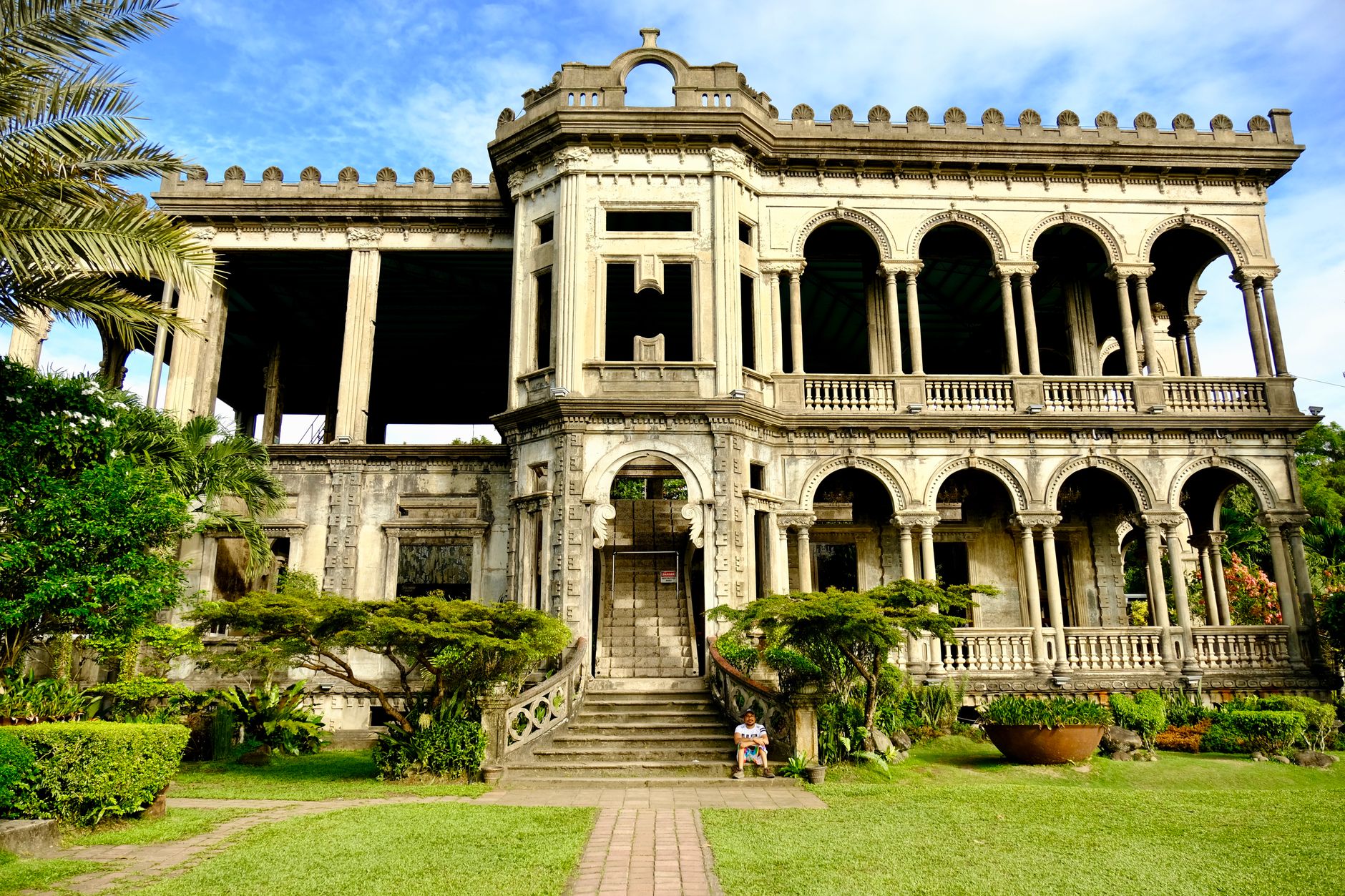 Photo: Jobert Enamno / Pexels
Built from cited sources · see the method · How we make our guides →
Bacolod calls itself the City of Smiles, and that tagline has teeth. MassKara began in 1980 after a brutal sugar crash and the MV Don Juan ferry tragedy, when locals chose public celebration over paralysis. That history still shapes the city’s tone: warm without being naive, festive without forgetting what it has survived. Around San Sebastian Cathedral, Gaston Park, and the Capitol Lagoon, daily life moves at a generous pace—morning walkers, evening families, and street vendors serving food that tastes like memory.
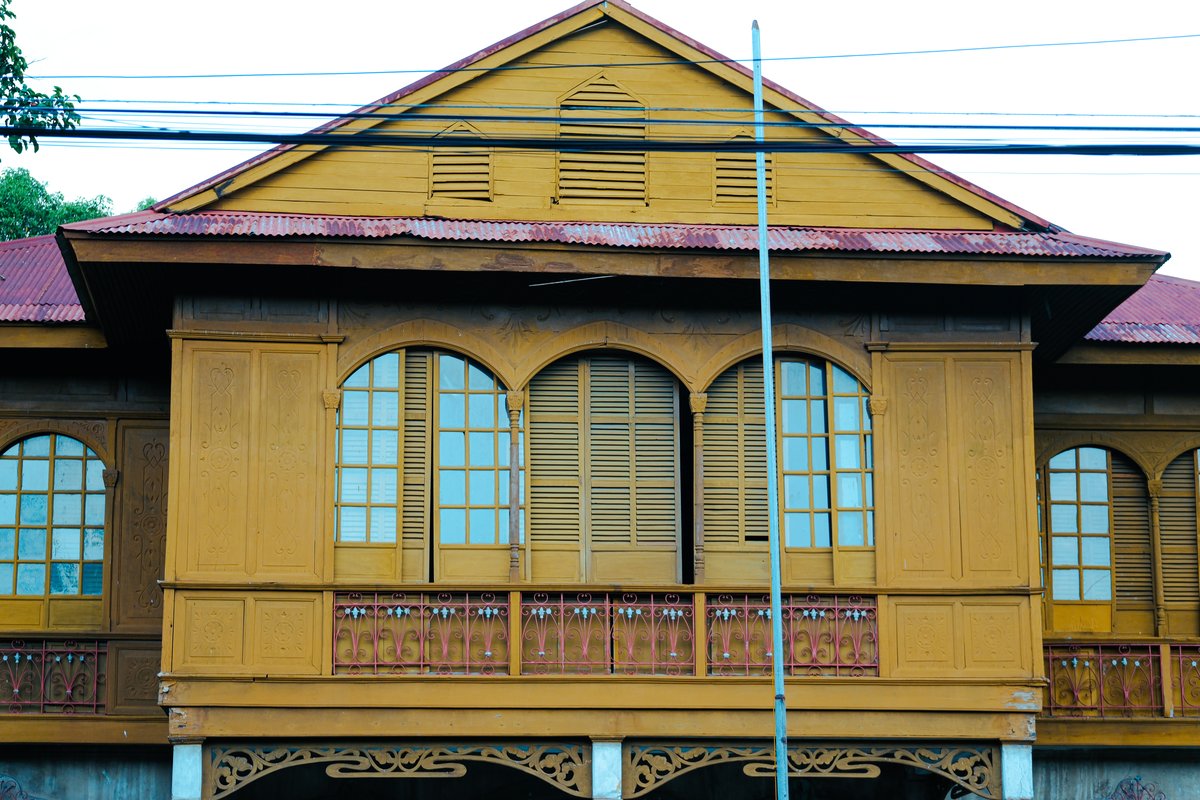
The city’s old wealth is visible in fragments: colonial-era bank facades on Lacson, heritage shophouses on Lopez Jaena Street, convent walls beside the cathedral, and hacienda houses scattered in outer barangays. Then there are the surprises most guides skip, like the fierce modernist 'Angry Christ' mural in nearby Victorias and the industrial ghosts of the old railway and sugar port zones. Bacolod works best when you read it as both city and gateway—urban core first, then short day trips that explain how sugar built an entire province.
And the food scene is reason enough to book the flight. Inasal is the headline at Manokan Country, but locals will steer you to kansi, a sour-spicy beef marrow soup sharpened with batwan fruit. Dessert is serious business too: piaya, napoleones, barquillos, and cake counters with weekend lines. Ride a motorela at least once, learn a few Hiligaynon words, and Bacolod shifts from 'easy stopover' to one of the Philippines’ most quietly rewarding cities.
Not every monument, just the ones we'd walk you past ourselves.


Where to wander, by quarter — each with its own rhythm.
Before you go
From a hilltop Visayan settlement to the resilient capital of Negros Occidental
Long before church bells and cane mills, Hiligaynon-speaking communities lived on the low rises that gave Bacolod its name: bakolod, a hill or mound. River mouths and coastal inlets linked them to Panay, Cebu, and wider Malay-Chinese trade circuits. The city’s oldest instinct—outward-looking, sea-connected, practical—starts here.
After Legazpi’s foothold in Cebu, Spanish authority slowly extended toward Negros, more aspiration than control at first. Missionary routes and tribute networks followed coastlines before they reached interiors. Bacolod’s future would be shaped by this gradual layering of empire rather than a single conquest moment.
By the late 17th century, Bacolod is documented as a distinct barrio in Spanish records. That paper trace matters: once a place is named, it can be taxed, mapped, and governed. A settlement on a mound was becoming a town in the colonial imagination.
Bacolod was recognized as a formal pueblo, with a parish dedicated to San Sebastian emerging in the same period. The plaza-church-government pattern that still frames downtown began to harden into place. Faith, administration, and daily market life were now physically stitched together.
When Bacolod became capital of Negros Occidental, power moved with it—clerks, judges, military officers, and merchants. The decision transformed a provincial town into the island’s political stage. Streets, offices, and social hierarchies reorganized around that new status.
The opening of Iloilo to foreign trade turned Negros cane into global commodity. Credit from foreign firms fueled mills, haciendas, and export chains, and Bacolod became the coordinating brain of this sugar frontier. Wealth accumulated fast—and so did inequality that would echo for generations.
Born into the sugar elite, Aniceto Lacson would later help steer Bacolod through the collapse of Spanish rule. His life captures the city’s paradox: landed power could be both revolutionary and conservative. In Bacolod, political change often came through families who already held economic command.
The present cathedral rose in coral stone and lime, anchoring the plaza with late-colonial confidence. Its facade became Bacolod’s visual center of gravity, where processions, funerals, feast days, and protests crossed paths. Even now, the building reads like a ledger of faith and civic memory.
Magdalena Jalandoni, born in nearby Silay, belonged to the literary world orbiting Bacolod’s print and cultural circles. Writing in Hiligaynon, she gave Negrense life a local voice at a time when Manila dominated prestige narratives. Her work helped prove that regional language could carry modern fiction and social critique.
On November 5, local revolutionary forces under Aniceto Lacson and Juan Araneta forced the Spanish garrison’s surrender in a near-bloodless takeover. Bacolod changed flags with astonishing speed and little urban destruction compared with many Philippine battle sites. The city discovered a political style it would repeat: decisive, elite-led, and pragmatic.
Only months after expelling Spain, Negros leaders accepted American sovereignty. For Bacolod’s hacendero class, U.S. order looked safer than uncertain revolutionary land politics. The move tied the city’s economy even tighter to export markets and imperial tariff policy.
The Payne-Aldrich Tariff opened favorable U.S. access for Philippine sugar, and Bacolod felt the surge in warehouses, rail links, and commercial houses. Money from cane financed schools, mansions, and politics. It also deepened labor precarity in fields far from the city lights.
Under American administration, Bacolod’s municipal structure was formalized and bureaucratically modernized. Census routines, English-language schooling, and new civic offices expanded state presence in everyday life. The city began to look and function like a modern provincial capital.
Rome established the Diocese of Bacolod, separating it from Jaro’s ecclesiastical jurisdiction. That gave the city a stronger religious institutional center and wider influence across Negros Occidental. Cathedral, plaza, and bishop’s authority became even more entwined in public life.
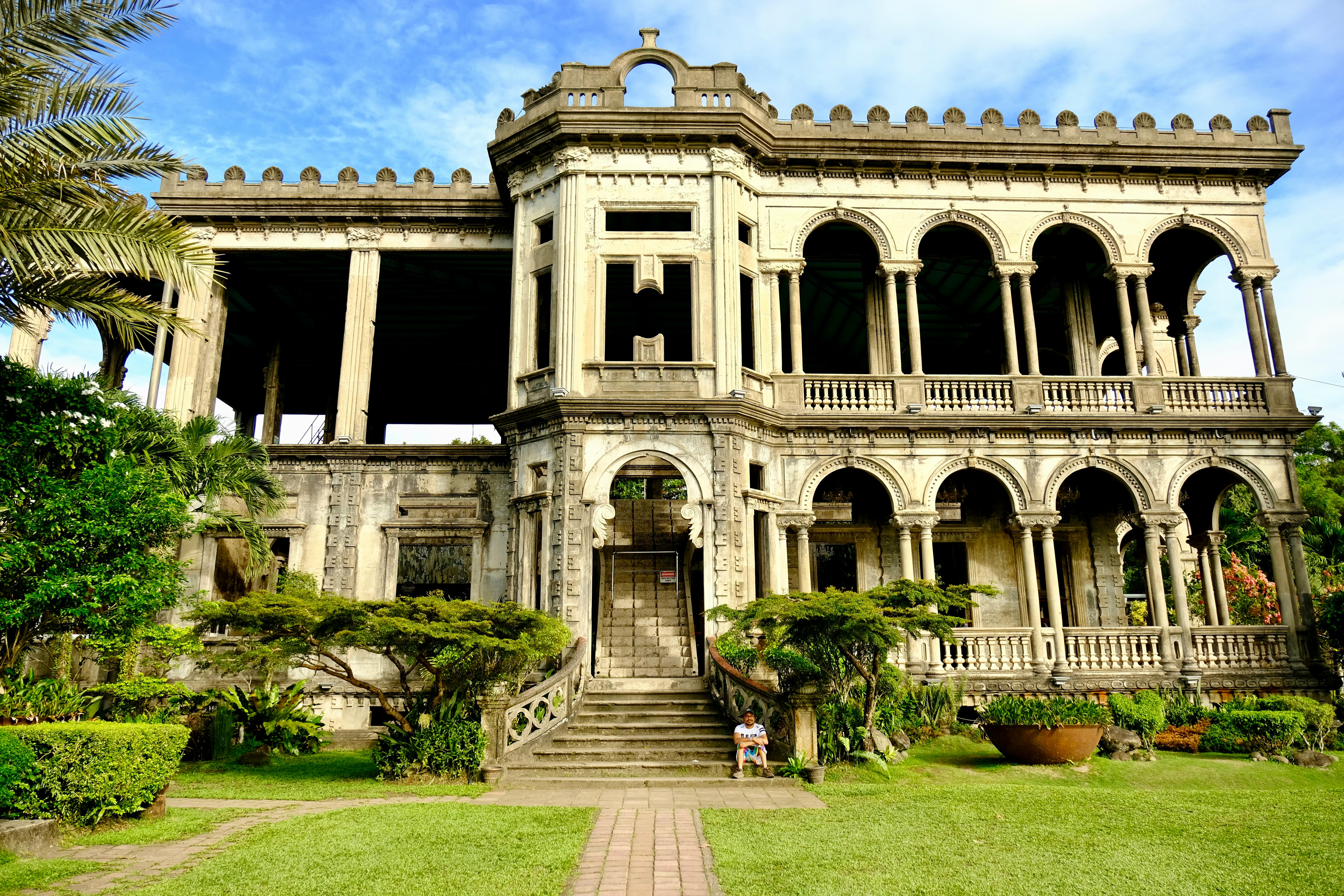
Japanese forces occupied Bacolod, and wartime scarcity hollowed out city routines. In nearby Talisay, the Lacson mansion was deliberately burned to prevent Japanese use, leaving the dramatic shell now called The Ruins. Smoke and strategy turned private grief architecture into a public war monument.
U.S. and Filipino forces landed at Pulupandan in March and pushed north, liberating Bacolod by late March or early April. The city was freed, but mountain fighting across Negros remained brutal for weeks. Liberation here was a doorway, not the end of danger.
Republic Act No. 1515 elevated Bacolod from municipality to chartered city on October 19. The legal shift unlocked stronger local governance, urban planning, and fiscal capacity. In civic memory, this is the hinge between old provincial town and modern city.
When Antonio Fortich became bishop of Bacolod, the diocese gained a fierce social conscience. From cathedral sermons to labor advocacy, he framed hunger and land inequality as moral emergencies, not rural background noise. During the coming sugar collapse, his voice would carry far beyond church walls.
USLS’s institutional growth in Bacolod strengthened the city as an educational magnet in Western Visayas. Classrooms trained teachers, engineers, accountants, and future civic leaders who would staff both sugar firms and post-sugar industries. Education became one of Bacolod’s quieter engines of resilience.
With PHILSUCOM and NASUTRA under Marcos-era control, Negros sugar was funneled through centralized power tied to Roberto Benedicto of nearby Silay, deeply influential in Bacolod’s business-political world. Prices and profits became political instruments. In the city’s clubs and offices, everyone understood that sugar was no longer merely an agricultural commodity—it was a regime system.
The MV Don Juan sank after collision in Tablas Strait, killing hundreds, many from Negros families. In the same year, world sugar prices crashed, gutting livelihoods across haciendas and sending shock waves into Bacolod’s markets and neighborhoods. Grief and economic panic arrived together, and the city’s smile had to be invented against the odds.
City leaders launched the first MassKara Festival in October, pairing choreography and smiling masks with a deeply wounded public mood. The masks weren’t denial; they were a public language for endurance. Bacolod’s identity shifted from sugar capital alone to a city that ritualized resilience.
After EDSA, Bacolod’s political networks recalibrated as the Marcos system fell. Expectations for agrarian reform and fairer sugar structures rose, though outcomes stayed uneven. The city entered democracy’s noisy era with old elites challenged but not erased.
BPO operations expanded rapidly in Bacolod, bringing graveyard shifts, fluorescent offices, and a new wage ladder for young workers. Cafes filled at midnight, and Lacson Street’s rhythm stretched beyond daylight commerce. The city learned to speak in American accents while keeping its Ilonggo warmth.
When Typhoon Yolanda devastated the central Philippines, Bacolod became a key logistics and relief staging point for operations to harder-hit islands. Warehouses, roads, and civic networks were tested in real time. The city’s role showed its regional importance beyond festival headlines.
For the first time in four decades, MassKara was cancelled or heavily restricted by COVID-19 protocols. Streets that usually throbbed with drums went oddly still. The interruption revealed how deeply the festival had become Bacolod’s civic heartbeat.
By 2024, MassKara returned in full color, drawing dense crowds back to city streets and plazas. Recovery wasn’t just economic; it was emotional, a shared rehearsal of continuity after years of disruption. Bacolod’s old lesson held: the smile is strongest when it remembers what it survived.
Singer and Actress · born 1978
Born here
Long before streaming playlists, Jolina's songs were already playing in jeepneys and sari-sari stores across Bacolod. Her career became part of everyday Filipino pop memory, and locals still claim her with pride. She would recognize the same warm, chatty city rhythm that shaped early family stories.
OPM Singer · born 1964
Born here
Dulce's powerhouse voice gave Bacolod one of its most respected names in Filipino music. In a city where karaoke is practically social glue, her legacy feels close, not distant. She would probably hear the same love for big vocals in neighborhood videoke nights.
Comedienne and Actress · born 1979
Born here
Rufa Mae brought a distinctly Filipino comic style into mainstream TV and film, bold and self-aware at the same time. Bacolod's humor can be playful and quick, and her persona fits that social energy. If she walked Lacson today, she'd still find an audience ready to laugh loud.
Actor and Singer · born 1979
Born here
Piolo's career helped define modern Philippine star culture, moving between film, television, and music with unusual staying power. Bacolod locals often mention him as proof that the city exports top-tier talent. He'd likely see a more modern skyline now, but the city's grounded pace would feel familiar.
Television Actress · born 1981
Born here
Known for major teleserye roles, Sunshine Dizon is part of the generation that dominated evening Philippine TV drama. Her Bacolod connection matters because local audiences are intensely loyal to artists they consider their own. She would still find that same loyal crowd energy during festival season.
Journalist and Former Athlete · born 1988
Born here
From elite volleyball to national journalism, Gretchen Ho's path reflects discipline across very different arenas. Bacolod's schools and sports culture helped normalize that ambition for many young locals. She would likely appreciate how the city now blends stronger media awareness with its old-school warmth.
Where locals actually book dinner — not the tourist menus.
Small things that change how the city treats you.
The city, as it actually looks.


Yes, especially if you care about food and regional history. Bacolod gives you the famous inasal scene, but also sugar-era heritage, the dramatic Ruins, and underrated side trips like Victorias' Angry Christ mural. It feels less crowded and more local than many big Philippine city stops.
Three to four days is the sweet spot for most travelers. That gives you time for city highlights, food crawls, and at least one day trip to places like The Ruins, Silay, or Mambukal. Stay 5 days if you want slower mornings at markets and multiple provincial excursions.
The easiest option is Grab, usually around PHP 250-400 for 30-45 minutes depending on traffic. Metered taxis are available but often cost more. If your hotel offers a shuttle, arrange it before arrival for a smoother transfer.
Generally yes; Bacolod is considered one of the safer Philippine cities for visitors. The main risks are petty theft in crowded areas like markets and terminals, plus occasional snatch-and-grab incidents on quiet roads at night. Stick to lit areas, use Grab after dark, and keep valuables discreet.
Jeepneys and motorelas are the cheapest daily options. Jeepney base fares are typically around PHP 13-15, while short motorela rides can be around PHP 15-25. For comfort and predictable pricing, mix cheap rides in daytime with Grab at night.
A budget traveler can get by on roughly PHP 1,800-3,000 per day with simple lodging, local meals, and public transport. Mid-range comfort is often around PHP 3,500-6,000 with better hotels and occasional car hire. Food can be very affordable if you eat at carinderias and Manokan Country.
January to March is usually best for weather: drier days, less rain disruption, and easier day trips. October is ideal if you want MassKara energy, parades, and nightlife. August to October can bring heavier rain and typhoon effects, so keep plans flexible.
10 places to discover
Saved and recently read places — kept on this device only.
Photos may have been resized or cropped.
