A mansion built for grief and burned for war sounds invented, yet The Ruins just north of Bacolod, Philippines, stands there in open air to prove it happened. You come for the theater of the place: sun through roofless arches, pale concrete glowing gold at dusk, and a story that turns from romance to sugar wealth to wartime sacrifice in a few steps. The site is technically in Talisay City, but for visitors based in Bacolod it feels close enough to fold into an afternoon. Visit because few places in Negros compress love, money, and fire this cleanly.
The shell you see today belonged to the Lacson mansion, a house raised on a 440-hectare sugar estate that once measured power in hectares and harvests. That scale matters. This was never a quaint family home; it was a planter's statement piece, built where the old Negros sugar economy made certain surnames feel almost architectural.
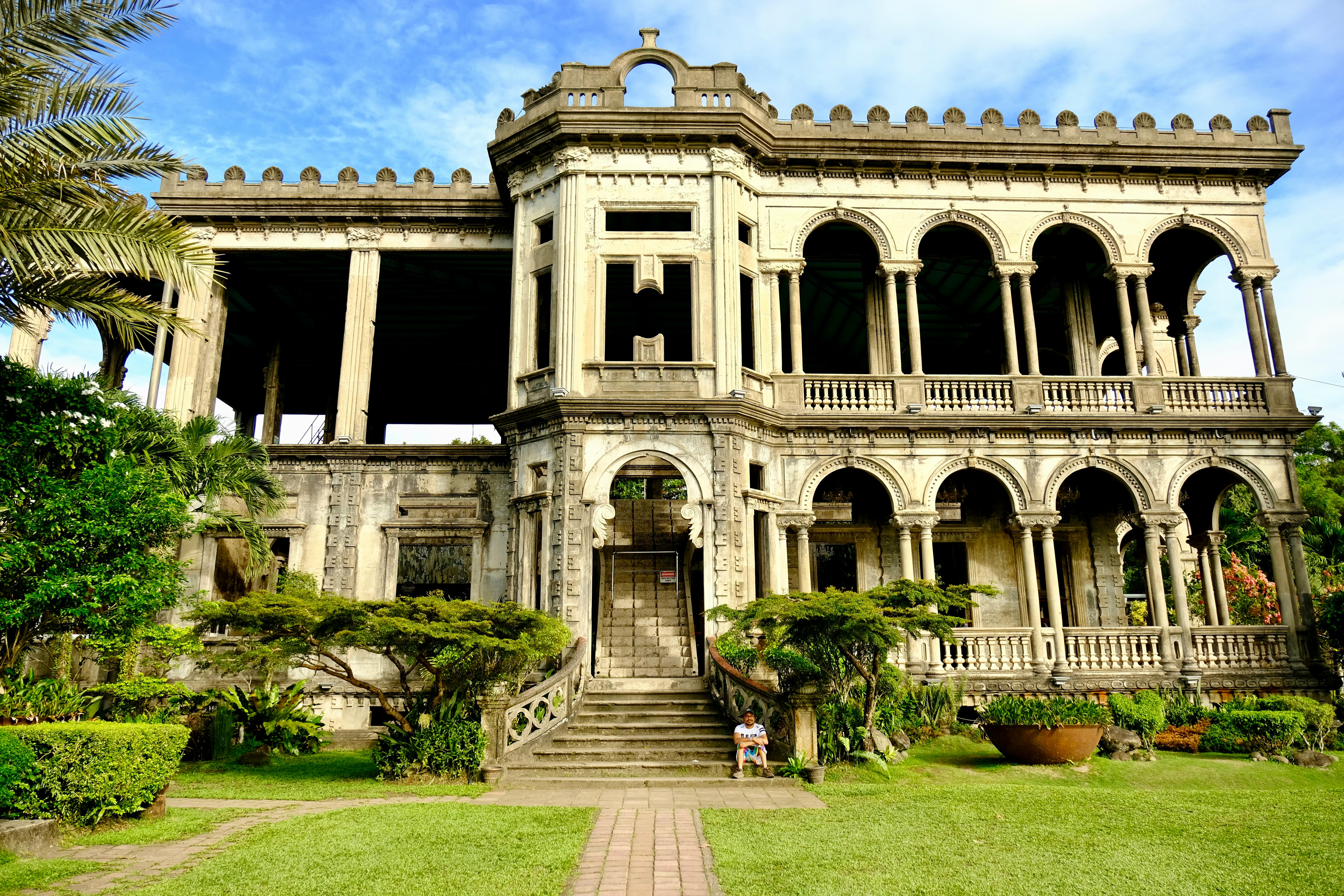
Light does half the storytelling here. In late afternoon the columns catch the sun, the ornament along the upper edge throws thin shadows, and the whole ruin looks less like wreckage than a stage set that forgot to take its final bow.
Most visitors arrive expecting a single-note love memorial, the so-called Taj Mahal of Negros. The better reason to come is messier: The Ruins shows how private grief became public display, how war reversed that ambition in one violent decision, and how a family ruin turned into one of the region's sharpest lessons in memory.
Researched by the Audiala editorial team from historical records, architectural archives, and local expertise.
What to see
The Roofless Mansion
What catches you first is the elegance of what survived: a 1920 mansion stripped to its concrete bones, with arches, columns, and a staircase rising into open sky where a ceiling should be. Walk close and the romance gets stranger; the paired "M" motifs for Mariano and Maria are worked into the posts, shell-shaped ornament curls along the upper edges, and the whole place starts to read less like a love story alone than a plantation fortune, burned in 1942 so Japanese forces could not take it over.
The Fountain Lawn at Sunset
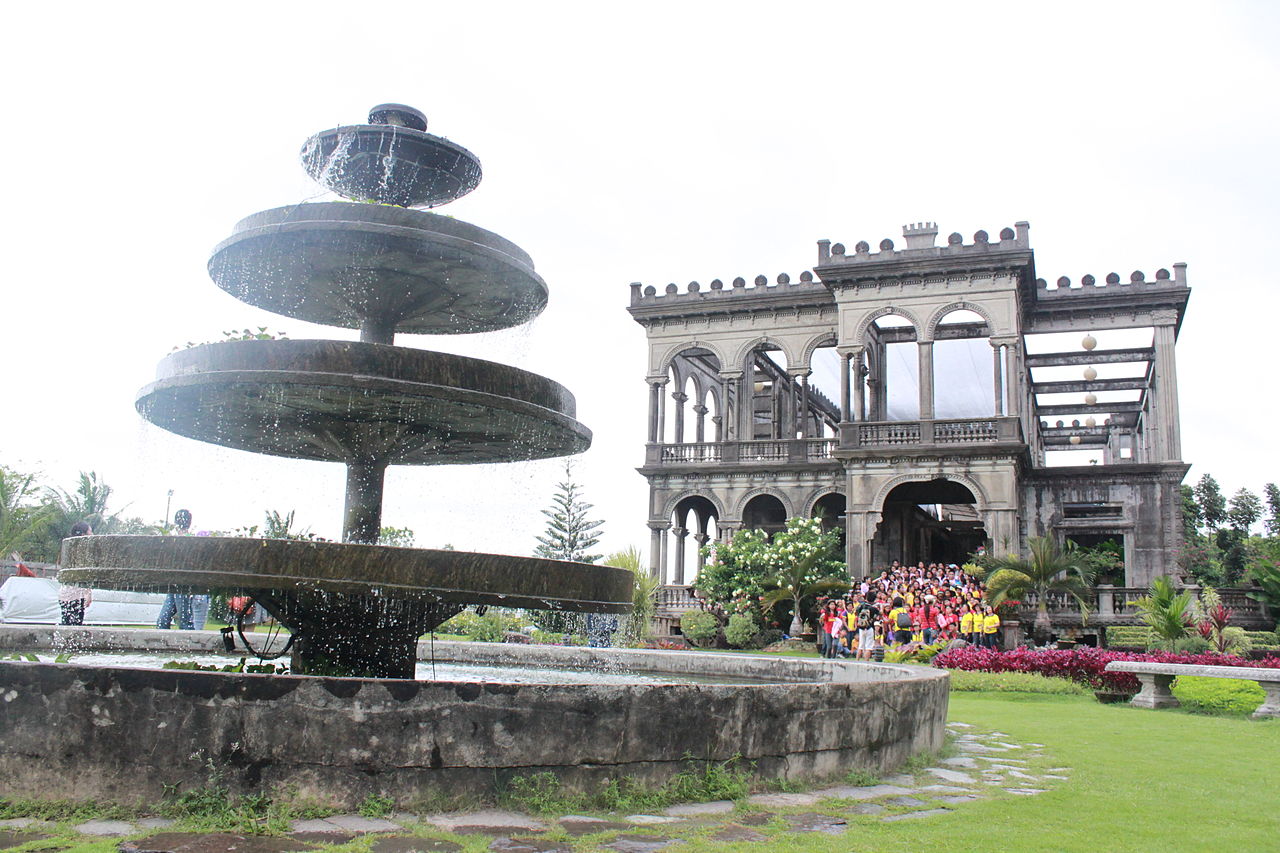
The classic view comes from the lawn in front, where the fountain sets the ruin at a slight distance and lets the building hold its shape against the late-afternoon light. Come around 5 pm, when the heat finally loosens its grip and the facade turns gold, because this is when you hear the water, catch the breeze across the grass, and understand why the place works best as an outline glowing against sugar-country dusk rather than as a relic inspected at noon.
The Ruins After the Photos
Most visitors take the front-facing shot and stop too soon. Stay longer, drift under the arches, look back from the restaurant side, then hunt for the details people miss: the shell decoration near the top, the openings where rooms once were, and, if you notice the old sugar-related structures nearby, the reminder that this was a 440-hectare estate, a property large enough to feel less like a house lot and more like a small village under one family's name.
Plan your visit
Getting There
The Ruins sits on Don Mariano L. Lacson Highway in Brgy. Zone 15, Talisay City, about 20 to 30 minutes from central Bacolod by taxi or Grab in normal traffic. By public transport, take a northbound Bata or Bata-Libertad jeepney, get off at Pepsi Plant or Bangga Pepsi, then switch to a tricycle for the last stretch; from Bacolod-Silay Airport, recent reports put the ride at about 15 minutes, quick as a short pop song.
Opening Hours
As of 2026, the official site lists normal operations from 9:00 am to 8:00 pm daily. Trust that, but verify the day before: third-party listings still show conflicting closed days, and private weddings or events can shut the gates even on a Saturday.
Time Needed
Give it 45 to 60 minutes if you're here for a walk, a few photos, and the basic story. Stay 1.5 to 2.5 hours if you want sunset, the evening lighting, time for the displays, and dinner or coffee on site; that is when the stone starts to glow instead of just standing there.
Accessibility
Recent listings and reviews describe the site as wheelchair accessible, with open grounds, large parking, and standard visitor circulation rather than a hard ruin climb. Still, expect outdoor surfaces, lawn edges, and uneven patches, and assume no elevators because none are publicly documented.
Cost & Tickets
As of 2026, official admission is PHP 150 for adults, PHP 100 for seniors and PWDs, PHP 80 for students, and free for children under 8 with an adult. Casual entry does not appear to require online booking, but styled shoots do: the official photoshoot fee is PHP 1,000 for the first five people, crew included.
Photo Gallery
The historic skeletal structure of The Ruins in Bacolod, Philippines, stands beautifully framed by a foreground fountain and lush, manicured gardens. · FroyRThe lush, manicured gardens and tranquil canal at The Ruins in Bacolod offer a peaceful escape with a view of the historic site's grounds. · JesraygarcianoThe Ruins in Bacolod, Philippines, stands as a hauntingly beautiful skeletal mansion surrounded by well-manicured gardens. · Paolobon140The historic Ruins in Bacolod, Philippines, showcases the striking skeletal remains of a grand mansion surrounded by lush gardens and a tiered fountain. · BenjamhilleThe iconic shell of The Ruins in Bacolod, Philippines, stands majestically against a clear sky, perfectly mirrored in the foreground water feature. · RodzzkieThe iconic skeletal structure of The Ruins in Bacolod, Philippines, stands surrounded by manicured gardens and a serene fountain. · FroyRThe historic, roofless structure of The Ruins in Bacolod, Philippines, creates a stunning symmetrical reflection in the surrounding water. · Klienneeco
History
Sugar, Grief, and the Fire That Saved the Walls
The Ruins makes more sense when you stop treating it as a postcard romance and start reading it as a chapter in Negros history. Records and family accounts place the mansion on Hacienda Sta. Maria, a 440-hectare sugar property just outside Bacolod, where planter wealth shaped politics, labor, and the look of the countryside itself.
Most scholars and recent Philippine sources date the mansion to 1920, built by Don Mariano Ledesma Lacson after the 1911 death of his wife, Maria Braga Lacson. According to family tradition, grief lit the fuse. The house, though, was not a mausoleum in disguise; it was a working hacienda residence for a powerful family that expected its name to last.
The turning point
Mariano Lacson's House of Memory
Don Mariano Ledesma Lacson had money, land, and a name that already carried weight in Negros. What he could not keep was Maria Braga Lacson, his Macanese wife, whose death in 1911 is documented in year but blurry in cause; sources split between childbirth and an accident during pregnancy, so the exact medical story remains unsettled.
According to tradition, Mariano answered that loss with architecture. Recent sources date the mansion to 1920, and family accounts describe a house built in Maria's memory, marked with small acts of devotion hidden inside the decoration: shell motifs linked to her seafaring family and mirrored letter M's for Mariano and Maria.
Then the story turned hard. In early 1942, as Japanese forces closed in on Negros, Filipino guerrillas burned the mansion so it could not serve as an enemy headquarters, and contemporary retellings say the fire raged for days. That was the hinge. Mariano's monument to permanence survived because his own side chose to destroy it first.
A House Inside the Sugar Order
The Ruins rose from sugar money, and that fact changes how you read every arch. Negros Occidental's planter class built fortunes on cane, and the Lacsons stood near the center of that world, tied to local officeholding and, through Gen. Aniceto Lacson, to the 1898 Negros revolt against Spain. What looks romantic from the garden was once part of a working estate economy measured across 440 hectares, an area larger than 600 football fields laid edge to edge.
From Private Ruin to Public Icon
For decades the burned shell sat as a family relic rather than a formal heritage site. That changed in 2007 and 2008, when Raymund Javellana, a great-grandson of Mariano and Maria, helped clear the grounds, restore the fountain, and open the property to visitors. Without that intervention, Bacolod might have had one more overgrown ruin and far fewer evening photographs.
Tips for visitors
Come at Sunset
Aim for 4:30 to 6:30 pm. The place is pleasant in full daylight, but it earns its reputation when the low sun hits the ruined arches and the walls turn honey-colored before the evening lights come on.
Ask Before Shooting
Phone photos are standard, but tripods, pre-wedding setups, and commercial shoots are a different matter. As of 2026, the site publicly charges for photoshoots, and recent visitor reports say drones are not allowed from inside the grounds.
Skip the Walk
Don't walk in from the highway unless you enjoy fast traffic and bad pedestrian conditions. Local advice is consistent here: use Grab, taxi, or a tricycle from Bangga Pepsi, then leave the heroic roadside march to someone else.
Eat Strategically
The on-site restaurant works if you want convenience and the view, but locals often treat it as the scenic option, not the food-first one. Tractor Cafe sits beside The Ruins and is a common backup for coffee or a meal; for a quieter proper sit-down, Nature's Village Resort is a short drive away.
Don't Pack Snacks
Recent attraction Q&A responses say outside food and drinks are not allowed, except water, and picnic setups are off the table. Eat before you arrive or plan to buy on site, because this is a heritage venue with restaurant rules, not a public park.
Travel Light
A recent 2024 traveler report says bags can be left near the entrance with the security guard, but management does not seem to publish that as a formal service. If you're arriving from the airport, treat luggage drop as possible, not promised, and keep valuables with you.
Where to Eat
local_dining
Don't Leave Without Trying
Chicken inasal (grilled chicken marinated in vinegar and spices)Bacolod peanut brittle (Bacolod's famous sweet treat)Sugarcane juice (fresh-pressed from local harvest)Lechon (roasted suckling pig)Pinagsisiw na manok (chicken stewed in blood and organs)
Tractor Cafe
local favorite
Cafe€€star4.4(237)directions_walk~5 km from The Ruins
Order: Local pastries and freshly brewed coffee; the casual farm-to-table vibe makes it perfect for a relaxed morning or afternoon break.
Set on Hacienda Sta. Maria, this is where locals actually hang out—no tourist gloss, just genuine hospitality and a real slice of rural Negros life. The agricultural setting gives it authentic charm that chain cafes can't touch.
Cafe€€star4.6(5)directions_walkAdjacent to The Ruins
Order: Light meals and refreshments with a view; ideal for grabbing something while exploring the ruins complex.
Perfectly positioned right at The Ruins site itself, this is your best bet for convenience without leaving the grounds. The gazebo setting offers a pleasant break spot with solid ratings.
Order: Fresh sugarcane juice and local refreshments—a true taste of Negros agricultural bounty, especially on a hot day exploring the ruins.
This is authentic Bacolod: fresh sugarcane juice pressed on-site. It's a quick, local refreshment stop that captures the region's agricultural heritage in a glass.
Order: Casual Filipino and international fare; the main dining option within the monument grounds, perfect for a full meal without leaving the site.
With over 5,200 reviews, this is the anchor dining spot at The Ruins. It's convenient, reliable, and lets you maximize time exploring the iconic sugar baron mansion without hunting for food elsewhere.
checkMost restaurants near The Ruins operate during monument hours (9 AM – 8 PM); plan meals accordingly.
checkCash is widely accepted; have small bills ready for quick transactions at cafes and juice stands.
checkThe area is agricultural, so fresh juice and farm-sourced ingredients are reliable choices.
Food districts:Talisay town center (5 km south) for wider dining variety beyond the monument areaHacienda Sta. Maria vicinity for farm-to-table and local cafe experiences
Restaurant data powered by Google
Frequently asked
Is The Ruins worth visiting?
Yes, if you go expecting a roofless mansion with a war story, not a full house museum. The shell is the point: arches open to the sky, late light turning the concrete gold, and a love story that sits inside the harder history of Negros sugar wealth and the 1942 wartime burning. Give it an hour at minimum, longer if you want sunset and dinner.
How long do you need at The Ruins?
Most people need 45 to 60 minutes for the ruin itself. Stay 1.5 to 2.5 hours if you want the guided tour, photos, a slow walk around the grounds, and the shift from hot afternoon glare to evening floodlights. That's when the place starts to confess.
How do I get to The Ruins from Bacolod?
The easiest way is by Grab or taxi from Bacolod, usually around PHP 195 to PHP 275 based on recent traveler reports. Public transport works too: take a northbound Bata or Bata-Libertad jeepney, get off near the Pepsi Plant or Bangga Pepsi, then take a tricycle for the last stretch. Don't count on walking in from the highway unless you enjoy heat, traffic, and bad roadside shoulders.
What is the best time to visit The Ruins?
Late afternoon, around 4:30 p.m. to 6:30 p.m., is the sweet spot. The heat drops, the fountain lawn softens, and the ruin catches sunset light before the evening lamps turn it into a glowing outline. Midday is harsher in every way.
Can you visit The Ruins for free?
Usually no: the official site lists paid admission, with adults at PHP 150, seniors and PWDs at PHP 100, students at PHP 80, and children under 8 free with an adult. I found no official free-entry day policy in the research. Check the day before anyway, because private events can close the grounds even on normal opening days.
What should I not miss at The Ruins?
Look past the headline facade and hunt for the mirrored letter M molded into the posts and arches, a small signature for Mariano and Maria. The shell ornaments along the upper edges matter too; local tradition ties them to Maria Braga's maritime family background. Then step back to the fountain lawn near sunset, because that front view is where grief, sugar money, and tropical light all line up.
Sources & attribution75
Researched and written by the Audiala editorial team from historical records, architectural archives, and local expertise. Last updated April 2026.
SunStar Bacolod — History, 1920 date framing, Maria Braga's death year, wartime burning, and site interpretation.
BusinessWorld Online — Detailed family history, sugar-estate context, Mariano Lacson, Maria Braga, and later preservation.
Guide to the Philippines — General history, location, wartime burning, current attraction basics, and transport notes.
Macanese Library — Genealogical details on Maria Braga and Mariano Lacson, including names and dates treated as single-source on the open web.
Philippine Primer — History, 1920 completion date, wartime burning, and architectural details including the M motif.
Talisay City Government — Municipal history of Talisay and context for the Lacson family and local sugar economy.
Wikipedia — Background on Gen. Aniceto Lacson and the family's role in Negros history.
Philippine Daily Inquirer — World War II chronology around Negros and Japanese arrival in the Bacolod area.
Bacolod City Government — Local historical timeline and wartime context for Bacolod and Negros.
Pacific Wrecks — Context on wartime dates and Japanese operations in the Bacolod area.
The Philippine Star — Profile of Raymund Javellana and the 2007-2008 reinvention of The Ruins as a public heritage attraction.
RJD Explorer — Support for the January 2008 public opening date.
Edge Davao — Later restoration ideas, including reported roof plans and an unconfirmed designer claim.
Interaksyon — Recent overview of current operations, branding, and event-oriented use of the site.
The Lone Rider — Older travel account used for family construction lore and site details.
UNESCO World Heritage Centre — Reference used to confirm The Ruins itself is not a UNESCO World Heritage Site and to situate the wider sugar-cultural proposal.
UNESCO World Heritage Centre — Additional UNESCO reference cited in the research notes for broader heritage context.
Culture Trip — Secondary source for shell ornament and romantic-history framing.
The Ruins Official Website — Official opening hours, ticket prices, contact details, photoshoot fees, dining, and event information.
Tripadvisor — Third-party hours, traveler impressions, and general practical visitor feedback.
Facebook — Recent traveler post with fares, access tips, luggage note, restaurant prices, and drone guidance.
Experience Negros — Public transport directions from Bacolod and route landmarks.
Happy Steps — Older route notes from the Bangga Pepsi turnoff and walking directions.
Wikimapia — Location notes, architectural summary, route clues, and mention of mini-golf.
Top-Rated.Online — Review aggregation for event-closure reports, facilities, parking, and visitor impressions.
Restaurant Guru — Restaurant and venue listing used for accessibility and facilities clues.
"The Ruins" as the symbol of unbroken love between 2 couple — Rodzzkie — CC BY-SA 4.0 (https://creativecommons.org/licenses/by-sa/4.0/) — Source: https://commons.wikimedia.org/wiki/File:"The_Ruins"_as_the_symbol_of_unbroken_love_between_2_couple.jpg
The Fountain at The Ruins — FroyR — CC BY-SA 4.0 (https://creativecommons.org/licenses/by-sa/4.0/) — Source: https://commons.wikimedia.org/wiki/File:The_Fountain_at_The_Ruins.jpg
The Ruin — Giovanni G. Navata — CC BY-SA 3.0 (https://creativecommons.org/licenses/by-sa/3.0/) — Source: https://commons.wikimedia.org/wiki/File:The_Ruin.jpg
The Lacson Ruins — Herbert Kikoy — CC BY-SA 4.0 (https://creativecommons.org/licenses/by-sa/4.0/) — Source: https://commons.wikimedia.org/wiki/File:The_Lacson_Ruins.jpg
The Lacson Ruins mansion 2012 - Flickr 01 — mkirader — CC BY 2.0 (https://creativecommons.org/licenses/by/2.0/) — Source: https://commons.wikimedia.org/wiki/File:The_Lacson_Ruins_mansion_2012_-_Flickr_01.jpg
The Ruins (Ancestral home mansion) — Jesraygarciano — CC BY-SA 4.0 (https://creativecommons.org/licenses/by-sa/4.0/) — Source: https://commons.wikimedia.org/wiki/File:The_Ruins_(Ancestral_home_mansion).jpg
The Ruins (Ancestral home mansion view from garden) — Jesraygarciano — CC BY-SA 4.0 (https://creativecommons.org/licenses/by-sa/4.0/) — Source: https://commons.wikimedia.org/wiki/File:The_Ruins_(Ancestral_home_mansion_view_from_garden).jpg
Strictly necessary cookies keep the site working. Analytics (PostHog, Google Analytics) measures how each visitor uses our pages. Marketing loads YouTube videos and walking-route maps without a tap and lets Google Analytics set advertising cookies. We never sell your data. You can change this any time from the footer.
Analytics and marketing cookies are optional and only load if you agree. Details under Customize.
Privacy
Cookie preferences
Pick what you're okay with. You can change this any time from the footer.
Strictly necessary
Always on
Sign-in, language, navigation. Always on.
Product analytics
PostHog (EU) and Google Analytics record which pages you view and how you use them, under a random identifier stored in your browser. Helps us see which pages work and which need fixing. Google's ad personalisation stays off. No selling.
Marketing
Loads YouTube videos and the walking-route maps (OpenFreeMap) without a tap; without it, they load only when you tap them. If analytics is also on, Google Analytics may set advertising cookies. Ad personalisation stays off.