Type 2+ letters to search all countries, cities, and places
/Ctrl KEsc
travel_explore
Type 2+ letters to search all countries, cities, and places
Press Enter to open the top result
Museo Nacional Del Virreinato
Cuautitlán Izcalli Municipality·Mexico·19° N · 99° W·Updated Apr 2026
Mexico's premier colonial museum: a Jesuit cloister housing Latin America's largest crowned nun portrait collection, part of a UNESCO World Heritage site.
December (Pastorelas festival) or weekday mornings year-round
Four times in six years, men with shovels broke through the floors of one of the finest baroque churches in the Americas, hunting for Jesuit gold that nobody has ever proven existed. The Museo Nacional del Virreinato in Tepotzotlán, México survived those excavations, a revolution, and an attempted conversion into a prison — with its 18th-century gilded retablos still intact. What you see today is not a reconstruction. It is the original.
The former Jesuit Colegio de San Francisco Javier sits on a plaza in Tepotzotlán, a town roughly 40 kilometers north of Mexico City and adjacent to Municipio De Cuautitlán Izcalli. Construction began in 1606 and didn't stop until the Jesuits were expelled in 1767 — a 161-year building project, longer than the Sagrada Família has been under construction so far. The complex sprawls across gardens, cloisters, and patios, anchored by the Church of San Francisco Javier, whose churrigueresque façade, designed by architect Ildefonso Iniesta Durán, ranks among the most elaborate baroque frontispieces in the Western Hemisphere.
Inside, the scale shifts from architectural to intimate. Miguel Cabrera, the most celebrated painter of 18th-century New Spain, designed the three main retablos: walls of carved wood sheathed in gold leaf, reaching from floor to ceiling, populated with saints whose painted faces still carry individual expression after nearly three centuries. The collection assembled since 1964 draws from the Mexico City Cathedral, the Museo Nacional de Historia, and private donations — ivory crucifixes, silver liturgical vessels, painted screens. But the building itself is the primary exhibit.
Since 2010, the complex has been inscribed as part of UNESCO's Camino Real de Tierra Adentro, the royal road that connected Mexico City to the northern silver mines. The Jesuits were infrastructure builders as much as educators, and Tepotzotlán served as a way-station along that 2,600-kilometer route. Bring a full day.
Researched by the Audiala editorial team from historical records, architectural archives, and local expertise.
What to see
Church of San Francisco Javier
Every surface lies. What looks like solid gold is wood carved so deeply you could lose your hand in the relief, then covered in gold leaf until the material underneath disappears. The Churrigueresque retablos, commissioned in 1753 from painter Miguel Cabrera and sculptor Higinio de Chávez, fill the interior from floor to vault — saints, angels, vine tendrils, crowns — layered so densely that the eye has nowhere to rest. That's the point. The Churrigueresque style wasn't decorative excess; it was theology made physical, every inch of emptiness filled because God's creation leaves no void. Morning light enters through high windows and rakes across the carved surfaces, throwing sharp shadows that make the relief legible. By afternoon, the gold warms to deep amber and the shadows soften. The church was built between 1670 and 1682, but the interior you see today is mid-eighteenth century — the Jesuits had seventy years to refine their vision before the Spanish Crown expelled them in 1767 and locked the doors. Inside, don't miss the Capilla de la Virgen de Loreto, a replica of the Santa Casa in Italy's Loreto. It functions as a jewel box within a jewel box, smaller and more concentrated than the main nave, and easy to walk past if you don't know it's there.
The Cloisters and 22 Galleries
Two cloisters structure the museum: the Claustro de los Aljibes on the ground floor, named for the water cisterns that once supplied the entire Jesuit college, and the Claustro de los Naranjos above, where orange trees still grow in the courtyard and scent the arcades with blossom from January through March. The 22 galleries span 1519 to 1810 — three centuries of New Spain compressed into rooms that were themselves dormitories, refectories, and classrooms. Some are staged as the Jesuits would have used them: stone kitchen hearths scaled for feeding dozens, a library arranged in period furniture. Others hold surprises. The crowned-nun portraits — over twenty full-scale paintings of women in extraordinary flower crowns and ceremonial habits, painted at the moment they took their vows — form the largest such collection in Latin America. Each face is individualized. These are portraits, not icons. In another gallery, the enconchados demand you move: paintings inlaid with fragments of mother-of-pearl that read as flat oil in direct light but shimmer when you shift your angle. No photograph captures this. The corn-stalk paste sculptures nearby look heavy but weigh almost nothing — pre-Columbian technology adopted by colonial workshops to make processional figures light enough for one person to carry. The walls of the cloister corridors are thick enough to step inside — over a meter of stone — and the temperature drops noticeably as you cross from courtyard sun into the arcade's shadow.
The Gardens and the Forgotten Fountain
Most visitors turn back after the galleries. Don't. A wide stone arch at the rear of the complex opens onto over three hectares of gardens — roughly the size of six football pitches — and the shift is physical: dark enclosed corridors give way to open sky, stone-echo silence replaced by wind and birdsong. Somewhere in these grounds stands the Salto de Agua fountain, the original terminal point of the colonial aqueduct that once carried water from Chapultepec to Mexico City. It's a piece of infrastructure history disguised as garden ornament, and almost nobody finds it. The gardens peak in the rainy season, June through October, when afternoon thunderstorms leave the soil smelling of wet earth and the greenery goes electric. In the dry winter months, the light is sharper and the grounds emptier. Either way, budget at least forty minutes here. The contrast with the gilded interior isn't just visual — it recalibrates your sense of what the Jesuits built. The college wasn't a church with a garden attached. It was a self-sustaining compound: classrooms, dormitories, kitchens, cisterns, orchards, aqueduct water. The garden is where that ambition becomes legible.
How to Experience the Full Complex
Plan three to four hours minimum — this is not a place that rewards rushing. Start with the church before 11 a.m., when raking morning light throws the facade carving into maximum contrast and the interior gold catches its sharpest angles. Work through the cloisters and galleries at whatever pace the crowned nuns and enconchados demand, then finish in the gardens while the afternoon light is still warm. Hire one of the on-site guides: the historical layers — Jesuit college, post-expulsion abandonment, Revolution-era treasure hunts that left visible damage in the floors, twentieth-century restoration — don't explain themselves through object labels alone. Entry costs 90 MXN. No food or drink is allowed inside the museum, but the former hospedería (the inn where the Jesuits housed travelers who weren't permitted past the cloister threshold) now operates as a restaurant just outside the restricted zone. If you visit during Christmas, the nationally famous Pastorela — a nativity drama performed in the church and atrium by candlelight — transforms the building into something the Jesuits might have recognized. The museum opens Tuesday through Sunday, 9 a.m. to 6 p.m., though some galleries occasionally close due to staffing. Weekday mornings are quietest. The silence inside the church vault, on those mornings, is the kind you feel in your chest.
Plan your visit
Getting There
Take the Tren Suburbano Line 1 from Buenavista station to Lechería, then grab a colectivo to Tepotzotlán — the whole trip runs about 60–75 minutes and drops you on Plaza Hidalgo, directly in front of the museum. By car, exit the México–Querétaro highway (MEX-57D) at Tepotzotlán; figure 45–60 minutes from central CDMX depending on traffic, and the museum has its own parking lot. Buses also run from Terminal Norte and Terminal Poniente to the town center.
Opening Hours
As of 2026, the INAH official site lists Tuesday through Saturday, 9:00 AM to 6:00 PM. Closed every Monday. Some third-party sources show Sunday hours or 5:00 PM closing — confirm at virreinato.inah.gob.mx before planning your visit, especially on Sundays.
Time Needed
A focused visit to the church and main cloister takes 1 to 1.5 hours. The full 22-room circuit plus the Churrigueresque church demands 2.5 to 3.5 hours — and that's before you wander the 3-hectare gardens, which are roughly the size of four football pitches. Budget a half-day if you want to eat at the on-site restaurant and linger.
Tickets & Free Entry
General admission is MXN 90 as of 2026. Students, teachers, and seniors get discounted entry with valid ID. Mexican nationals and residents enter free every Sunday — a standard INAH policy — but expect larger crowds on those mornings.
Accessibility
Ramps and at least one elevator serve visitors with mobility challenges, though the 16th-century cloister floors can be uneven cobblestone in places. The complex spans two stories across multiple courtyards and gardens — wheelchair access exists but coverage of every upper-floor gallery is unconfirmed. Audio guides are available, though language options beyond Spanish have not been verified.
Photo Gallery
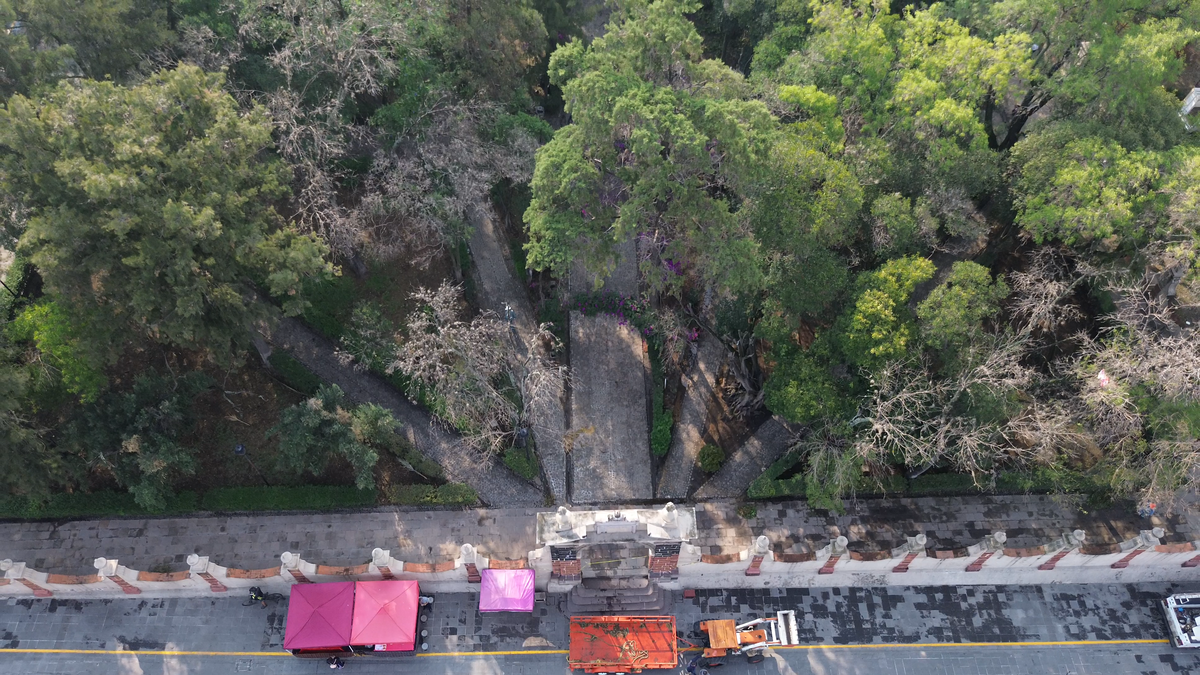
A pair of historic suits of armor stand guard in a sunlit window alcove at the Museo Nacional Del Virreinato in Cuautitlán Izcalli, México. · Artest.jimThe serene, colonial-style courtyard of the Museo Nacional Del Virreinato in Cuautitlán Izcalli, México, showcases historic stone arches and lush garden landscaping. · MinaramAn elevated perspective of the historic Museo Nacional Del Virreinato in México, showcasing its beautiful colonial architecture nestled within a vibrant, tree-filled landscape. · LuisalvazAn informational plaque at the Museo Nacional Del Virreinato in México provides historical context about the antechoir's architectural features. · LuisalvazThe historic corridors of the Museo Nacional Del Virreinato in México showcase exquisite colonial-era religious paintings and intricate wall frescoes. · LuisalvazA protest banner from museum workers hangs over a window at the Museo Nacional Del Virreinato in México, highlighting budget and staffing concerns. · LuisalvazThe historic interior of the Museo Nacional Del Virreinato in México showcases colonial architecture with intricate wall murals and classic religious art. · Luisalvaz
History
What Gold Leaf Remembers
The art has outlived every institution that tried to claim it. Jesuits built these retablos, but the Crown seized them. Secular priests inherited the building but couldn't maintain it. Revolutionaries occupied it; treasure hunters broke through its floors. The gold leaf on the walls of the Church of San Francisco Javier has watched five different Mexicos pass through its doors — colonial, independent, reformed, revolutionary, modern — and still catches the light the same way it did when Cabrera laid down the final brushstroke in 1753.
What endures here is not a ritual or a liturgical practice but something more stubborn: the physical fact of the art itself. The retablos, the façade, the painted ceilings, the Camarín de la Virgen — all made between 1606 and 1767. The institution changed five times over. The gilded walls did not move.
The turning point
Cabrera's Retablos: A Painter's Argument in Gold
Records show that on December 7, 1753, Jesuit rector Pedro Reales signed a contract with painter Miguel Cabrera and gilder Higinio de Chávez to construct three gilded retablos for the Church of San Francisco Javier. The deadline was nearly impossible — the works were to be unveiled for the feast of Saint Francis Xavier that same December. For Cabrera, born in Oaxaca of mixed indigenous and Spanish heritage, this was the commission of a lifetime. He had already risen to become the most sought-after painter in New Spain. Now he had to prove it against a clock measured in weeks.
Inside the sagrario niche of the main retablo, Cabrera placed a painting of the Virgin of Guadalupe — unsigned, attributed to him on stylistic grounds. On her tunic, above the right foot, he painted a small figure "8." This was not decorative. Two years earlier, Cabrera had been among the painters officially invited to examine Juan Diego's original tilma at the Basilica of Guadalupe. The "8" encodes a theological claim linking the Guadalupan image to the Immaculate Conception's octave day — a doctrinal argument he later published in his 1756 treatise Maravilla Americana. He was painting theology into a gilded wall, in a Jesuit novitiate, at a moment when the stakes of that theology were still very much alive.
Fourteen years later, the Jesuits were expelled from all Spanish territories in a single night. Cabrera died in 1768 — one year after the decree that destroyed his most important patron. But the retablos never left Tepotzotlán. They survived the expulsion, a seminary conversion, the Reform Laws, the Mexican Revolution, and four separate treasure-hunting excavations that tore through the church floors between 1928 and 1934. The gold leaf Cabrera and Chávez applied in December 1753 still reflects light from the same windows.
Five Institutions, One Address
The complex has been a Jesuit novitiate (1580–1767), a seminary-and-correctional-facility for secular clergy (from 1777), national property under the Reform Laws (1859), a briefly reoccupied Jesuit house (1871–1914), and a national museum since 1964. After the expulsion, Archbishop Alonso Núñez de Haro y Peralta repurposed the building as a retirement home for elderly priests and, simultaneously, a place to send clergy who had "committed some kind of error." The college that trained New Spain's most ambitious Jesuits became, within a decade, a repository for the institutional church's problems. In 1871, the State of México proposed converting it into a prison. The people of Tepotzotlán refused.
What the Walls Kept
The 1606–1767 construction campaign produced the Church of San Francisco Javier, the Camarín de la Virgen, the Capilla de Loreto, the Relicario de San José, the Patio de Naranjos, and the churrigueresque façade — all of which survive in their original form. The retablos were not restored from fragments. They were never fragmented. The carved estípite columns, the gilding, Cabrera's paintings — they weathered a decade of vacancy, treasure hunters with shovels, and a military occupation, but they escaped destruction. Even the original Salto de Agua fountain still stands in the gardens. The museum's collection was assembled from other institutions after 1961, but the architecture and its integrated art are the same objects the last Jesuit novices saw when soldiers walked them out in June 1767.
Tips for visitors
Dress for Two Churches
The Church of San Pedro Apóstol is still an active parish with regular Catholic masses — cover your shoulders and knees if services are in session. The grander Church of San Francisco Javier functions as museum space, so dress code is relaxed there, but the atmosphere rewards a quiet, unhurried pace.
No Outside Food
The museum enforces a strict no-outside-food policy — one TripAdvisor reviewer reports a member of their group had to wait outside to guard their snacks. Eat beforehand on Plaza Hidalgo, or plan to use the on-site restaurant in the former colonial guest quarters.
Eat Like Tepotzotlán
Weekend mornings on Plaza Hidalgo mean barbacoa tacos and quesadillas from market stalls for MXN 30–80. The restaurant inside the museum complex occupies the old stables and guest courtyard — mid-range at MXN 150–300 per person, but the colonial setting is half the meal. Wash it down with pulque, the fermented agave drink that's a regional staple.
Go Weekday Mornings
Free Sundays draw crowds of families from across the CDMX metro area. Weekday mornings — especially Tuesday or Wednesday — give you the cloisters nearly to yourself, and the morning light through the church's Churrigueresque retablos is worth setting an alarm for.
Photography Rules
Standard INAH policy applies: personal photography without flash is generally permitted, but tripods and professional equipment require a separate permit. Leave the flash off entirely inside the church — the gilded altarpieces are fragile, and your phone captures more detail in natural light anyway.
Combine with Arcos del Sitio
The 18th-century Arcos del Sitio aqueduct is a short drive from Tepotzotlán and makes a natural pairing for a full day trip. If you're visiting in mid-March, time it with the spring flower fair held the week before the equinox — the town transforms.
Where to Eat
local_dining
Don't Leave Without Trying
Tacos borrachos—meat marinated in beer, a Tepotzotlán signaturePozole—traditional Mexican hominy stew, perfect for lunchTortas—Mexican sandwiches with fresh bread and quality fillingsTamales—steamed corn cakes, often eaten for breakfastComida corrida—fixed-price daily lunch special, the backbone of local diningPan de muerto—if visiting during Día de Muertos seasonChocolate mexicano—traditional hot chocolate, thicker and richer than European versions
Café 17
cafe
Café & Light Bites€€star4.8(177)directions_walkWalking distance from museum
Order: Coffee and fresh pastries—the perfect pit stop before or after exploring the museum's colonial treasures.
Located right on Plaza Tepotzotlán with the highest review count in our verified list, this is where locals grab their morning café. It's casual, reliable, and positioned perfectly for a quick break between museum galleries.
Bakery & Breakfast€€star4.8(24)directions_walkShort drive from museum
Order: Fresh baguettes and traditional Mexican breakfast—this is where locals start their day before work.
A proper desayunador (breakfast spot) with excellent ratings, Blanco Negro serves authentic Mexican morning fare alongside quality bread. It opens early (7:30 AM) and closes by 4 PM, making it ideal for pre-museum breakfast.
Caf退star5.0(10)directions_walkWalking distance from museum
Order: Specialty coffee drinks and café fare—a sweet spot (literally) in Tepotzotlán's quiet residential lanes.
Perfect 5-star rating with a intimate, neighborhood feel. This is where you'll find real locals taking their time over coffee, not tourist crowds. Closed Mondays, open afternoons and evenings.
Tacos & Mexican Street Food€€star5.0(1)directions_walkWalking distance from museum
Order: Tacos borrachos (drunken tacos)—a local specialty where the meat is marinated and cooked with beer, served with fresh tortillas and lime.
A perfect 5-star local taquería where you eat what Tepotzotlán eats. No frills, no tourists—just authentic tacos made the way they should be. This is the real deal for lunch or a late-night bite.
checkTepotzotlán's historic center is walkable—most restaurants cluster near the museum and Plaza Tepotzotlán. Plan 10-15 minutes on foot between spots.
checkBreakfast (desayuno) is typically 7-10 AM; lunch (comida) runs 1-4 PM. Many local spots close by 4-5 PM.
checkCash is preferred at smaller fondas and street food vendors, though larger restaurants accept cards.
checkTipping: round up the bill or add 10% at sit-down restaurants; not expected at taquerías or cafés.
checkThe museum area gets quieter on weekdays—better for a peaceful meal without crowds.
Food districts:Tepotzotlán Historic Center—concentrated around the museum and Plaza Tepotzotlán, walkable and atmosphericSan Martín district—where you'll find authentic local taquerías and neighborhood spots like Tacos BorrachosTlacateco—residential area with family-run cafés and bakeries like Dulce Amor and Café 17
Restaurant data powered by Google
Frequently asked
Is the Museo Nacional del Virreinato worth visiting?
Yes — it's the single best place in Mexico to understand three centuries of colonial life, and the gilded Churrigueresque church alone justifies the trip. The complex includes 22 gallery rooms, a church interior covered floor-to-ceiling in gold leaf and carved wood by painter Miguel Cabrera, plus over three hectares of gardens. Plan a half-day from Mexico City; the 45-minute drive north feels like entering a different century.
How long do you need at the Museo Nacional del Virreinato?
Budget three to four hours for a proper visit. The 22 galleries, the Church of San Francisco Javier, the Loreto Chapel replica, and the gardens add up fast — rushing through means missing the crowned nun portraits, the mother-of-pearl inlaid paintings, and the Salta de Agua fountain at the back of the grounds. If you only have 90 minutes, skip the upper galleries and head straight to the church interior.
How do I get to the Museo Nacional del Virreinato from Mexico City?
Take the Tren Suburbano Line 1 from Buenavista station to Lechería or Cuautitlán, then catch a colectivo (shared minibus) to Tepotzotlán — the museum sits directly on the main plaza. By car, take the México–Querétaro highway (MEX-57D) and exit at Tepotzotlán; the drive takes 45 to 60 minutes depending on traffic. Buses also run from Terminal Poniente or Terminal Norte and drop you within walking distance.
What is the best time to visit the Museo Nacional del Virreinato?
Weekday mornings between 9 and 11 AM give you the best light on the church facade and the fewest crowds. Late winter and early spring (January through March) add orange blossom scent in the Naranjos Cloister — a sensory detail no photograph can capture. Avoid Sunday mornings unless you want company: free admission for Mexican nationals fills the galleries. At Christmas, the famous Pastorela theatrical performances transform the courtyards into a live stage.
Can you visit the Museo Nacional del Virreinato for free?
Mexican nationals and residents enter free every Sunday — bring a valid ID. General admission is 90 MXN (roughly $5 USD), with discounts for students, teachers, and senior citizens. Children under 13 and visitors over 60 with ID also qualify for reduced or free entry under standard INAH museum policy.
What should I not miss at the Museo Nacional del Virreinato?
The Church of San Francisco Javier is the centerpiece — every surface is carved, gilded, and painted by Miguel Cabrera's workshop, and the gold leaf shifts from pale yellow to deep amber as the light changes through the day. Don't skip the crowned nun portrait gallery (20-plus full-scale paintings, the largest such collection in Latin America) or the enconchados, paintings inlaid with iridescent mother-of-pearl shell that shimmer when you shift your viewing angle. Walk all the way to the back gardens to find the Salta de Agua fountain, a piece of colonial water infrastructure most visitors never reach.
Is the Museo Nacional del Virreinato the same as the Tepotzotlán museum?
Same place, different names. Locals call it "el museo de Tepotzotlán" or simply "El Virreinato." The museum is in the town of Tepotzotlán, Estado de México — not in Cuautitlán Izcalli, despite what some travel databases claim. The address is Plaza Hidalgo 99, Barrio San Martín, right on Tepotzotlán's main square.
What are the opening hours of the Museo Nacional del Virreinato?
The museum opens Tuesday through Sunday, 9:00 AM to 5:00 or 6:00 PM — sources conflict on the exact closing time, so check virreinato.inah.gob.mx before you go. Closed every Monday. INAH museums in Mexico also typically close on January 1, May 1, and November 2, though this hasn't been confirmed specifically for this site.
Sources & attribution15
Researched and written by the Audiala editorial team from historical records, architectural archives, and local expertise. Last updated April 2026.
INAH — Museo Nacional del Virreinato official page — Official museum description, construction dates, collection overview, architectural phases, and key holdings including crowned nun portraits and enconchados
INAH — Zona arqueológica y museo de Tepotzotlán — Detailed architectural timeline (1610–1640 and 1730–1770 phases), Jesuit expulsion details, post-expulsion history, Camino Real connection
Wikipedia — Museo Nacional del Virreinato — General history, 1767 Jesuit expulsion, treasure hunt excavations (1928–1934), 1871 prison resistance, collection materials including pasta de caña sculptures and silver liturgical objects
Wikipedia (Spanish) — Museo Nacional del Virreinato — Martín Maldonado and early Jesuit establishment, Archbishop Núñez de Haro's secular clergy conversion, Reform Laws nationalization, 1961–1964 restoration under López Mateos
Antecoro del Templo de San Francisco Javier en el Museo Nacional del Virreinato 03 — Luisalvaz — CC BY-SA 4.0 (https://creativecommons.org/licenses/by-sa/4.0/) — Source: https://commons.wikimedia.org/wiki/File:Antecoro_del_Templo_de_San_Francisco_Javier_en_el_Museo_Nacional_del_Virreinato_03.jpg
Antecoro del Templo de San Francisco Javier en el Museo Nacional del Virreinato 01 — Luisalvaz — CC BY-SA 4.0 (https://creativecommons.org/licenses/by-sa/4.0/) — Source: https://commons.wikimedia.org/wiki/File:Antecoro_del_Templo_de_San_Francisco_Javier_en_el_Museo_Nacional_del_Virreinato_01.jpg
Cartel de protesta en contra de Diego Prieto (director del INAH) en la entrada del Museo Nacional del Virreinato — Luisalvaz — CC BY-SA 4.0 (https://creativecommons.org/licenses/by-sa/4.0/) — Source: https://commons.wikimedia.org/wiki/File:Cartel_de_protesta_en_contra_de_Diego_Prieto_(director_del_INAH)_en_la_entrada_del_Museo_Nacional_del_Virreinato.jpg
Antecoro del Templo de San Francisco Javier en el Museo Nacional del Virreinato 04 — Luisalvaz — CC BY-SA 4.0 (https://creativecommons.org/licenses/by-sa/4.0/) — Source: https://commons.wikimedia.org/wiki/File:Antecoro_del_Templo_de_San_Francisco_Javier_en_el_Museo_Nacional_del_Virreinato_04.jpg
Antecoro del Templo de San Francisco Javier en el Museo Nacional del Virreinato 02 — Luisalvaz — CC BY-SA 4.0 (https://creativecommons.org/licenses/by-sa/4.0/) — Source: https://commons.wikimedia.org/wiki/File:Antecoro_del_Templo_de_San_Francisco_Javier_en_el_Museo_Nacional_del_Virreinato_02.jpg
Antecoro del Templo de San Francisco Javier en el Museo Nacional del Virreinato 05 — Luisalvaz — CC BY-SA 4.0 (https://creativecommons.org/licenses/by-sa/4.0/) — Source: https://commons.wikimedia.org/wiki/File:Antecoro_del_Templo_de_San_Francisco_Javier_en_el_Museo_Nacional_del_Virreinato_05.jpg
Antigua biblioteca del Museo Nacional del Virreinato 02 — Luis Alvaz — CC BY-SA 4.0 (https://creativecommons.org/licenses/by-sa/4.0/) — Source: https://commons.wikimedia.org/wiki/File:Antigua_biblioteca_del_Museo_Nacional_del_Virreinato_02.jpg
Antigua biblioteca del Museo Nacional del Virreinato 01 — Luis Alvaz — CC BY-SA 4.0 (https://creativecommons.org/licenses/by-sa/4.0/) — Source: https://commons.wikimedia.org/wiki/File:Antigua_biblioteca_del_Museo_Nacional_del_Virreinato_01.jpg
Antigua biblioteca del Museo Nacional del Virreinato 03 — Luis Alvaz — CC BY-SA 4.0 (https://creativecommons.org/licenses/by-sa/4.0/) — Source: https://commons.wikimedia.org/wiki/File:Antigua_biblioteca_del_Museo_Nacional_del_Virreinato_03.jpg
Strictly necessary cookies keep the site working. Analytics (PostHog, Google Analytics) measures how each visitor uses our pages. Marketing loads YouTube videos and walking-route maps without a tap and lets Google Analytics set advertising cookies. We never sell your data. You can change this any time from the footer.
Privacy
Cookie preferences
Pick what you're okay with. You can change this any time from the footer.
Strictly necessary
Always on
Sign-in, language, navigation. Always on.
Product analytics
PostHog (EU) and Google Analytics record which pages you view and how you use them, under a random identifier stored in your browser. Helps us see which pages work and which need fixing. Google's ad personalisation stays off. No selling.
Marketing
Loads YouTube videos and the walking-route maps (OpenFreeMap) without a tap; without it, they load only when you tap them. If analytics is also on, Google Analytics may set advertising cookies. Ad personalisation stays off.