Parque Espejo De Los Lirios
Cuautitlán Izcalli MunicipalityMexico 19° N · 99° W Updated Apr 2026
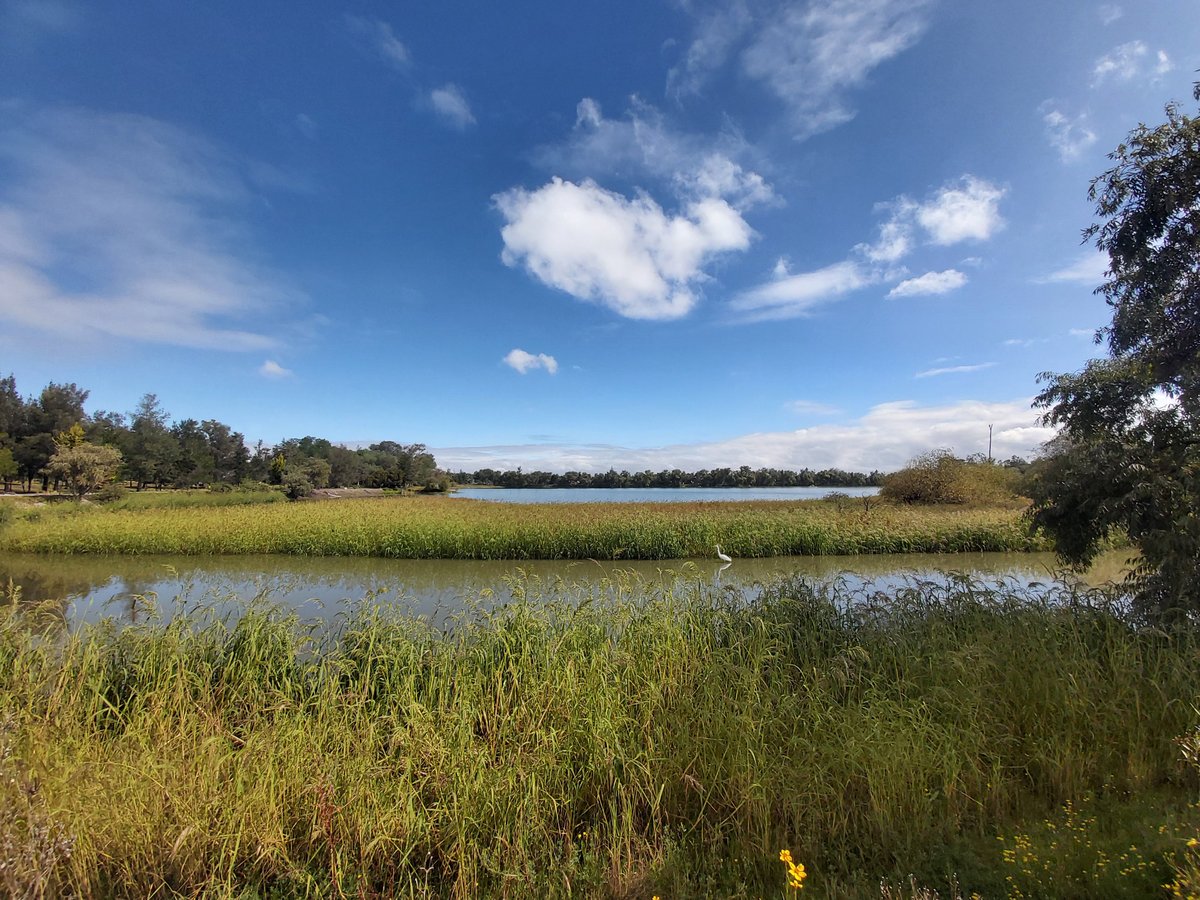
Once called La Presa del Muerto, this 48-hectare wetland shelters migratory white pelicans, holds protected status since 2009, and costs nothing to enter.
- Time needed
- 1–2 hours
- Entry
- Free
- Access
- Flat clay running track around the lake; some park areas have unpaved surfaces
- Best season
- Winter (November–February) for migratory white pelicans
Locals still call it La Presa del Muerto — the Dead Man's Reservoir. That grim nickname belongs to Parque Espejo de los Lirios, a 48-hectare wetland park in Cuautitlán Izcalli, México, where still water once hid the bodies of murdered landowners and now reflects migrating white pelicans against an open sky. The official name translates as Mirror of the Lilies, but the old one tells you more about what this place has survived.
The park sits at the intersection of Avenida El Jacal and Avenida Constitución, covering 487,000 square meters — an area the size of 68 football pitches carved out of Mexico City's northern sprawl. At its center, a 14-hectare artificial lake fed by a canal from the Presa de Guadalupe drops to depths beyond 2.5 meters.
A 2-kilometer clay running track circles the water, and the perimeter fills with basketball courts, football fields, cycling paths, and family palapas with grills. But the draw isn't the infrastructure. It's the unlikely survival of open water and wetland in a metropolitan zone of over 22 million people, and the birds that figured this out before the guidebooks did.
The park opens daily at 6 AM and closes at 6 PM. Entry is free. Pets are not allowed — a rule that, given the resident birdlife, makes sense.
What to see
-
The Lake and Its Pelicans
The 14-hectare lake at the park's center — deep enough at 2.5 meters to swallow a tall person standing upright — is the reason everything else exists. Fed by a canal from the Presa de Guadalupe, its still surface earned the 'mirror' in the park's name: on calm mornings, the reflection of the sky is sharp enough to dissolve the horizon line. From roughly November through March, migratory white pelicans use the lake as a winter refuge, banking low across the water in loose formations. Resident ducks and geese hold court year-round, indifferent to the seasonal spectacle overhead. -
The 2-Kilometre Clay Running Track
A flat, 2-kilometer loop of compacted clay circles the lake — soft enough on the knees to forgive you for yesterday's run and mercifully free of the concrete that punishes runners in most Mexican parks. The circuit is level, shaded in stretches by wetland vegetation, and keeps the water on one side the entire way around. Early mornings before 8 AM are the runner's window. By midday, the track belongs to families, cyclists on the adjacent ciclopista, and children on mechanical rides that clatter along the park's edges. -
Paseo Cultural Juan Pablo II
This cultural walkway, established in 2006, threads through the park and centers on a statue of Pope John Paul II — a choice that says something about the community's priorities in the years before conservation became the official narrative. The path is pleasant for a slow walk, lined with urban wetland plants typical of the Valley of Mexico. Its real interest is as a time capsule: the park was three years away from its protective decree, and the most permanent thing anyone thought to install was a monument to a pope. Nearby, the Izcalli Bus — a small tourist vehicle — runs a loop for those who'd rather ride than walk.
Plan your visit
- Getting There
- Take the Tren Suburbano to Lechería station, then catch a micro heading toward "Espejo de los Lirios" — ask the driver, they all know it. By car, the park sits at the intersection of Avenida El Jacal and Avenida Constitución, with paid parking lots on both streets. From central Mexico City, expect about 90 minutes by transit or 45–70 minutes driving, depending on traffic gods.
- Opening Hours
- As of 2026, the park opens daily from 6:00 AM to 6:00 PM — no seasonal variation, no rest days. The early opening rewards morning runners who get the 2 km clay track practically to themselves. Gates close firmly at six, so plan accordingly.
- Time Needed
- A lap around the lake on the running track plus some bird-watching takes about an hour. Families using the pool, cycling paths, playgrounds, and palapas should budget two to three hours. If you're here to photograph pelicans during migration season, you could lose an entire morning without noticing.
- Cost
- Entry is free — this is a municipal public park, not a ticketed attraction. Budget a small amount for parking on Avenida El Jacal or Constitución, and for extras like the Izcalli Bus ride, horse rides, and children's mechanical games inside the park. Phone for current pricing on activities: +52-55-5864-2500.
Photo Gallery

History
A Lake That Changed Its Name to Forget
Before Cuautitlán Izcalli existed as a municipality — it was formally created in 1973 — the body of water at its heart served as a cattle watering hole. No one built it for recreation or conservation. It was functional, rural, and largely ignored by anyone who didn't own livestock.
What happened between the ranching era and the park's current incarnation as a protected natural area involves murder, bureaucratic failure, and one politician's attempt to fix a promise that had rusted for sixteen years.
The turning point
The Sixteen-Year Broken Promise
On December 17, 2009, the Gaceta Municipal of Cuautitlán Izcalli published a decree that should have changed everything. The park was officially designated an Área Natural Protegida — a legally protected natural area — with prohibitions on land-use change and criminal penalties for violations. The decree was precise: 487,407.31 square meters of wetland, pinned to two named avenues, shielded by law.
Then nothing happened. The Plan de Manejo — the management plan required by law to give the decree teeth — was never written. For sixteen years, the park held protected status on paper while receiving no corresponding protection on the ground. Local media would later describe the situation as una promesa oxidada — a rusty promise.
On September 26, 2025, municipal president Daniel Serrano formally re-declared the park's protected status and announced a full rehabilitation program. The city council finally approved the long-overdue management plan. Serrano's announcement was, in effect, an admission: the 2009 decree had been ignored by every administration that followed it. Whether this attempt proves different remains the park's open question.
The Dead Man's Reservoir
Pelicans, a Pope, and an Unlikely Refuge
Tips for visitors
Leave Pets Home
Pets are not permitted inside the park — no exceptions. This is partly to protect the resident ducks, geese, and seasonal migratory birds that use the lake as refuge.Pelican Season
White pelicans migrate through between roughly November and February, using the 14-hectare lake as a stopover. Arrive before 9 AM for the best sightings — the birds feed early, and the still water earns its "mirror" name when morning light hits before the wind picks up.Runners' Track
The 2 km clay loop circling the lake is flat and forgiving on joints — a rarity in this part of the Estado de México. The park opens at 6 AM, and the pre-dawn crowd thins out by 7:30, leaving a quiet window before families arrive.The Mirror Shot
The lake's still surface reflects the sky almost perfectly in early morning, which is how it earned the name "Espejo" — mirror. For the cleanest reflection photos, shoot from the eastern shore before 8 AM, when foot traffic hasn't stirred the water's edge.Ask About the Name
Locals old enough to remember still call this place "La Presa del Muerto" — the Dead Man's Reservoir. Legend says ejido landowners were murdered and dumped in the water by those who wanted their land. The park's polished modern name papers over a darker story worth knowing.Pack Your Own Food
The park has palapas with grills specifically for family cookouts — bring charcoal, carne asada, and tortillas. Street food vendors cluster near the Avenida Constitución entrance, but options inside are limited to snack stands, so a self-catered lunch under the palapas is the move.
Frequently asked
Is Parque Espejo de los Lirios worth visiting?
Yes, especially if you're already in northern Estado de México — it's free, nearly 49 hectares (roughly 68 soccer fields), and genuinely peaceful for a municipal park. The 14-hectare lake is the draw: still water that reflects the sky and, in winter, attracts migratory white pelicans that locals describe as an emotional sight.
How long do you need at Parque Espejo de los Lirios?
One to two hours covers a full loop of the 2-kilometer clay track around the lake with time to watch the birds. Families with children tend to stay longer given the cycling paths, mechanical rides, horse rides, and basketball courts on site.
Can you bring dogs to Parque Espejo de los Lirios?
No — pets are not permitted. The restriction is consistent with the park's Área Natural Protegida status, which prohibits activities that disturb the wetland and its resident wildlife.
When do the pelicans arrive at Parque Espejo de los Lirios?
White pelicans have used the lake as a migratory refuge since at least February 2004. They typically arrive in winter months; checking the Gobierno de Izcalli Facebook page close to your visit is the most reliable way to confirm current sightings.
How do you get to Parque Espejo de los Lirios by public transport?
Take the Tren Suburbano to Lechería station, then catch a micro toward the park — ask the driver for "Espejo de los Lirios" — or take one toward the Palacio Municipal de Izcalli and a short taxi from there. The entrance is at Av. El Jacal and Av. Constitución.
Is Parque Espejo de los Lirios free to enter?
Entry to the park is free. Paid parking is available on Av. El Jacal and Av. Constitución for visitors arriving by car. Individual activities like horse rides and mechanical rides may carry their own fees, though these are not confirmed in official sources.
What is the history of Parque Espejo de los Lirios?
The lake was historically called "La Presa del Muerto" — The Dead Man's Reservoir — a name tied to oral accounts of land dispute murders, with bodies allegedly dumped in the water. The area became a public park in 1973 and was formally declared a protected natural area in December 2009, though the legally required management plan went unwritten for sixteen years until the city council finally approved it in late 2025.
What activities are available at Parque Espejo de los Lirios?
The park has a 2-kilometer clay running track, cycling paths including a children's circuit, basketball courts, football fields, a swimming pool, horse rides, family palapas with grills, and a small tourist bus called the Izcalli Bus. A cultural walkway — the Paseo Cultural Juan Pablo II, established in 2006 — runs through the grounds with a statue of Pope John Paul II.
Sources & attribution 10
- Wikipedia Español — Parque Espejo de los Lirios — Primary source: full history including 1973 delimitation, ANP 2009 decree, legend of La Presa del Muerto, lake measurements (14 ha, 2.5 m depth), pelican sightings since 2004, and 2025 rehabilitation.
- Municipio de Cuautitlán Izcalli — Sitio Oficial — Official municipal government site confirming the December 17, 2009 ANP declaration and the September 26, 2025 re-declaration and rehabilitation announcement by municipal president Daniel Serrano.
- endondecorrer.com — Parque Espejo de los Lirios — Practical visitor details: 2 km clay running track, daily hours (6 AM–6 PM), no-pets policy, parking locations, restroom availability.
- Trip.com — Parque Espejo de los Lirios — Visitor information: full address (Av. El Jacal y Av. Constitución, CP 54740), contact phone (+52-55-5864-2500), recommended visit duration of 1–2 hours.
- experiencia.edomex.gob.mx — Estado de México tourism portal independently confirming the 487,407 m² total park area figure.
- DossierIzcalli (Facebook) — Local news outlet documenting the 2025 rehabilitation and the 16-year gap between ANP decree and approved management plan; source of the quote 'El Espejo de los Lirios ya no será una promesa oxidada.'
- Gobierno de Izcalli — GobIzcalli (Facebook) — Municipal social media documenting migratory white pelican arrivals at the lake and the emotional visitor response.
- redescol.ilce.edu.mx — Source for the legend of La Presa del Muerto — oral history account of land dispute murders and the lake's original name.
- Corriente Alterna / UNAM (2023) — Academic-journalistic source cited in Wikipedia ES for the park's pre-modern use as a cattle watering hole and its formal 1973 conservation and delimitation.
- edomexinforma.com.mx — Source for the 2006 establishment of the Paseo Cultural Juan Pablo II walkway and statue inside the park.
Built from cited sources · see the method · How we make our guides →
More in Cuautitlán Izcalli Municipality.
1 places to discover — a few worth pairing.
Pick up where you left off
Saved and recently read places — kept on this device only.
Photo credits (1)
- Lago Espejo De Los Lirios (Lago de Los Lirios) — Rocío — CC BY-SA 4.0 (https://creativecommons.org/licenses/by-sa/4.0/) — Source: https://commons.wikimedia.org/wiki/File:Lago_Espejo_De_Los_Lirios_(Lago_de_Los_Lirios).jpg
Photos may have been resized or cropped.