
Historical Background
Origins and Early Development
The Galleria Nazionale di Parma’s heritage is closely linked with the Farnese family, whose art patronage from the Renaissance onward elevated Parma’s cultural status. The original Farnese collection, assembled in Rome and later transferred to Parma in the 17th century, was one of Italy’s most celebrated. This initial artistic wealth, however, was largely relocated to Naples in 1734 by Charles of Bourbon, leaving Parma’s ducal palaces temporarily depleted (art-facts.com, cultura.gov.it).
Parma’s cultural revival began with the arrival of Duke Philip of Bourbon and his wife, Louise Élisabeth of France, in 1748. Their reign saw the founding of the Ducal Academy of Fine Arts in 1752, which became a focal point for artistic education and innovation (cultura.gov.it). The Academy’s competitions, acquisitions, and student works formed the nucleus of the future museum collection.
The Ducal Academy and Transformation into a Public Museum
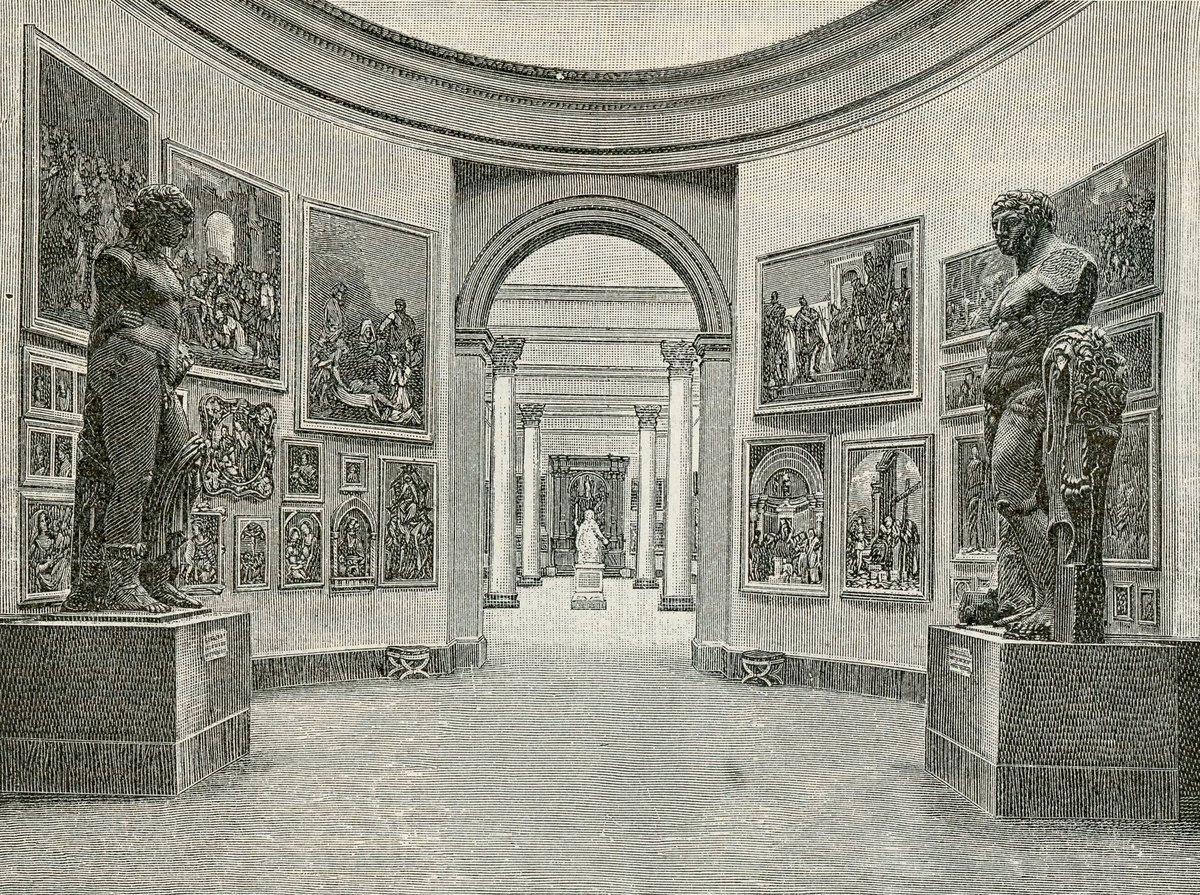
In the early 19th century, under the rule of Maria Luigia of Austria, the Academy’s collection was systematically organized as a public museum. Architect Nicola Bettoli and painter Paolo Toschi were instrumental in redesigning the gallery’s exhibition spaces, particularly to accommodate the return of significant works, such as Correggio’s altarpieces, previously seized by Napoleon (cultura.gov.it). The gallery was opened to the public, and its holdings continued to expand through acquisitions and donations in subsequent decades.
Artistic Highlights
Masterpieces and Notable Artists
The Galleria Nazionale di Parma boasts an extraordinary range of Italian and European artworks from the 12th to the 20th centuries, with a particular emphasis on the Renaissance and Baroque periods.
Key highlights include:
- Leonardo da Vinci’s “La Scapigliata” (“Head of a Woman”) An enigmatic, unfinished portrait demonstrating Leonardo’s mastery of sfumato (art-facts.com).
- Correggio Several masterpieces by Antonio Allegri da Correggio, such as “The Lamentation of Christ,” “Martyrdom of Four Saints,” and “Madonna and Child with Saints Jerome and Mary Magdalene,” showcase his pioneering use of light and dynamic compositions.
- Parmigianino Notable works include the “Mystic Marriage of Saint Catherine” and portraits that exemplify his elegant Mannerist style.
- Annibale Carracci The “Pietà with Saints Clare, Francis, and Mary Magdalene” is a highlight of the Bolognese School.
- Other Masters Canaletto’s Venetian views, works by Fra Angelico, Guercino, Anthony van Dyck, El Greco, and neoclassical sculptures by Antonio Canova are also featured (summerinitaly.com).
- Farnese Legacy Portraits and Roman antiquities from the Farnese collection reflect Parma’s aristocratic and political history.
Temporary exhibitions and thematic shows are regularly hosted, often including international loans (Galleria Nazionale di Parma).
Visitor Information
Opening Hours
- Tuesday–Sunday 8:30 AM to 7:30 PM (last admission 6:45 PM)
- Closed Mondays and select public holidays
- Note Check the official website for seasonal changes or special closures.
Tickets and Admission
- Standard ticket €16
- Reduced €8–14 (students, seniors, groups)
- Free Children under 18
- Group rate €14 per person (groups of 10–20)
- Purchase Online via the official site or on-site
- Advance booking is recommended during peak travel periods (italia.it).
Accessibility
- Wheelchair accessible with ramps and elevators; some areas may require assistance due to the building’s historic layout (whichmuseum.com).
- Contact staff in advance for mobility support.
Guided Tours and Education
- Guided tours (multiple languages) and audio guides are available; advance booking is advised.
- Educational workshops and programs are regularly offered for students and art lovers.
Facilities
- Restrooms and cloakroom available.
- No on-site café, but nearby restaurants and cafés in the city center.
- Gift shop options may be available within the Palazzo della Pilotta complex.
Photography
- Non-flash photography is generally permitted, except in restricted areas or certain temporary exhibitions.
Practical Tips and Nearby Attractions
Getting There
- Address Palazzo della Pilotta, Piazza della Pilotta, 5, Parma, Italy
- Transport 15-minute walk from Parma train station; central location makes it accessible by foot or public transport.
Recommended Visit Duration
- Allocate 1.5 to 2.5 hours for the gallery; more if including the Teatro Farnese or other Palazzo attractions.
Best Times to Visit
- Early afternoons are usually less crowded. Spring and autumn offer the most pleasant weather.
Language
- Most interpretive materials are in Italian; English guidance is available via tours or audio guides.
Nearby Highlights
- Teatro Farnese Stunning 17th-century wooden theater (admission included).
- Parma Cathedral & Baptistery Short walk from the gallery.
- National Archaeological Museum, Bodoni Museum, Palatine Library All within the Palazzo della Pilotta complex.
- Other Museums Pinacoteca G Stuard, Casa della Musica, and Casa del Suono (purelifepodcast.com).
Dining
- Excellent local trattorias and cafés are available nearby.
Frequently Asked Questions (FAQ)
Q: What are the opening hours for the Galleria Nazionale di Parma?
A: Tuesday–Sunday, 8:30 AM–7:30 PM (last entry 6:45 PM); closed Mondays.
Q: How much are tickets, and where can I buy them?
A: Standard tickets are €16, with discounts for eligible groups; buy online or at the entrance.
Q: Is the museum accessible for visitors with disabilities?
A: Yes, with some limitations due to the historic building. Contact ahead for assistance.
Q: Are guided tours available?
A: Yes, in multiple languages. Book in advance for preferred times.
Q: Can I take photos?
A: Photography without flash is generally allowed except in restricted areas.