
Medieval Origins and Early Development
Schlossplatz traces its roots back to the Middle Ages, when it served as the nucleus of Wiesbaden’s fortified settlement. Initially functioning as the city’s main marketplace, the square was closely linked to the original medieval castle of the Counts of Nassau, who were instrumental in shaping the region (hessenweb.de; geo.io). By the 13th century, following Wiesbaden’s town charter (1232), the area emerged as the city’s administrative and economic center.
The Nassau Dynasty and Stadtschloss
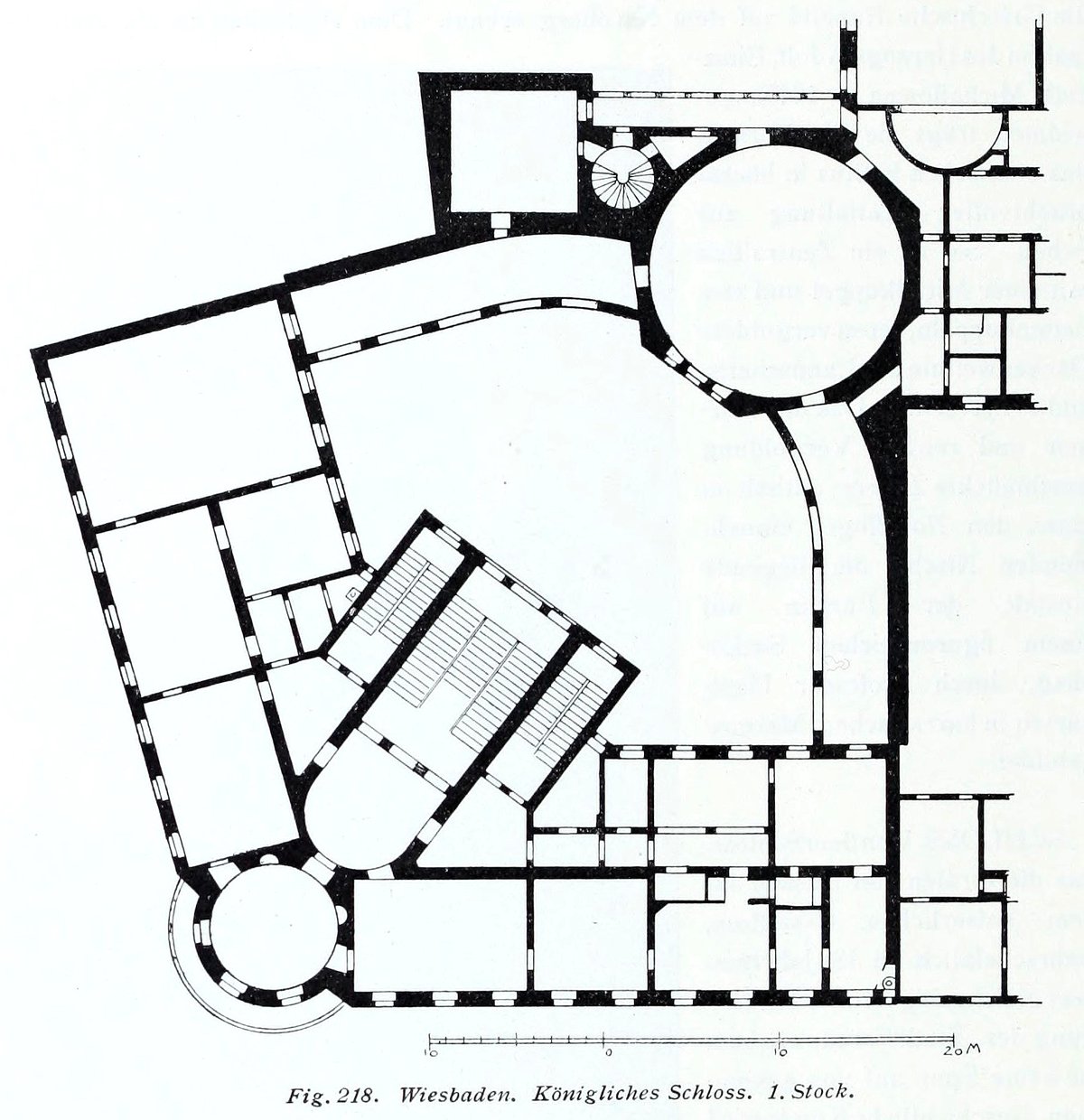
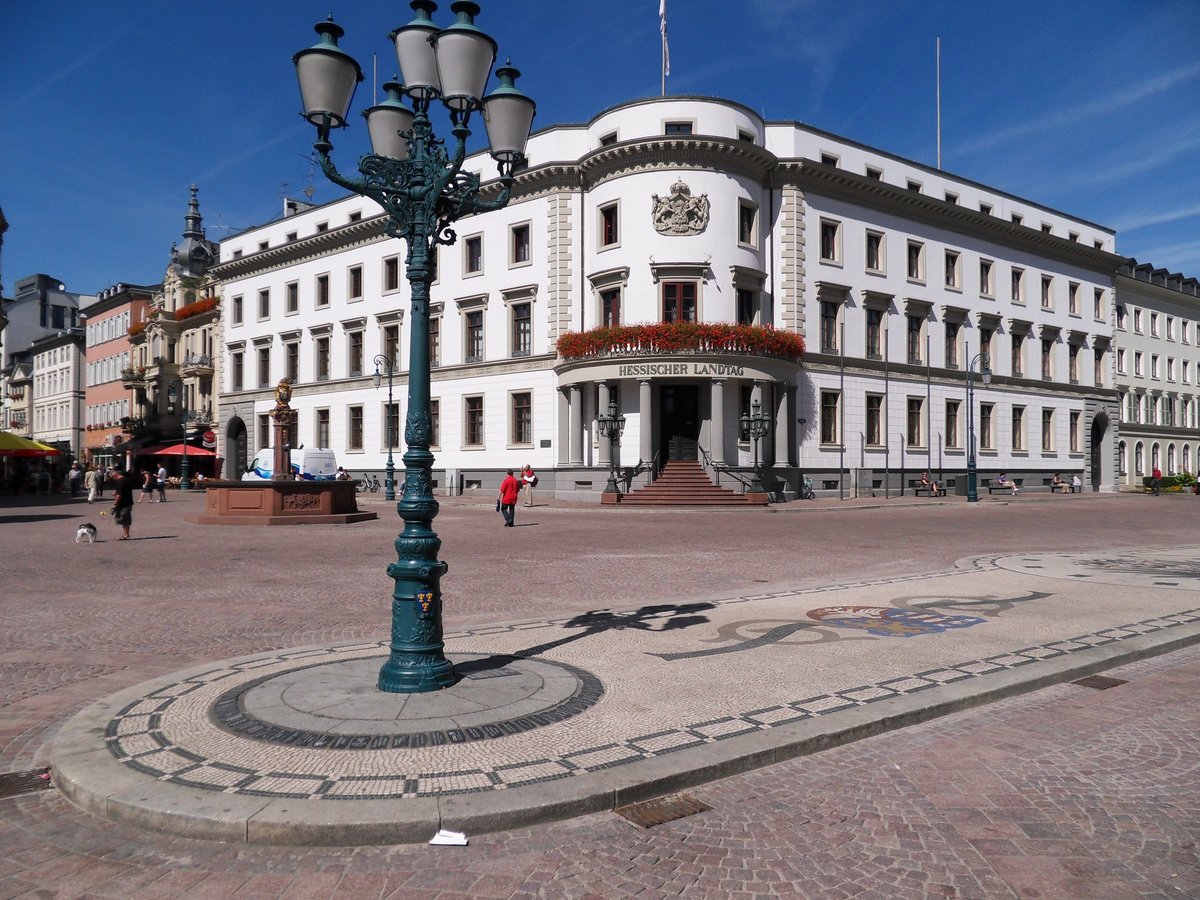
The 19th century brought transformative change as Wiesbaden became the capital of the Duchy of Nassau after 1815. Between 1837 and 1841, the neoclassical Stadtschloss—designed by Georg Moller—was constructed, replacing the medieval castle and becoming the ducal residence. This architectural landmark epitomized Wiesbaden’s rise as a fashionable spa city (germansights.com).
Prussian and Imperial Influence
In 1866, Prussia annexed the Duchy of Nassau, turning the Stadtschloss into a royal residence. Under Kaiser Wilhelm II, who made annual visits, Wiesbaden became a gathering place for European nobility, further elevating the city’s status (germansights.com).
Twentieth Century: War and Renewal
Wiesbaden largely escaped the destruction of World War II, allowing its historic core to remain intact. After the war, the Stadtschloss became the seat of the Hessian Landtag (State Parliament) in 1946, symbolizing the city’s transition to democratic governance (hessenweb.de).
Architectural Ensemble and Urban Significance
Schlossplatz is surrounded by a harmonious blend of architectural styles:
- Stadtschloss (City Palace) Neoclassical ducal residence, now the Hessian Parliament.
- Altes Rathaus (Old Town Hall) Built in 1610, the city’s oldest surviving building, reflecting the Renaissance era (Tripination).
- Neues Rathaus (New Town Hall) Renaissance Revival structure (1884–1887), featuring red sandstone and ornate gables.
- Marktkirche (Market Church) Neo-Gothic brick church completed in 1862, with a 98-meter central spire that dominates the skyline (Tripination).
- Marktbrunnen (Market Fountain) An 18th-century fountain, recalling the square’s original role as a market (geo.io).
This architectural ensemble forms a cohesive urban landscape, showcasing Wiesbaden’s evolution from a medieval market town to a modern state capital (hessenweb.de).
Civic and Cultural Life
Schlossplatz is not only a historical landmark but also a dynamic civic space. It regularly hosts:
- Sternschnuppenmarkt (Christmas Market) Festive lights, crafts, and culinary delights in winter (wiesbaden-lebt.de).
- Rheingauer Weinwoche (Wine Festival) Celebrating the region’s renowned Riesling wines in summer (triplyzer.com).
- Internationales Sommerfest A multicultural festival with music, dance, and cuisine from around the world (wiesbaden-lebt.de).
- Farmers’ Markets Held on Wednesdays and Saturdays, offering fresh regional products and local specialties (triplyzer.com).
The square is also a focal point for political events, public demonstrations, and civic celebrations, underscoring its role as the heart of Wiesbaden’s community (de.wikipedia.org).
Visiting Information
Opening Hours
- Schlossplatz Open public space, accessible 24/7.
- Stadtschloss (City Palace) Not generally open for drop-in visits; guided tours are occasionally available (check official tourism site for schedules).
- Marktkirche Open daily from 9:00 AM to 6:00 PM.
- Neues Rathaus Administrative offices with public access during business hours; the Ratskeller restaurant is open daily.
Tickets
- No tickets required to enter Schlossplatz or view exterior landmarks.
- Guided tours of the Stadtschloss and special exhibitions may require advance booking and a nominal fee or donation.
Accessibility
- Physical Accessibility The square is pedestrian-friendly, with smooth, barrier-free routes and ramps. Ongoing renovations in 2025 will further improve accessibility (merkurist.de; faz.net).
- Public Transport Easily reached from Wiesbaden Hauptbahnhof by foot (15 minutes) or short bus/tram ride. Several bus lines stop nearby (wiesbaden.de).
- Parking Car parks such as Luisenplatz offer ample parking, including options with free or reduced rates during market times.
Facilities
- Restrooms Available near Rathaus and local cafés.
- Dining Numerous cafés, bakeries, and the Andechser im Ratskeller restaurant offer refreshments and local cuisine (zimminaroundtheworld.com).
- Tourist Information Offices near Schlossplatz provide maps, multilingual assistance, and event details (en.wikivoyage.org).
Key Sights and Activities
- Stadtschloss (Hessian State Parliament) Occasional tours offer insights into architecture and politics (triplyzer.com).
- Marktkirche Notable for its neo-Gothic architecture and atmospheric concerts (zimminaroundtheworld.com).
- Weekly Farmers’ Market Experience local flavors every Wednesday and Saturday (triplyzer.com).
- Photo Opportunities The Marktkirche, Stadtschloss, and Marktbrunnen are ideal subjects, especially in the morning or during evening illumination.
Travel Tips
- Best Times to Visit Spring through early autumn for pleasant weather; December for the Christmas market. Market or festival days offer a lively atmosphere.
- Accessibility The square is fully accessible, with ongoing improvements enhancing inclusivity.
- Crowds Arrive early during major events for a more relaxed experience.
- Language English is widely understood in tourist areas; most signage is in German.
- Nearby Attractions Combine your visit with the Kurhaus, Bowling Green, Wilhelmstraße, and Museum Wiesbaden (triplyzer.com).
Ongoing Renovations and Modernization
In 2025, a €5.5 million renovation project is underway to increase green spaces, improve infrastructure, and enhance accessibility. The square remains open during these upgrades, which are designed to ensure Schlossplatz’s continued role as a welcoming and vibrant public space (merkurist.de; faz.net).
Frequently Asked Questions (FAQ)
Q: Is there an entrance fee to visit Schlossplatz?
A: No, Schlossplatz is a public square with free access.
Q: What are the visiting hours for the Marktkirche?
A: Open daily from 9:00 AM to 6:00 PM.
Q: Are guided tours available?
A: Guided tours of the Stadtschloss are occasionally offered; check the official tourism website for schedules.
Q: How do I get to Schlossplatz from the train station?
A: It is a 15-minute walk or a short ride by bus/tram from Wiesbaden Hauptbahnhof.
Q: Is Schlossplatz accessible for wheelchair users?
A: Yes, the square is barrier-free, with further improvements ongoing.
Summary of Key Points and Visitor Tips
- Schlossplatz is the historic and civic heart of Wiesbaden, open 24/7 and free to visit.
- The square features major architectural landmarks: Stadtschloss, Old and New Town Halls, Marktkirche, and Marktbrunnen.
- Regular events include markets, festivals, and guided tours.
- The site is fully accessible and centrally located, with excellent transport and parking.
- Ongoing modernization in 2025 will further enhance the visitor experience.
- For the most current information, check the official Wiesbaden tourism site and event calendar.