Medieval Origins and Founding
The Palais de Justice de Rouen was constructed between 1499 and 1508 to serve as the seat of the Échiquier de Normandie, the region’s highest court (Wikipedia). Its location in the city’s old Jewish quarter is historically significant—the site was built atop the remains of Rouen’s medieval Jewish community, destroyed in the 14th century. Beneath the Palais lies the Maison Sublime, a 12th-century Jewish monument and one of France’s oldest, now open for guided visits (Maison Sublime).
Evolution of Judicial Role
In 1515, King Francis I elevated the Échiquier to the Parliament of Normandy, making the Palais the central judicial institution across the region (Live the World). The building was not only a court but also a gathering place for merchants and civic leaders. Over the centuries, it witnessed pivotal events, including the condemnation and trial of Joan of Arc and significant political proceedings during the Ancien Régime and the French Revolution. The latter period saw the dissolution of the Parliament and the transformation of the Palais into Rouen’s main courthouse—a role it still fulfills today.
World War II and Restoration
During the Allied liberation in 1944, the Palais suffered extensive damage from aerial bombings. The central building and parts of the surrounding area were severely affected, with scars from bullets and shrapnel still visible on the exterior—especially along rue Jeanne-d’Arc (Nomads Travel Guide). Restoration efforts in the postwar decades faithfully reconstructed damaged sections, blending historical accuracy with modern preservation. Today, the Palais stands as both a functioning courthouse and a powerful symbol of Rouen’s resilience (Rouen à la folie).
Architectural Highlights
Exterior Features
The Palais de Justice is renowned as the largest Gothic civic building in France. Its flamboyant Gothic façade is adorned with intricate stonework, pointed arches, flamboyant spires, and sculpted gargoyles (The Crazy Tourist). The main façade, visible from the Cour d’Honneur, is especially ornate, while the façades along rue Jeanne-d’Arc and rue aux Juifs feature romantic neo-Gothic elements and preserved wartime scars.
Interior Spaces
- Salle des Procureurs Originally the merchants’ hall, this grand vaulted chamber is a highlight of the interior, showcasing the city’s medieval wealth and craftsmanship.
- Neo-Gothic Staircase Added in 1904 by architect Paul Selmersheim, it features vertical elegance reminiscent of Champagne Gothic.
Maison Sublime: Jewish Heritage Site
Beneath the eastern staircase lies the Maison Sublime, a Romanesque stone structure dating from the 12th century. Believed to have been a rabbinical school or synagogue, it is now accessible via guided tours, offering a rare glimpse into medieval Jewish life in Normandy (Lonely Planet).
Visiting Information
Visiting Hours
- Exterior Viewing The Palais’ exterior can be viewed at any time, free of charge.
- Guided Tours (Interior Access)
- Tuesdays: 2:00 PM – 5:00 PM
- Last Friday of each month: 10:00 AM – 12:00 PM
Hours may vary during holidays and special events; always consult the Rouen Tourist Office for updates.
Ticket Prices and Booking
- Exterior Free to view.
- Guided Tours Approximately €7 per person; tours last about 2 hours and include architectural, historical, and judicial insights.
Advance booking is highly recommended via the Rouen Tourist Office.
Accessibility
- Physical Access The area around the Palais is paved with cobblestones, which may be challenging for those with mobility impairments.
- Interior Access Some parts are accessible, but due to the historic nature, not all areas can accommodate wheelchairs.
- Arrangements Contact the tourist office in advance to discuss specific needs.
How to Get There
- By Public Transport
- Nearest tram stop: Palais de Justice – Gisèle Halimi (Line T1)
- Multiple bus routes serve the area
- By Foot Located in the city center, a short walk from Rouen Cathedral and Gros Horloge
- By Car Limited parking nearby; use public transport or walk when possible (Normandie Lovers)
Visitor Experience
Guided Tours and Special Events
Guided tours unlock access to the Palais’ interior and the Maison Sublime, led by knowledgeable guides. The Rouen tourist office also organizes occasional exhibitions and cultural events—check schedules and book tours ahead, especially during peak seasons.
Best Times to Visit
- Spring and Early Autumn Pleasant weather and fewer crowds
- Peak Hours Busiest between 11:00 AM and 12:00 PM; visit early or late in the day for a quieter experience
Photography Tips
- Exterior Particularly beautiful in early morning or late afternoon light
- Interior Photography policies vary; generally not allowed inside courtrooms to respect proceedings (sainte-chapelle.co)
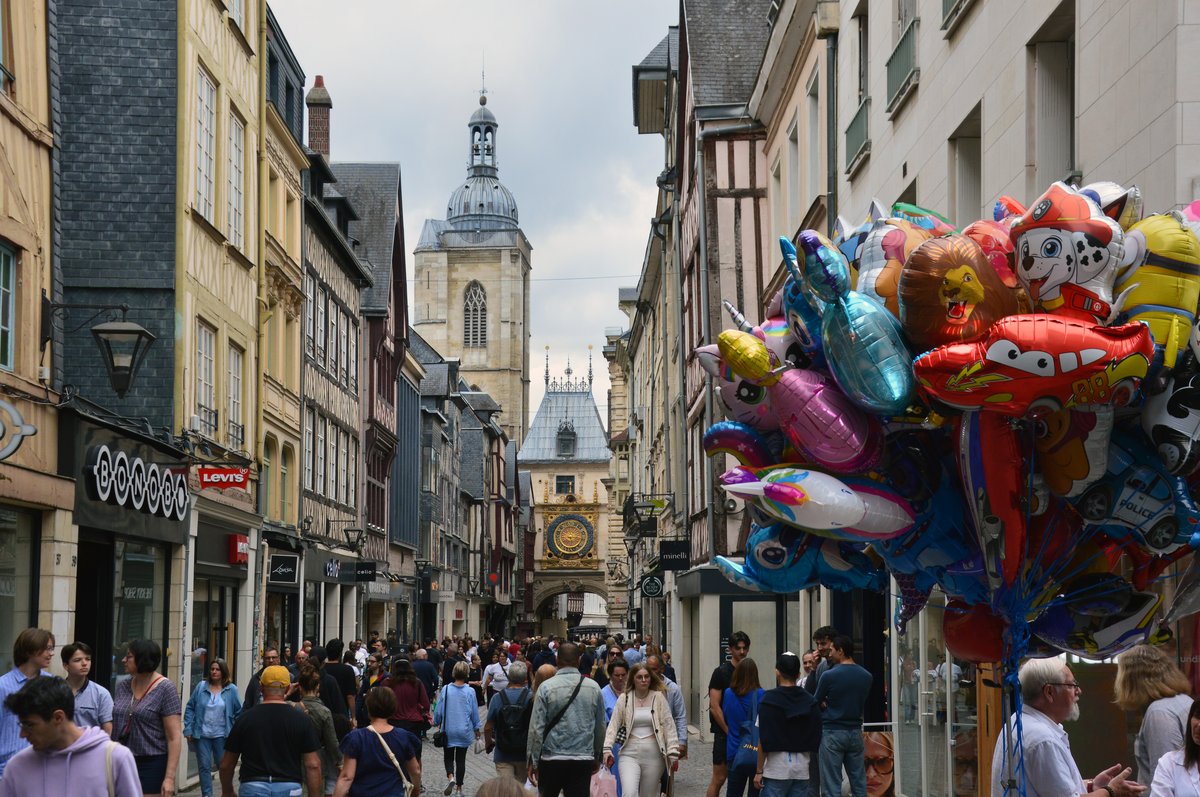
- Surroundings The surrounding medieval streets and timber-framed houses offer excellent photo opportunities
Nearby Attractions
- Rouen Cathedral
- Gros Horloge
- Joan of Arc Museum
- Musée des Beaux-Arts de Rouen
- Hôtel de Bourgtheroulde
All are within easy walking distance and can be combined for a full day of historical exploration (Triphobo).
Practical Visitor Tips
- Weather Rouen has frequent rain—bring an umbrella or raincoat (Normandie Lovers)
- Rouen Pass Consider for discounts on museums, tours, and transport
- Food & Rest Numerous cafés and restaurants are nearby
- Accommodation Stay in the historic center for charm and proximity to sites
Frequently Asked Questions (FAQ)
Q: What are the Palais de Justice de Rouen visiting hours?
A: The exterior is accessible daily. Guided interior tours are available on Tuesdays (2–5 PM) and the last Friday of each month (10 AM–12 PM). Check local sources for updates.
Q: Are tickets required to visit?
A: Exterior viewing is free. Tickets are required for guided tours—book in advance.
Q: Is the Palais de Justice wheelchair accessible?
A: The exterior is accessible, but cobblestones can be challenging. Interior access is limited; contact the tourist office for details.
Q: Can I take photos inside?
A: Exterior photography is welcome. Interior photography, especially inside courtrooms, is generally not permitted.
Q: Are guided tours available?
A: Yes, on select days. Advance booking via the tourist office is recommended.
Q: What other historical sites are nearby?
A: Notable sites include Rouen Cathedral, Gros Horloge, Musée des Beaux-Arts de Rouen, and Hôtel de Bourgtheroulde.