


Place
Rouen
France Updated Oct 2026
The bells and river traffic share the same damp air in Rouen, France, where a Gothic cathedral rises above leaning timber houses. Claude Monet painted Notre-Dame more than 30 times, chasing a façade that could shift from pale gold to bruised gray with the light. The surprise is how much of the old center still feels lived in, not staged.
 Photo: Edoardo Colombo / Pexels
- Attractions
- 12
- Audio
- 8 h 12 min
- Trip length
- 2–3 days
- Best season
- Late spring to early autumn (May–September)
Why Rouen
Built from cited sources · see the method · How we make our guides →
Rouen rewards looking up, then turning into the next lane. The mechanism inside the Gros-Horloge is generally dated to 1389, while Saint-Maclou’s carved porch and the death-dance carvings at Aître Saint-Maclou put the city’s medieval preoccupations right at street level.
The beauty carries a harder history. Joan of Arc was condemned in the archbishop’s palace in 1431 and burned at Place du Vieux-Marché on May 30; the modern church there holds 16th-century stained glass rescued from a church destroyed in wartime bombing.
Rouen’s past is not sealed behind glass; it reaches the table, too. Canard à la rouennaise is finished with a silver duck press, while market stalls offer Norman cheeses, butter, cider, and seafood—a reminder that this is a working city, not a medieval set.
A cathedral made for changing light
Rouen’s Gothic cathedral held Claude Monet’s attention for more than 30 canvases, each studying the façade under different light. In summer, projections turn that same west front into the setting for the Cathédrale de Lumière show.Joan of Arc, in the rooms where history happened
At the Historial Jeanne d’Arc, digital projections tell the story inside the Archbishop’s Palace, where Joan was condemned in 1431 and her case reopened in 1456. The Place du Vieux-Marché, where she was executed, lies a short walk away.Timber, stone and the Dance of Death
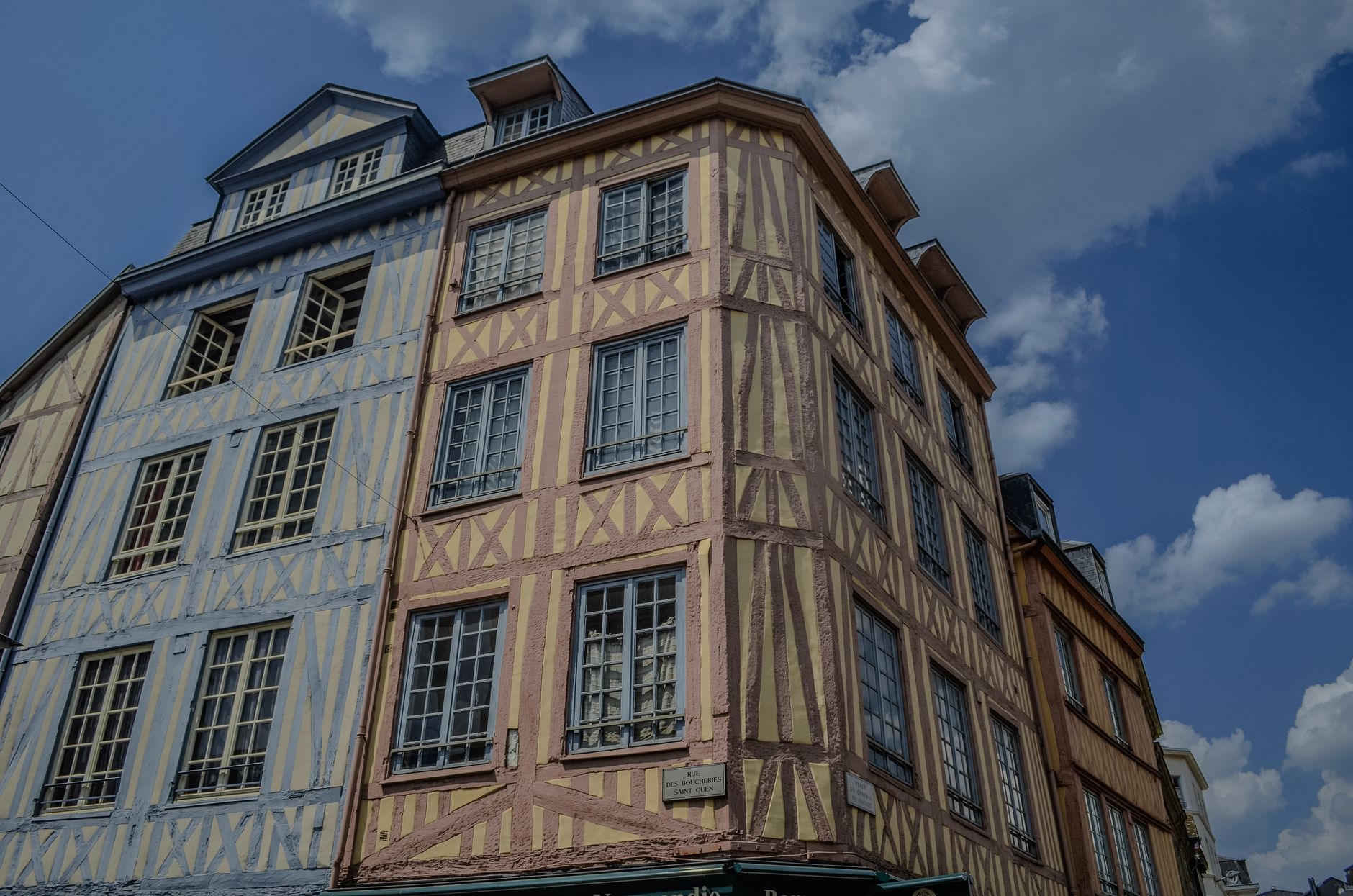
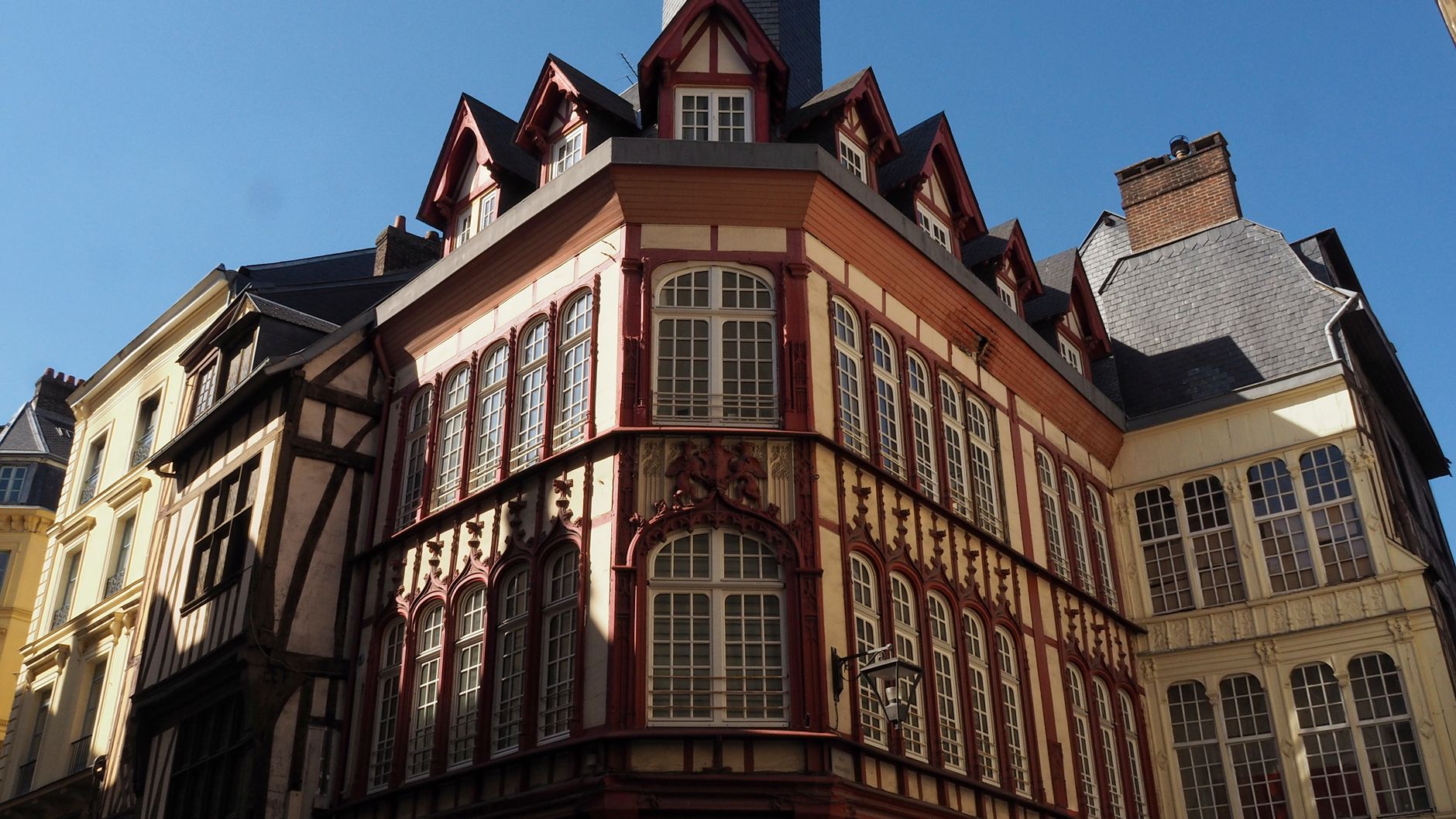
Half-timbered houses crowd Rouen’s old lanes, but the Aître Saint-Maclou asks you to look closer: its 16th-century galleries bear carvings of skulls, spades and the Dance of Death. The courtyard began as an ossuary after the Black Death.The city from Côte Sainte-Catherine
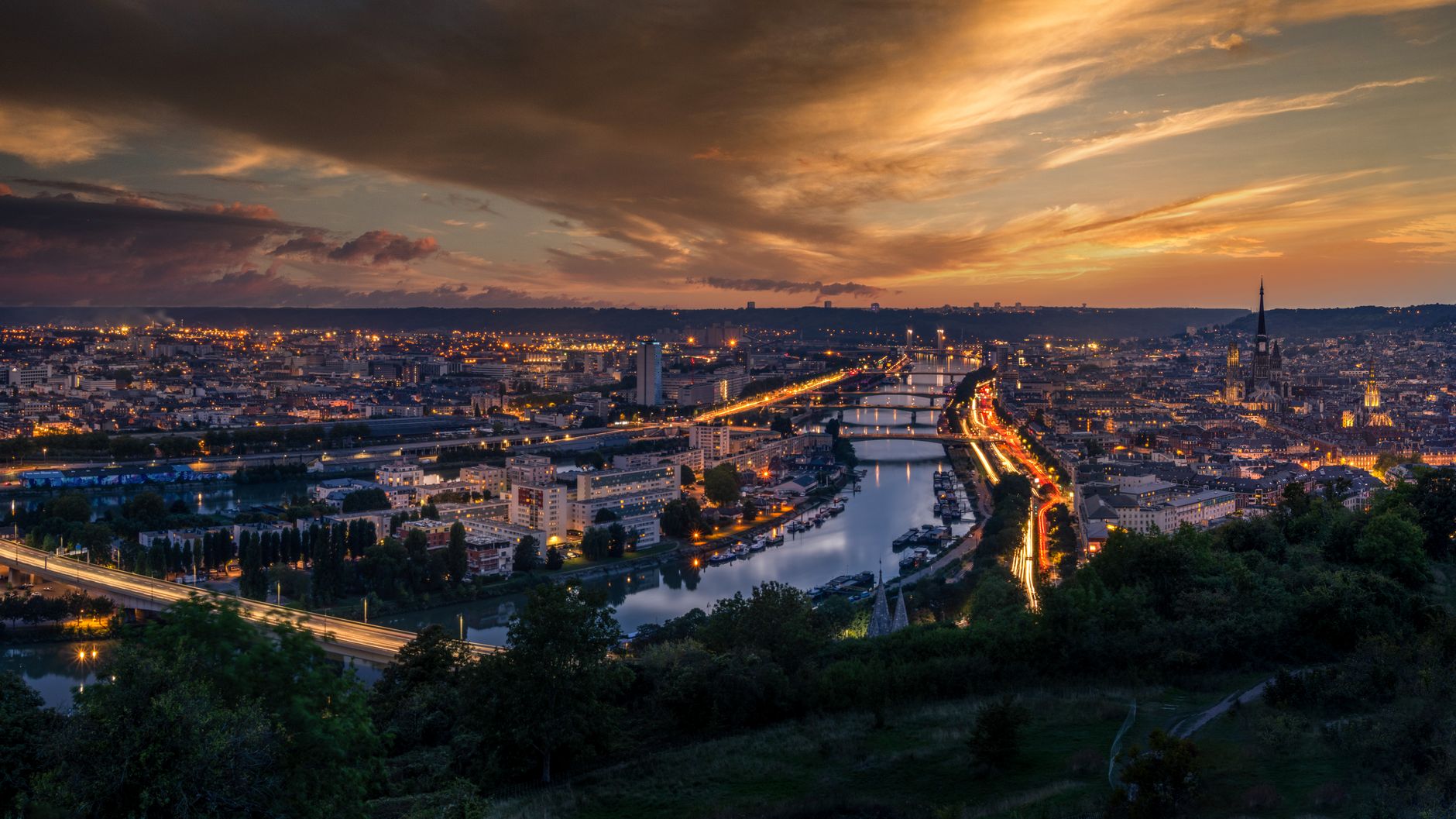
Climb 525 steps to the 140-metre hill for the view that explains Rouen’s shape: the Seine bends below, with the cathedral and abbey spires rising over the rooftops. Claude Monet painted the panorama in 1892.
Places to Visit
Not every monument, just the ones we'd walk you past ourselves.
-
Place Du Vieux-Marché Nestled in the heart of Rouen’s historic old town, Place du Vieux-Marché stands as a captivating blend of medieval heritage, cultural vibrancy, and poignant…

-
Jardin Des Plantes De Rouen Nestled in the heart of Rouen, the Jardin des Plantes de Rouen is a distinguished botanical garden and cultural landmark that seamlessly blends over three…

-
Rouen Opera House Nestled in the heart of Normandy’s historic city of Rouen, the Opéra de Rouen Normandie—also known as the Théâtre des Arts—stands as a vibrant emblem of…

-
Church of Saint-Maclou Nestled in the heart of Rouen’s historic district, the Church of Saint-Maclou stands as a breathtaking monument to Flamboyant Gothic architecture and the…

-
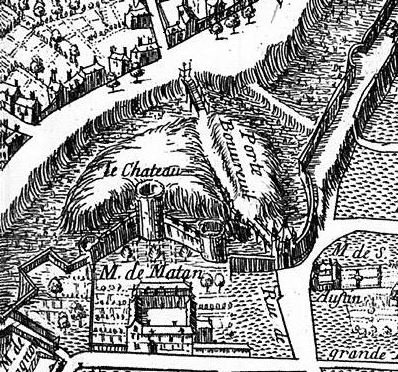
Rouen Castle Rouen Castle, known locally as Château de Rouen or Château Bouvreuil, stands as an iconic fortress perched on Bouvreuil Hill overlooking the historic city of…
-
Monument to Napoléon Ier Situated prominently in the heart of Rouen, France, the Monument To Napoléon Ier is a distinguished historical and artistic landmark that offers visitors an…

- Rouen Cathedral Rouen Cathedral, officially known as Notre-Dame Cathedral of Rouen, stands as a majestic emblem of Norman heritage and French Gothic architecture.
- Cimetière Monumental De Rouen The Cimetière Monumental de Rouen stands as one of the city of Rouen’s most historically and culturally significant landmarks, offering visitors a profound…
- Maritime, Fluvial and Harbor Museum of Rouen Situated on the banks of the Seine River in Normandy, the Maritime, Fluvial and Harbor Museum of Rouen offers a unique and immersive window into the city’s…
Neighborhoods
Where to wander, by quarter — each with its own rhythm.
Cathedral and Gros-Horloge
The old center’s grandest street runs beneath the astronomical clock of the Gros-Horloge toward Notre-Dame Cathedral. Duck into the lanes nearby for half-timbered façades and quieter views of the cathedral’s carved stonework.Place du Vieux-Marché
This lively square is both a food-market stop and the site where Joan of Arc was executed. The sweeping roof of the modern church shelters stained glass saved from the bombed Church of Saint-Vincent.Saint-Maclou and Rue Eau-de-Robec
In the former dyers’ quarter, half-timbered houses lean above the open channel of the Robec brook. Saint-Maclou’s Flamboyant Gothic porch and the macabre carvings at Aître Saint-Maclou reward a slow walk through the side streets.Place Saint-Marc
Rouen’s largest open-air market fills this square on market days, with local produce, cheeses, seafood, and Sunday flea-market stalls. The cafés along Rue Armand-Carrel make a good perch for watching the morning trade.The Seine quays
Converted dockside hangars on the river host restaurants and seasonal bars, a more modern counterpoint to the old center. Walk the quays for open river views and a sense of Rouen’s life as a port.Rive Gauche and Saint-Sever
Across the river, broad lawns at Prairie Saint-Sever and the glasshouses of the Jardin des Plantes offer a quieter change of pace. Le 106, a contemporary music venue in a converted warehouse, brings evening crowds to the docks.
Plan your trip
Before you go
- Getting There
- Rouen Vallée de Seine (URO) has no regular commercial passenger flights; the usual gateways are Paris Charles de Gaulle (CDG), Paris-Orly (ORY) and Paris-Beauvais (BVA). The main station is Gare de Rouen-Rive-Droite, with trains from Paris Gare Saint-Lazare; by road, the A13 links Paris and Caen, the A28 heads toward Le Mans and Abbeville, and the A150 connects toward Yvetot and the A29.
- Getting Around
- Réseau Astuce runs the Métro, a light-rail system with two southern branches, plus four TEOR bus rapid-transit lines (T1–T4) and local buses; a single journey costs €1.80 in 2026 and is valid for one hour of transfers. Transit is free on Saturdays, while the Rouen Pass offers 24-, 48- and 72-hour options with transport included; LOVÉLO bike-share has stations across the city, with the first 30 minutes of each ride free.
- Climate & Best Time
- Expect spring days around 11–18°C, summer around 21–25°C, autumn around 10–20°C and winter highs near 7–10°C, with cool nights in every season. Rain falls year-round, with wetter spells often from October to December; mid-May to mid-September is the busier period, while May, June and September balance milder weather with fewer peak-season crowds.
- Language & Currency
- French is the local language and the currency is the euro (€); starting with “Bonjour” before a request is appreciated in shops and cafés. Cards are widely accepted, and restaurant bills include service, so a tip is optional—rounding up or leaving a little change is enough.
Rouen, Where Empires Meet the Seine
From Celtic river settlement to a city rebuilt by war
- c. 100 BCE
Before Rome, Ratumacos
Before Roman rule, the Veliocasses lived along this bend of the Seine, where river traffic connected inland settlements to the coast. Most scholars trace the name Ratumacos to their settlement, though its earliest boundaries remain uncertain.
- c. 50 BCE
Rotomagus Takes Shape
Roman rule turned Ratumacos into Rotomagus, a trading city whose riverfront linked northern Gaul with the wider empire. By the late third century, it had become the administrative capital of Gallia Lugdunensis II, with public baths and an amphitheatre marking its new status.
- 841
Viking Raiders Sack Rouen
In May, Viking ships swept up the Seine and sacked Rouen, damaging its early church buildings and disrupting life along the river. The attack exposed how easily the city’s main artery could carry danger as well as trade.
- c. 860
Rollo, Ruler on the Seine
Rollo’s birth date is uncertain, but he emerged as the Viking leader whose power would be anchored at Rouen. His settlement along the lower Seine became the starting point for a new political order in Normandy.
- 911
Normandy Takes Its First Form
After years of raids, King Charles the Simple reached an agreement with Rollo, granting him lands around Rouen in return for loyalty and defense of the Seine. Rouen became the heart of the new Norman territory, where Scandinavian and Frankish customs began to meet.
- c. 1028
William’s Norman Capital
Born around 1028, William grew up to rule Normandy from a duchy whose political and commercial center was Rouen. After conquering England in 1066, he still drew on the city’s administration and wealth; he died at Rouen’s Priory of Saint-Gervais in 1087.
Show the full timeline (30 moments)
- 1150
A Charter for the City
Rouen received a communal charter that gave its citizens greater control over local government and river trade. In the same century, the city’s Jewish community built a renowned scholarly center, a reminder that Rouen’s markets carried ideas as well as goods.
- 1200
Fire Clears the Cathedral
A major fire destroyed much of Rouen’s Romanesque cathedral complex. The rebuilding that followed began the Gothic church whose carved stone and soaring vaults still dominate the city center.
- 1204
The French Crown Takes Rouen
Philip II Augustus captured Rouen after a siege, ending Norman independence and bringing the duchy under the French crown. The king demolished the ducal castle and built a new stronghold, the Château de Rouen, on the city’s heights.
- 1306
The Jewish Community Expelled
Philip IV ordered the expulsion of Rouen’s Jewish residents and confiscation of their property. A community that had helped shape the city’s commercial and intellectual life was forced to leave by royal decree.
- 1348–1349
The Black Death Reaches Rouen
The plague struck a city crowded with merchants, craftspeople, and sailors arriving by river. Death emptied households and workshops, leaving Rouen to reckon with the human cost of its position on busy trade routes.
- 1382–1389
Revolt and a Clock’s First Ticks
In 1382, an anti-tax uprising called the Harelle shook royal authority and cost Rouen some of its civic freedoms. Seven years later, a new clock mechanism began marking time above the streets, the working heart of what became the Gros-Horloge.
- 1418–1419
A City Starved into Surrender
Henry V’s English army surrounded Rouen for six months, cutting off supplies to a population of roughly 70,000. The city surrendered on January 19, 1419, after hunger had made resistance untenable.
- 1430–1431
Joan of Arc Faces Rouen
Captured Joan of Arc was brought to Rouen in December 1430 and tried in the archbishop’s palace under English rule. On May 30, 1431, she was burned at the stake in Place du Vieux-Marché, with the smoke visible across the city’s rooftops.
- 1449
French Rule Returns
French forces under Charles VII retook Rouen after nearly three decades of English occupation. The royal entry restored French rule to Normandy and changed the city’s political allegiance once more.
- 1456
Joan’s Conviction Overturned
A new court convened in Rouen’s archiepiscopal palace reviewed Joan of Arc’s trial and annulled the conviction against her. The reversal came 25 years after her execution, in the same city that had witnessed it.
- 1499
A Palace for Normandy’s Courts
Work began on the Parlement de Normandie, now the Palais de Justice, as Rouen entered a period of architectural ambition. Its intricate Flamboyant Gothic stonework made royal law visible in the heart of the city.
- 1562
The Wars of Religion Reach Rouen
Huguenot forces seized Rouen, and conflict damaged the city’s Catholic churches and religious images. Royal Catholic troops recaptured it in October after a siege that brought France’s religious divisions into its streets.
- 1606
Pierre Corneille Is Born
Pierre Corneille was born in Rouen, where he studied law and began his career before becoming one of France’s leading tragedians. The city’s streets and theaters belonged to his early world, even after his plays carried his name far beyond Normandy.
- 1790
Rouen Becomes a Prefecture
The French Revolution reorganized the country into departments, and Rouen became the prefecture of Seine-Inférieure. The change placed the city at the head of a new administrative map, later renamed Seine-Maritime.
- 1821
Flaubert’s Rouen Beginnings
Gustave Flaubert was born at Rouen’s Hôtel-Dieu, where his father worked as chief surgeon. He grew up in the city and studied at the Collège Royal, absorbing the Normandy settings and sharp social contrasts that would surface in his fiction.
- 1843
The Railway Arrives from Paris
The new Paris–Rouen railway opened in May, shrinking the journey between the capital and the Seine port. Faster movement of people and goods fed Rouen’s textile mills, workshops, and river trade.
- 1876
An Iron Spire Rewrites the Skyline
A cast-iron lantern spire was completed atop Rouen Cathedral, lifting it to 151 metres. For a brief period, the cathedral claimed the title of the world’s tallest building, its dark ironwork rising above the city’s slate roofs.
- 1892–1894
Monet Paints the Cathedral
Claude Monet set up across from the cathedral and painted its western façade in more than 30 canvases. He returned to the same stone under changing weather and light, showing how an old building could seem to alter from hour to hour.
- June 1940
Fire Devours the Old Quarters
As French forces demolished bridges during the German advance, fires spread through Rouen and burned for several days. Timbered neighborhoods between the river and cathedral were lost, leaving familiar streets as blackened walls and rubble.
- May–August 1944
Red Week, Then Liberation
Allied bombing during Rouen’s Red Week, from May 30 to June 5, damaged the cathedral and Palais de Justice and tore through the historic center. Canadian and Free French forces liberated the city on August 30, but the cost was written across its streets.
- 1945–1960s
Rebuilding the Riverfront
Architect Jean Gréber oversaw postwar reconstruction of the quays, bridges, and riverfront façades. Rouen repaired what it could and rebuilt what had vanished, restoring historic streets beside new structures shaped by the needs of a modern port.
- 1979
A New Church for Joan
Louis Arretche’s Église Sainte-Jeanne-d’Arc opened on Place du Vieux-Marché, close to the site of Joan’s execution. Its modern roofline shelters Renaissance stained-glass windows saved from the church of Saint-Vincent, destroyed in the war.
- 1989
Tall Ships Fill the Seine
Rouen launched the Voiles de la Liberté for the bicentennial of the French Revolution, bringing tall ships to its quays. The gathering became the Armada, an international event that gives the working river a very different kind of crowd.
- 2015–2016
History Finds New Bearings
The Historial Jeanne d’Arc opened in the archiepiscopal palace, the building where her trial had taken place, using immersive media to revisit the record and its afterlife. In 2016, the reunification of Upper and Lower Normandy made Rouen the administrative prefecture of the restored region.
Who lived here
-
French military figure · c. 1412–1431
Joan of Arc
Tried and executed here
In 1431, Joan of Arc faced trial in Rouen’s Archbishop’s Palace and was burned at the stake in Place du Vieux-Marché. The city now holds both the rooms of her trial and the site of her execution; she might find the distance between those two memorials telling.
-
Painter · 1840–1926
Claude Monet
Painted Rouen Cathedral here, 1892–1894
Monet returned to Rouen’s cathedral façade again and again, painting it under changing light from a rented room across the square. He might recognize the same shifting stone today, though crowds now share the view he once studied alone.
-
Novelist · 1821–1880
Gustave Flaubert
Born here
Flaubert was born in Rouen’s Hôtel-Dieu, where his father worked as a surgeon; the former hospital now houses a museum devoted to the writer and the history of medicine. He might have appreciated how his birthplace still puts the city’s literary life beside its clinical past.
-
Playwright · 1606–1684
Pierre Corneille
Born here
Corneille was born in Rouen in 1606, in a city whose courts and public squares could have served as a stage for his sharp-eyed dramas. Today, his birthplace is a museum; he might enjoy the irony of visitors pausing there before continuing through streets that still feel theatrical.
Where to Eat
Where locals actually book dinner — not the tourist menus.
Insider tips
Small things that change how the city treats you.
Stick To Lit Streets
Around Gare de Rouen-Rive-Droite late at night, use Rue Jeanne d’Arc rather than quieter side streets. On the Seine, stay to the renovated, well-lit quays after dark.Greet Before Asking
Say “Bonjour Madame” or “Bonjour Monsieur” when entering a shop or starting a conversation; use “Bonsoir” in the evening. A greeting before a request is an everyday courtesy in France.Ride Free Saturdays
Réseau Astuce buses, TEOR and the tram-metro are free on Saturdays. Still validate your Astuce card or blank QR ticket at the onboard readers.Use Free Collections
Permanent collections at Rouen’s municipal museums, including the Musée des Beaux-Arts, are free year-round. Check ahead for temporary exhibitions, which may charge admission.Wear Grippy Shoes
Cobblestones and narrow pavements make the old town awkward in smooth-soled shoes. The center is mostly flat, but routes toward Mont-Saint-Aignan and Côte Sainte-Catherine climb steeply.Pack For Showers
May to mid-September usually brings the warmest conditions, with July and August among the drier months. Spring and autumn have fewer visitors, but bring a waterproof layer for changeable weather.Tip Only If You Like
Restaurant bills include service by law, so a tip isn’t expected. For attentive service, round up or leave €1–€3; at a café, small change is enough.Try LOVÉLO Bikes
The LOVÉLO bike-share system has stations around the city, marked by raspberry-colored hoops. The first 30 minutes of each ride are free, making it handy for short trips along the Seine.
Gallery
The city, as it actually looks.

Watch
Frequently asked
Is Rouen worth visiting?
Yes, especially if you like Gothic architecture, Impressionist art and layered history. The cathedral Monet painted, the half-timbered old town and the rooms where Joan of Arc was tried are all close enough to explore on foot.
How many days do you need in Rouen?
Plan on two days for the historic center and a museum or two. A third day gives you more time for the free municipal collections, the Aître Saint-Maclou and a slower walk along the Seine.
How do you get from Paris to Rouen?
Direct trains run from Paris Saint-Lazare to Rouen-Rive-Droite, taking about 1 hour 15 minutes to 1 hour 30 minutes. From Charles de Gaulle Airport, a direct coach takes around 2½ hours, or you can travel into Paris and change stations for the train.
How do you get around Rouen without a car?
The historic center is easy to explore on foot, while Réseau Astuce tram-metro, TEOR and buses reach farther across the city. Transit is free on Saturdays; on other days, the research-listed single ticket costs €1.80 and allows transfers for one hour.
Is Rouen safe for visitors?
Rouen is generally a safe city for visitors, though ordinary city precautions still apply. Keep an eye on belongings in crowded markets and transit, and use main streets near the train station after dark.
How much does a trip to Rouen cost?
Rouen can be relatively budget-friendly: permanent collections at municipal museums are free, and public transit is free on Saturdays. The research-listed single transit fare is €1.80 on other days; check the current tariff before travelling, as prices can change.
All Places to Visit.
122 places to discover
Place
Place Du Vieux-Marché
Place
Jardin Des Plantes De Rouen
Place
Rouen Opera House
Place
Church of Saint-Maclou
Place
Cimetière Monumental De Rouen
Place
Rouen Castle
Place
Maritime, Fluvial and Harbor Museum of Rouen
Place
Monument to Napoléon Ier

Place
Place De La Pucelle-D'Orléans, Rouen

Place
Place De La Haute-Vieille-Tour
Place
Pont Gustave-Flaubert
Place
Place De La Cathédrale
Place
Joan of Arc Bridge

Place
Place Du Général-De-Gaulle, Rouen

Place
Historial Jeanne D'Arc

Place
Place Du Maréchal-Foch

Place
Place Saint-Marc
Place
Matilda Bridge

Place
Tour Jeanne-D'Arc
Place
Place Bernard-Tissot, Rouen
Place
Place Henri-Iv
Place
Place De La Rougemare
Place
Synagogue De Rouen
Place
Place Des Emmurées, Rouen

Place
Rouen Ceramic Museum
Place
Place Carnot

Place
Place De La Basse-Vieille-Tour
Place
Place De La Verrerie
Place
Place Du Gaillardbois

Place
Place Barthélémy, Rouen
Place
Place Du 19-Avril-1944
Place
Place Martin-Luther-King
Place
Place Joffre, Rouen

Place
Place Saint-Vivien

Place
Place De La Calende

Place
Place Du Lieutenant-Aubert, Rouen
Place
Place Du Docteur-Alfred-Cerné

Place
Church of St Joan of Arc
Place
Musée Des Beaux-Arts De Rouen

Place
Boieldieu Bridge
Place
Rouen-Les-Essarts
Place
Place Saint-Clément

Place
Saint-Ouen Abbey, Rouen
Place
Gare De Rouen-Rive-Droite
Place
Lycée Pierre-Corneille

Place
Palais De Justice De Rouen

Place
Gros Horloge
Showing 1–48 of 122 places
Pick up where you left off
Saved and recently read places — kept on this device only.
Photo credits (5)
- Edoardo Colombo — Pexels License (https://www.pexels.com/license/) — Source: https://www.pexels.com/photo/13640916/
- Pierre Blaché — Pexels License (https://www.pexels.com/license/) — Source: https://www.pexels.com/photo/5794705/
- Matteus Silva — Pexels License (https://www.pexels.com/license/) — Source: https://www.pexels.com/photo/6150958/
- Hub JACQU — Pexels License (https://www.pexels.com/license/) — Source: https://www.pexels.com/photo/29032540/
- Theo Felten — Pexels License (https://www.pexels.com/license/) — Source: https://www.pexels.com/photo/31155474/
Photos may have been resized or cropped.