Historical Background
Origins and Construction
Set on the right bank of the Rhône, the Tour de la Roquette was constructed as part of Arles’ medieval ramparts between the 12th and 15th centuries, when the city was a vital trade hub. Its strategic riverside position allowed for surveillance and defense against incursions, particularly during turbulent periods such as the Hundred Years’ War. The name “Roquette” likely derives from the Provençal for “little rock,” referencing the area’s stony terrain and fortified character (Arles Tourism, CityZeum).
Medieval and Early Modern Role
Throughout the Middle Ages and early modern era, the tower played a key role as a watchtower, checkpoint, and tax collection site, helping control river commerce and providing refuge during times of conflict or flooding. In later centuries, as Arles’ military needs waned, it was repurposed for civic uses, including service as an abattoir—a function that earned it the alternate name "Tour de l’Écorchoir" (Navaway).
Architectural Features and Preservation
The tower’s robust, cylindrical form, thick limestone walls, narrow embrasures, and spiral staircases were typical of defensive architecture designed to withstand sieges. The base was intentionally wider for stability and defense, while the upper platform could support artillery in the late medieval period. Despite periods of neglect, preservation efforts, particularly since the 19th century, have maintained its integrity, securing its status as a protected historical monument (Monumentum).
Social and Cultural Significance
Historically, La Roquette was a working-class quarter populated by fishermen, artisans, and dockworkers. The tower has become a symbol of the district’s identity, featuring in community events like the Fête de la Roquette and in local art and literature. Today, it stands as a proud emblem of Arles’ resilience and continuity (Arles en Fêtes).
Historical Anecdotes
During the French Revolution, the tower served as a lookout for revolutionary guards. It also provided shelter during Rhône floods and was preserved from demolition in the 19th century thanks to advocacy from heritage supporters.
Integration into Modern Arles
Now integrated into a lively neighborhood, the Tour de la Roquette features in guided walking tours and cultural events. Informational plaques and interpretive materials help visitors appreciate its layered history (Arles Walking Tours).
Relation to Other Arles Monuments
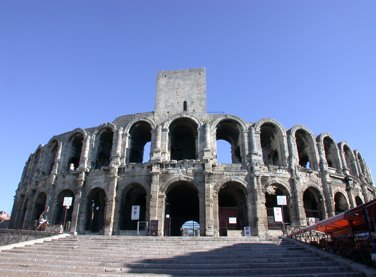
While less monumental than the Roman amphitheater or Church of St. Trophime, the tower is an essential link in Arles’ multi-era heritage, bridging the medieval and modern city (CityZeum).
Visitor Information
Location and Access
The Tour de la Roquette is located at Quai de la Roquette, 13200 Arles, within the atmospheric La Roquette district. The neighborhood, bordered by the Rhône, Boulevard Clemenceau, and Rue Gambetta, is easily accessible on foot from the city center. Arles’ main train station is nearby, and parking is available along Quai de Triquetaille or Quai Saint-Pierre (Monumentum, Mes Balades en France, Brainy Backpackers).
Visiting Hours and Admission
- Exterior Access The tower’s exterior is freely viewable at any time; no tickets are required.
- Interior Access The interior is generally closed, but may open for special events such as European Heritage Days (Journées Européennes du Patrimoine, JEP) in September, when entry is free (Monumentum).
- Guided Tours Many guided walking tours include the tower as a highlight. These tours typically require prior booking and a fee (Arles Tourisme).
For up-to-date schedules and event access, check the official Arles Tourism website or contact the local tourist office (9 Boulevard des Lices, 13200 Arles).
Guided Tours and Special Events
- Guided Tours Available year-round by reservation, these tours delve into La Roquette’s history and the tower’s role in Arles’ defenses (Arles Tourisme, Navaway).
- Special Events The European Heritage Days in September and neighborhood festivals such as La Nuit de la Roquette often include special access or programming at the tower (JDS).
Accessibility
- District The La Roquette neighborhood is pedestrian-friendly but features cobbled streets and some uneven surfaces.
- Tower The tower’s exterior is accessible from public areas, but the interior and upper levels are not suitable for those with reduced mobility due to narrow spiral stairs and historic architecture.
- Nearby Parking Accessible parking is available at Parc des Ateliers and Minimes parking lot (Luma Arles).
Practical Tips
- Best Time to Visit Spring and autumn offer pleasant weather and fewer crowds; summer features lively festivals (The Weithouse).
- Photography Early morning and late afternoon provide the best lighting for photos.
- Amenities Enjoy nearby cafés and restaurants such as Mazette!, Peach bakery, and Le Criquet for local flavors (The Weithouse).
- Accommodation Stay in La Roquette for an authentic experience; options include guesthouses like Au Coin de la Roquette and restored fishermen’s houses.
Frequently Asked Questions (FAQ)
Q: Can I enter the Tour de la Roquette?
A: The interior is usually closed, but may be opened for special events like European Heritage Days. The exterior is always accessible.
Q: Are tickets required?
A: No tickets are needed for exterior viewing. Guided tours and special event access may require booking and a fee.
Q: Is the area accessible for visitors with disabilities?
A: The neighborhood has accessible parking, but cobblestones and uneven surfaces may pose challenges. The tower’s interior is not wheelchair accessible.
Q: What else is there to do nearby?
A: Explore Arles’ Roman amphitheater, Church of St. Trophime, the Saturday market, and vibrant cafes and boutiques in La Roquette.
Q: How do I stay updated on visiting hours and events?
A: Check the official Arles Tourism website or visit the local tourist office for the latest details.