A national art museum in Asunción began, in part, with an exile accused of helping kill a president. That alone makes Museo Nacional De Bellas Artes De Asunción worth your time. In Asunción, Paraguay, this compact museum turns painting into political gossip, postwar ambition, and one of the strangest origin stories in South American cultural history.
Records show the museum opened to the public on March 28, 1909, but the institution feels older and less settled than that date suggests. You come for the canvases, yes, though the real pull is the argument behind them: what kind of capital city rebuilds itself after catastrophe by collecting Murillo, Courbet, and Paraguayan painting under one roof.
The building on Eligio Ayala does not overwhelm you. Good. That keeps your attention on the works, the soft museum hush, and the sense that much of the collection still lives just out of sight, split between display and storage like a story that never quite finished telling itself.
Visit because this is where Paraguay tried to teach itself how a republic might remember: through pictures, books, archives, and taste. Few museums show their seams so openly.
Researched by the Audiala editorial team from historical records, architectural archives, and local expertise.
Plan your visit
-
Getting There
- The museum sits at Eligio Ayala 1345, at Pa'i Pérez and Curupayty, in Asunción's microcentro. By bus, get off at Mcal. Estigarribia x Curupayty and walk about 3 minutes; Línea E1 is one confirmed option. From Plaza Independencia or Calle Palma, the walk is roughly 10 to 15 minutes through the old center, and if you come by car, use daylight hours and avoid leaving anything visible inside.
-
Opening Hours
- As of 2026, the official picture is messy. The most current official museum page lists Tuesday to Friday 09:00-19:00 and Saturday 09:00-20:00, with free entry; older posts show shorter schedules, and January has operated on summer hours of 08:00-13:00. Sundays and Mondays are usually closed, so check the museum's current post before you set out.
-
Time Needed
- Give it 30 minutes if you want the essentials. Give it 45 to 60 minutes if you read labels, linger with the temporary exhibition, and let the place work on you; this is a compact museum, more like a concentrated shot than a long afternoon.
-
Cost & Tickets
- As of 2026, entry is free. No ticket desk, no timed slot, no reason to overplan; just remember that the real variable here is the schedule, not the price.
History
The Museum That Exile Built
Museo Nacional De Bellas Artes De Asunción did not begin as a calm state institution with a fixed address and a neat founding plaque. Records show its public inauguration took place on March 28, 1909 under the long title "Museo de Bellas Artes, del Histórico y la Biblioteca Americana," though scholars still argue over whether its bureaucratic prehistory begins in 1902 or January 10, 1903.
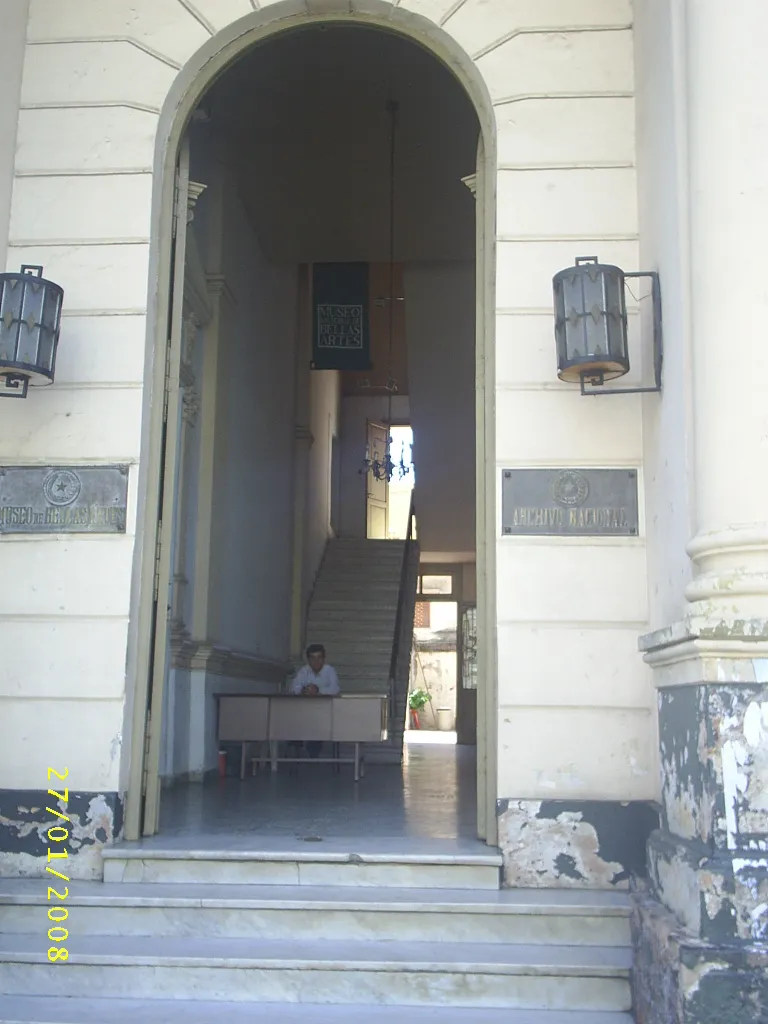
That instability matters. The museum first lived inside Juan Silvano Godoy's own house at Presidente Franco and Juan E. O'Leary, moved in 1969 to the Archivo Nacional at Mariscal Estigarribia and Iturbe, then reopened in 2011 at Eligio Ayala 1345. Even now, the institution feels slightly divided, as if Asunción is still deciding where its memory belongs.
The turning point
Juan Silvano Godoy's Dangerous Afterlife
Juan Silvano Godoy, born in Asunción on November 12, 1850, was no serene patron of the arts. Paraguayan sources describe him as politician, collector, polemicist, and a man accused of intellectual authorship in the April 12, 1877 assassination of President Juan Bautista Gill. Exile sent him to Buenos Aires, where what was at stake became painfully personal: reputation, survival, and the chance to turn a compromised life into cultural authority.
According to documented museum histories, that exile changed everything. Godoy received advice from Eduardo Schiaffino and bought paintings from galleries, auctions, and artists' studios, then imagined a public institution where art, books, and archives would stand together as proof that Paraguay still belonged in the world of ideas after the War of the Triple Alliance. The turning point came on March 28, 1909, when his private collection stopped being private and opened to the republic.
And that is the sting in the story. The country's first major fine-arts museum grew from one man's hunger for legitimacy, then outlived him and passed into state hands in 1939. You walk through the galleries now and feel two ambitions at once: love of painting, and the colder wish to rewrite how history remembers your name.
The Tunnel Under Iturbe
Records show that on July 29, 2002, thieves rented a storefront across the street from the museum's Archivo Nacional site and dug a 25-meter tunnel under the road, about the length of two city buses parked nose to tail. They stole five European works, including paintings attributed to Murillo and Tintoretto, leaving frames behind. The robbery was dramatic enough to sound invented, which is exactly why it lingers: Paraguay's national collection was breached like a bank vault.
A Museum Without One Body
Most visitors assume the museum's present home is its historic seat. Wrong. Documented accounts show only part of the collection is displayed on Eligio Ayala, while hundreds more works remained for years in storage or in the former Archivo Nacional building, making the institution feel physically split. That absence shapes the visit as much as any canvas on the wall.