Photo: Heribert Bechen .. thanks for 2.6 mio. visits from Bergisch Gladbach, Germany · CC BY-SA 2.0
Time needed
20-40 minutes
Entry
100 Dh foreign adults
A royal cemetery hidden for centuries sits a few steps from one of Marrakesh's busiest lanes, and that tension is the whole reason to visit the Saadian Tombs in Marrakesh, Morocco. You come for the painted cedar, the Carrara marble, and the hush that settles the moment the courtyard noise drops away. You also come because this is not just a beautiful burial ground. It is a dynastic argument in tile and stucco, made by rulers who needed the dead to keep working on their behalf.
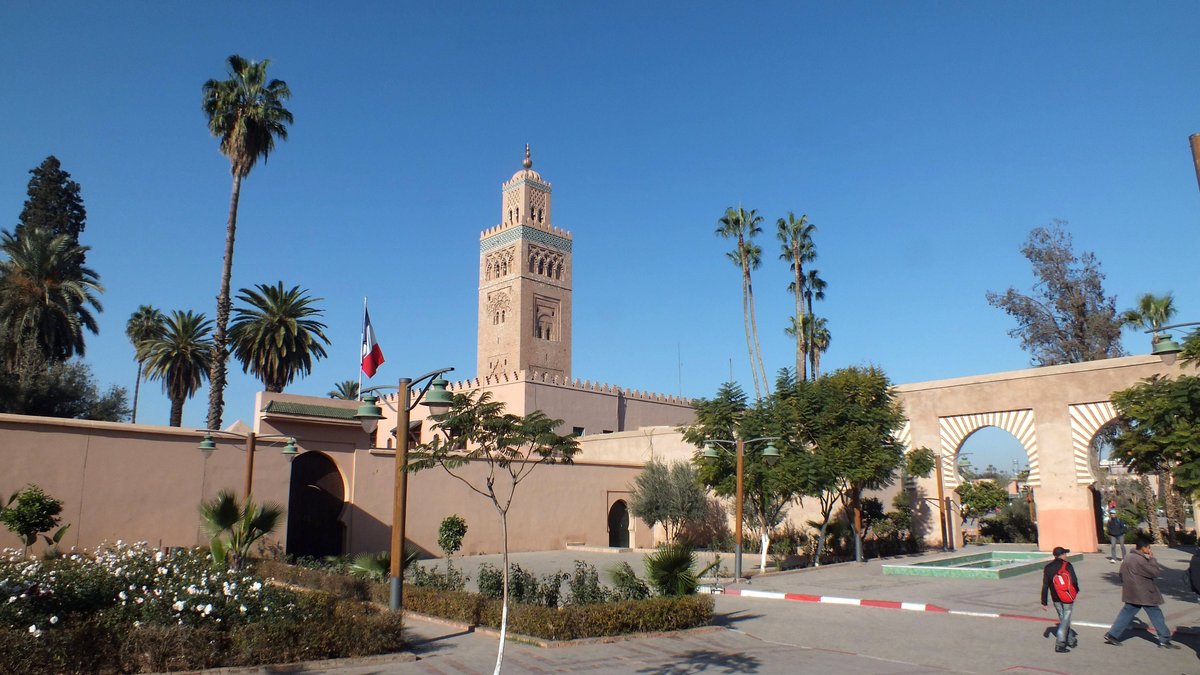
The setting matters. The tombs stand in the Kasbah district beside the Moulay al-Yazid Mosque, inside the old walled world of the Marrakesh medina, where alleys smell of dust, orange peel, and hot stone by late morning.
Most visitors remember the Chamber of the Twelve Columns. Fair enough. Its marble shafts rise like a small indoor palm grove, and the light lands softly on carved plaster so fine it looks stitched rather than cut.
But the real pull is historical friction. Records show the Saadian necropolis began with the burial of Muhammad al-Shaykh in 1557, yet the ground itself was already older royal burial space, which means the Saadians were claiming inherited sanctity, not inventing it.
Researched by the Audiala editorial team from historical records, architectural archives, and local expertise.
What to see
The Chamber of the Twelve Columns
The surprise is how small Ahmad al-Mansur's grand gesture really is: a funerary chamber held up by 12 Carrara marble columns, each one catching the light as if the room were storing daylight for later. You usually see it through a framed opening in the wall rather than by striding straight in, which makes the first glimpse feel almost staged; then your eyes adjust, and the cedar ceiling, gilded plaster, muqarnas cornices, and zellij begin to compete for your attention while the room stays almost hushed except for footsteps and the low murmur of people waiting their turn.
Lalla Messaouda Mausoleum and the Garden Graves
Most people queue for the famous chamber and barely register the older eastern qubba, which is a mistake. This part of the necropolis carries the longer memory of the site, tied to Muhammad al-Shaykh's burial in 1557 and later reworked under al-Mansur; outside it, roughly 100 tombs stretch through an enclosure about 85 meters by 25 meters, about as long as seven buses parked nose to tail and as narrow as a tennis court, where heat sits on the paving, birds cut across the sky, and the cemetery finally reads as a royal family archive rather than a single photogenic room.
The Kasbah Approach
Come through the Kasbah early or after 4 pm, when the light softens and the crowds loosen their grip, and pay attention to the sequence rather than rushing the tomb itself. A narrow access passage about 13 meters long, roughly the length of one city bus, pulls you out of the noise of the mosque quarter and into a calmer world; that contrast is the real trick of the place, and it changes how you read Marrakesh too, as a city built on sudden shifts from street pressure to private stillness.
Plan your visit
Getting There
The tombs sit on Rue de la Kasbah beside the Kasbah Mosque, a 10 to 15 minute walk south of Jemaa el-Fna and about 5 minutes from El Badi Palace. Taxi drivers usually understand "Tombeaux Saadiens" or "Bab Agnaou"; if you use the bus, Bab Rob and Bab Rob Cemetery are the most useful stops, then you walk a few minutes into the Kasbah.
Opening Hours
As of 2026, the strongest official source is the Moroccan Ministry of Culture ticketing page, which lists daily hours as 9:00 to 17:00. Ramadan hours often shift to 10:00 to 16:00, and late 2025 reports still mentioned restoration scaffolding, so check again close to your visit.
Time Needed
Give it 20 to 30 minutes if you want a quick look, 30 to 45 minutes for a normal visit, and up to an hour if you study the stucco, cedar, and garden graves. The real variable is the queue for the Chamber of the Twelve Columns, which can add 20 to 30 minutes and sometimes closer to an hour around midday.
Accessibility
As of 2026, visitors with reduced mobility get free entry, but the site itself is only partly accessible. Narrow passages, uneven ground, a few steps, and the crowd pressed around the main viewing doorway make this a difficult visit for many wheelchair users.
Tickets
As of 2026, the official ticket is 100 MAD for foreign adults and 50 MAD for children aged 7 to 13; Moroccan and resident tickets are lower at 30 MAD and 10 MAD. Moroccans enter free on Fridays and on the first day of national and religious holidays, and buying online can save ticket-desk time but not the bottleneck at the main chamber.
Tickets & tours.
These are guided options from our partners — same price as booking direct.
Prices are indicative — final pricing and availability are confirmed at checkout. Audiala may earn a commission from bookings made through these links.
Photo Gallery
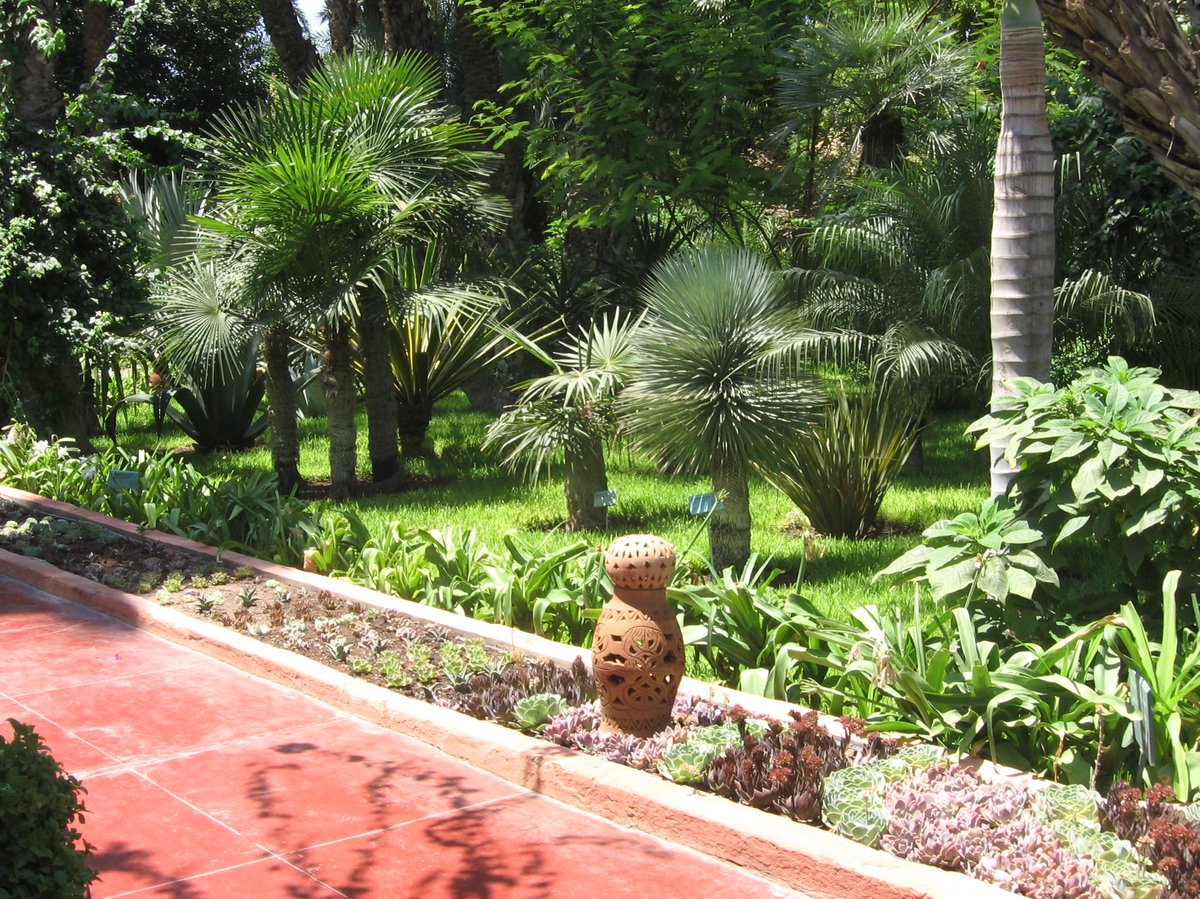
A beautifully preserved marble cenotaph adorned with detailed Arabic calligraphy and floral motifs at the Saadian Tombs in Marrakesh. · Mike Prince from Bangalore, IndiaThe Saadian Tombs in Marrakesh feature a stunning courtyard filled with ornate, mosaic-tiled graves set against traditional Moroccan architecture. · Heribert Bechen .. thanks for 2.6 mio. visits from Bergisch Gladbach, GermanyThe historic Saadian Tombs in Marrakesh feature beautifully preserved, mosaic-tiled graves nestled among a tranquil garden of wildflowers. · Mike Prince from Bangalore, IndiaThe historic Saadian Tombs in Marrakesh, Morocco, feature ancient earthen structures set within a serene, landscaped garden. · Aggour80A close-up view of the ornate, geometric wooden ceiling craftsmanship found within the historic Saadian Tombs in Marrakesh, Morocco. · Mike Prince from Bangalore, IndiaThe Saadian Tombs in Marrakesh showcase stunning Moorish architecture, characterized by earthy ocher walls and traditional green-tiled roofs set amidst lush gardens. · Martin FurtscheggerA craftsman works on intricate zellige tile patterns, preserving the historic artistry found within the Saadian Tombs in Marrakesh, Morocco. · Werner100359
History
A Dynasty Builds Its Afterlife
The Saadian Tombs look serene now, almost self-contained, but their history is full of interruption. Documented evidence places the Saadian core here in 1557 with the burial of Muhammad al-Shaykh, while Museum With No Frontiers identifies the site as an older cemetery annex to the kasbah mosque used by Almohad and Marinid elites.
That changes the way the place reads. You are not looking at one dynasty's private garden of grief, but at a contested royal cemetery repeatedly claimed, narrowed, forgotten, restored, and then shaken again by the earthquake of 8 September 2023.
The turning point
Ahmad al-Mansur and the Mother Who Changed the Tombs
Ahmad al-Mansur had personal reasons to think about memory in stone. His father, Muhammad al-Shaykh, had been assassinated in 1557, and the dynasty's hold on Morocco never felt safely inherited; it had to be staged, defended, and seen.
Records show the turning point came in 1591, when al-Mansur buried his mother, Lalla Messaouda, here. That burial pushed the site from dynastic cemetery to political theatre: between 1591 and 1603, he enlarged the complex, clad it in carved stucco and imported marble, and created a mausoleum fit for a ruler who wanted posterity to read legitimacy in every surface.
The result still carries a trace of fragility. Some scholars point to decoration near the mihrab that appears traced but never fully carved, as if the project stopped mid-breath when al-Mansur died in 1603.
Not Quite Lost
Popular retellings say the Alaouites sealed the tombs, the place vanished, and French restorers rediscovered it in 1917 as if lifting a curtain. The truth is messier and better: Archnet gives 1677 as the closure date, though that exact year remains uncertain in open sources, and the necropolis did not fall completely out of use. The Moroccan ministry states that Moulay al-Yazid, who died in 1792, was buried here, which suggests the complex stayed politically alive even while it slipped from ordinary public view.
Older Than Its Name
One of the site's sharpest little shocks sits in plain sight. The marble epitaph of the Marinid sultan Abu al-Hasan survives inside the complex, evidence that royal prestige attached to this ground before the Saadians made it their own. That detail strips away the easy story of a single founder and replaces it with something more interesting: dynasties in Marrakesh inherited sacred geography the way they inherited enemies.
Tips for visitors
Go Early
Arrive right at 9:00 or after 16:00. The monument is small, but the queue for the famous chamber can feel longer than the visit itself once the late-morning groups arrive.
Photo Limits
Personal photography is generally allowed, but treat the funerary chambers with some restraint and skip the flash. Drones are a bad idea in Morocco without prior authorization, and this corner of the Kasbah sits close to sensitive royal and religious ground.
Dress Respectfully
The tombs are a royal necropolis beside the active Kasbah Mosque, so cover shoulders and knees and keep your voice down. During Ramadan, be more careful about eating, drinking, or smoking in public around the site.
Ignore Fixers
The usual medina trick works here too: someone tells you the street is closed, then offers a shortcut. Keep walking on Rue de la Kasbah, watch your bag, and if you want a guide, ask for an official badge instead of following a volunteer.
Eat Nearby
For a practical post-visit stop, Kasbah Cafe sits right opposite the tombs and works well for tea or a light meal at mid-range prices. Krepchy is the budget pick on Kasbah Street, while Le Tanjia in the Mellah is the better move if you want tanjia marrakchia, the dish Marrakesh treats almost like civic identity in a clay pot.
Pair The Visit
The tombs make more sense when you read them as one piece of the old royal quarter, not as a stand-alone stop. Pair them with El Badi Palace and a walk through the Kasbah toward the Mellah, and the whole district starts to feel like the afterimage of Saadian Marrakesh rather than a single crowded doorway.
Where to Eat
local_dining
Don't Leave Without Trying
Tanjia (slow-cooked lamb in clay)Pastilla (sweet-savory chicken pastry)Tagine (lamb with prunes, chicken with lemon, seafood versions)Rfissa (chicken-and-lentil dish with shredded msemen)Seffa mefouna (sweet-savory vermicelli or couscous)Sfenj (Moroccan doughnuts)
Munissa | Moroccan Snacks & Drinks | Medina
local favorite
Moroccan snacks and drinks€€star5.0(227)directions_walk3-5 min walk
Order: Their fresh orange juice and msemen (flaky pancakes) are legendary for a quick, authentic start to the day.
A tiny, beloved spot where locals and travelers mingle over simple but perfect Moroccan breakfast staples. No frills, just great flavors.
checkLook for restaurants with locals inside—it’s the best sign of authenticity.
checkJemaa el-Fna’s food stalls are a 15-20 min walk away and great for street-food atmosphere.
checkMany kasbah restaurants are rooftop spots; ask for a seat with a view after visiting the tombs.
checkFresh orange juice is a must-try in Marrakesh—it’s everywhere, but the best is made fresh from local oranges.
Food districts:Kasbah (for traditional Moroccan meals with a view)Jemaa el-Fna (for street food at night)Mellah (for markets and everyday Moroccan flavors)
Restaurant data powered by Google
Frequently asked
Is Saadian Tombs worth visiting?
Yes, especially if you care more about atmosphere and craftsmanship than size. The whole place is compact, but that is the point: a narrow passage opens into a royal cemetery where Carrara marble, carved cedar, gilded stucco, and zellij pull the light into one small chamber. Pair it with Marrakesh, El Badi, or the Kasbah quarter, because on its own the visit is often only 30 to 45 minutes.
How long do you need at Saadian Tombs?
Most people need 30 to 45 minutes. You can do it in 20 to 30 if the queue is light, but the bottleneck at the doorway to the Chamber of the Twelve Columns can easily add another 20 minutes. Give yourself an hour if you want time for the garden graves, the older eastern mausoleum, and a proper look upward at the cedar ceilings.
How do I get to Saadian Tombs from Marrakesh?
Walk if you are already in the medina: from Jemaa el-Fna it is about 10 to 15 minutes south along Rue de la Kasbah. Taxi drivers usually understand "Tombeaux Saadiens" or "Bab Agnaou," and from Bab Agnaou you are almost there. From El Badi Palace, the walk is about five minutes, which is why the two sites make sense together.
What is the best time to visit Saadian Tombs?
Go at opening time or after 4 pm. Midday brings the harshest light and the longest line for the famous framed view into the Twelve Columns chamber, while early and late hours let the marble and gold catch softer light. The official Ministry page currently lists 9:00 to 17:00 daily, though Ramadan hours may shift to 10:00 to 16:00.
Can you visit Saadian Tombs for free?
Yes, but only in a few cases. The official Ministry ticket page says entry is free for people with reduced mobility, for Moroccan nationals on Fridays, and for Moroccan nationals on the first day of national and religious holidays. Foreign adult admission is currently 100 MAD, and booking online may save ticket time but not the queue for the main chamber.
What should I not miss at Saadian Tombs?
Do not rush past the garden graves just to queue for the postcard room. The Chamber of the Twelve Columns earns its reputation, but the older eastern mausoleum, the quieter cemetery, and the odd displaced inscription linked to Muhammad al-Shaykh tell the better story: this was not one ruler's jewel box, but a dynastic memory fight in stone. And look up, because the cedar ceilings do half the work.
Sources & attribution20
Researched and written by the Audiala editorial team from historical records, architectural archives, and local expertise. Last updated April 2026.
Moroccan Ministry of Culture Ticketing — Current official opening hours, ticket prices, free-entry rules, and core historical timeline including burials of Muhammad al-Shaykh, Abdallah al-Ghalib, and Lalla Messaouda.
Archnet — Architectural plan, dimensions of the enclosure, chronology of the Saadian expansion, and the spatial sequence from narrow passage to necropolis.
Museum With No Frontiers — Evidence that the burial ground predates the Saadians, plus material on decoration, lighting, and the older name Qubur al-Ashraf.
UNESCO World Heritage Centre — Context for the tombs within the UNESCO-listed Medina of Marrakesh and the broader heritage setting of the Kasbah.
UNESCO State of Conservation — Confirmed earthquake damage in September 2023 and emergency stabilization work after the Al Haouz earthquake.
Visit Marrakech — Official city tourism overview used for location, practical context, and corroboration of key dates in the site's history.
Slow Morocco — Recent visitor-focused detail on crowd patterns, likely visit length, timing advice, and lack of facilities such as toilets or storage.
Tripadvisor Attraction Reviews — Recent traveler reports used to gauge queue times, scaffolding mentions, and realistic on-the-ground visit duration.
Moovit Saadian Tombs — Public transport stops and routing context for reaching the tombs by bus and on foot.
Moovit Bab Agnaou — Transport context for Bab Agnaou as the clearest nearby landmark for taxi drop-off and walking approach.
Nomads Travel Guide — Practical notes on accessibility limits, uneven surfaces, and current visitor experience inside the site.
Britannica — Background on Ahmad al-Mansur, the patron most closely tied to the grand expansion of the tomb complex.
Britannica — Historical context for the Saadian high point that shaped Ahmad al-Mansur's political legitimacy and the tombs' dynastic message.
Wikipedia — Secondary synthesis used carefully for unresolved points, the displaced inscription detail, and the likely unfinished mihrab carving.
Morocco World News — Press confirmation of the tombs reopening in October 2023 after post-earthquake repairs.
TelQuel — French-language press corroboration for the public reopening of affected Marrakesh monuments in October 2023.
Wikimedia Commons — Image record supporting the unusual displaced inscription plaque associated with Muhammad al-Shaykh.
Visit Marrakech - Kasbah — Neighborhood context for the Kasbah quarter and its relationship to the tombs, El Badi, and the southern medina.
Visit Marrakech - Tanjia — Local food context used to situate the tombs within a wider Kasbah and Marrakchi day out.
Kasbah Cafe — Nearby cafe reference used in practical planning around the visit, since the monument itself lacks visitor facilities.
Saadian Tombs 1044-HDR — C messier — CC BY-SA 4.0 (https://creativecommons.org/licenses/by-sa/4.0/) — Source: https://commons.wikimedia.org/wiki/File:Saadian_Tombs_1044-HDR.jpg
Garden at the Saadian Tombs (5038946452) — Mike Prince from Bangalore, India — CC BY 2.0 (https://creativecommons.org/licenses/by/2.0/) — Source: https://commons.wikimedia.org/wiki/File:Garden_at_the_Saadian_Tombs_(5038946452).jpg
0049 Saadier-Gräber, Marrakesch (37200277501) — Heribert Bechen .. thanks for 2.6 mio. visits from Bergisch Gladbach, Germany — CC BY-SA 2.0 (https://creativecommons.org/licenses/by-sa/2.0/) — Source: https://commons.wikimedia.org/wiki/File:0049_Saadier-Gräber,_Marrakesch_(37200277501).jpg
Garden at the Saadian Tombs (5038945364) — Mike Prince from Bangalore, India — CC BY 2.0 (https://creativecommons.org/licenses/by/2.0/) — Source: https://commons.wikimedia.org/wiki/File:Garden_at_the_Saadian_Tombs_(5038945364).jpg
Cours principale — Aggour80 — CC BY-SA 3.0 (https://creativecommons.org/licenses/by-sa/3.0/) — Source: https://commons.wikimedia.org/wiki/File:Cours_principale.jpg
Ceiling Detail (5038942434) — Mike Prince from Bangalore, India — CC BY 2.0 (https://creativecommons.org/licenses/by/2.0/) — Source: https://commons.wikimedia.org/wiki/File:Ceiling_Detail_(5038942434).jpg
Innenhof der Saadier-Gräber, Marrakesch - panoramio — Martin Furtschegger — CC BY 3.0 (https://creativecommons.org/licenses/by/3.0/) — Source: https://commons.wikimedia.org/wiki/File:Innenhof_der_Saadier-Gräber,_Marrakesch_-_panoramio.jpg
Grabmäler der Saadier 04 — Werner100359 — CC BY-SA 4.0 (https://creativecommons.org/licenses/by-sa/4.0/) — Source: https://commons.wikimedia.org/wiki/File:Grabmäler_der_Saadier_04.jpg
Strictly necessary cookies keep the site working. Analytics (PostHog, Google Analytics) measures how each visitor uses our pages. Marketing loads YouTube videos and walking-route maps without a tap and lets Google Analytics set advertising cookies. We never sell your data. You can change this any time from the footer.
Analytics and marketing cookies are optional and only load if you agree. Details under Customize.
Privacy
Cookie preferences
Pick what you're okay with. You can change this any time from the footer.
Strictly necessary
Always on
Sign-in, language, navigation. Always on.
Product analytics
PostHog (EU) and Google Analytics record which pages you view and how you use them, under a random identifier stored in your browser. Helps us see which pages work and which need fixing. Google's ad personalisation stays off. No selling.
Marketing
Loads YouTube videos and the walking-route maps (OpenFreeMap) without a tap; without it, they load only when you tap them. If analytics is also on, Google Analytics may set advertising cookies. Ad personalisation stays off.