
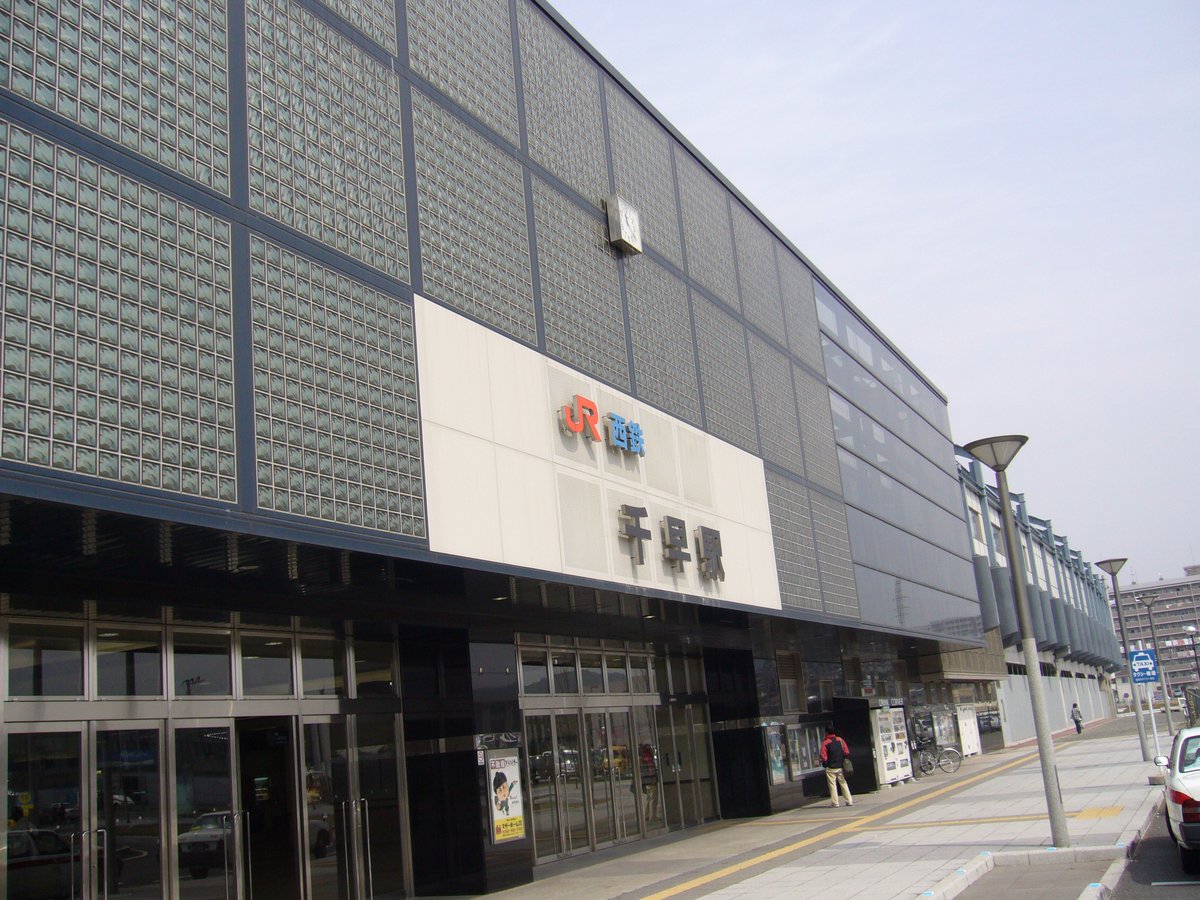
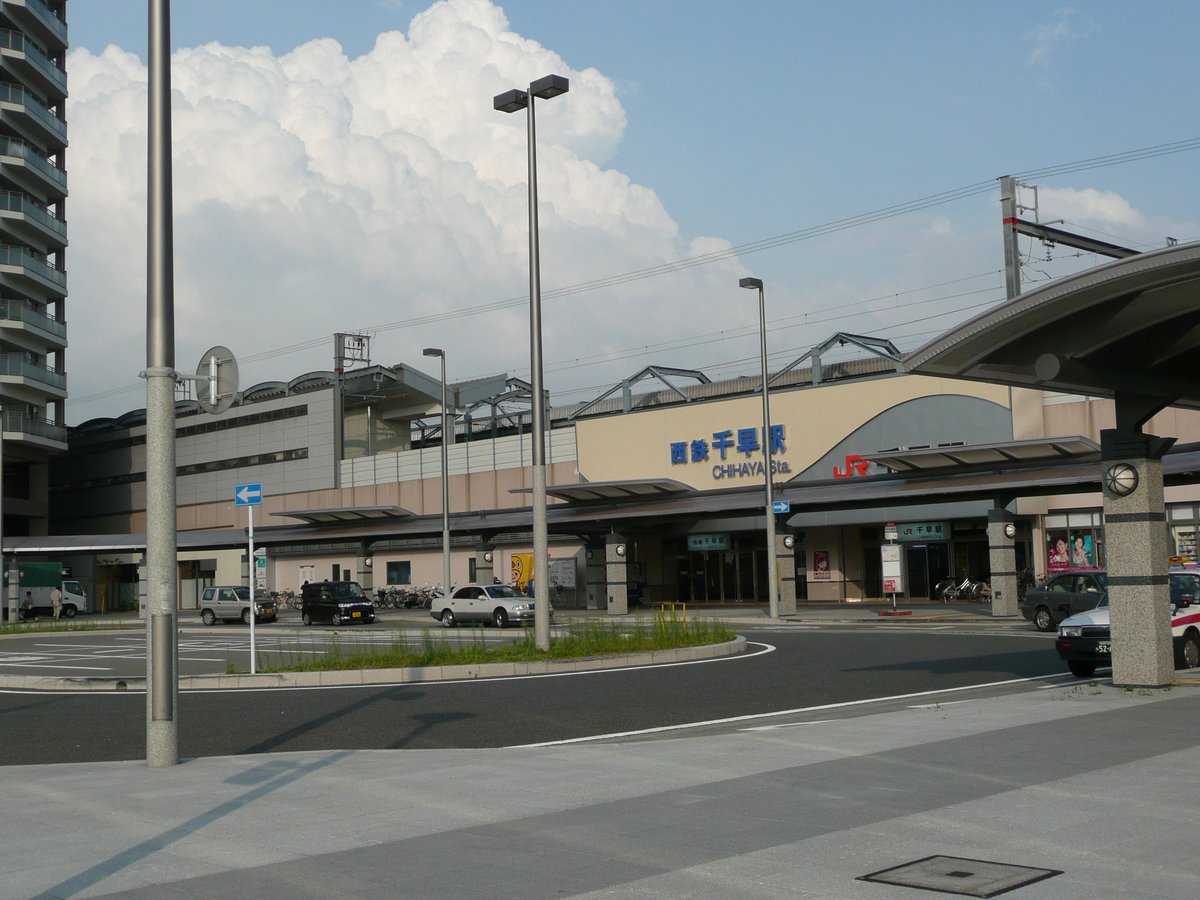
Chihaya Station at a Glance
- Location Higashi Ward, Fukuoka, Japan
- Lines Served JR Kyushu Kagoshima Main Line, Nishitetsu Kaizuka Line
- Accessibility Fully barrier-free with elevators, ramps, accessible restrooms, and multilingual signage
- Nearby Attractions Hakozaki Shrine, Fukuoka Castle Ruins, Marine World Uminonakamichi, Island City, Tenjin Chuo Park
History and Urban Significance
Originally opened as Nakano Station in 1951, the site was redeveloped and renamed Chihaya Station in the early 2000s as part of Fukuoka’s urban renewal efforts. The modern station reflects the transformation of Higashi-ku from an industrial area to a thriving mixed-use community. Today, it stands as a symbol of Fukuoka's commitment to sustainable urbanism, boasting residential, commercial, and green spaces that enrich the local lifestyle (JR Kyushu).
Station Layout and Facilities
Platform and Structure
- JR Section Two island platforms serving four tracks for local and rapid services
- Nishitetsu Section Single island platform with two tracks, adjacent to the JR platforms
- Transfers Easy, barrier-free transfers via a shared concourse, equipped with elevators, escalators, and clear signage (Japan Travel Navitime)
Amenities
- Automated ticket machines (with English interface)
- Staffed ticket office (Midori no Madoguchi): 6:30 AM – 8:00 PM
- Clean restrooms, accessible toilets, and baby-changing facilities
- Waiting areas, retail kiosks, convenience stores, and coin lockers
- Free Wi-Fi in station concourse
Accessibility
- Elevators, escalators, and ramps throughout the station
- Tactile paving for visually impaired passengers
- Multilingual signage (Japanese, English, Korean, Chinese)
- Audio/visual announcements in multiple languages
Visiting Hours and Ticketing
Operating Hours
- Station and Trains Daily, approximately 5:00 AM – midnight
- Ticket Office 6:30 AM – 8:00 PM
Tickets and Fare Options
- IC Cards SUGOCA, nimoca, Hayakaken—usable across JR, Nishitetsu, Fukuoka City Subway, and buses (MetroEasy)
- Tourist Passes Fukuoka Tourist City Pass—unlimited rides for one day, available at major stations
- Single Tickets Purchase at machines or counters; fares range from ¥200–¥370 depending on distance
- Rail Passes Japan Rail Pass and JR Kyushu Rail Pass accepted
Buying Tickets
- At ticket machines (with English support)
- Staffed counters for complex journeys or tourist passes
- Via official mobile apps and websites (JR Kyushu, Nishitetsu)
Accessibility and Multimodal Connections
- Bus Stops Adjacent to station entrances, with frequent connections to local neighborhoods and attractions
- Taxi Stands Available outside main exits
- Bicycle Parking Secure racks for eco-friendly access
- Pedestrian Paths Well-maintained, connecting to nearby parks and shopping areas
Nearby Attractions
Historical and Cultural Sites
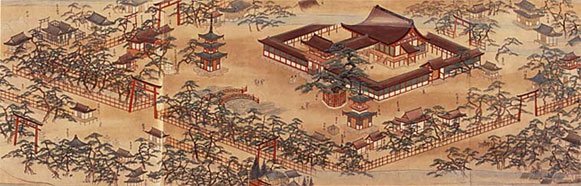
- Hakozaki Shrine One of Fukuoka’s oldest Shinto shrines, hosting seasonal festivals
- Fukuoka Castle Ruins (Maizuru Park) 17th-century castle remains with gardens and panoramic city views
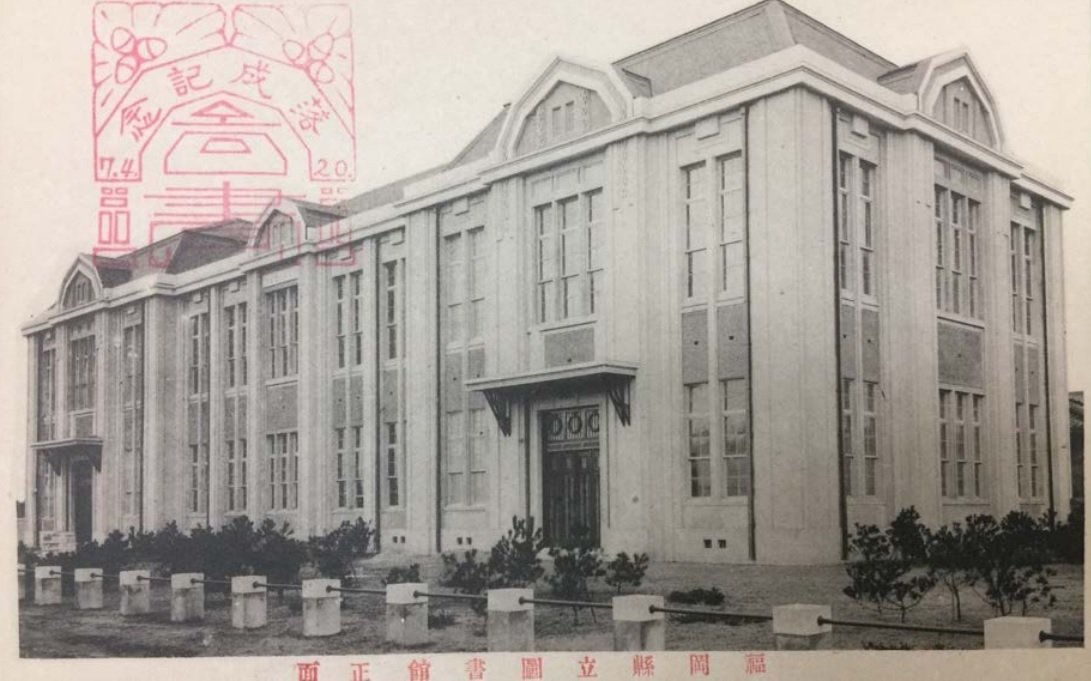
- Fukuoka City Museum Exhibits on regional history and culture
Family and Recreational Spots
- Marine World Uminonakamichi Aquarium with shows and marine exhibits (adults ¥1,350, 9:30 AM – 5:30 PM, Matcha Japan)
- Ohori Park Japanese gardens, pond, and scenic walking trails
- Island City Modern waterfront with shopping, dining, and parks
Shopping and Food
- Canal City Hakata Shopping, entertainment, and the famous Ramen Stadium (PlanetWare)
- Yanagibashi Market Local delicacies and fresh produce
- Kawabata Shopping Arcade Traditional crafts, souvenirs, and boutiques
Travel Tips
- Best Times to Visit Mid-mornings and early afternoons (less crowded)
- Peak Hours 7:30–9:00 AM and 5:00–7:00 PM
- Navigation Apps Use NAVITIME, Google Maps, or the Audiala app for real-time schedules
- Luggage Storage Coin lockers available inside the station
- Language English signage is common; translation apps are helpful; staff offer foreign language support
- Connectivity Free Wi-Fi; pocket Wi-Fi and SIM cards widely available
- Etiquette Queue in an orderly fashion, speak quietly on transport, tip not required
Local Culture and Experiences
- Festivals Hakata Gion Yamakasa (July) features traditional float races and performances (PlanetWare)
- Traditional Crafts Hakata-ori textiles and Hakata dolls; workshops at Hakata Machiya Folk Museum (Japan Travel)
- Cuisine Hakata ramen, fresh seafood, and yatai street food stalls (Matcha Japan)
Frequently Asked Questions (FAQ)
Q: What are Chihaya Station’s operating hours?
A: The station operates from about 5:00 AM to midnight daily; ticket office hours are 6:30 AM – 8:00 PM.
Q: How do I purchase tickets?
A: Use ticket machines, staffed counters, or IC cards. Tourist passes are available at major stations.
Q: Is the station accessible for travelers with disabilities?
A: Yes. Elevators, ramps, tactile paving, and accessible restrooms are provided.
Q: Are there luggage storage options?
A: Coin-operated lockers are available inside the station.
Q: What historical sites are nearby?
A: Hakozaki Shrine, Fukuoka Castle Ruins, Fukuoka City Museum, and Uminonakamichi Seaside Park.
Q: Can I use tourist passes?
A: Yes. Fukuoka Tourist City Pass and JR Kyushu Rail Pass are accepted.