Museum Origins and Historical Development
Established during the fervor of Italian unification, the Civic Museum of Modena aimed to preserve and celebrate the region’s unique heritage. Since its opening in 1871, the museum’s collections have grown through archaeological discoveries, donations, and acquisitions. Its home, the Palazzo dei Musei, was originally an almshouse and later a Jesuit college before being repurposed in the 19th century as a multi-disciplinary cultural hub (Comune di Modena). The museum’s dual focus on archaeology/ethnology and art was formalized in 1962, and the institution continues to evolve, balancing historical preservation with modern interpretation.
Visiting Hours and Ticket Information
-
Standard Hours
- Tuesday to Sunday: 9:00 AM – 7:00 PM
- Closed Mondays and select public holidays
- Always check the official Musei Civici di Modena website for the most current schedule.
-
Weekend/Public Holiday Hours
- Saturday, Sunday & Holidays: 10:00 AM – 1:00 PM, 4:00 PM – 7:00 PM
-
Admission
- Entry is free for all visitors.
-
Guided Tours
- Available upon advance request; booking required via the museum’s website or visitor center.
-
Audio Guides
- Free audio guides in four languages are available to enhance your visit.
Architectural and Institutional Significance
The Palazzo dei Musei is not only the museum’s home but also an architectural landmark. Built in 1764 and transformed for civic use in the 19th century, it houses several institutions, including the Estense Gallery and Library. The building’s neoclassical grandeur—spacious galleries, ornate ceilings, and grand staircases—sets the tone for an immersive historical experience (Musei Civici di Modena).
Archaeological Holdings
The archaeological collections trace Modena’s story from prehistory through the Middle Ages, featuring:
- Prehistoric and Bronze Age Artifacts Tools, ceramics, and ornaments from the Po Valley.
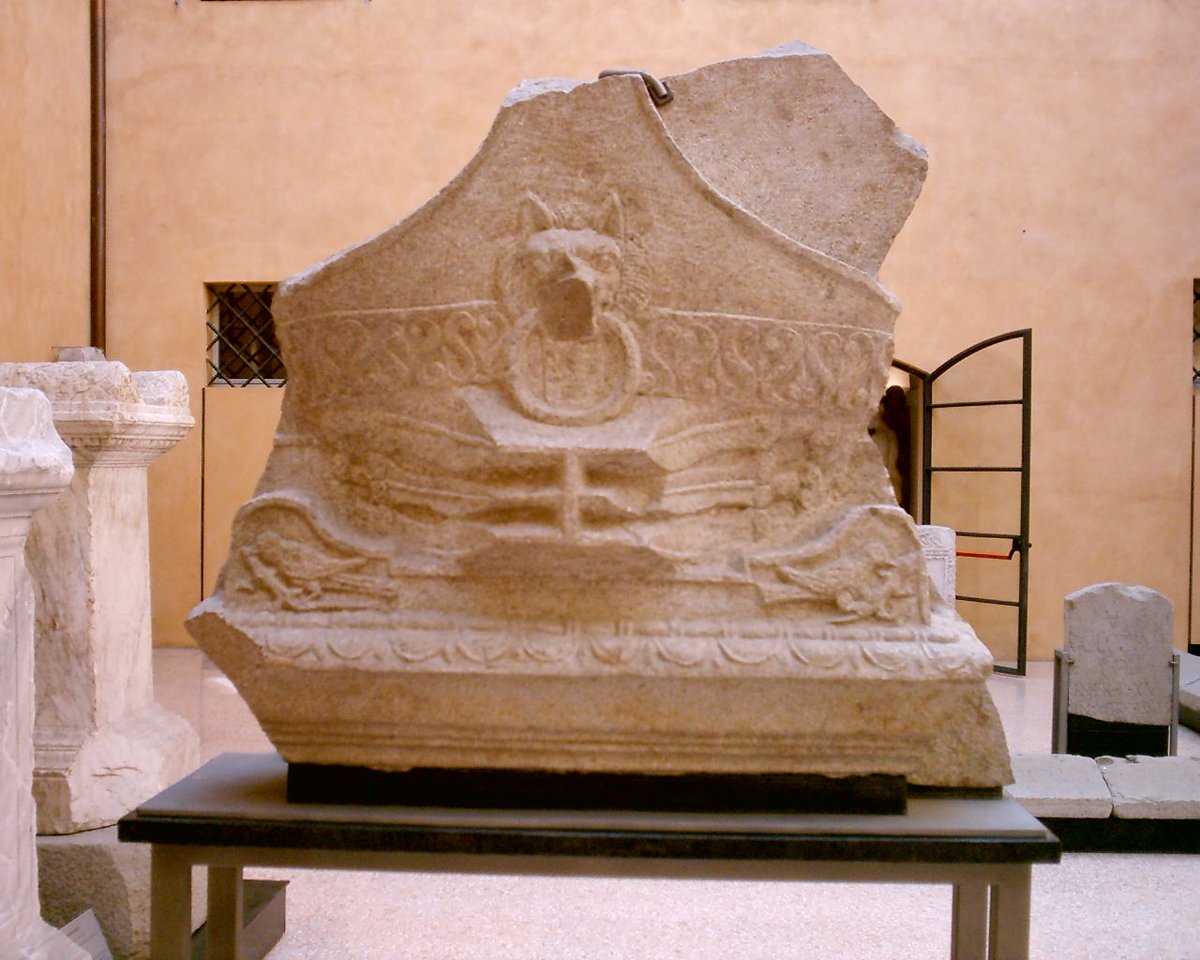
- Etruscan and Roman Relics Funerary steles, mosaics, coins, and everyday objects, including the notable "Stele di Rubiera."
- Medieval Items Religious objects, coins, and weaponry illustrating the post-Roman era (Musei Civici di Modena – Archeologia).
Art and Decorative Arts
Spanning the Middle Ages to the 19th century, the art collection features:
- Paintings and Sculptures Works by Modenese artists such as Antonio Begarelli and Guido Mazzoni.
- Decorative Arts Ceramics, textiles, musical instruments, and furniture that provide insight into Modena’s cultural and economic life.
Ethnographic and Industrial Heritage
This section documents Modena’s rural and industrial evolution through:
- Traditional Crafts Ceramics, woodworking, metalwork, and textiles.
- Folk Art and Ritual Objects Costumes, masks, and festival items.
- Industrial Heritage Artifacts related to ceramics and balsamic vinegar production (Musei Civici di Modena – Etnografia).
Accessibility and Visitor Services
- Accessibility The museum is equipped with ramps, elevators, and accessible restrooms. Some historic areas may have limitations, so contact the museum in advance for specific accessibility needs.
- Visitor Amenities Information desks, free Wi-Fi in common areas, rest zones, a bookshop, and educational workshops are available.
- Group Visits Special arrangements can be made for groups of 20 or more.
Museum Layout and Navigation
The museum occupies the upper floors of the Palazzo dei Musei. Its layout is intuitive, with clear bilingual signage (Italian and English) and original 19th-century display cases. The two main sections—Archaeology/Ethnology and Art—are adjacent, allowing a seamless exploration of the collections.
Getting There
- Location Largo Porta Sant’Agostino, 337, Modena, Italy
- By Foot 10 minutes from Modena train station, in the historic center.
- By Public Transit Buses and taxis are readily available.
- By Car Public parking is nearby, with street parking managed via apps like EasyPark.
Nearby Attractions and Itinerary Ideas
The museum’s central location makes it easy to combine with other Modena highlights:
- Modena Cathedral and Ghirlandina Tower UNESCO World Heritage sites
- Ducal Palace Home to Modena’s ducal history
- Piazza Grande A vibrant public square ideal for photography
- Galleria Estense and Museo Lapidario Estense Located within the same building
Sample Itinerary:
- Morning: Explore Modena Cathedral and Piazza Grande
- Lunch: Enjoy local cuisine
- Afternoon: Visit the Civic Museum of Modena
- Evening: Stroll the historic center or visit the Galleria Civica for contemporary art
Visitor Tips and FAQs
Essential Tips
- Arrive early or late to avoid crowds.
- Check for special exhibitions or events on the official website.
- Bring a translation app for non-Italian labels.
- Photography for personal use is permitted (no flash/tripods).
Frequently Asked Questions
Q: What are the Civic Museum of Modena’s visiting hours?
A: Typically Tuesday–Sunday, 9:00 AM to 7:00 PM. Weekend and holiday hours may differ. Always check the latest schedule online.
Q: Is there an admission fee?
A: No, admission is free for all visitors.
Q: Is the museum accessible?
A: Most areas are accessible, with ramps and elevators; contact in advance for specific needs.
Q: Are guided tours available?
A: Yes, but advance booking is required.
Q: Can I take photos inside?
A: Yes, personal photography is allowed without flash or tripods.