


Place
Italy Updated Aug 2026
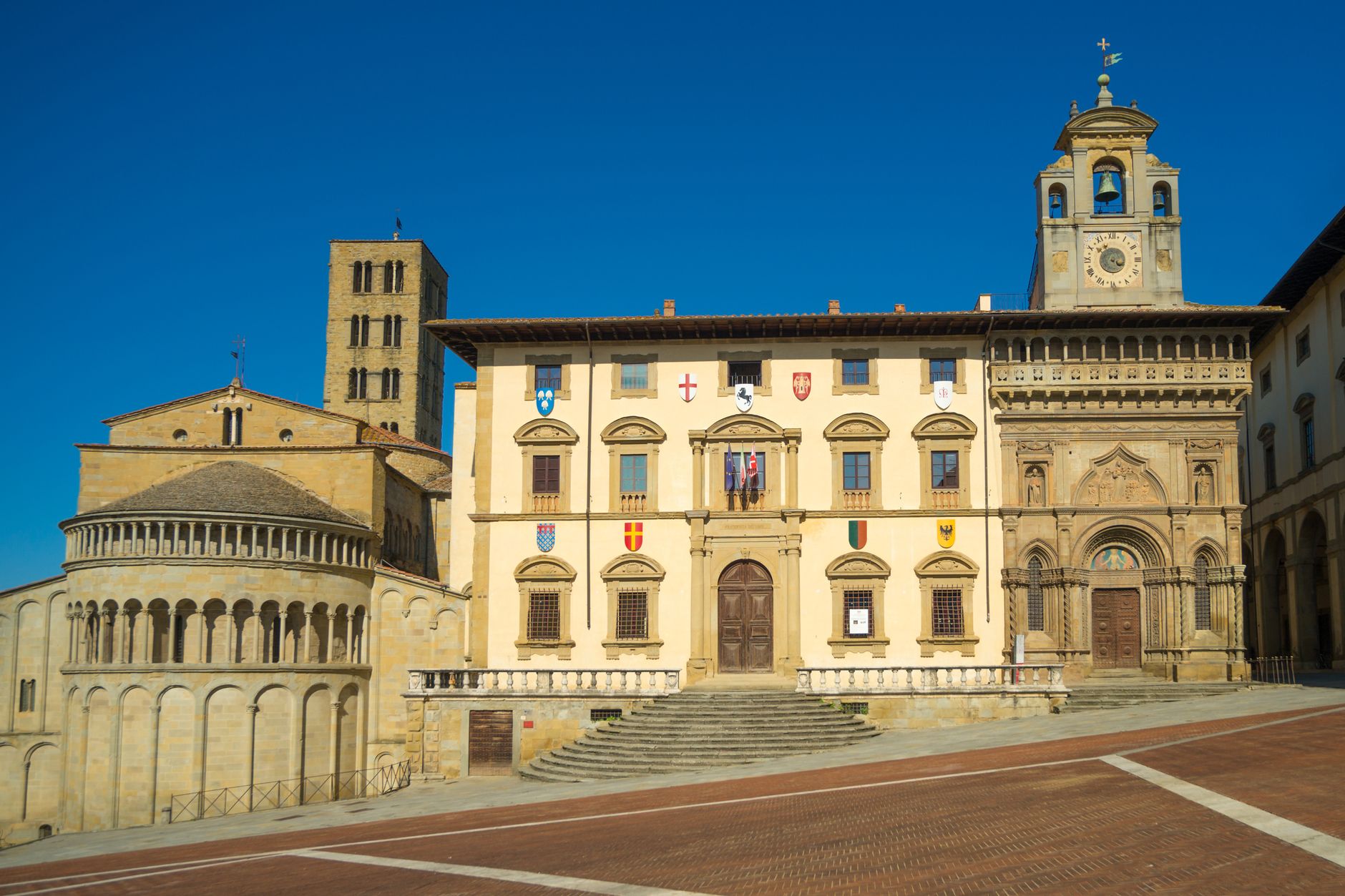
Silverware clicks under the arcades of Piazza Grande, then twice a year the same sloping square fills with horses, lances, and a wooden effigy of the Saracen king. Arezzo, in Tuscany, Italy, packs Roman pottery, Piero della Francesca’s Renaissance painting, and Giorgio Vasari’s theatrical architecture into a hill town where medieval civic rituals still organize public life. Come for the Bacci Chapel’s quiet, watchful frescoes—or arrive on the first Sunday of the month, when antiques spread through the square and steep lanes.
 Photo: Ivan Dražić / Pexels
Built from cited sources · see the method · How we make our guides →
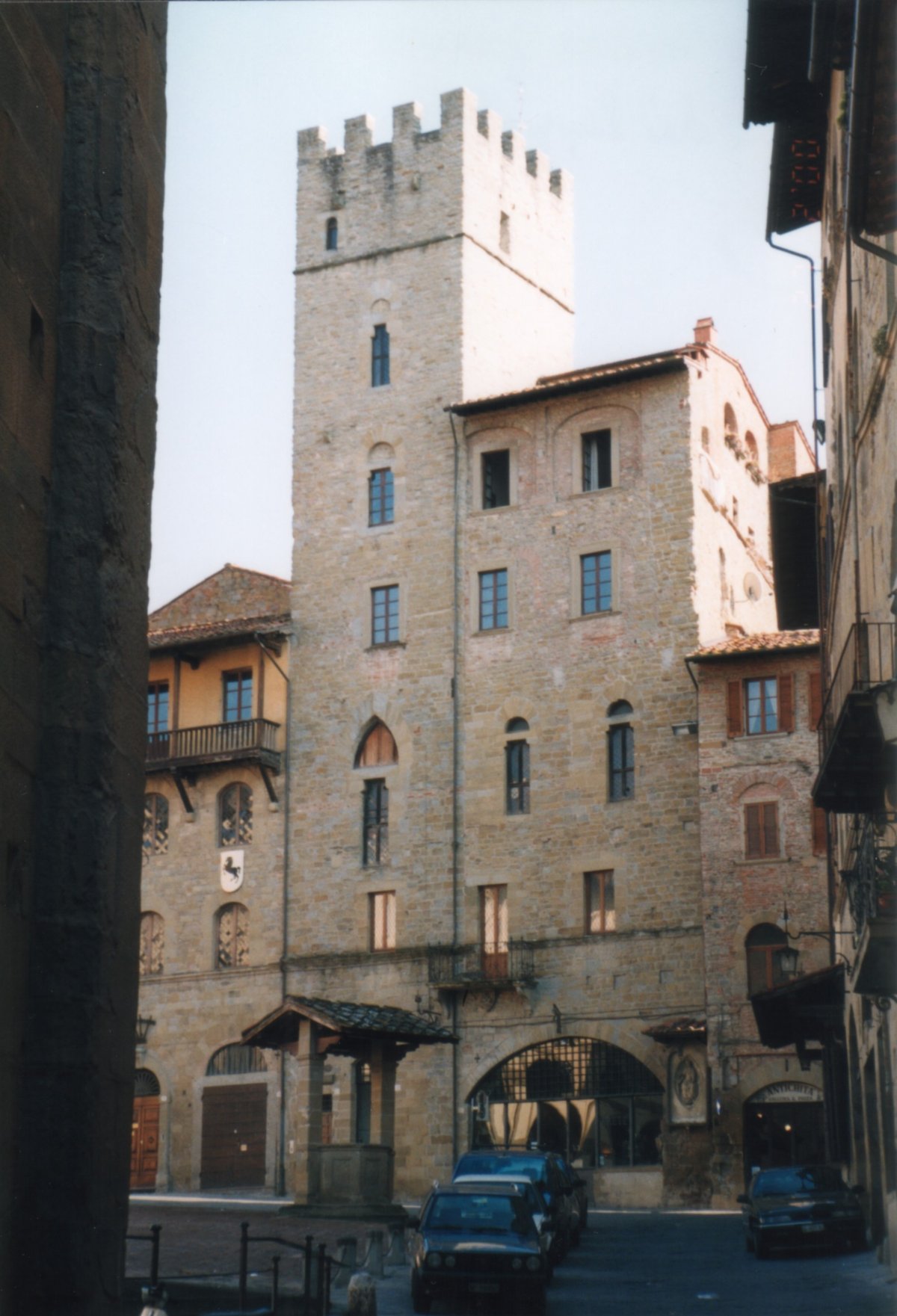
Art here is not tucked away from daily life. In the Basilica di San Francesco, Piero della Francesca’s Legend of the True Cross, painted between 1452 and 1466, unfolds across the dim hush of the Bacci Chapel; preservation rules limit entry to 30 people per 30-minute slot, so reserve before you go. At the hilltop Duomo, Guillaume de Marcillat’s stained glass catches the light beside the monumental Gothic tomb of Bishop Guido Tarlati, while the Pieve’s Tower of a Hundred Holes gives Corso Italia its unmistakable vertical marker.
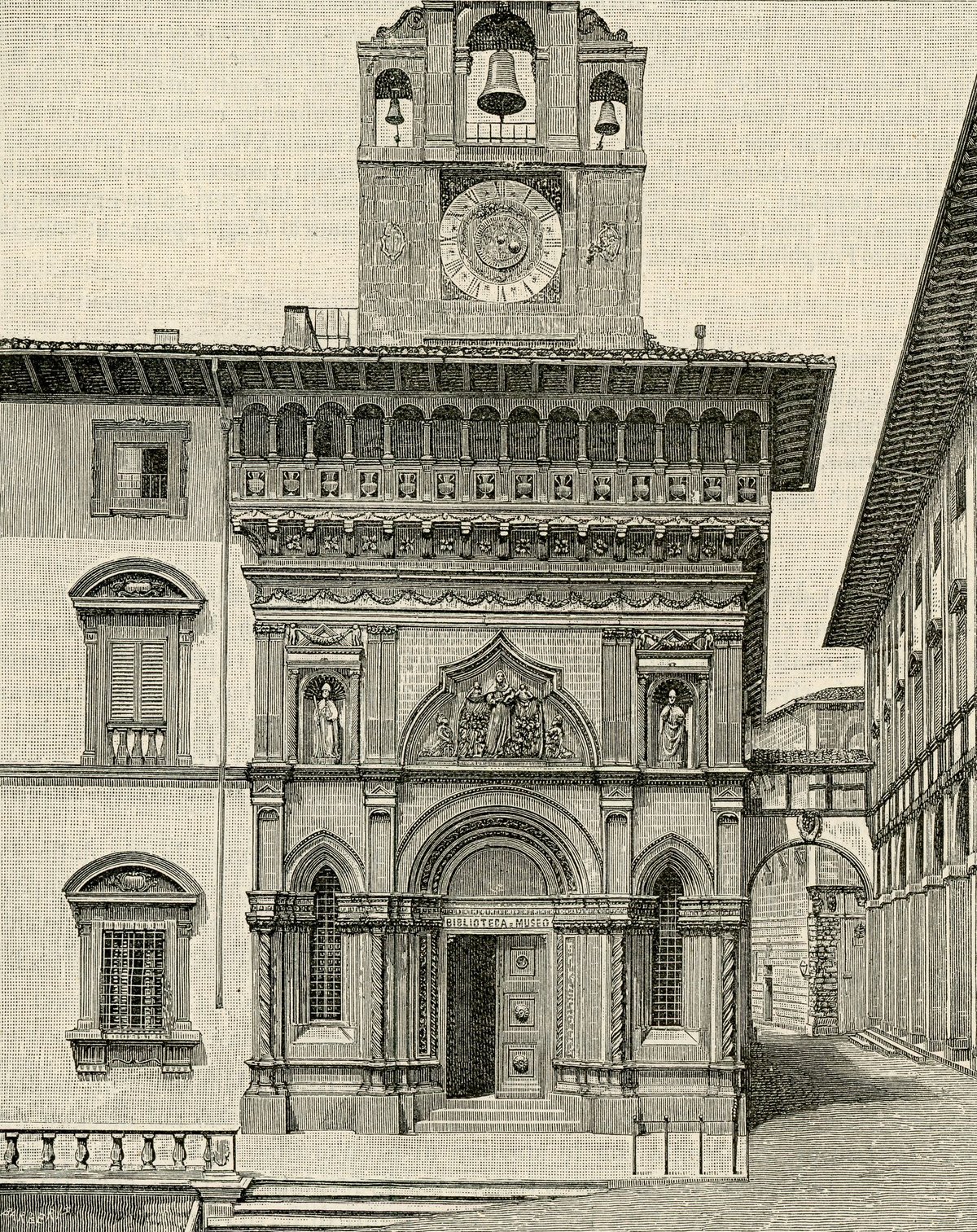
Vasari keeps reappearing, as if Arezzo had commissioned one long conversation with its most ambitious son. His former home, Casa Vasari, preserves rooms frescoed in the 1540s and around 50 Mannerist works; across town, his Logge Vasariane frame Piazza Grande, while the Badia contains his altar complex and Andrea Pozzo’s painted false cupola. In the Museo della Fraternita dei Laici, a working 16th-century astronomical clock still follows the old Ptolemaic model, a small mechanical argument with the modern sky.
Food pulls Arezzo back toward its four valleys: try crostini neri, maccheroni all’ocio, or the unapologetic grifi, then drink Chianti Colli Aretini with Chianina steak. On fair days, Ivan Bruschi’s 1968 Fiera Antiquaria turns the center into a market of lamps, paintings, and furniture; during the Giostra, the four historic quarters turn the same public life into a contest of drums, lances, and horses. After that, Arezzo reads less like a stop between Florence and Rome than a compact meeting point of Tuscan histories.
Not every monument, just the ones we'd walk you past ourselves.


Where to wander, by quarter — each with its own rhythm.
Before you go
Curated from places in this city. Same price as official sites.


Prices shown are indicative — final pricing and availability are confirmed at checkout. Audiala may receive a commission from bookings made via these links.
From Etruscan Aritim to the city of Piero and Vasari
By about 5000 BCE, farming communities were settling the fertile meeting ground of the Arno, Tiber, and Chiana valleys around the future city. Their huts, crops, and tools belong to a quiet beginning, but the hill already offered something cities prize: a dry, defensible perch above routes through central Italy.
Between the ninth and eighth centuries BCE, a Villanovan-era settlement grew into Aritim, the Etruscan name behind Roman Arretium. By the sixth century BCE, fortified San Donato Hill, ironworking, pottery, and membership in the twelve-city Etruscan Dodecapolis had made the settlement a power in the surrounding valleys.
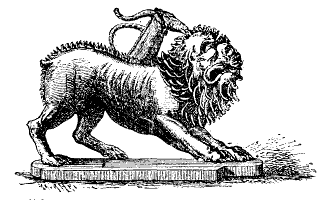
Around 400 BCE, an Etruscan workshop cast the crouching lion, goat, and serpent now known as the Chimera of Arezzo. Found in 1553 during Medici fortification work, the bronze emerged from the earth like a message from the city that had occupied the hill long before Tuscany had a name.
In 283 BCE, the Senones besieged Arretium, and a Roman relief force under Praetor Lucius Caecilius Metellus Denter marched to its walls. The Romans were crushed—ancient accounts put the losses near 13,000, with the praetor among the dead—before Rome reorganized its grip on Etruria.
During the Second Punic War, consul Gaius Flaminius stationed troops at Arretium to guard the Apennine approaches. Hannibal bypassed the position and drew the Roman army toward Lake Trasimene, where the ambush of 217 BCE turned the town’s strategic importance into a warning.
Arretium backed the Marian side in Rome’s civil war, and Sulla’s victory brought collective punishment in 82–80 BCE. Citizens lost rights and territory, parts of the walls were dismantled, and veteran settlers formed the colony called Arretini Fidentiores.
Gaius Cilnius Maecenas was born in Arretium around 68 BCE into the old Cilnii aristocracy. As Augustus’ adviser, he backed Virgil and Horace; his name later became the ordinary Italian word for an arts patron, while Arezzo named its archaeological museum for him.
After crossing the Rubicon in 49 BCE, Julius Caesar took Arretium swiftly to secure the Via Cassia and the road south. The move was brief but telling: this hill town was still a hinge between Rome, Etruria, and the Apennine passes.
From the late first century BCE into the first century CE, Arretium’s glossy red terra sigillata—Arretine Ware—left local kilns for markets across the Mediterranean and as far as India. In the early second century CE, the city added an amphitheatre about 121 by 68 metres, with room for roughly 8,000 to 10,000 spectators; kiln heat and crowd noise marked its Roman high point.
Tradition places the martyrdom of Bishop Donatus in the third or fourth century, after the famous story of a shattered glass chalice at a Christian service. By the fourth century, his cult had made him Arezzo’s patron, and the cathedral hill still carries his name in stone.
After 476, Arretium endured raids and the hard politics of a frontier between Byzantine Ravenna and the Lombard duchy of Tuscia. The Roman city did not vanish, but its old network broke into defended heights, churches, and roads that could change hands with the season.
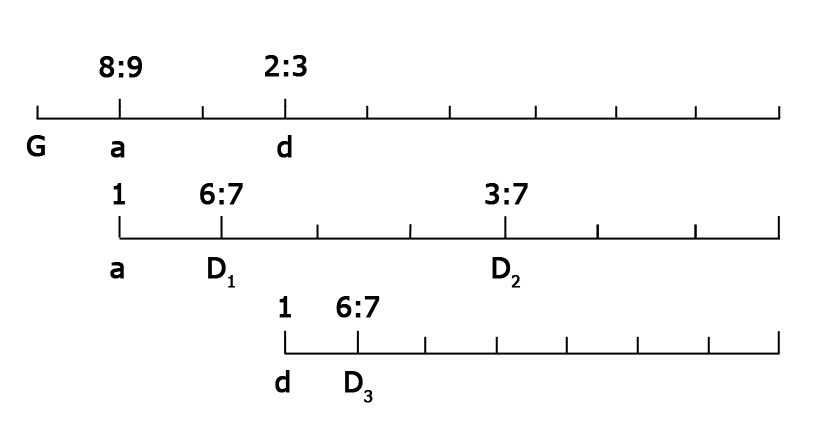
Around 1025, the Benedictine monk Guido of Arezzo taught singers at the cathedral under Bishop Tedald and wrote the Micrologus soon after. His four-line staff and ut–re–mi–fa–sol–la system gave memory a set of rails; music could now be read rather than learned only by ear.
By 1098, Arezzo had organized itself as a free commune, with elected consuls sharing power with the bishop. The arrangement turned the town’s towers and market streets into a political machine, even as rival Guelph and Ghibelline loyalties sharpened outside the walls.
Between the twelfth and thirteenth centuries, builders reshaped Santa Maria Assunta into the Romanesque church seen today. Its many-arched facade and the Campanile delle Cento Buche, the ‘Tower of a Hundred Holes,’ turn repetition into a kind of music; Pietro Lorenzetti’s later polyptych would deepen that effect.
Work began in 1278 on the Gothic Cathedral of Saints Donatus and Peter at the summit of San Donato Hill. Its long construction left a layered monument: the 1330 tomb of Bishop Guido Tarlati, Guillaume de Marcillat’s later glass, and Piero della Francesca’s Mary Magdalene all occupy the same uphill story.
On 11 June 1289, Ghibelline Arezzo met a Florentine-led Guelph army at Campaldino; Bishop Guglielmino degli Ubertini died in the defeat, and Dante Alighieri rode with the opposing cavalry. The loss shattered Aretine military power and left Florence tightening its hold on the valley.
Francesco Petrarca was born in Arezzo on 20 July 1304, after his father Ser Petracco had been expelled from Florence with Dante’s circle. The house on Via dell’Orto preserves the city’s surprising claim on the poet who would make classical literature feel newly urgent to Europe.
From 1312, Bishop Guido Tarlati ruled as Arezzo’s forceful Ghibelline lord, extending its power over neighboring towns and rebuilding the municipal walls. His program gave the city one last burst of military confidence before dynastic quarrels and mercenary violence reopened its wounds.
In 1320, Pietro Lorenzetti installed his great polyptych in Santa Maria Assunta, its painted saints confronting the church’s cool Romanesque stone. The commission shows Arezzo still attracting major Sienese artists, even as its political fortunes were beginning to narrow.
After the Tarlati succession collapsed and the mercenary Enguerrand de Coucy sacked Arezzo, the weakened city was sold to Florence in 1384 for 40,000 florins. The price reads like an account-book detail, but its consequence was immense: independent Aretine sovereignty ended.
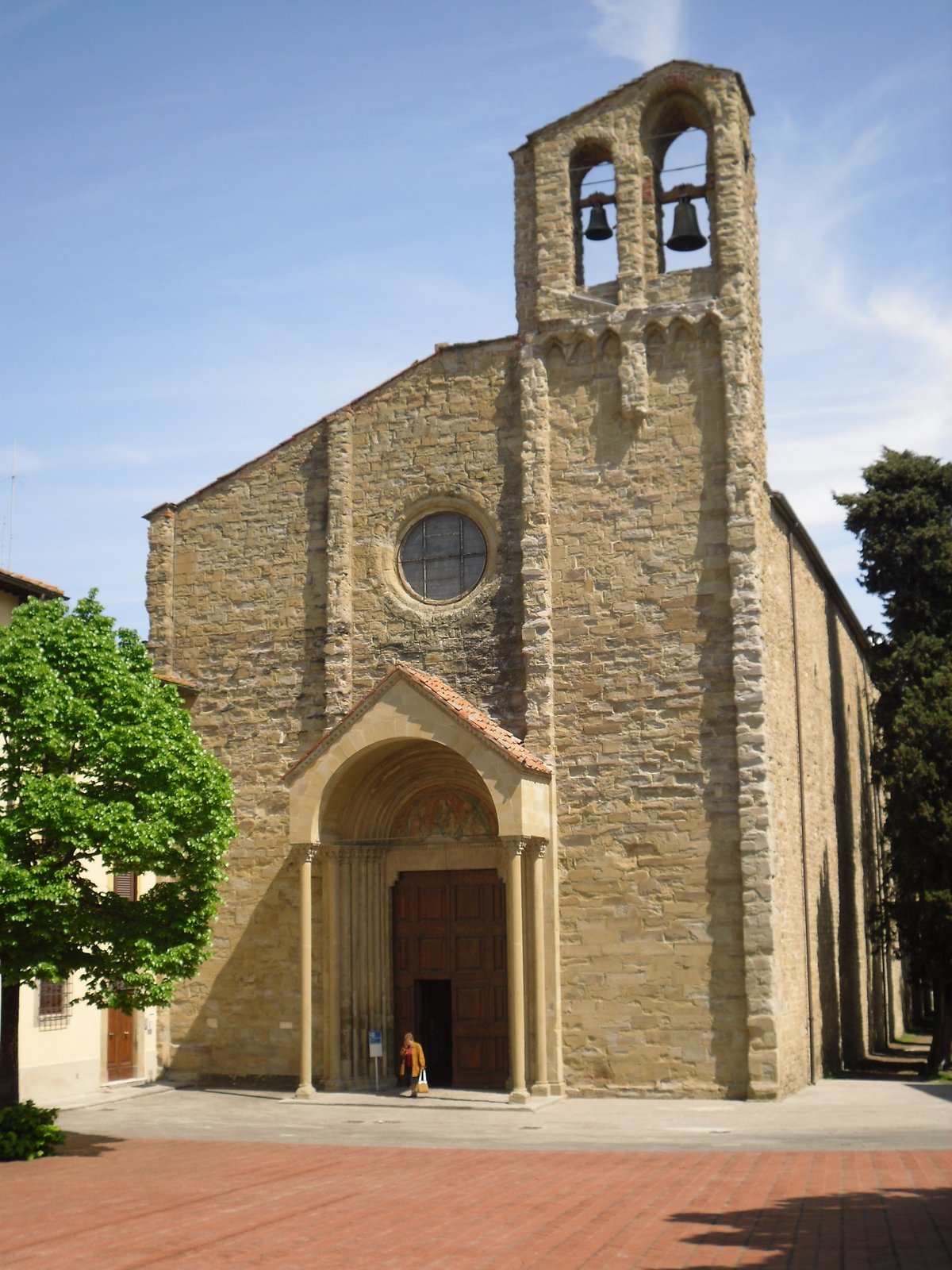
Between 1452 and 1466, Piero della Francesca painted The Legend of the True Cross in the Bacci Chapel of San Francesco. His figures stand in measured silence beneath pale, controlled light, turning a local chapel into a laboratory for perspective, geometry, and belief.
Pietro Aretino was born in Arezzo in 1492, the son of a shoemaker, and carried the city’s name as his surname. His satires, plays, and letters made literary opinion feel dangerous enough to unsettle princes; ‘the Aretine’ was never a quiet signature.
Giorgio Vasari was born in Arezzo in 1511 and kept returning to it in paint, brick, and memory. He frescoed his Casa Vasari, designed the Logge in Piazza Grande, and helped give the city the architectural frame through which its Renaissance ambitions are still read.
In 1553, Cosimo I de’ Medici’s fortification works reshaped the hilltop into the Fortezza Medicea, with designs associated with Antonio and Giuliano da Sangallo. Excavation uncovered the Etruscan Chimera, so a machine of Medici control briefly became the stage for an older city’s return.
In May 1799, Arezzo became the center of the Viva Maria uprising against Napoleonic occupation, as peasants and conservative forces raised the cry of the Virgin’s name. The revolt spread a provisional government across Tuscany before French troops suppressed it, leaving the city with a memory of defiance rather than clean victory.
Arezzo voted overwhelmingly in 1860 to join the Kingdom of Sardinia, and the result folded the old Tuscan city into the Kingdom of Italy proclaimed in 1861. A change made on paper altered the flag above civic buildings and tied local roads, taxes, and railways to a new national state.
The founding of UnoAErre in 1926 turned Arezzo’s long tradition of metalworking into industrial gold jewelry and refining. The city began to earn a second identity: a hill town of frescoes and a place where precious metal moved through furnaces by the kilo.
In 1931, Arezzo revived the Giostra del Saracino, a medieval joust now staged in Piazza Grande in June and September. Horses strike sparks from the paving as the four quarters charge the Buratto; beneath the pageantry sits a carefully rehearsed and fiercely local act of memory.
Allied bombing damaged Arezzo’s railway yards, bridges, and transport network in 1943–44 before British and Commonwealth troops entered on 16 July 1944. Liberation did not restore the city at once; it left broken routes, blackened masonry, and the hard work of reconnecting a divided country.
In 1997, Roberto Benigni filmed Life Is Beautiful in Piazza Grande, the Badia delle Sante Flora e Lucilla, and the old streets. The Oscar-winning film changed how millions pictured Arezzo: its medieval squares became a setting where comedy, tenderness, and the machinery of fascist violence could occupy the same frame.
Statesman and arts patron · 68 BC–8 BC
Born here
Born in ancient Arretium, Maecenas turned political influence into support for Virgil, Horace, and Propertius; his name later became the word for an arts patron. The archaeological museum bearing his name gives Arezzo a direct link to the Roman figure behind modern cultural sponsorship.
Monk and music theorist · c. 991/992–after 1033
Lived and taught here
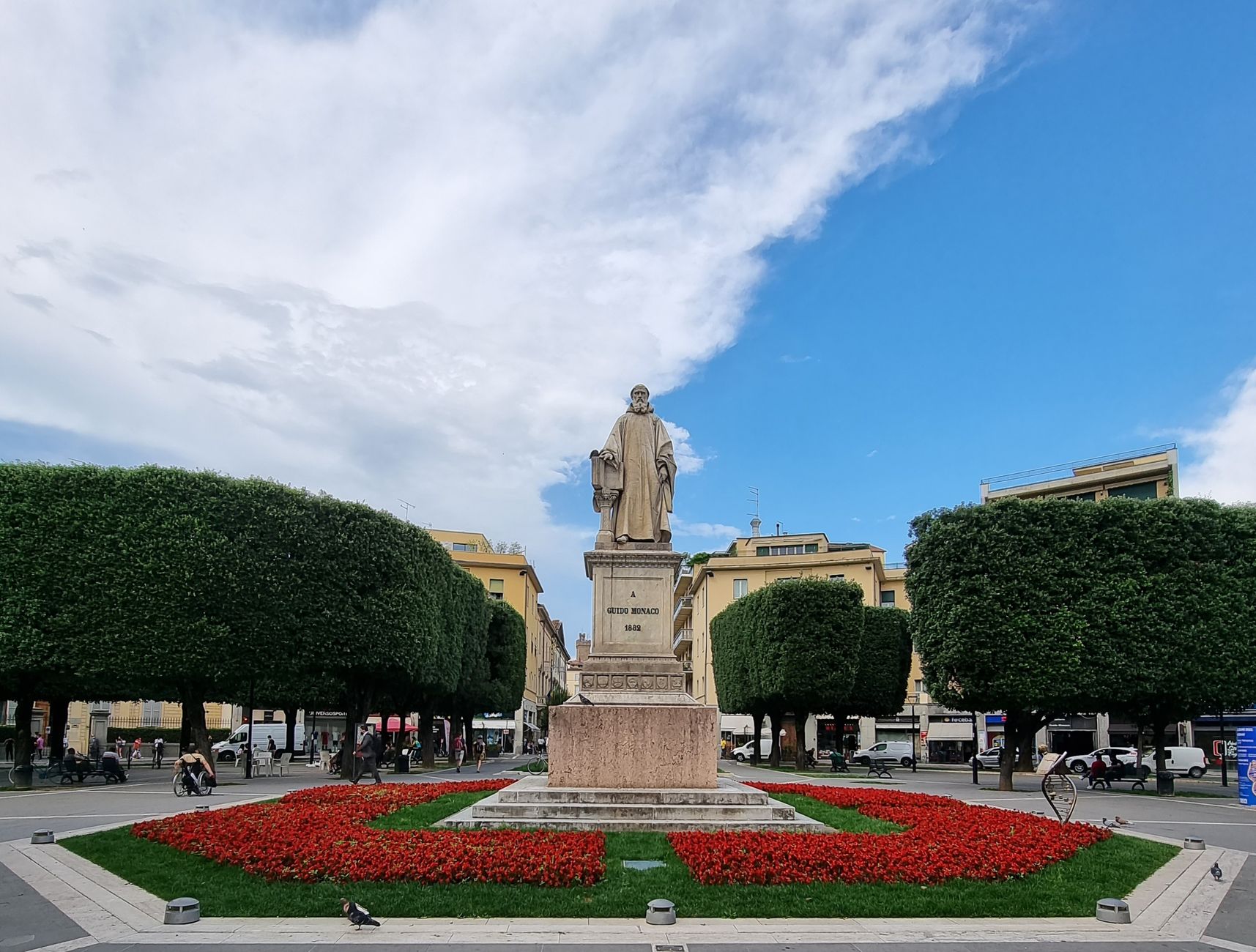
After leaving Pomposa, Guido settled in Arezzo under Bishop Theobald and taught the cathedral singers, where he shaped the four-line staff and the ut–re–mi–fa–sol–la system. He might appreciate the city's musical geography today: the old cathedral still stands above the streets where his teaching changed how Europe learned music.
Poet and humanist · 1304–1374
Born here
Petrarch was born in Arezzo on July 20, 1304, after his exiled Florentine family found refuge in the city; the house on Via dell'Orto now preserves that connection. He would probably recognize the same useful tension today—a provincial town with ideas large enough to travel far beyond its walls.
Renaissance painter · c. 1415/1416–1492
Painted major works here
Piero della Francesca spent years in Arezzo painting The Legend of the True Cross in the Bacci Chapel between 1452 and 1466, along with Mary Magdalene in the cathedral. His quiet geometry still governs the visitor's eye: stand before the frescoes and the city begins to feel measured, not merely old.
Satirist and author · 1492–1556
Born here
Born to the shoemaker Luca Del Tura, Pietro took “Aretino”—the Aretine—as his public identity while becoming one of Renaissance Italy's sharpest satirists and art commentators. The name suggests a hometown he carried as both credential and provocation; today's Arezzo might suit his eye for pomp, ceremony, and market-day theatre.
Architect, painter, and art historian · 1511–1574
Born and lived here
Vasari was born near Piazza Grande and later bought and frescoed the house that now bears his name, while designing the Logge Vasariane overlooking the square. He would find his city oddly fitting today: his own work still frames daily life, from café tables beneath the arcades to the measured view across Piazza Grande.
Poet · c. 1235–1294
Born near Arezzo
Guittone was born at Santa Firmina near Arezzo and became a leading Tuscan vernacular poet before Dante, writing from the charged world of 13th-century civic politics. He would likely recognize the old center's continued talent for turning public squares into stages, whether for poetry, jousting, or the antiques fair.
Painter, sculptor, and architect · active c. 1250–1290
Born and worked here
Margaritone was a native Aretine whose signed Duecento works helped make him one of the few named Tuscan artists of his generation; Giorgio Vasari later included him in the Lives. His paintings in Arezzo's museums and cathedral keep the city connected to an earlier, more solemn visual language than the Renaissance that followed.
Small things that change how the city treats you.
The city, as it actually looks.




Yes—Arezzo packs Piero della Francesca's Bacci Chapel, Vasari's architecture, Roman archaeology, and a medieval square into a walkable hill town. It feels quieter than Florence while still offering serious art, especially during the monthly antiques fair or the June and September jousts.
Allow two full days for Arezzo's churches, museums, Piazza Grande, and the Medici fortress. Add a third day if you want to cycle part of the flat 62-kilometre Sentiero della Bonifica or visit nearby towns in the province.
Take a Trenitalia train from Firenze Santa Maria Novella to Arezzo; Regionale Veloce services take about 50–60 minutes and cost roughly €9.10. From Florence Airport, take the T2 tram to Santa Maria Novella first, adding about 20 minutes and €1.50–€1.70.
Yes, and the historic center is easiest on foot. The railway station sits near the lower center, while free covered escalators connect Parcheggio Pietri with the Duomo; Autolinee Toscane buses serve the city and surrounding valleys.
Yes, Arezzo has low violent crime and is generally calm for solo visitors. Take routine care around the railway station late at night and protect valuables in dense crowds at Piazza Grande; call 112 for emergencies.
A combined Musei Arezzo Pass costs about €20 and remains valid for 72 consecutive hours. The pass can include the Bacci Chapel, Casa Vasari, the National Archaeological Museum, and the National Museum of Medieval and Modern Art, but the chapel still needs its own timed reservation.
Yes, advance booking is mandatory for the Bacci Chapel in the Basilica di San Francesco. Visits are restricted to 30 people every 30 minutes, so choose a time before planning the rest of your day.
26 places to discover





Saved and recently read places — kept on this device only.
Photos may have been resized or cropped.